Chilling Adventures of Sabrina 7: Discussion

by Ryan Mogge and Patrick Ehlers
This article contains SPOILERS. If you haven’t read the issue yet, proceed at your own risk!

slim-banner

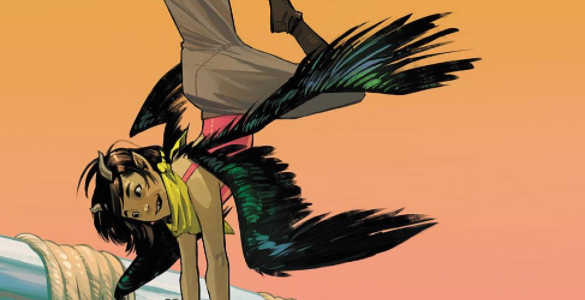
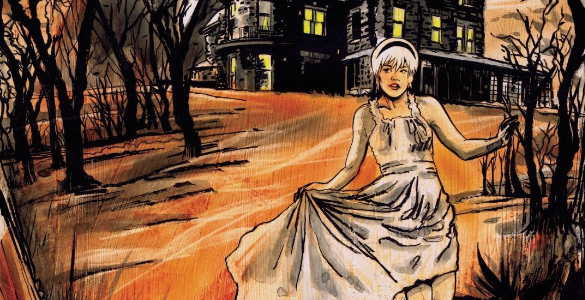
Ryan M: Writing in the point of view of a sociopath creates a set of problems. They will never have the kind of human connection or emotional growth that ground most stories. It’s why most serial killer stories are from the perspective of the detective on the case. It’s easy to alienate the audience when you allow a sociopath to tell the story. When these characters express an earnest truth about themselves, rather than make them more sympathetic, it emphasizes what’s “wrong” with them. Often, weaving in an undercurrent of irony or dark humor can make the character easier to take. Bret Easton Ellis’ American Psycho breaks up graphic tales of murder with pop music critiques. A tale of horror must offer the reader a break from the evil or suffer a tediousness that lessens the impact of the darkest moments. In Chilling Adventures of Sabrina 7, Roberto Aquirre-Sacasa and Robert Hack use humor to give release as Edward Spellman tells his life story.
Continue reading

Crisis Reveals Character in Jughead 16

by Ryan Mogge

This article contains SPOILERS. If you haven’t read the issue yet, proceed at your own risk!

When things are at their most dire, it can be surprising who will step up. Crisis allows people to drop their posturing and bluster and actively work on a shared goal. In Jughead 16, Ian Flynn, Mark Waid and Derek Charm show a new side of Reggie Mantle by putting Jughead in crisis. Continue reading

Jean Grey 3: Discussion

By Ryan Desaulniers and Ryan Mogge

This article containers SPOILERS. If you haven’t read the issue yet, proceed at your own risk!

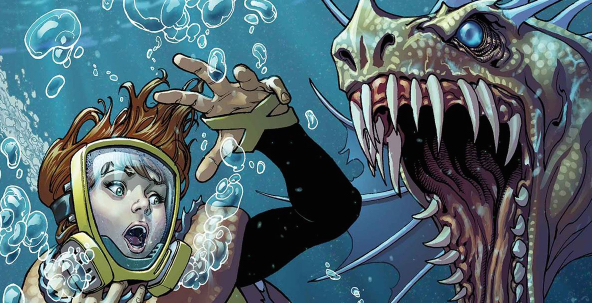
Ryan D: When one writes about comic books, due to the popular types of stories being told, the critical eye encounters Joseph Campbell’s template for “the hero’s journey.” This monomyth pervades the pages of superhero titles, and seems even more prevalent in solo runs of characters due to the ease of accessibility inherent to that narrative. In Jean Grey, however, Dennis Hopeless and his creative team use a different kind of literary precedent — that of the Bildungsroman –– to tell the story of the young Jean as she gears up to meet the looming threat of the Phoenix. The Bildungsroman is a novel of formation or education with the psychological and moral development of the protagonist as the crux of the narrative, along the lines of Ponyboy in The Outsiders or Marji in PersopolisJean Grey 3 continues that trend of Jean moving painfully towards development and maturity as she learns a lesson in the company of “Marvel’s First Mutant,” Namor. Continue reading

Definition by Contrast in Saga 44

by Ryan Mogge

This article contains SPOILERS. If you haven’t read the issue yet, proceed at your own risk!

When you are a kid, your family creates your idea of normal. It’s only when you go to a friend’s house and things are done just a little differently, that you can really define what makes your family unique. In Saga 44, Fiona Staples and Brian K. Vaughan reinforce what we know about Marko, Alana, and Hazel by giving us a fun-house mirror version of their family.

Continue reading

Peter Parker: The Spectacular Spider-Man 1: Discussion

by Ryan Mogge and Ryan Desaulniers

This article containers SPOILERS. If you haven’t read the issue yet, proceed at your own risk!

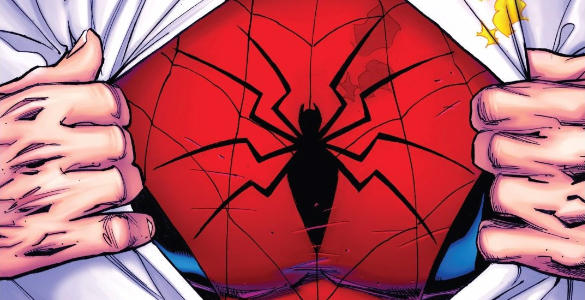
Ryan M.: How much background do you need to enjoy a single issue of an on-going serial? There is an argument that the answer is none. Most of us start out by just diving in, checking things out and then heading to Wikipedia or a very knowledgeable friend to help fill in the cracks. The serialized narrative is a moving train, you catch it when you can, and see what it has to offer. This can be one of the format’s strengths, giving the reader a feeling of discovery by entering a rich established world. You may have questions that aren’t answered or relationship dynamics you can’t understand, but you are seeing into a fictional world that is fully realized. It’s one of the reasons that origin stories can feel plodding. They are explaining why things are rather than showing what they become. In Peter Parker: The Spectacular Spider Man 1, Chip Zdarsky balances out that sense of history by giving the story a day-in-the-life feel with a few big turns that make it clear that a bigger story is evolving. Continue reading

Choice is a Privilege in Teenage Mutant Ninja Turtles Universe 11

by Ryan Mogge

Teenage Mutant Ninja Turtles Universe 11

This article contains SPOILERS. If you haven’t read the issue yet, proceed at your own risk!

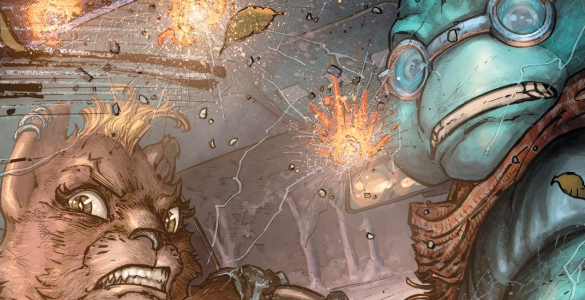
Choice is a privilege. It’s easy to take that for granted when facing horrible options, but self-determination is worth something. In Teenage Mutant Ninja Turtles Universe 11, Rich Douek and Aaron Conley explore this idea through the characters of Ray and Dreadmon. Continue reading

Splitting the World into Pre and Post Tragedy in Archie 21

by Ryan Mogge

Archie 21

This article contains SPOILERS. If you haven’t read the issue yet, proceed at your own risk!

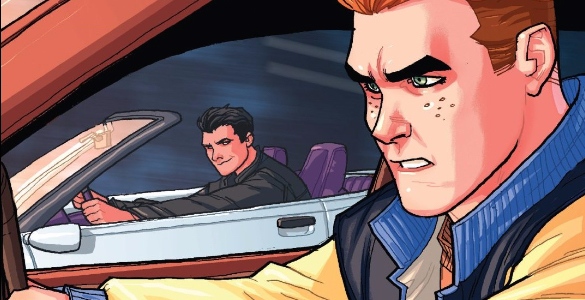
When something awful happens, priorities immediately change. Trivial pursuits are rendered meaningless when real loss is pending. Memories can be categorized as “before” and “after.” In Archie 21, Mark Waid and Pete Woods build toward one such loss by showing several characters in their “before” mode. Continue reading

Despair in the Denouement in Wonder Woman 24

by Ryan Mogge

Wonder Woman 24

This article contains SPOILERS. If you haven’t read the issue yet, proceed at your own risk!

In a classical Greek tragedy, no matter whether they achieve their goals, the protagonists of a story end up worse off than they started. In Wonder Woman 24, everyone is at once successful and miserable. Greg Rucka focus on three women living in pain even after reaching their objectives.

After seeing her mother and being only a step away from Themyscria, Diana is distraught when she returns. Rucka indicates that Diana is not her usual self in the way that she carelessly leaves Cheetah behind. It wouldn’t necessarily be careless if a regular person did it, but Wonder Woman has set standards of empathy and kindness that even she cannot always live up to. When Etta calls her out, it only takes a moment before Diana is ready to take action. Even in her guilt, she is committed to making things right. Continue reading

Secret Empire 4: Discussion

by Patrick Ehlers and Ryan Mogge

This article contains SPOILERS. If you haven’t read the issue yet, proceed at your own risk!

slim-banner

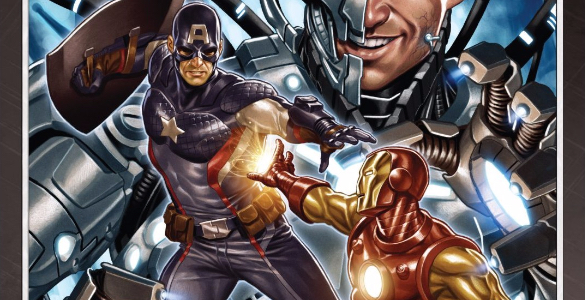
Patrick: The Secret Empire epic drives on an engine powered by dramatic irony. From the second Steve’s first “Hail Hydra” was uttered, the audience knew more about the threat the Marvel Universe faced better than any of its inhabitants. It is serendipitous (in the worst possible way) that the current political climate in the United States has made readers hyper-aware of this irony, as we’re able to draw obvious parallels between the rise of Hydra and the rise of white nationalism. We don’t need to parse out the rhetorical devices Steve uses to justify his abuses of power — we see them demonstrated by our president every day. Issue 4 doubles down on the practice of illustrating dramatic irony, giving the audience far more information than any of the characters are ever afforded. The result is an unsettling exercise in moral relativism. Continue reading

Serve the Community, or Save the World? The Dilemma of Captain America: Sam Wilson 23

by Ryan Mogge

Captain America Sam Wilson 23

This article contains SPOILERS. If you haven’t read the issue yet, proceed at your own risk!

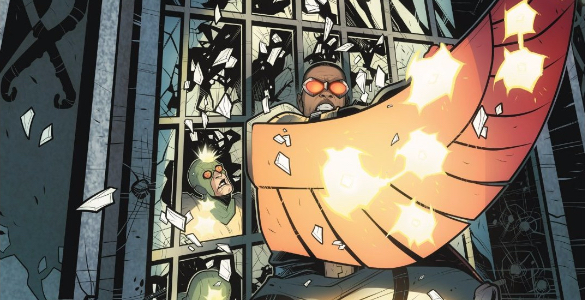
The central conflict of Captain America: Sam Wilson 23 is not between the Avengers and the Mole Man. Instead, it’s a reverberation of the themes that Nick Spencer has been exploring throughout the series’ run. Sam Wilson is a hero because he believes in helping people. His work begins at a human level, functioning as part of a community. By contrast, the Avengers present a plan to save the world. Their goal to rescue Steve Rogers using the cosmic cube could alter the course of human history. Continue reading