Dark Nights: Metal Finds Its Thematic Core in Issue 4

by Spencer Irwin

This article contains SPOILERS. If you haven’t read the issue yet, proceed at your own risk!

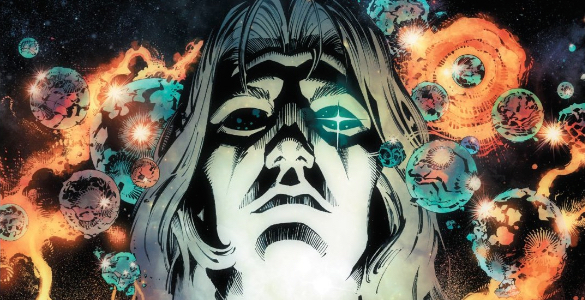
So far, Dark Knights: Metal has been best known for its reverence for DC’s history and its dedication to ideas and concepts as convoluted and zany as they are grand and cosmic (i.e., the instantly iconic Baby Darkseid). This focus has made the event a breathless thrill-ride, but in issue 4 Scott Snyder and Greg Capullo finally start to dig into the thematic and character-driven cores of their story, instantly making it a far more memorable and satisfying experience. Continue reading

A Satisfying “Ending” in New Super-Man 18

by Mark Mitchell

This article contains SPOILERS. If you haven’t read the issue yet, read on at your own risk!

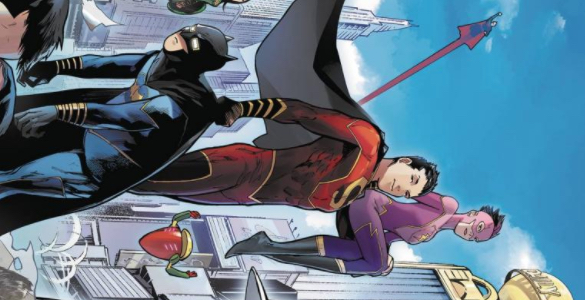
New Super-Man has always been a messy book, and so it’s fitting that its “conclusion” should be messy as well. Clearly intended at one point to be the final issue of the series, New Super-Man 18 is Gene Luen Yang’s usual mix of strange pacing salvaged by strong character moments.

Continue reading

Booster Gold Steals the Spotlight in Action Comics 993

By Michael DeLaney

This article contains SPOILERS. If you haven’t read the issue yet, proceed at your own risk!


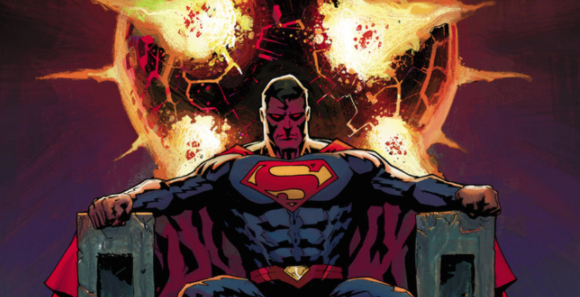
The “Superman time travels back to pre-blown up Krypton” story is so frequent of a tale that DC should make a hardcover collection of them all. A bit more than a trip to way back when, Action Comics 993 touches on the elusive mysteries of Mr. Oz and Doctor Manhattan. Continue reading

Bug! The Adventures of Forager 6: Discussion

by Patrick Ehlers and Drew Baumgartner
This article contains SPOILERS. If you haven’t read the issue yet, proceed at your own risk!

“Come now — what’s more believable? A teddy bear that talks? A ghost girl who doesn’t? Spontaneous resurrections? Infinite Realities? Or the simple fact that you’re dead?”

-Chagra, Bug! The Adventures of Forager 6

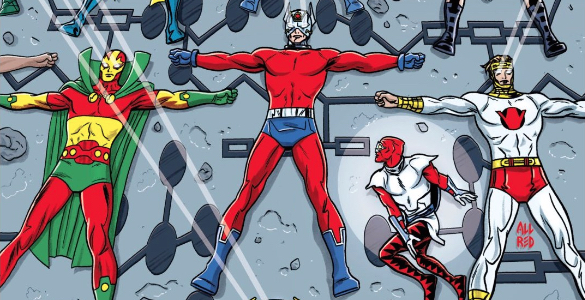
Patrick: Longtime readers of this site will know that I’ve got a limited amount of patience for stories that refuse to ground themselves. Often, this is literal — my favorite Green Lantern stories are those that tie back to Coast City, or Earth, or even just Hal Jordan. My attachment to the characters wane when they start to slip through time, space or even layers of reality. As such, I’ve always had something of a hard time with Fourth World stories and the whole cast of New Genesis characters. They’re fucking weirdos, in weird situations, somehow both a part of and separate from the multiverse. Lee, Michael and Laura Allred have been telling a story that leans into my biggest fears about Kirby’s opus, but wraps it all up by insisting on the purity of the simplest explanation: what you see is what you get. And they make “what you see” something truly worth the readers’ time.

Continue reading

Differences Unite, But Also Divide, in Hal Jordan and the Green Lantern Corps 34

by Spencer Irwin

This article contains SPOILERS. If you haven’t read the issue yet, proceed at your own risk!

There’s no point in having a team book if all the characters are exactly the same. Differences create tension and provide variety — the differences in opinion and methods between the various Green Lanterns, especially the four core Earth Lanterns, is the engine that makes Hal Jordan and the Green Lantern Corps run. They’re especially prevalent in issue 34, an installment that doesn’t just dive into the differences that define Hal, John, Guy, and Kyle, but that divide the Guardians and the Controllers as well. Continue reading

It’s Kirby vs. Lee in Mister Miracle 5

by Drew Baumgartner

Mister Miracle 5

This article contains SPOILERS! If you haven’t read the issue, proceed at your own risk.

Charlie: I’ve written myself into my screenplay.

Donald: That’s kind of weird, huh?

Adaptation

To call Adaptation “kind of weird” would be putting it mildly — ostensibly about Charlie Kaufman’s attempt to adapt Susan Orlean’s The Orchid Thief, the movie is ultimately about itself, but becomes this weird fictionalized version of itself, as Kaufman invents a twin brother to introduce hackneyed thriller elements to the film’s closing acts. It’s much, much weirder than someone simply writing themself into their own screenplay. Heck, the actual script is credited to both Charlie and Donald Kaufman, and both were nominated for an Academy Award for best adapted screenplay even though Donald is a fictional character (or, arguably, a manifestation of Charlie’s most commercial writing instincts). But I think Mister Miracle 5 might just top it for meta weirdness, serving as a kind of final word on comics’ own Charlie and Donald Kaufman — Jack Kirby and Funky Flashman. Continue reading

Black Lightning: Cold Dead Hands 2 Settles Into Itself

by Drew Baumgartner

Black Lightning Cold Dead Hands 2

This article contains SPOILERS. If you haven’t read the issue yet, proceed at your own risk!

For as many superhero comics there are out there, it’s remarkable how little diversity there is — both in terms of representation and narrative variety. Those are both points that have been made to death, but are rarely mentioned in the same breath. But with Black Lighting: Cold Dead Hands 2, Tony Isabella and Clayton Henry make a strong case that they might be related — or more precisely, that the solution to both can be the same thing: Jefferson Pierce’s blackness lends the character to stories totally unlike the reheated adventures of other superhero faire. It demonstrates the storytelling potential of diverse characters, emphasizing perspectives, obstacles, and motivations that otherwise might never come up at the Big 2. Continue reading

The Power of Faith and Trust in Superman 36

by Spencer Irwin

This article contains SPOILERS! If you haven’t read the issue, proceed at your own risk.

Fans and creators alike often complain that it’s hard to find a proper challenge for Superman when the character is so unfathomably powerful. But as far as I’m concerned, the best Superman stories aren’t the ones that challenge him physically, but the ones that test his morals and ideals, his methods and resolve. Peter Tomasi and Patrick Gleason’s run on Superman has excelled in this respect, and issue 36 continues this streak, further defining Superman’s greatest strengths by showing what happens when he doesn’t live up to his own lofty standards. Continue reading

The Mother of All Betrayals in Green Arrow 35

by Michael DeLaney

This article contains SPOILERS. If you haven’t read the issue yet, proceed at your own risk!

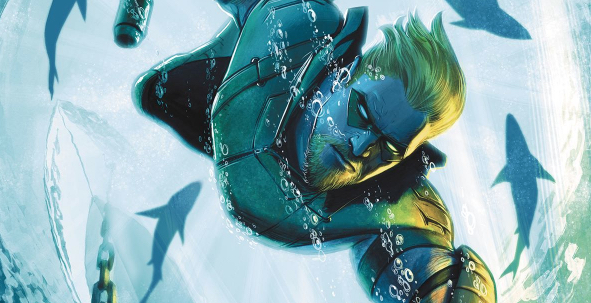
A common criticism of Green Arrow is that he’s Batman by another name: he’s rich, handy with the ladies, and, as a non-powered superhero, he’s got an arsenal of crime fighting tech. The biggest difference between The Dark Knight and The Emerald Archer? Batman thinks with his head and Green Arrow think with his heart. Continue reading

Batman: White Knight 3

by Mark Mitchell

Batman White Knight 3

This article contains SPOILERS. If you haven’t read the issue yet, proceed at your own risk!

The primary mystery of Sean Murphy’s Batman: White Knight (with an assist from Matt Hollingsworth on colors) is determining what exactly Jack Napier’s intentions are. How much of his stance against Batman on moral grounds is part of a longer con? And even if Napier is truly free of the Joker, he’s certainly willing to indulge in a little villainy if the ends justify the means. But then, the same can be said of Murphy’s Batman, and it’s the murky morality of most all the major players in Batman: White Knight 3 that makes this book so compelling. Continue reading