Moonshine 8: Discussion

by Drew Baumgartner and Patrick Ehlers
Moonshine 8

This article contains SPOILERS. If you haven’t read the issue yet, proceed at your own risk!

Dyin’? Boy, he can have this little life any time he wants to. Do ya hear that? Are ya hearin’ it? Come on. You’re welcome to it, ol’ timer. Let me know you’re up there. Come on. Love me, hate me, kill me, anything. Just let me know it.

Luke, Cool Hand Luke

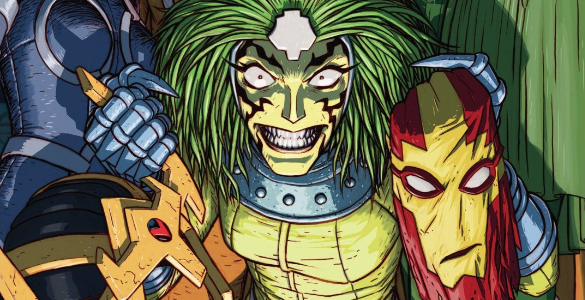
Drew: It’s hard for me to read genre fiction through anything other than a deconstructionist lens. I mean, it’s hard for me to read anything through anything other than a deconstructionist lens, but this is especially true of genre fiction, where by definition conventions must be explicitly followed. Fortunately for me, that postmodern generic awareness is just as prevalent in creators as it is in audiences, so I’m never struggling to find multidimensional, self-aware, fully postmodern genre fictions. But the good ones, the ones that actually force me to reexamine the genres they’re deconstructing (rather than just having fun with some winking references), are few and far between. But Brian Azzarello and Eduardo Risso’s collaborations have always gone a step further. Beyond cute self-awareness or even symphonic use of references, Azzarello and Risso’s work offer new perspectives on the foundational genre pieces they take on. That is to say, their comics don’t just gain meaning from their references — their references gain meaning from the comics. They’re almost a purer form of postmodernism, digesting entire genres in a few issues, offering new readings to even the most familiar works of art. Continue reading

Eternity Girl 1: Discussion

by Mark Mitchell and Spencer Irwin


This article contains SPOILERS. If you haven’t read the issue yet, proceed at your own risk!

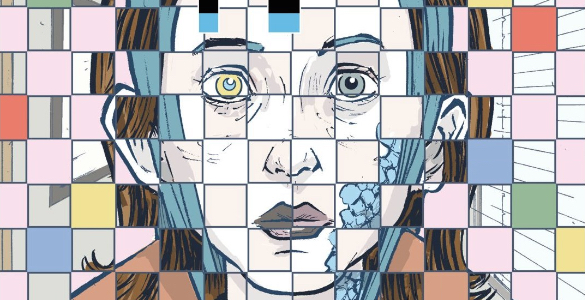
Mark: People who suffer from chronic depression are often very good at putting up facades of happiness; it’s part of why suicide can be surprising to the friends and family of the person who took their life. These facades are a coping mechanism for a depression sufferer in a number of ways, including stopping people from inquiring about their happiness. If you look happy — if you act “normal” — then people are more apt to leave you alone. But keeping up appearances for the benefit of others is exhausting, and sometimes the facade breaks down at inopportune moments — at a friend’s wedding, the night before a big paper is due, in front of your co-workers at the office.

The performative aspect of keeping up appearances is made literal in Magdalene Visaggio and Sonny Liew’s Eternity Girl 1, a new title in DC’s Young Animal line. Continue reading

The Unbeatable Squirrel Girl 30: Discussion

by Taylor Anderson and Patrick Ehlers

This article contains SPOILERS. If you haven’t read the issue yet, proceed at your own risk!

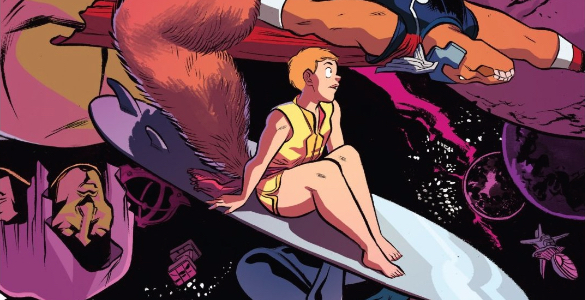
Taylor: A couple days ago, Erica Henderson announced on Twitter that she would be stepping away from artistic duties on the Unbeatable Squirrel Girl. For fans of the comic, particularly those who have been reading it from the beginning, this comes as crushing news, which is only moderately softened by knowing Henderson is stepping down of her own accord. While that makes the situation a bit easier to swallow it’s still is weird to consider a Squirrel Girl comic not drawn by Henderson. Luckily, there are still a few issues left to appreciate Henderson’s artwork and the 30th issue provides a great example of why she’ll be missed so much. Continue reading

Doctor Strange: Damnation 2 is Basically a Heist Movie

by Taylor Anderson

This article contains SPOILERS. If you haven’t read the issue yet, proceed at your own risk!

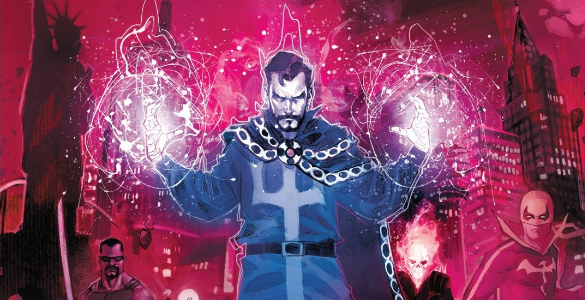
Just as surely as the sun rises in the east and sets in the west, Steven Soderbergh will reemerge from “retirement” now and again to make another heist movie. One can’t blame him for this: heist movies are fun, and Soderbergh has shown that he’s become very good at making them. Still, why is it that our thirst for these can’t be sated? Is it seeing familiar faces from different walks of life team-up? The notion of stealing for a just cause like Robin Hood? Or perhaps it’s serving comeuppance to someone who deserves it. Whatever the reason may be, the heist story is here to stay, and, as Donny Cates and Nick Spencer show, is easily transferable to the superhero genre. Continue reading

Green Arrow 38: Discussion

by Spencer Irwin and Michael DeLaney 

This article contains SPOILERS. If you haven’t read the issue yet, proceed at your own risk!

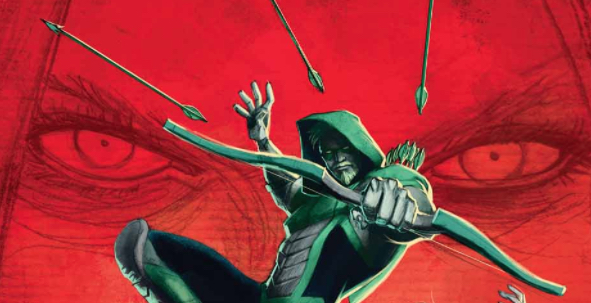
Spencer: In the Justice League Unlimited animated series, Green Arrow isn’t recruited to the League for his skills with a bow and arrow, but for his conscience and candor. Indeed, in all the character’s best portrayals Green Arrow’s greatest strength isn’t his trick arrows, but his unflinching honesty, his willingness to stand up to (and get in the face of) absolutely anybody, and his “man on the ground” perspective. These qualities are at the forefront of Green Arrow 38, an issue where (outside of one largely symbolic image) Oliver Queen doesn’t fire a single arrow, instead saving the day simply by standing up for what he believes in. Continue reading

The Wilds 1: Discussion

by Drew Baumgartner and Mark Mitchell

Wilds 1

This article contains SPOILERS. If you haven’t read the issue yet, proceed at your own risk!

They might not have done so with elaborate ritual, since there has never been solid evidence that they included symbolic objects in graves, but it is clear that they did not just dump their dead with the rest of the trash to be picked over by hyenas and other scavengers.

Francesco d’Errico

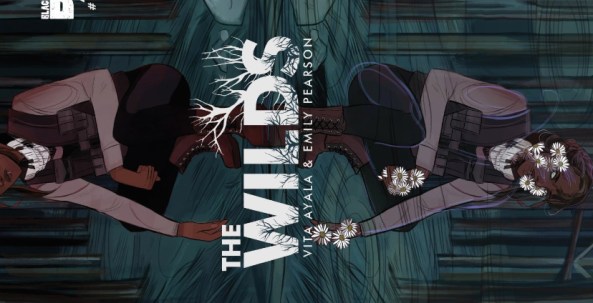
Drew: What makes us human? As with any attempt to draw hard lines around a vague concept, there seem to be exceptions to every feature we might describe as human, forcing us to consider that other species might just qualify for whatever working definition we land on. Such is the case with Neanderthals — the “they” in the quote at the top of this piece — which display enough of what we understand as culture and morality for me to be satisfied with their humanity. But were their contemporary Homo sapiens? The trouble with that nebulous definition of humanity is that our gut tends to default to speciesism, especially in the moment. It’s easy for me to rule Neanderthals in now, but what about chimpanzees or dolphins? They have irrefutably human-like use of tools and language, but they just don’t feel human — they inspire a kind of visceral “this is an animal” feeling that requires a great deal of rational thought to overcome. That confusing, blurry line between human and non-human has long been a point of fascination for sci-fi writers, whether the non-human is a robot, alien, or some kind of mutated human, literalizing the struggle Homo sapiens seem to have in even recognizing the humanity of one another. This is far from the only intriguing theme in Vita Ayala and Emily Pearson’s The Wilds 1, but it might be the most unexpected. Continue reading

Lockjaw 1: Discussion

by Taylor Anderson and Patrick Ehlers

This article contains SPOILERS. If you haven’t read the issue yet, proceed at your own risk!

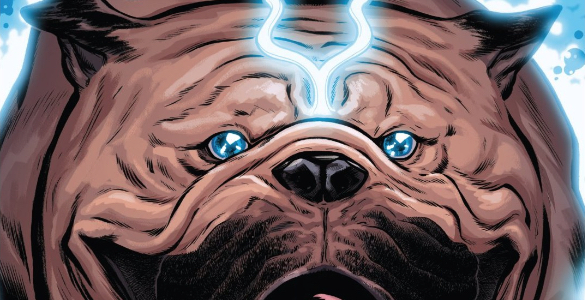
Taylor: Ancient wisdom states that you should never judge a book by it’s cover. We’re all familiar with this phrase and know that this metaphor extends far beyond assessing books by their cover art. Don’t judge people by the way they look and don’t assume a video game is good based on the franchise it hails from. Yet while I’m familiar with this sage advice, I often find it extremely hard to follow. Take Lockjaw 1, for example. It’s tempting to think this comic will be about its titular character, given his name splayed across the cover and the oversize likeness of this same dog. However, that’s not the case here, so how much you are inclined to judge a book by its cover might determine what you think of this issue. Continue reading

Mata Hari 1: Discussion

by Mark Mitchell and Patrick Ehlers

This article contains SPOILERS. If you haven’t read the issue yet, proceed at your own risk!

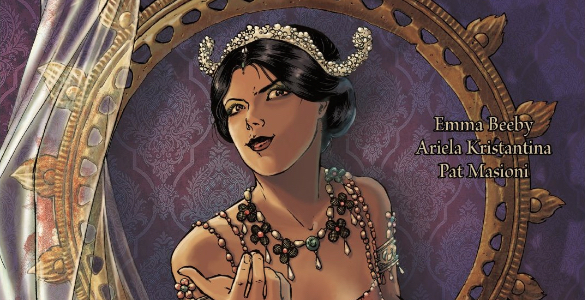
Mark: One of the corollaries to the Harvey Weinstein revelations and the #METOO and #TIMESUP movements is the healthy reexamination of other women in history who were victims, in one way or another, of systemic misogyny. Though they were produced before the movements began, last year’s Oscar nominated film I, Tonya makes the case for re-examining the way the media portrayed Tonya Harding — regardless of her guilt — and FX’s 2016 American Crime Story: The People vs OJ Simpson television series was a notably empathetic portrayal of lead prosecutor Marcia Clark. The point of these and other reexaminations isn’t to canonize these women, but to consider that the truth of their stories is more complicated than the convenient daytime talk show-like narratives that surround them.

Writer Emma Beeby calls out Harvey Weinstein by name in her author’s note at the end of Mata Hari 1, noting specifically that “now is the perfect moment to tell the story of what happens when women are without power.” Continue reading

Black Panther Annual 1: Discussion

by Drew Baumgartner and Ryan Desaulniers

Black Panther Annual 1

This article contains SPOILERS. If you haven’t read the issue yet, proceed at your own risk!

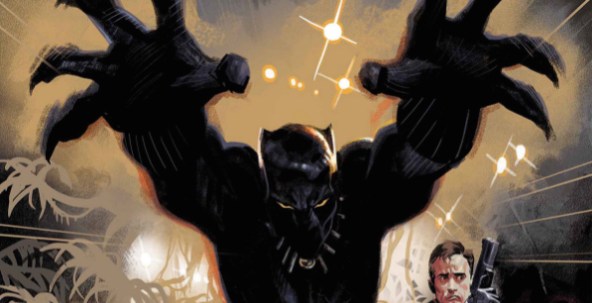
Drew: Over the past two weeks, countless articles have been written about the world-building in the Black Panther film. It’s obviously something the movie does remarkably well, combining a kind of anthropological survey of African culture with a sci-fi utopia for an Afrofuturist aesthetic that is unique in the world of blockbuster movies. Moreover, that world-building was essential in ingratiating a new audience to the character and his home country, implying a rich culture that stretched far beyond what we saw on the screen. Of course, superhero comics — especially long-running ones — are often more interested in what has already been built than they are in what is new, trading on our nostalgia for familiar events and characters in a way that a single film obviously can’t. There’s certainly a case to be made for honoring the storied history of any character in that way, though the approach may be at odds with appealing to newcomers (who may have been brought in by, say, a widely popular movie), all of which puts Black Panther Annual 1 in a difficult position. Is it aimed at newcomers looking for an approachable entry into comics after seeing the movie, or is it aimed at long-time readers who are already duly familiar with the character’s history? Continue reading

Doctor Strange: Damnation 1: Discussion

by Spencer Irwin and Taylor Anderson

This article contains SPOILERS. If you haven’t read the issue yet, proceed at your own risk!

Spencer: Since our audience has excellent taste, I’m going to assume that you’re all watching NBC’s The Good Place, right? Essentially a show about lost souls trying to earn their way into Heaven by becoming better people, one of the more interesting concepts percolating beneath the show’s surface is the idea that the rules dictating what afterlife you’re sent to are inherently flawed and unfair. It’s almost impossible to earn your way into the Good Place — only the most selfless and charitable of souls make it — leaving plenty of folks who led wholly mediocre lives (or whose greatest crimes were being born in Florida) facing an eternity of torture and punishment. I couldn’t help but think of this while reading Nick Spencer, Donny Cates, and Rod Reis’ Doctor Strange: Damnation 1, which finds the city of Las Vegas, the Avengers, and perhaps the entire world being judged by equally biased, unfair rules. Continue reading