Moonshine 7: Discussion

by Patrick Ehlers and Drew Baumgartner

This article contains SPOILERS. If you haven’t read the issue yet, proceed at your own risk!

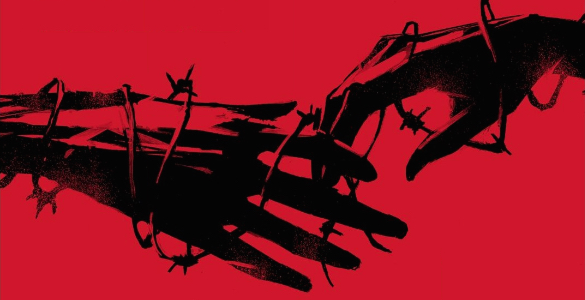
Patrick: On February 14th, a 19 year old former student opened fire on Marjory Stoneman Douglas High School. He killed 14 students and three teachers. The gunman had been expelled before completing school, and he bounced in and out of foster care. He suffered from depression, cut himself, frequented white supremacy websites, and actively posted about his desire to shoot up the school. When he was still a student, he wasn’t allowed to wear a backpack, because administrators feared he might bring something dangerous on the campus. On the day of the shooting, he was armed with an AR-15, which he had purchased legally. This shooting is a critical system failure. And that failure is necessarily the failure of the generation that came before both the shooter and his victims — the children punished for their parents’ crime of inaction. How does that happen? How does a generation obsessed with protecting their young end up harming them? Brian Azzarello and Eduardo Risso’s Moonshine 7  explores the devastating relationship between generations, staging acts of innocence and malice simultaneously. Continue reading
Doctor Strange 385: Discussion

by Patrick Ehlers and Michael DeLaney

This article contains SPOILERS. If you haven’t read the issue yet, proceed at your own risk!

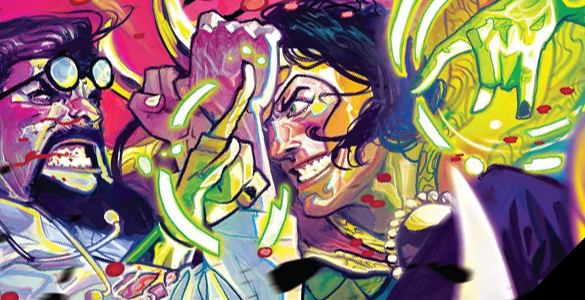
Patrick: Where does trust come from, narratively speaking? It’s almost a process of subtraction: audiences trust what they are presented with until they are given a reason not to. We’ll be dubious of anything a villain says because they demonstrate themselves to be dishonest, or greedy, or whatever it is that triggers our own feeling of moral superiority. Heroes are, of course, the opposite: we will trust them, even give them the benefit of the doubt when they make bad calls. Ultimately, we’re acting on our faith in narrative structure and we trust our hero to be in the right by the end of the story. Doctor Strange 385 twists our assumptions about right and wrong, about heroism and villainy without ever truly violating our expectations for Stephen Strange or Loki. Continue reading

New Super-Man and the Justice League of China 20: Discussion

by Spencer Irwin and Mark Mitchell

This article contains SPOILERS. If you haven’t read the issue yet, proceed at your own risk!

Spencer: There’s a common belief that kids raised in sheltered, restrictive environments will go absolutely wild at their very first taste of freedom. I don’t know if the truth is that extreme — I was about as sheltered as they came as a child, and all my rebellions have been rather tame — but there is a lot of truth to the idea that needless restrictions and censorship just hurt people, regressing emotions and hindering growth and in many cases leading to actual physical punishment for meaningless offenses. New Super-Man and the Justice League of China 20 taps into the latter when it introduces its new “Aquaman,” Ahn Kwang-Jo. Continue reading

X-Men Red 1: Discussion

by Spencer Irwin and Ryan Desaulniers

This article contains SPOILERS. If you haven’t read the issue yet, proceed at your own risk!

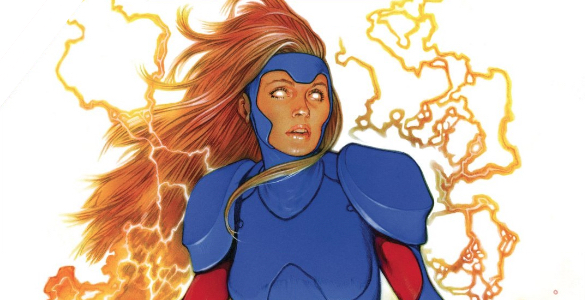
Spencer: What are the X-Men best known for? I’d honestly say that there’s two answers to this, because while thematically the X-Men are most often used to explore discrimination and social justice, in execution they’re just as well known for their unwieldy cast, soap opera dramatics, and byzantine continuity. I think what I like most about Tom Taylor and Mahmud Asrar’s debut issue of X-Men Red is how heavily it leans into that first aspect, while ignoring the latter almost entirely. There’s plenty of character within these pages, of course, but this is first-and-foremost a title with a mission and a message. Continue reading

Teenage Mutant Ninja Turtles Universe 19: Discussion

By Taylor Anderson and Drew Baumgartner

This article contains SPOILERS. If you haven’t read the issue yet, proceed at your own risk!

Ninja: noun \  nin·ja  \ ˈnin-jə \ a person trained in ancient Japanese martial arts and employed especially for espionage and assassinations

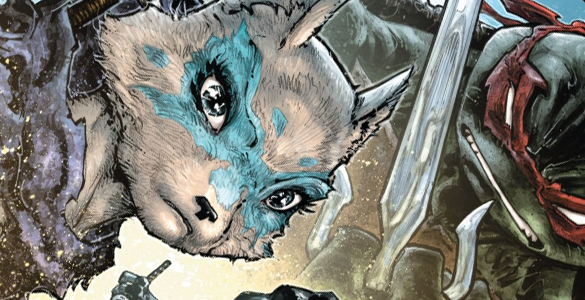
Taylor: After all the numerous battles the Teenage Mutant Ninja Turtles have been through, it’s become easy to forget one fourth of their namesake. No, it’s not that they’re teenagers — Raphael’s temper and Michelangelo’s lightheartedness remind us of that every issue. The part of their name that’s easy to forget, rather, is the “ninja.” Even though each turtle knows ninjitsu and uses shurikens, they frequently eschew one of the fundamental traits of being ninja — stealth — and this makes them more akin to warriors than ninja. So what happens when they’re called out on not being the thing they were trained to become since birth? Continue reading

Star Wars: The Last Jedi – DJ: Discussion

By Taylor Anderson and Ryan Mogge

This article contains SPOILERS. If you haven’t read the issue or watched The Last Jedi yet, proceed at your own risk!

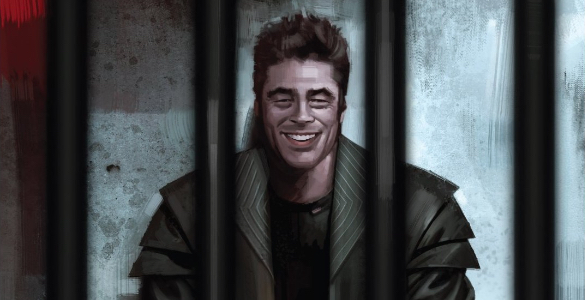
Taylor: Ever sense the Last Jedi came out about a month and a half ago, writer-director Rian Johnson has been on the interview circuit answering questions about the more controversial aspects of the movie. Many of these questions want Johnson to go into more detail about a specific aspect of the movie such as the origin of Rey’s parents or why Luke had a different haircut at the end of the movie (it’s true!). However, no one seems to be asking questions about one of the most enigmatic characters ever to grace a Star Wars script. DJ, the man who sold out the Resistance for a pile of credits, is shrouded in mystery yet no one seems to care. Maybe that’s because he plays a minor roll in the movie or maybe it’s because we learn all we need to know about him in his very own Star Wars comic. Continue reading

Motherlands 1: Discussion

by Mark Mitchell and Spencer Irwin

This article contains SPOILERS. If you haven’t read the issue yet, proceed at your own risk!

slim-banner

Mark: I grew up in a fairly regimented househould. That’s not a complaint, it instilled a lot of (to my mind) positive values in me, but it did definitely affect my worldview. My parents are deeply religious, and accordingly, their religion guides them to seek out things that have redeeming value. Growing up, this translated into strong feelings on what is and is not appropriate. To give you an example of where the line lay: The Simpsons? Not appropriate. When I reached a more rebellious age I began to watch, when I could, things I knew my parents didn’t approve of, but usually with one hand on the channel changer in case they happened to walk into the room. Of course, as I’ve grown older, I’ve determined for myself where the boundaries of good taste are tread, but from birth, a sense of good old fashioned Puritanical Shame has been instilled in me, and occasionally my palms still get a little sweaty when reading a smutty comic, like my parents are going to walk in on me at any moment.

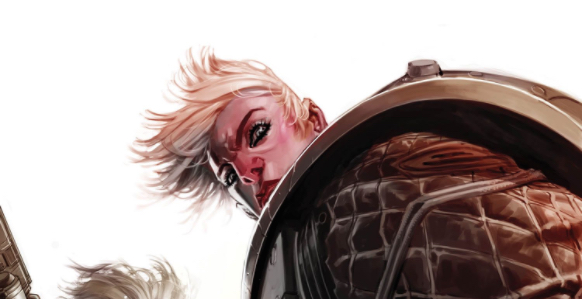
Simon Spurrier and Rachael Stott’s Motherlands 1 is smut — it’s shrill and pornographic and grotesquely violent — but it’s principled smut. Continue reading

Days of Hate 1: Discussion

by Ryan Desaulniers and Patrick Ehlers

This article contains SPOILERS. If you haven’t read the issue yet, proceed at your own risk!

Fom ancient grudge break to new mutiny,
Where civil blood makes civil hands unclean.

William Shakespeare, Romeo and Juliet

Ryan D:  The Capulets and Montagues. The Hatfields and the McCoys. The Shiite and the Sunni. These famous rivalries span generations, with their common point being that the reason which the fighting began has long since ceased to matter. The conflict now revolves around the most recent slight or atrocity perpetrated by the other side. In the aptly named Days of Hate, writer Ales Kot and artist Danijel Zezelj bring us a speculative world where our current political divide is seen played out to one natural conclusion in which the catalyst has been lost in four long years of partisan turmoil and war. Continue reading

Abbott 1: Discussion

by Patrick Ehlers and Mark Mitchell

This article contains SPOILERS. If you haven’t read the issue yet, proceed at your own risk!

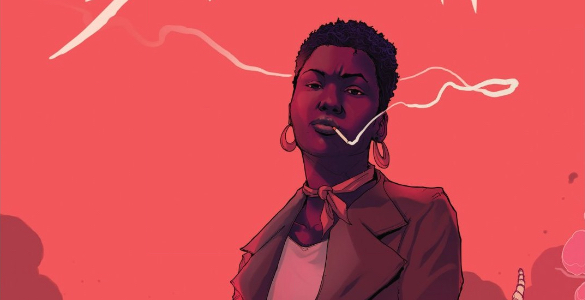
Patrick: I love the moment in every episode of X-Files or Buffy the Vampire Slayer where whatever otherworldly threat our heroes are facing reveals itself to be alarmingly similar to some current societal ill. Sometimes it comes late to the story, and it’s not until two episodes into a three-episode arc that you realize these demons are riffing on toxic masculinity. I suppose that’s been the M.O. for science- and genre-fiction forever: lure the reader in with the hook and then gradually reel them in to the message. Writer Saladin Ahmed and illustrator Sami Kivelä work that formula in reverse in Abbott 1. The setting, a racially divided Detroit in 1972, and the supernatural mystery are slowly collapsed into one cohesive experience. Continue reading

Mighty Thor 703: Discussion

by Taylor Anderson and Spencer Irwin

This article contains SPOILERS. If you haven’t read the issue yet, proceed at your own risk!

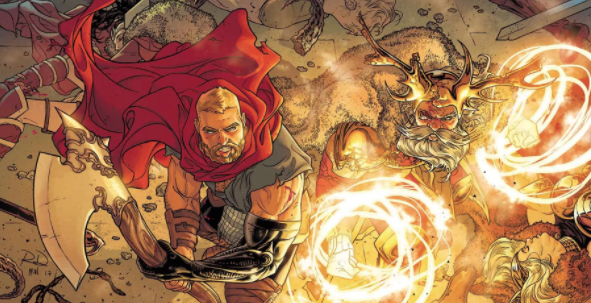
Taylor: One of the hardest lessons to learn growing up is that everything has a cost. This is a particularly difficult lesson to learn because when we’re young, things tend to not really cost all that much, if anything at all. It’s only once we become adults and begin to age that literally everything has some cost associated with it. Want to go out and drink all night? The cost is a hangover. Want to get a master’s degree? The cost is crippling student debt. Heck, even want to find love? The cost is putting in the time and effort to cultivate a meaningful relationship with someone. This isn’t to say that things aren’t worth their cost – love is a good example of something that more than pays for itself. However, the cost of things always has to be collected, as Jane and her friends learn in Mighty Thor 703.

Continue reading