Culminating Repercussions in Despicable Deadpool 296

by Drew Baumgartner

Deadpool 296

This article contains SPOILERS. If you haven’t read the issue yet, proceed at your own risk!

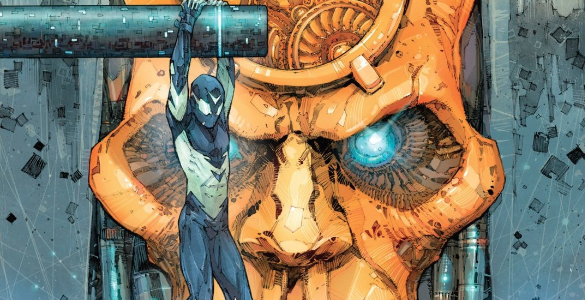
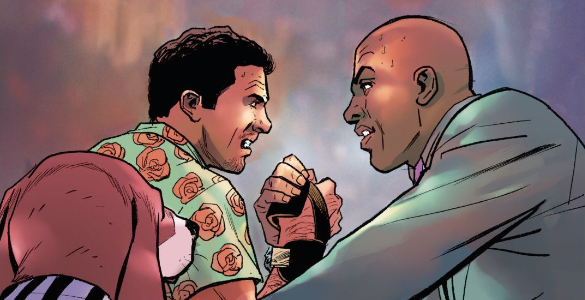
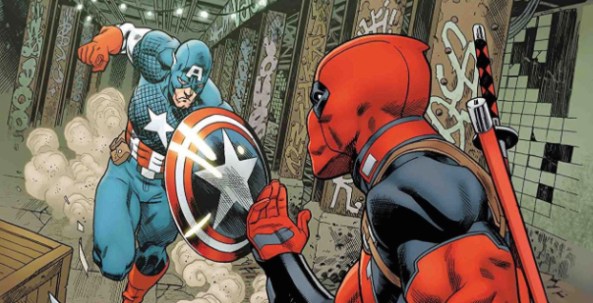
Are reverence and irreverence mutually exclusive? Linguistically, we might understand these words as opposites, but practically, we recognize that they coexist all around us. This is especially true in standup comedy, a field that both finds humor in what we take seriously and takes what we find funny very seriously. It’s no coincidence, then, that Gerry Duggan’s Deadpool run has had such a rich mix of reverence and irreverence, adopting some of the “sad clown” stylings of his comedic friends and collaborators, lending an otherwise goofy character real pathos. Indeed, one of the most distinctive features of Duggan’s work with this character was in crafting a tragic (but nonetheless joke-filled) backstory that could lend itself to reverence. With issue 296, Despicable Deadpool aims to cash in on much of that reverence, drawing on everything from Duggan’s earliest work with the character to some of his most recent. Continue reading

Dumbass Details in Sideways 2

By Patrick Ehlers

This article contains SPOILERS. If you haven’t read the issue yet, proceed at your own risk!

Last month, I praised Sideways 1’s hyper-specificity. Writers Dan DiDio and Justin Jordan crafted an excruciatingly detailed world for the would-be superhero Derek and his geek-culture-obsessed best friend Ernie. Artist Kenneth Rocafort dutifully filled the pages with visual details, whether painstakingly realizing the Gotham City skyline or Ernie’s shrine to cosplay and video games. The high I was feeling from that issue has all but evaporated during the second issue as the details began to feel awkward, forced, or generic. Continue reading

Strange Continues to Damn Himself in Doctor Strange 387

by Spencer Irwin

This article contains SPOILERS. If you haven’t read the issue yet, proceed at your own risk!

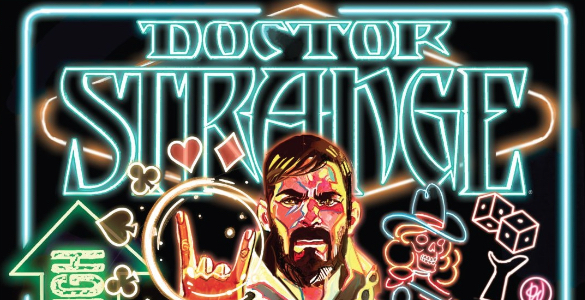
Spencer: Damnation is an appropriate title for this event in several ways. The entire city of Las Vegas was damned to Hell when it was destroyed during Secret Empire, and its revival has damned the soul of anyone who dares get near the city. Perhaps most significant, though — especially in the Doctor Strange tie-in issues — is the damnation the Sorcerer Supreme himself, Stephen Strange, faces. There’s the literal damnation courtesy of Mephisto, of course, but Donny Cates and Niko Henrichon seem much more interested in the self-damnation Strange has put himself through, the way he’s driven away his friends and allies, and the increasingly desperate and toxic ways he’s attempting to cope with this fact. Continue reading

Mister Miracle 7: Discussion

by Michael DeLaney and Drew Baumgartner 

This article contains SPOILERS. If you haven’t read the issue yet, proceed at your own risk!

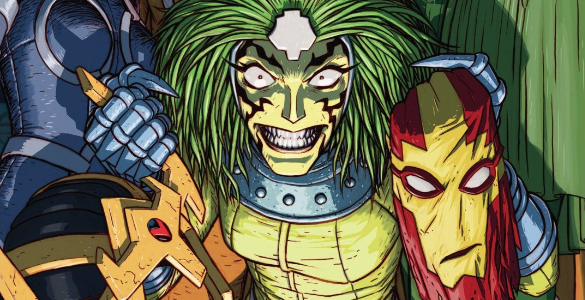
Michael: A “realistic approach” to comic book superheroes is sometimes successful (often with Batman comics). But most of the time, when you bind the mythic origins of superheroes to real world science and logic, you lose something from the original incarnation. However there’s a difference between a realistic approach and a serious approach to superheroes, like Tom King’s exploration of Jack Kirby’s Fourth World in Mister Miracle 7. This isn’t to say that King’s script is grim and humorless, but that he takes all aspects of Scott Free’s otherworldly life at face value, no matter how “silly” or “outrageous” they might sound in the context of the real world. Continue reading

Relishing Genre in Vampironica 1

by Drew Baumgartner

Vampironica 1

This article contains SPOILERS. If you haven’t read the issue yet, proceed at your own risk!

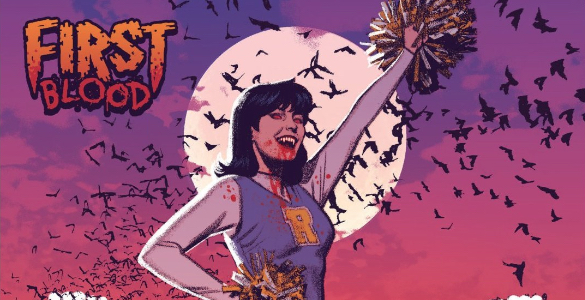
Stop me if you’ve heard this one before: a teenage girl battles (slays, if you will) vampires in her suburban hometown. The connections between Vampironica and Buffy the Vampire Slayer are myriad (honestly, if you asked me which takes place in “Sunnydale” and which in “Riverdale,” I’d get it wrong 50% of the time), but clearly intentional. Indeed, writers Meg and Greg Smallwood revel in the Buffy-ness of their opening, introducing Veronica Lodge as a vampire-slaying badass, bringing her own stakes to rescue some typically teen partygoers from some marauding ghouls. But there’s a twist (albeit one that features prominently on the cover and gives this series its name): Veronica is a vampire. Continue reading

All-New Wolverine 32 finds Catharsis in Revenge

by Drew Baumgartner

All-New Wolverine 32

This article contains SPOILERS. If you haven’t read the issue yet, proceed at your own risk!

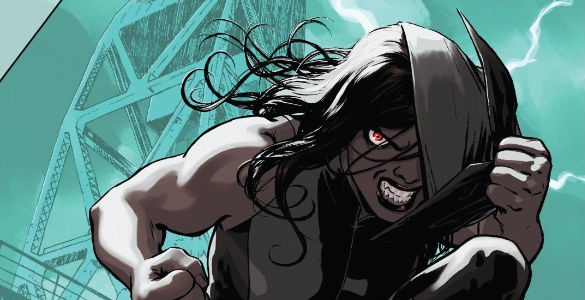
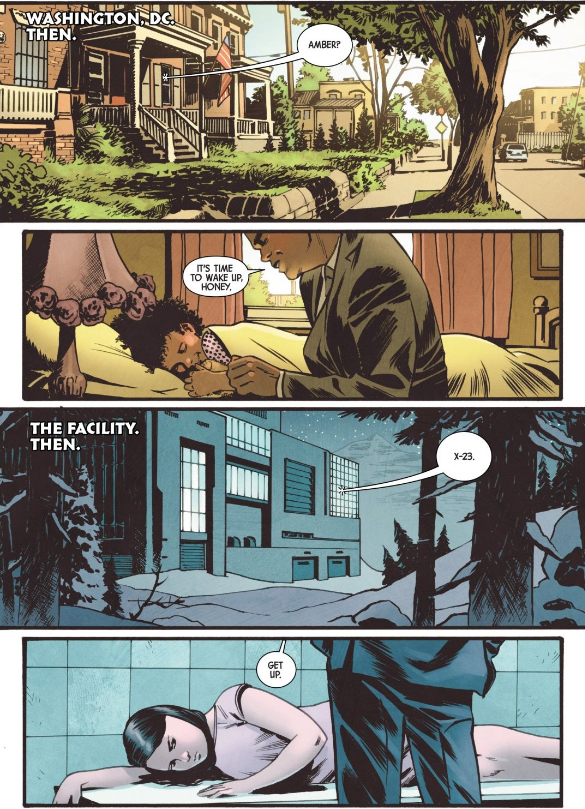
This issue opens with a heartbreaking flashback sequence chronicling the simultaneous loss of innocence for two young girls. One is Amber Griffen, whose father was killed at his first day on the job protecting a presidential candidate. The other is Laura Kinney, who was the assassin sent to kill that candidate (and anyone else within clawing distance). Years later, it’s easy to understand why these women would be enemies, but Tom Taylor and Djibril Morissette-Phan take care to demonstrate that Laura is every bit as victimized by these events as Amber, telling their stories in parallel to drive that point home.

Amber and Laura Continue reading

The Unbeatable Squirrel Girl 30: Discussion

by Taylor Anderson and Patrick Ehlers

This article contains SPOILERS. If you haven’t read the issue yet, proceed at your own risk!

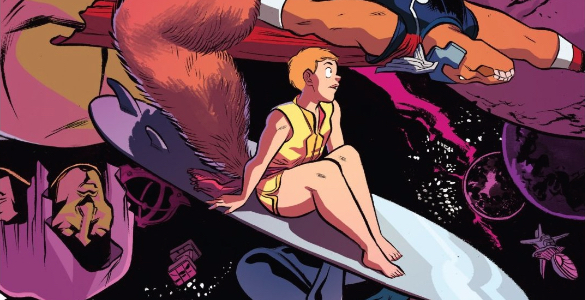
Taylor: A couple days ago, Erica Henderson announced on Twitter that she would be stepping away from artistic duties on the Unbeatable Squirrel Girl. For fans of the comic, particularly those who have been reading it from the beginning, this comes as crushing news, which is only moderately softened by knowing Henderson is stepping down of her own accord. While that makes the situation a bit easier to swallow it’s still is weird to consider a Squirrel Girl comic not drawn by Henderson. Luckily, there are still a few issues left to appreciate Henderson’s artwork and the 30th issue provides a great example of why she’ll be missed so much. Continue reading

The Dangers of the Unknown in Curse Words 12

By Spencer Irwin

This article contains SPOILERS. If you haven’t read the issue yet, proceed at your own risk!

What is magic? In many ways it’s the unknown — mere mortals attempting to wield power beyond their comprehension, attempting to control and contain vast, foreign energy. At the end of Charles Soule and Ryan Browne’s Curse Words 12 Margaret puts her total faith in magic, despite not knowing what effects it may have on her. Why? Because when you define something with infinite possibilities as “magic” that definition makes it trustworthy? Because she trusts the source of this particular magic (Wizord and Ruby Stitch?)? That idea of who and what you can trust, and what you know and what you don’t, is one that runs throughout this entire issue. Turns out not everyone trusts the unknown quite as much as Margaret does. Continue reading

Escalation and Coincidence in The Wild Storm 12

by Drew Baumgartner

Wild Storm 12

This article contains SPOILERS. If you haven’t read the issue yet, proceed at your own risk!

Towards the end of this issue, Jackie King dismisses the simultaneity of the attack on Hightower and IO’s own attack on Skywatch as “coincidental.” She’s not wrong, exactly — not only was the Hightower attack not retaliatory, it wasn’t even perpetrated by Skywatch — but she’s not quite right, either. In a series so fixated on cause and effect, there are no coincidences; these attacks may be separate bowling pins, but they were set in motion by the same ball. It’s a hell of an idea for us to get our heads around — especially when one of the most cunning characters makes clear she hasn’t quite internalized it yet — but it’s an attitude that Warren Ellis and Jon Davis-Hunt have woven into every panel of this series, creating a kind of fractal that keeps pointing to cause and effect. Continue reading

Grief is Messy in The Fix 11

By Patrick Ehlers

This article contains SPOILERS. If you haven’t read the issue yet, proceed at your own risk!

I know this is hypocritical immediately following a spoiler alert, but I don’t believe in spoilers. They’re something I respect because I know other people believe in them (like God), but the threat of a spoiler doesn’t change the articles I will read or the conversations I’ll have (huh, also like God). If a movie or tv show or book is so slight as to have the experience of it ruined by simply knowing what’s going to happen, it probably wasn’t worth experiencing in the first place. The Fix 11 starts with a seismic shift, fully acknowledging the trope that Nick Spencer and Steve Lieber are subverting for shock value. “Surprise” reads the narration box. But the surprise isn’t the point, the fall-out from the surprise is. Continue reading