Teenage Mutant Ninja Turtles Universe 15: Discussion

By Drew Baumgartner and Patrick Ehlers
Teenage Mutant Ninja Turtles Universe 15

This article contains SPOILERS. If you haven’t read the issue yet, proceed at your own risk!

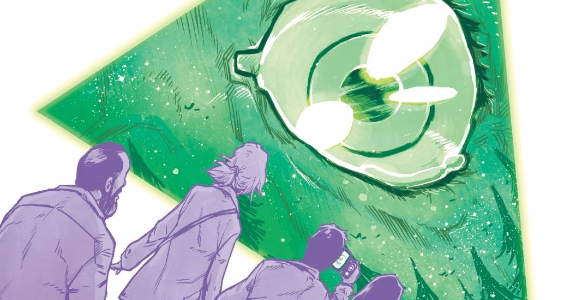
Drew: The Teenage Mutant Ninja Turtles have always been the perfect outcasts in a medium made for outcasts. Well, saying that comics were “made” for outcasts isn’t entirely accurate, but it certainly had become a medium for outcasts — at least in the US — by the time the turtles were invented in the 1980s. We don’t really need to get into the causality of why comics fandom was perceived as a weird thing — the point is that it was. And in the age before the internet, someone with a “weird” hobby or enthusiasm for some obscure piece of pop culture might not know anyone else like themselves. While the rest of the world could connect over their religion, political party, or even local sports team, the average comics reader in 1984 might not have had anyone they knew who shared their interest. I don’t bring this up to pity the lot of the poor comics fan — heaven knows plenty of people were more isolated and actively persecuted — just to say that themes of not fitting in have always been an essential part of the TMNT makeup. This is a point that Erik Burnham and Sophie Campbell clearly understand, as their Teenage Mutant Ninja Turtles Universe finds several characters seeking their place in the world. Continue reading

Killing Hope in Daredevil 27

by Drew Baumgartner

Daredevil 27

This article contains SPOILERS. If you haven’t read the issue yet, proceed at your own risk!

When you walk through the garden
You gotta watch your back.
Well I beg your pardon
Walk the straight and narrow track.
If you walk with Jesus
He’s gonna save your soul.
You gotta keep the devil
Way down in the hole.

Tom Waits, Way Down in the Hole

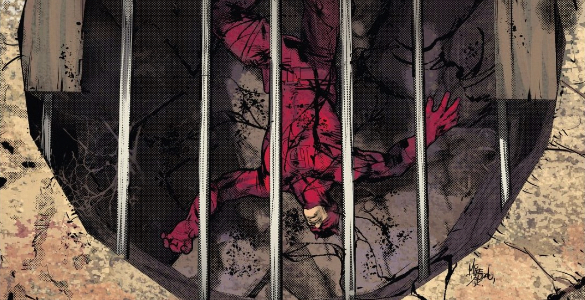
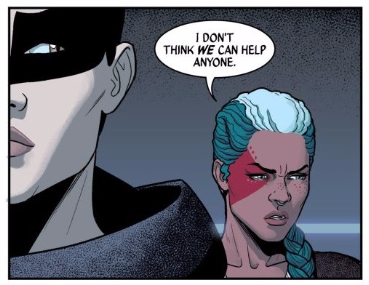
There are plenty of great morals to learn from The Wire, but one that left the biggest impression on me is the thought that many Americans simply don’t have access to the American Dream. Each successive series does a great job of detailing why both policing and education fail to end the drug trade, why politics fail to fix the police or the schools, and why the press fails to fix politics. It’s a disheartening lesson to learn, for sure, but it’s one we must reconcile with before we can mount any meaningful solutions. Unfortunately, many American’s are still too enamored of the old narrative of the American Dream — the kind represented by Matt Murdock’s “orphaned fighter’s son to high-powered attorney” origin — to accept that not everyone has access to that dream. Continue reading

Rhetoric Paints the Picture in Rocket 6

by Patrick Ehlers

This article contains SPOILERS. If you haven’t read the issue yet, proceed at your own risk!

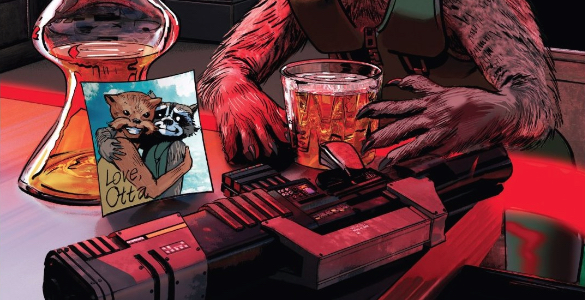
Rocket is an amazing series. Adam Gorham’s artwork is evocative, gritty and ambitious in a way that is simultaneously grounded and totally off the wall. There’s also the novelty of the persistent gutter narration, lending the whole thing a literary noire vibe that seldom makes its way into such a strongly visual medium. One aspect of this series I’ve seldom found an opportunity to praise is the rhetorical strength of Al Ewing’s writing. The story itself is compelling, but I’m referring to the moment-to-moment use of language and how Ewing uses tonal shifts, word play, and rhetorical flourishes to illustrate Rocket’s emotional journey. And this issue takes us on one hell of a journey. Continue reading

Jor-El and Superman Can’t Back Down From Their Convictions in Action Comics 989

by Spencer Irwin


This article contains SPOILERS. If you haven’t read the issue yet, proceed at your own risk!

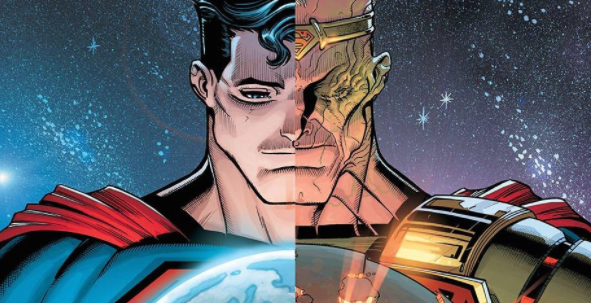
For simplicity’s sake, comics tend to paint large groups or alien races with a broad cultural brush (“On Tamaran we all follow our hearts and live by our emotions!”), but in reality, entire races or civilizations can’t be that simply summed up. In all honesty, Superman claiming that humanity are better than their base instincts is just as ridiculous as Jor-El saying that humanity are no better than their base instincts — both are trying to sum up six billion people with one easy label that will never be applicable to them all. Both have made a choice to see humanity in a way that reaffirms their worldview.  Continue reading

Mister Miracle 3: Discussion

by Mark Mitchell and Michael DeLaney

This article containers SPOILERS. If you haven’t read the issue yet, proceed at your own risk!

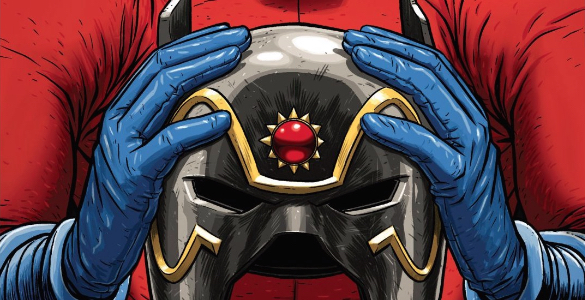
Mark: How I feel about Mister Miracle 3 will ultimately depend on how the remaining 9 issues pan out, and if Tom King and Mitch Gerads are able to stick their landing. In isolation, I’m grossed out by King invoking the Holocaust and the genocide of more than 6 millions Jews in Nazi Germany not once, but twice, in this issue. The Holocaust is one of the modern era’s most visceral examples of mankind’s cruelty towards mankind, and as such it has become shorthand in media for “A Very Bad Thing.” Comparing fictional events to the Holocaust is cheap and easy, and doing so runs the risk of devaluing the real-life horrors experienced by real people and perpetrated by their fellow men.

Continue reading

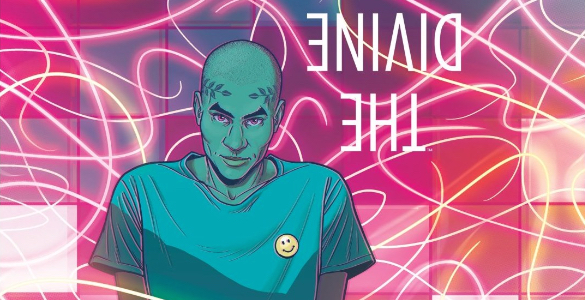
The Futility of Action in The Wicked + The Divine 32

by Spencer Irwin

The Wicked + The Divine 32

This article contains SPOILERS. If you haven’t read the issue yet, proceed at your own risk!

Something Amateratsu said way back in the first issue of The Wicked + The Divine has always stuck with me — she said that the Pantheon exist to inspire. This implies that their direct ability to change the world, for better or for worse, is limited; like most creators and performers, their true strength is (or at least should be) their ability to move others through their art. This seems an especially significant point to keep in mind while reading issue 32, which finds the futility in all of its characters’ attempts at grand gestures or plans — but especially Dionysus’. Continue reading

Gwenpool Trades Genre for Medium in Gwenpool 21

by Patrick Ehlers

This article contains SPOILERS. If you haven’t read the issue yet, proceed at your own risk!

This may be the first time in my life where I’m reading a superhero who is as obsessed with the gutter as I am. Since discovering that she can manipulate the physical space of the comic book page, Gwen no longer needs to rely on her knowledge of story tropes to defeat her enemies. Gwen is on something of a fan’s journey here, discovering that her real power (read: her real fandom) lies not in the genre but in the medium. Gwen’s no longer a fan of superhero stories, but a fan of of comics. Continue reading

Parker Luck Returns in The Amazing Spider-Man 789

by Drew Baumgartner

Amazing Spider-Man 789

This article contains SPOILERS. If you haven’t read the issue yet, proceed at your own risk!

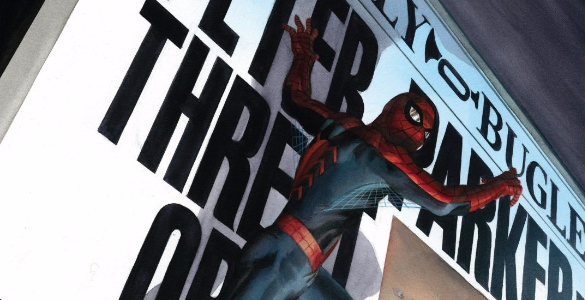
Here’s a question: What would you say is the platonic public perception of Spider-Man in the Marvel Universe? Never mind the exceptional circumstances of specific story arcs, do we imagine in general that the public sees Spider-Man as a hero, or do we think J. Jonah Jameson’s one-man crusade against him has influenced public opinion? I suppose I’ve always seen him as misunderstood by the general public, but his interactions with individual New Yorkers always seemed positive — there’s not a whole lot of ambiguity when you see him rescuing babies from burning buildings. Maybe it speaks to just how street-level Spider-Man has traditionally been that his sphere of personal influence would be small, but it sure seems like the citizens of Spider-Man’s New York are on the whole easily swayed by the media they consume. That’s probably an evergreen theme, but it’s one that feels particularly relevant in our modern political climate, and one that comes back in a decidedly unexpected way in Amazing Spider-Man 789. Continue reading

Doreen Inspires Good Once Again in The Unbeatable Squirrel Girl 25

by Taylor Anderson

This article contains SPOILERS. If you haven’t read the issue yet, proceed at your own risk!

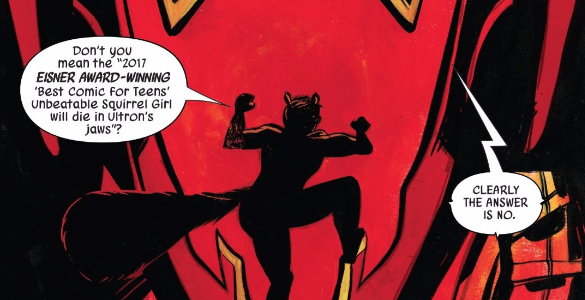
There are some superheroes who are more good than others. Superman and Captain America are your prototypical heroes who have the reputations for always doing the “right thing.” Other heroes are more nebulous when it comes to how they carry out their heroing. The Punisher, for example kills people, and while Batman isn’t that extreme, he operates in the shadows in more ways than one. If you had to peg Doreen Green into one of these two pigeonholes, she would definitely fall in the former, and while that predictability risks being boring, with The Unbeatable Squirrel Girl, it never is. Continue reading

The Woods 36: Discussion

by Spencer Irwin and Drew Baumgartner

This article contains SPOILERS. If you haven’t read the issue yet, proceed at your own risk!

Spencer: Drew and I had the immense pleasure of chatting with The Woods artist Michael Dialynas at New York Comic Con a few weeks ago, and early in our conversation Dialynas caught me off guard by asking me how I wanted The Woods to wrap up. I like endings, and I like endings that surprise me, but I’ve also been following these characters for over three years now, so I answered, “Well, I just want a happy ending for everyone. Especially Isaac.” Dialynas proceeded to sign my comic with the words “I’m so sorry.”

Final issues are always about wrapping things up for beloved characters, but after that conversation, I especially approached The Woods 36 trying to figure out what kind of life each character could possibly live going forward. What kind of futures have Dialynas and writer James Tynion IV granted their creations?  Continue reading