How Lettering Sells the Loss in Deadpool 34

by Patrick Ehlers

This article contains SPOILERS. If you haven’t read the issue yet, proceed at your own risk!

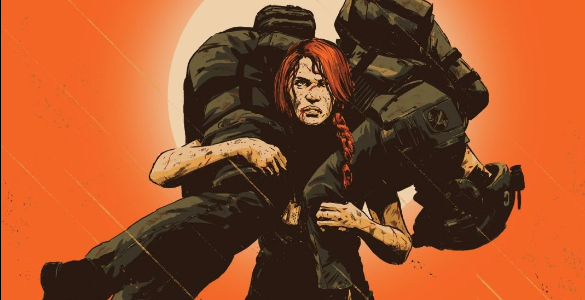
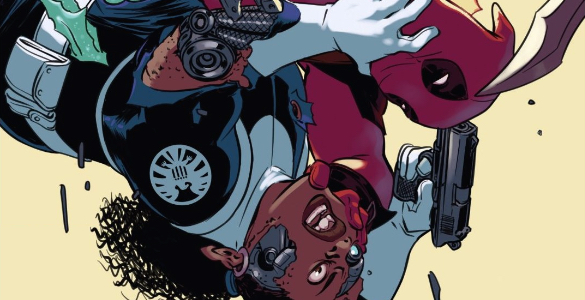
Comic book creators have so many tools at their disposal for exploring sadness. There’s the acting of the characters, the framing of a panel, setting, color and even dialogue if it comes down to it. Throughout their run with The Merc With the Mouth, writer Gerry Duggan and artist Matteo Lolli have utilized every one of these tools to convey the extreme despair at the center of Wade’s life, and his climatic battle with Preston is no exception. The sky turns red, and all other color disappears, in the abandoned town of Pleasant Hill, setting a strong emotional tone for the battle. The previous issue saw Preston turning off her emotions (literally — she’s a robot and can just mute those things), but Lolli’s insistence on her steely visage actually ends up communicating more about the fatalism driving Wade’s fall from grace. Continue reading
Teenage Mutant Ninja Turtles Usagi Yojimbo 1: Discussion

by Patrick Ehlers and Spencer Irwin

This article contains SPOILERS. If you haven’t read the issue yet, proceed at your own risk!

I grew up in Europe — where the history comes from. Oh yeah. You tear your history down man: “30 years old? Let’s tear it down and build a car park here.” I have seen it in stories — I saw a program on something in Miami. They said “we’ve redecorated this building to how it looked over 50 years ago!” People going: “No! Surely not, no! No one was alive then!”

Eddie Izzard, Dressed To Kill

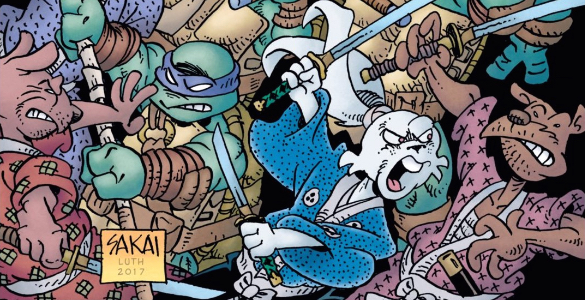
Patrick: One of the things we here at Retcon Punch find so impressive about IDW’s run with the Ninja Turtle series is the storytelling team’s commitment to remixing, recontextualizing, and reimagining the franchise’s immense history. Tom Waltz, Bobby Curnow, Kevin Eastman and a murders row of artists and writers have been pulling in influences from over thirty years of comics, TV shows, movies, video games, action figures, music videos, stage shows — you name it. It’s an impressive feat, but is also an exercise that rings weirdly hollow when compared to what Stan Sakai has always done with Usagi Yojimbo. The Long-Eared Samurai has been the protagonist in remixed stories from Japanese folklore for decades — literally as long as the TMNT have been around. With this latest crossover, Sakai again proves he is the king of narrative remix, reaching back way further than 1984 for his source material. Continue reading

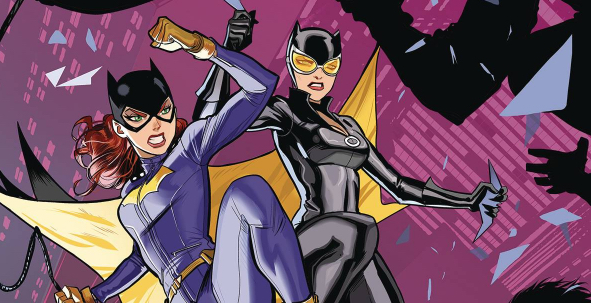
Embracing Camp in Batgirl 13

by Mark Mitchell

This article contains SPOILERS. If you haven’t read the issue yet, read on at your own risk!

At what point does something become appreciated for its camp value? Tango and Cash is a terrible late-80’s buddy cop comedy starring Sylvester Stallone and Kurt Russell that was released to terrible reviews, but watching it now, one can’t help but appreciate just how surgically terrible it is — a concentrated dose of the cliches of the era, heightened to impossible extremes. A flop when it released in 1989, time has transformed it into an endlessly watchable cheesefest. Continue reading

The Negative Speed Force Only Muddles the Flash 27

by Spencer Irwin

This article will contain SPOILERS. If you haven’t read the issue yet, proceed at your own risk!

The “emo Peter Parker” from Spider-Man 3 gets a lot of well-deserved flack, but it’s always bugged me when people complain about that being the “evil” version of Peter. No, that’s not how the symbiote works — it doesn’t turn people evil, it frees them from their inhibitions and reveals who they truly are inside, something established in the comics, and at least implied in the movie. The result, in Peter’s case, may be dumb, but at least it’s consistent with how the symbiote works. I wish I could say the same about Eobard Thawne’s Negative Speed Force, because I have no idea what in the world that thing does. Continue reading

Prioritizing Responsibilities in Peter Parker: The Spectacular Spider-Man 2

by Drew Baumgartner

Peter Parker The Spectacular Spider-Man 2

This article contains SPOILERS. If you haven’t read the issue yet, proceed at your own risk!

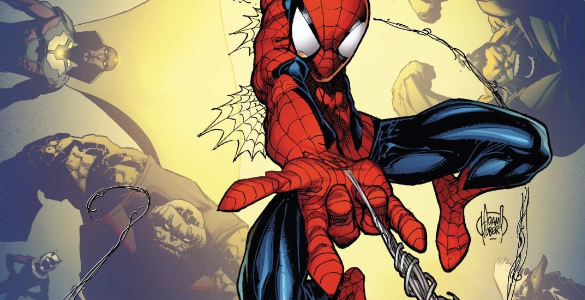
It’s always easy to score political points against the president by suggesting they’re spending too much time relaxing. Folks of every political persuasion have made this argument at some point or another, and it always sounds reasonable because the President obviously has more important things to be doing. With great power, as the saying goes, must also come great responsibility. But of course, even Presidents are people, and while we should certainly hold them to a high standard in terms of workload (that it’s a stressful job is part of the job description), expecting them to never take a vacation is inhumane. This is a point Peter Parker has always fluctuated on. He obviously respects the responsibilities that come with his powers, but he’d also like to be a human being with a fulfilling professional and personal life. Usually, that means he’s constantly running out on dates or jobs to save the day, but Chip Zdarksy and Adam Kubert find a decidedly different approach in Peter Parker: The Spectacular Spider-Man 2. Continue reading

“Preachy” Doesn’t Mean “Bad” in Superman 27

by Spencer Irwin

This article contains SPOILERS. If you haven’t read the issue yet, proceed at your own risk!

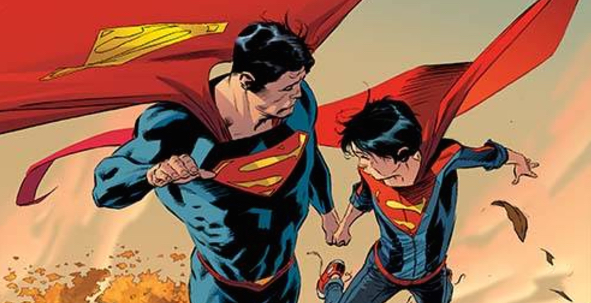
“Preachy” is one of those words that I, as both a critic and a human being, hate using. Almost every narrative preaches in one way or another, meaning that the word largely ends up being used, much like “agenda” or “pandering,” only to describe concepts the speaker can’t stand. Yet, I can’t find a better word to describe Superman 27 than “preachy” — I mean, Lois and Clark spend the majority of the issue stating their beliefs almost directly to the reader in language that sounds straight from a dictionary, eliciting several eye-rolls from me. Thankfully, this doesn’t lead to the issue’s doom. In fact, it still succeeds because of three reasons. Continue reading

Action is Character in Teenage Mutant Ninja Turtles Universe 12

by Patrick Ehlers

This article contains SPOILERS. If you haven’t read the issue yet, proceed at your own risk!

For a character we’ve been hanging out with for like 60 issues, we don’t know an awful lot about Karai. She is the fiercely loyal Chunin of Oroku Saki’s Foot Clan, solely responsible for both the clan and its leader coming back to life in the 21st century. She’s a character of constant struggle, and she has an adversarial relationship with everyone. Erik Burnham and Sophie Campbell’s first chapter in Karai’s post-New York saga starts with circumstantial violence, and escalates it into meaningful scheming and action — and Karai is the merciless engine behind all of it. Continue reading

The Power of Friendship (and smoke) in Daredevil 24

by Michael DeLaney

This article contains SPOILERS. If you haven’t read the issue yet, proceed at your own risk!

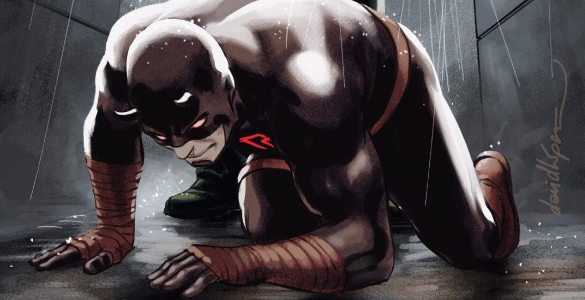
How long can you stay mad at your best friend? In the case of Matt Murdock and Foggy Nelson, it took about 20+ issues. In Daredevil 24 Charles Soule and Alec Morgan finally begin to mend their broken relationship as Matt continues his grand quest to “legalize superheroing.” That, and pick on poor Tombstone. Continue reading

The Spectacular Status Quo in Godshaper 4

by Ryan Desaulniers

This article will contain SPOILERS. If you haven’t read the issue yet, proceed at your own risk!

Godshaper weaves a tale of discrimination with gorgeous parallels to our current day within a new universe. Period. While parallels exist here between the “Dark Materials” series, the comic lives in its own plane, dealing with social issues in a novel, resonating way. While issue four does not break down any new walls in this series, the base-line for this comic is so consistent and lovely and revealing that I don’t even mind. Continue reading

Lazarus X+66 1: Discussion

By Drew Baumgartner and Ryan Desaulniers

Lazarus X+66 1

This article contains SPOILERS. If you haven’t read the issue yet, proceed at your own risk!

Some are born great, some achieve greatness, and some have greatness thrust upon ’em.

William Shakespeare, Twelfth Night

Drew: This quote often comes up when discussing historical figures, but to my eye, it’s really all about the narratives we build around people. That is, this describes fictional heroes — from “chosen ones” destined for greatness to utterly reluctant nobodies that rise to the occasion — stories so familiar to us, we can’t help but project them on the world around us. But, like, what does it mean to be “born great,” and how do we distinguish that from someone having greatness thrust upon them? Those kinds of distinctions might make sense in stories where deities and magic put concepts like destiny in play, but the real world is much messier than that. Such is the case with Casey Solomon, whose greatness is anticipated by Forever Carlyle. Is her greatness inborn, or is it something she only achieved in order to live up to expectations? Continue reading