Man of Steel 2: Discussion

by Michael DeLaney and Drew Baumgartner

This article contains SPOILERS. If you haven’t read the issue yet, proceed at your own risk!

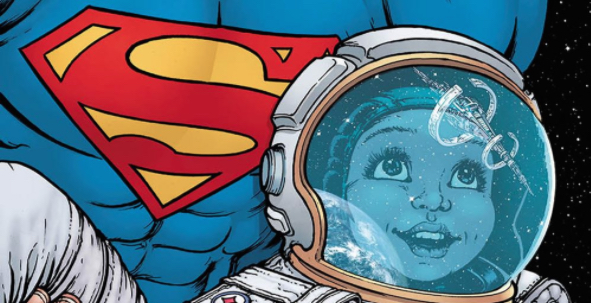
Michael: Batman is a subject that frequents many pages of my sketchbooks and I assume everyone else’s.  Unlike the versatile Batman, I find that Superman is a harder character to draw, especially in his facial features. The face of Superman has to simultaneously convey strength, joy and a decent amount of charm. Thus far, I am enjoying Brian Michael Bendis’ depiction of Superman, and in Man of Steel 2, he is joined by 3 artists who tap into that Clark Kent Charm. Continue reading

Justice League: No Justice 4: Discussion

by Drew Baumgartner and Spencer Irwin
Justice League No Justice 4

This article contains SPOILERS. If you haven’t read the issue yet, proceed at your own risk!

Everything changes here!

Comics solicit, traditional

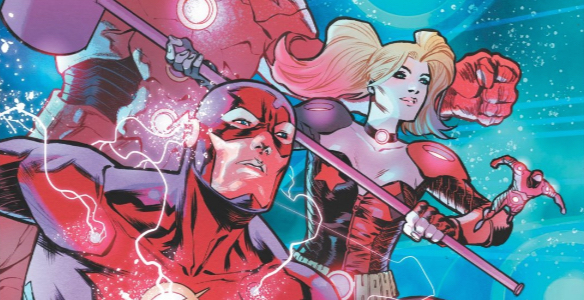
Drew: Okay, that epigraph is maybe too cute by half, but seriously, what does it mean for “everything” to change? The closest parallel I can draw to real life is the conventional wisdom that “a baby changes everything,” but even then, we understand “everything” to be decidedly limited in its scope. Certain events might be life-changing, but only for those with some connection to said events. And yet: comics. Big crossover events are promoted with the promise that the events with change “everything,” and while we might understand “everything” to be limited to the folks involved (in the same way that it is for a birth), there’s also tons of details we might assume exempt from “everything,” from the laws of physics to the peculiarities of english grammar — some things never change. Even so: some comics events are bigger than others, so there’s a range of just what “everything” means. Maybe it’s interpersonal dynamics of the superheroes involved, maybe it’s the principles of the universe as we know it. In its finale, Justice League: No Justice reveals that it falls almost entirely into that latter category, sending the DC Universe into decidedly uncharted territory. Continue reading

The Timeline Skews in Batman 45

By Drew Baumgartner

Batman 45

This article contains SPOILERS. If you haven’t read the issue yet, proceed at your own risk!

Here’s the present, 1985, the future, and the past. Prior to this point in time, somewhere in the past…the time line skewed into this tangent…creating an alternate 1985. Alternate to you, me, and Einstein…but reality for everyone else.

Doc Brown, Back to the Future Part II

We’re all familiar enough with the notion of alternate timelines and the butterfly effect by this point that any reasonable time-traveler would have to fear ever changing past events — indeed, it’s a sci-fi concept so ubiquitous, even Abe Simpson thought to offer Homer a warning about it on his wedding day. And yet, we still like to imagine “what if” scenarios about making different decisions in only our own pasts, but those of fictional characters. The most well-known “what if” story in superhero comics might well be “For the Man Who Has Everything,” Alan Moore and Dave Gibbon’s clever parable about fantasy wish fulfillment. Superman’s fantasy necessarily focuses on his own experiences on a non-exploded Krypton, but the absence of Superman would obviously have profound effects back on Earth. That is, there are butterfly effects in that fantasy timeline we never see, that a Krypton-based Kal-El wouldn’t even know about. Cleverly, Tom King and Tony Daniel open on the butterfly effects of their alternate timeline in Batman 45 before circling back to explain how and why this alternate timeline was created in the first place. Continue reading

Dark Nights: Metal 6: Discussion

by Spencer Irwin and Mark Mitchell 

This article contains SPOILERS. If you haven’t read the issue yet, proceed at your own risk!

slim-banner

Spencer: Now that the series has come to an end, I can safely say that I have very mixed feelings about Dark Nights: Metal as a whole. So much of this event has been about embracing gonzo, bonkers, throwback action, but much of that fun is buried under attempts to overexplain every aspect of the (often impossible to follow) plot. The stakes of the event never fully sank in for me, as aside from artist Greg Capullo’s hellish landscapes, most of the nightmarish aspects of the Dark Multiverse were buried away in tie-in issues, while the main series focused on fun, but straightforward action beats. That said, there were a few areas where this series shined, and Dark Nights: Metal 6 exemplifies them all. It’s a strong metaphor for embracing hope and community over nihilism and isolation, a powerful reminder of stories’ ability to inspire, and an ode to the past (and future) of the DC Universe. Continue reading

Form Trumps Myth in Hal Jordan and the Green Lantern Corps 37

By Patrick Ehlers

This article contains SPOILERS. If you haven’t read the issue yet, proceed at your own risk!

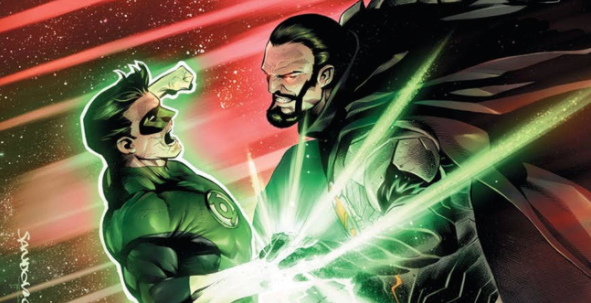
My Green Lantern fandom often feels like a relic from a time before I truly understood what I loved about comics. I love the limits of the medium — the way an artist has to imply light and sound and movement and time all on a still page which literally possesses none of these qualities. So much of a comic story, for me, is in how it is told, rather than what it’s telling. But Green Lantern is a myth-making franchise, and the moment-to-moment storytelling can often be measured by the twists and connections it makes to its own winding history. Hal Jordan and the Green Lantern Corps 37 eschews that entirely, pulling one of Superman’s Big Bads into the ring for some refreshingly innovative visual storytelling. Continue reading

The Big Brother of Steel in Superman 39

By Michael DeLaney

This article contains SPOILERS. If you haven’t read the issue yet, proceed at your own risk!

With DC’s recent announcement that The Man of Steel will be regaining his red trunks, it looks like they’re embracing the the classic Superman of yore. Another example is Superman 39, which centers around Superman spending the day with young cancer patients. If that’s not golden age wholesome, then I don’t know what is. Continue reading

The Guardians Frustrate in Hal Jordan and the Green Lantern Corps 35

by Mark Mitchell

Hal Jordan and the Green Lantern Corps 35

This article contains SPOILERS. If you haven’t read the issue yet, proceed at your own risk!

Through no fault of Hal Jordan and the Green Lantern Corps 35’s writer, Robert Venditti, the Guardians are deeply uninteresting characters. Supposedly supremely wise, they mostly manage to make Hal Jordan seem brilliant by comparison. Supposedly extremely powerful, their existence seems to be threatened with frightening regularity. All of this on top of the fact that they’re frankly unpleasant to look at, especially the more human they’re rendered. Continue reading

Green Lanterns 37 is a Clumsy Parable

by Patrick Ehlers

This article contains SPOILERS. If you haven’t read the issue yet, proceed at your own risk!

“I conducted my own investigation because no one listens to me. I got away with it because no one looks at me. Because, unless I have your reports, your coffee or your lunch, I’m invisible.”

Peggy Carter, Agent Carter

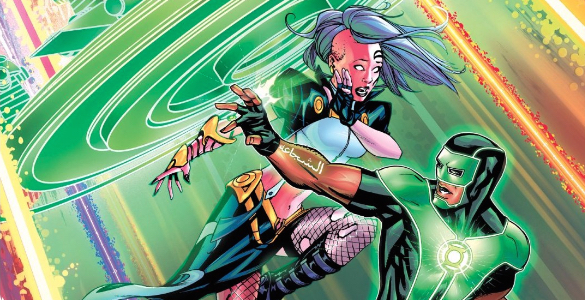
Patrick: Part of what I love about the short-lived Agent Carter television series is that, when it wants to, it can be thuddingly obvious about its themes and values. Peggy is a bad-ass super-spy often overlooked — or worse, taken advantage of — because she is a woman in the 1950s. The show loves putting these blatant statements of gender theory in Peggy’s mouth, but only once the show itself has actually demonstrated what she’s describing. It makes for an exhilarating story that embodies complicated values: having fun and having something to say at the same time. Green Lanterns 37 has an awful lot to say, but has not quite mastered how to have fun saying it. Continue reading

Differences Unite, But Also Divide, in Hal Jordan and the Green Lantern Corps 34

by Spencer Irwin

This article contains SPOILERS. If you haven’t read the issue yet, proceed at your own risk!

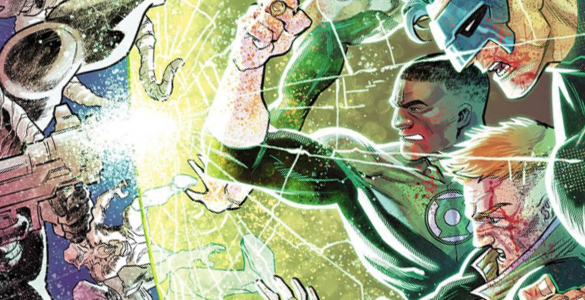
There’s no point in having a team book if all the characters are exactly the same. Differences create tension and provide variety — the differences in opinion and methods between the various Green Lanterns, especially the four core Earth Lanterns, is the engine that makes Hal Jordan and the Green Lantern Corps run. They’re especially prevalent in issue 34, an installment that doesn’t just dive into the differences that define Hal, John, Guy, and Kyle, but that divide the Guardians and the Controllers as well. Continue reading

Green Lanterns 34: Discussion

by Michael DeLaney and Mark Mitchell

This article contains SPOILERS. If you haven’t read the issue yet, proceed at your own risk!

slim-banner

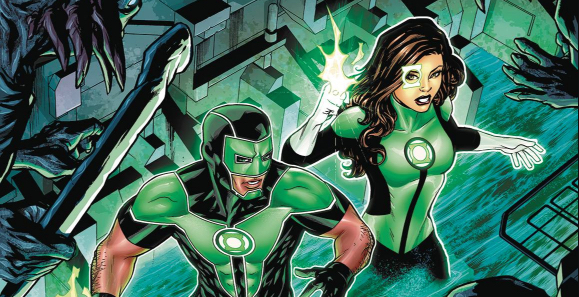
Michael: Sam Humphries has passed the Green Lanterns torch but the flame still burns strong. Green Lanterns 34 marks Tim Seeley’s second issue with Simon Baz and Jessica Cruz and explores how hard it is to maintain a steady job while you’re on call to save the universe 24/7. More importantly, it highlights the ugly truth that no matter how heroic you are, if you’re brown in America you’re still seen as second-class citizens. Continue reading