Serviceable is Not Enough in Avengers 3

by Spencer Irwin

This article contains SPOILERS. If you haven’t read the issue yet, proceed at your own risk!

I’ve been reading, collecting, and following weekly American comics for well over a decade now, and I’ve watched not only the industry grow, but my own tastes as well; the type of standard, “heroes beat villain and saves the world” stories that were once exciting have become a bit routine. That’s not to say that there isn’t room for these kind of stories within the industry, but they need a little something special to stand out and really feel worth investing in, and unfortunately, I haven’t found that spark yet in Jason Aaron and Ed McGuinness’ run on Avengers. Continue reading
Reaching a Fever Pitch in The Wild Storm 14

by Drew Baumgartner

Wild Storm 13

This article contains SPOILERS. If you haven’t read the issue yet, proceed at your own risk!

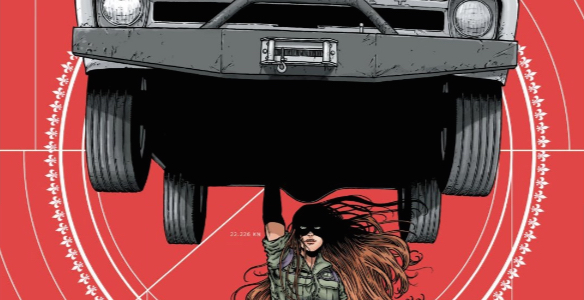
I’ve spent plenty of write-ups of The Wild Storm praising Jon Davis-Hunt’s diagrammatic approach to action AND connecting that aesthetic to the interconnected world Warren Ellis is crafting. It’s a remarkably unified vision that has the power to keep even the wordiest talking-head pages engaging (though admittedly, I tend to use big action sequences to illustrate its efficacy). And to be sure, there are definitely some talking-head sequences in this issue, but as the central conflict between Skywatch and IO heats up, the slow simmer that defined the first year of this series is quickly becoming a rolling boil, meaning pretty much every scene is going to feature some action, too. Continue reading

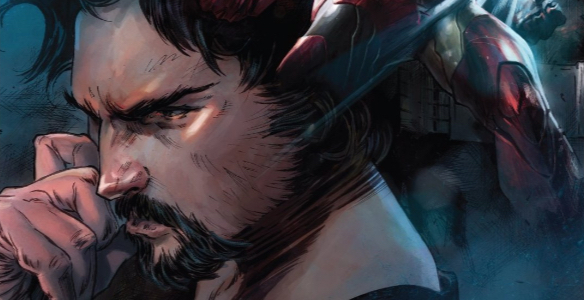
Tony is the Team in Tony Stark Iron Man 1

by Patrick Ehlers

This article contains SPOILERS. If you haven’t read the issue yet, proceed at your own risk!

There’s no “i” in “team”.

Traditional

Tony Stark is a selfish jerk. It’s one of the things we like best about him! But there’s no denying that his success as Iron Man is contingent on the hard, capable work of thousands of employees, and countless robots and A.I. systems. As writer Dan Slott and artist Valerio Schiti take the Iron reins, they pitch Iron Man as a team venture, while casually undermining the autonomy of every individual on the team. Aside, of course, from Tony Stark. Tony remains a singular genius, more of a puppeteer than a team leader. Continue reading

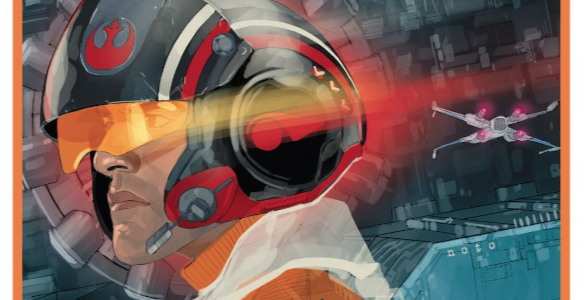
Approaching Old Stories From a New Angle in Poe Dameron 28

by Spencer Irwin

This article containers SPOILERS. If you have not read the issue yet, proceed at your own risk!

The fact that The Last Jedi picks up almost immediately where The Force Awakens left off leaves the Poe Dameron comic in a bit of a tight spot — the Star Wars comics have been mining the fertile ground between A New Hope and The Empire Strikes Back for decades now, but Poe Dameron doesn’t have that kind of space to work in, instead leaving Charles Soule and Angel Unzueta only tiny blank gaps of backstory to fill in. We here at Retcon Punch have been a bit frustrated by this over the past few issues, generally preferring the sweet, chemistry-filled framing device (a conversation between Poe, Rey, and Finn) to the actual stories it’s being used to tell. Poe Dameron 28, though, finds success by approaching these vignettes from a new angle, building a mystery around who actually is telling the story. Continue reading

Narrative Efficiency in Captain America 704

by Drew Baumgartner

Captain America 704

This article contains SPOILERS. If you haven’t read the issue yet, proceed at your own risk!

Superhero stories are high-concept endeavors. Beyond the origin of the hero’s powers and commitment to justice, there are villains and supporting characters that might require just as much explanation. Monthly comics tend to smooth this over by taking our knowledge of those high concepts for granted, cramming all of that exposition into a logline on the cover page in order to make room for actual action. It’s a popular solution, so ubiquitous that explaining it in this way feels almost unnecessary. But then we encounter those superhero stories — perhaps it’s a miniseries with a new character or an alternate universe — that have to fit that logline into the story itself, forcing us to recognize just how much explaining really is necessary in the genre. Captain America 704 is one such story, catching us up with (and ultimately thwarting) a multi-generational plan and addressing some long-standing Cap mythology. Continue reading

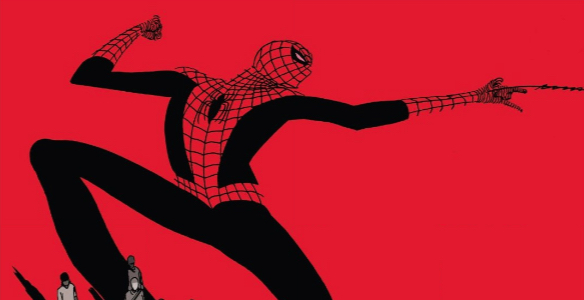
Amazing Spider-Man 801: Discussion

By Spencer Irwin and Patrick Ehlers

This article contains SPOILERS. If you haven’t read the issue yet, proceed at your own risk!

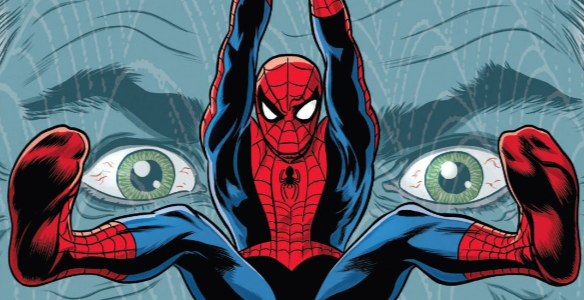
Spencer: Dan Slott has written more issues of The Amazing Spider-Man than any other creator ever. That’s not something one achieves if they merely “like” a character — Slott clearly loves Spider-Man in a way even the most die-hard of fans can only dream of. Writing his adventures has certainly changed Slott’s world for the better, and that’s a sentiment he expresses beautifully in The Amazing Spider-Man 801, his final issue on the title. It’s a love letter to the power of Spider-Man told in the only way that kind of story really can be told — through the perspective of a fan. Continue reading

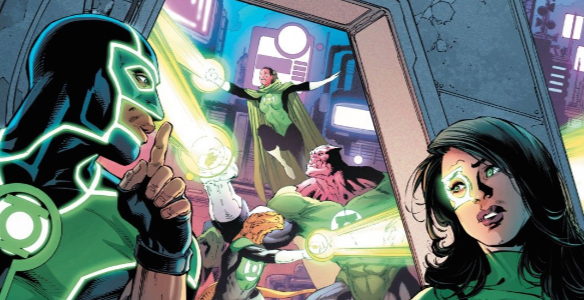
Corruption Within the Corps in Green Lanterns 49

by Spencer Irwin

This article contains SPOILERS. If you haven’t read the issue yet, proceed at your own risk!

Over the past few years, as police injustices have been brought more and more into the open and it’s become harder and harder to justify supporting them (or often even tolerating them) as an organization, it’s become harder for me to fully buy into the idea of the Green Lantern Corps as well. It’s not the characters that give me pause — I adore Jessica, Simon, Kyle, and Guy — but their space cop routine. I don’t know, maybe that’s the point — so many Green Lantern stories in the past decade have positioned the Corps’ own leadership as their greatest enemies — but it’s certainly a thought that ran through my mind in Green Lanterns 49, where the biggest threat to Jessica Cruz isn’t the crime-lord who helped frame her, but the leaders within the Corps who already had it out for her before that even happened. Continue reading

The Restraint and the Rage of The Man of Steel 4

by Michael DeLaney

This article contains SPOILERS. If you haven’t read the issue yet, proceed at your own risk!

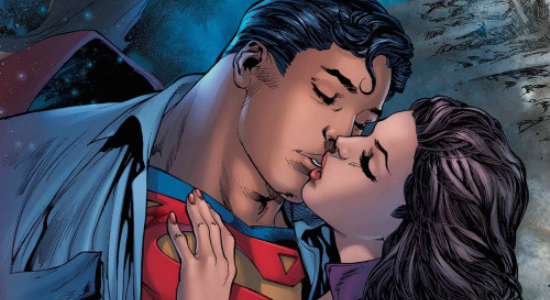
Outside of certain movies, Superman is not a creature of rage. He does not fly blindly into a situation without tying to think of its ramifications. And most important of all: he does everything possible to ensure the safety of innocent bystanders. The Man of Steel 3 ended with an enraged Superman attacking Rogol Zaar in a rare instance of blind rage. In The Man of Steel 4 Superman quickly comes to his senses, as he regains that trademark composure, restraint and presence of thought. Continue reading

Peter Parker: the Spectacular Spider-Man Annual 1 Offers a Secret History for J. Jonah Jameson

by Drew Baumgartner

Peter Parker The Spectacular Spider-Man Annual 1

This article contains SPOILERS. If you haven’t read the issue yet, proceed at your own risk!

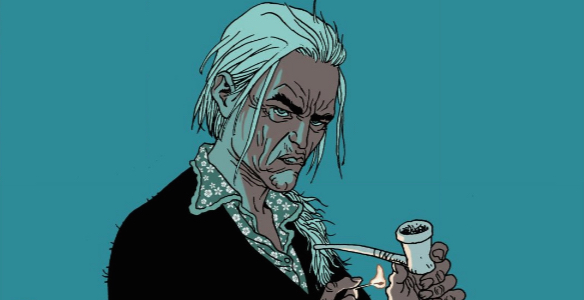
All fictional characters — especially in the compressed world of superhero comics — start as types. It’s only as we spend more time with them that they can be fleshed out into more fully-realized, nuanced characters. But, of course, being a type is often all a given character may need to be. And so, for decades, J. Jonah Jameson was little more than the irritable, muckraking editor of the Daily Bugle. That’s not a failure — it’s all he really needed to be to move the story forward, and he was still plenty entertaining. But as with any character that’s around for the better part of a century, those little glimpses we got of him started to add up, and creators started exploring who he was behind all of that bluster, giving us the JJJ we all know and love. He’s still that irritable muckraker, but we understand that there’s more too him. Indeed, there’s enough there that Jameson can anchor a story himself every now and then, as he does in Peter Parker: The Spectacular Spider-Man Annual 1. Continue reading

Moonshine 11: Discussion

by Patrick Ehlers and Drew Baumgartner

This article contains SPOILERS. If you haven’t read the issue yet, proceed at your own risk!

Patrick: Hey, how fast is a comic? I’ve read twenty-page comics that take me over half an hour to get through, and there are some issues I can breeze through in less than 10 minutes. Some comics take place over the course of 60 in-universe seconds, while others stretch on to tell stories that take entire lifetimes. So the answer to my question is: variable. Brian Azzarello and Eduardo Risso’s Moonshine 11 masterfully commands pacing to create breathless swings between compression, tension and release. Continue reading