Leia is The Great White Savior in Star Wars 48

by Michael DeLaney

This article contains SPOILERS. If you haven’t read the issue yet, proceed at your own risk!

Science fiction has always been known for its social commentary. Different races of aliens have been stand-ins for all kinds of different cultures and subcultures in the real world. But as much as a show like Star Trek depicted the importance of diversity and inclusion, Captain Kirk was still cast in the role of “The Great White Savior.” Thought it’s not as overt, the ending of Star Wars 48 leaves me with that same uneasy feeling. Continue reading
Doctor Aphra 20: Discussion

by Patrick Ehlers and Mark Mitchell

This article contains SPOILERS. If you haven’t read the issue yet, proceed at your own risk!

Darth Vader: You are overly fond of talking.
Doctor Aphra: I’m nervous.

-Darth Vader 3

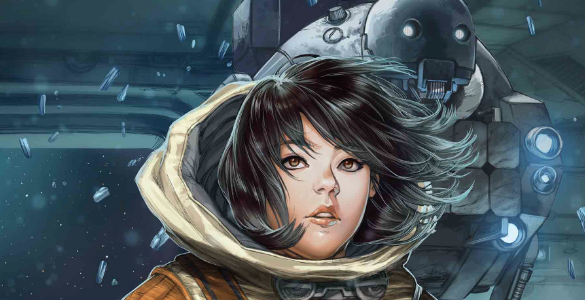
Patrick: Chelli Lona Aphra is a motormouth. She’ll unleash a torrent of words when she’s confident, when she’s nervous, when she’s got something to hide, and when she’s got something to say. It makes it tough to get a read on her, but after 20 issues of her own series and a bunch of appearances in Darth Vader, the reader has the benefit of familiarity. By this point in our journey with her, we sorta know Doctor Aphra. The Imperial chumps trying to probe her for information, on the other hand, don’t stand a chance of untangling the truth. Writer Si Spurrier leverages dramatic irony, both in the form of the reader’s past experiences with Aphra and by contrasting his words with Kev Walker’s art, to dig deeper into the character of Doctor Aphra. Continue reading

A Big Goodbye in Invincible Iron Man 600

by Drew Baumgartner

Invincible Iron Man 600

This article containers SPOILERS. If you haven’t read the issue yet, proceed at your own risk.

Grant Morrison Animal Man

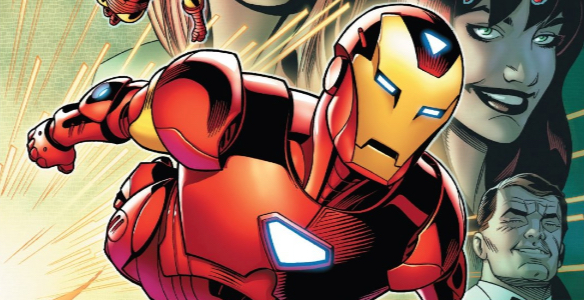
The ends of long creator runs in comics are a strange thing — an ending that isn’t an ending, a goodbye that isn’t a goodbye — but are also relatively commonplace. Indeed, those “final issues” are common enough to create a kind of map of morphologies, from those that send the characters in bold new directions to those that more or less put things back to neutral. One of the most common features, though, is that writers step out from behind the curtain to acknowledge their own departure. Some do this in a self-consciously postmodern way (a la Animal Man 26, excerpted above), but any hint of goodbye from the creative team breaks the fourth wall at least a little. We’ve written about plenty of those final issues over the years, but none quite as final as Invincible Iron Man 600, which isn’t just the finale of Brian Michael Bendis’s three-year run with the series, but of his 18-year run with Marvel. That is, he’s not just saying goodbye to the cast of Invincible Iron Man, but the Marvel Universe as a whole, which demands some kind of acknowledgement, which Bendis of course puts his trademark spin on. Continue reading

Black Panther 1: Discussion

by Taylor Anderson and Michael DeLaney

This article contains SPOILERS. If you haven’t read the issue yet, proceed at your own risk!

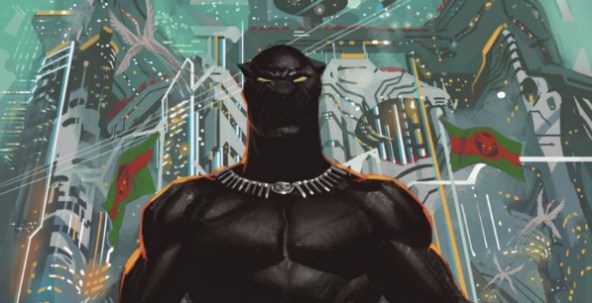
Taylor: The other day I was in a tabletop game store and played a great game called “Clank!” It was so fun that I ended up buying it, but not before having to choose between the original version, set in a typical fantasy setting, and another version set in space. I went with the original because it suits the game better, but it reminded me that I’m a sucker for anything re-imagined in space. That being said, I was super excited to learn about a new Black Panther series set in outer-space and am delighted to say that after reading the first issue, it doesn’t disappoint. Continue reading

Ambiguity and Closure in Doctor Strange 390

by Patrick Ehlers

This article contains SPOILERS. If you haven’t read the issue yet, proceed at your own risk!

slim-banner

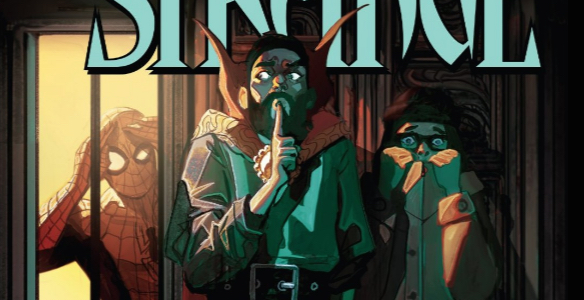
I had a writing teacher in college that used to say there were four kinds of stories. The first is the most common: the hero wants something, gets it, and is happy he got it. We see this one in superhero media all the time, right? Batman wants to catch the Riddler, he does, feels great about it. The second type of story is the hero wants something, gets it, is unhappy he got it. This is the old Twilight Zone twist — “I can live forever, BUT AT WHAT COST?” The last two kinds of stories are similar: hero wants something, doesn’t get it, is happy to have not gotten it, and; hero wants something, doesn’t get it, is unhappy to have not gotten it. Doctor Strange 390 manages to be a weird mix of all these types of stories, where even the question of who our hero is leads to some fascinating ambiguity. Donny Cates’ send-off to Doctor Strange is as mysterious, and true to the tone of the character, as a reader could possibly hope for. Continue reading

X-Men Red 4 Battles Real-World Threats

by Drew Baumgartner

X-Men Red 4

This article containers SPOILERS. If you haven’t read the issue yet, proceed at your own risk.

Comics have always reflected our real-world fears — from inner-city crime or nuclear panic — by heightening them to exaggerated extremes. Except, I’d argue, when it comes to the X-Men’s persecution. Sure, the X-Men’s superpowers would qualify as an “exaggerated extreme” of the types of differences that normally mark a minority class, but it’s straight-up not possible for writers to come up with more exaggerated ways societies persecute their minorities. From apartheid to lynchings to genocides, there’s nothing the X-Men have faced that real-world minorities haven’t already suffered, grounding even their most fanciful stories in sober reality. It’s a fact that Tom Taylor and Mahmud Asrar have leaned into from the start of X-Men Red, lending the series a “ripped from the headlines” approach that is truly unique in superhero comics. Continue reading

X-Men: The Wedding Special 1

by Spencer Irwin

This article containers SPOILERS. If you haven’t read the issue yet, proceed at your own risk.

What’s a Wedding Special without a wedding? It’s X-Men: The Wedding Special 1, I suppose. I’ll try not to hold the fact that this isn’t actually Kitty and Colossus’ wedding against this issue — chalk it up to a failure of expectations and research on my behalf, although I’ll still argue that it’s a misleading title. If anything, the real problem with this special isn’t the lack of a wedding, but the fact that much of what we get instead feels insubstantial and, at times, even generic. Continue reading

Mind Wipes and Missteps in Infinity Countdown: Daredevil 1

by Michael DeLaney

This article contains SPOILERS. If you haven’t read the issue yet, proceed at your own risk!

slim-banner

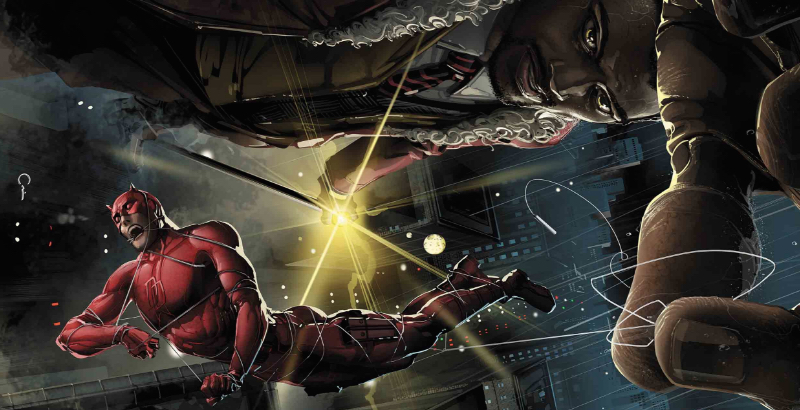
Infinity Countdown is well under way which means…time for some tie-ins! Written by the Infinity Countdown helmer Gerry Duggan, Infinity Countdown: Daredevil 1 focuses on the current owner of the Mind Gem: Daredevil “villain” Turk Barrett. Many readers scratched their heads when it was revealed that low-level criminal Turk was in possession of an Infinity Stone. While Duggan highlights why Daredevil is a good pairing for the Mind Gem, the issue lacks consequence. Continue reading

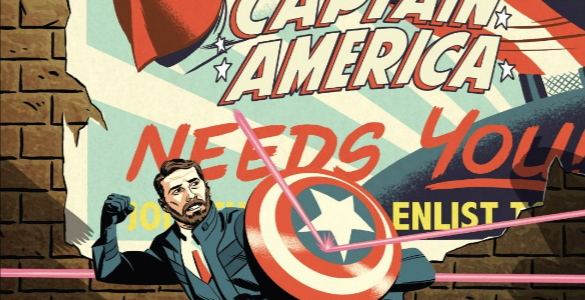
The Shield as Excalibur in Captain America 702

by Drew Baumgartner

Captain America 702

This article contains SPOILERS. If you haven’t read the issue yet, proceed at your own risk!

Drew: Comics historians are obsessed with Wonder Woman’s Lasso of Truth. There’s fun parallels to draw between the lasso and Wonder Woman creator William Moulton Marston’s invention of the lie detector, but another essential point is that a lasso isn’t a phallus in the same way that a sword or gun is. That is, it’s a feminine weapon, designed to entwine Wonder Woman’s enemies, rather than pierce their flesh. I think that reading certainly has utility, but I think practically, the effect of that choice is that Wonder Woman is less concerned with injuring and maiming her enemies as she is neutralizing them — her weapon of choice embodies her compassion. I think Captain America’s shield represents a similar compassion, positioning as a defender, rather than an aggressor. That fact becomes particularly salient as Mark Waid and Leonardo Romero explicitly draw parallels between the shield and Excalibur, effectively highlighting the difference between a shield and a sword. Continue reading

Delayed Gratification in Avengers 2

by Mark Mitchell

This article contains SPOILERS. If you haven’t read the issue yet, proceed at your own risk!

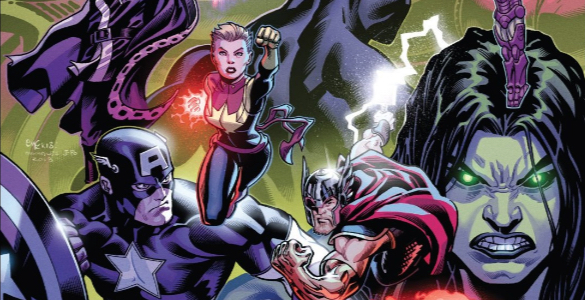
Avengers 2 finds writer Jason Aaron and artist Ed McGuinness still trying to explain just what their Avengers book is going to be. Like the premiere issue, Avengers 2 is incredibly chatty, stuffed to the gills with narration, banter, quips, and inner-monologue that try to help explain the presence (and absence) of various Avengers. There’s a delayed gratification aspect at play, and seeing the entire team finally all together (whenever that happens) will no doubt be cathartic, but spending so much ink explaining why this team-up book doesn’t yet have a team is a sometimes frustrating choice. Continue reading