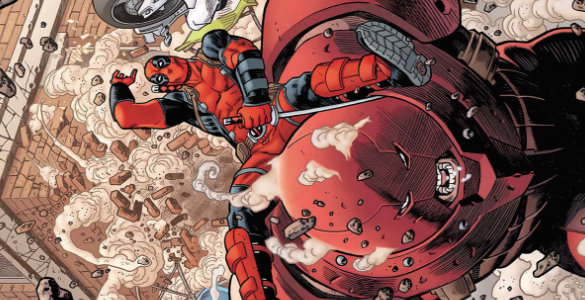
Expressive Lettering Fills in the Gaps in Despicable Deadpool 298

by Patrick Ehlers

This article contains SPOILERS. If you haven’t read the issue yet, proceed at your own risk!

slim-banner

“All that people care about is the look. There’s figures on this: 70% of what people react to is the look, 20% is how you sound, and only 10% is what you say.”

-Eddie Izzard, Dressed to Kill

Here’s something that’s true about comics: it’s a medium full of speaking characters that we will never actually hear speaking. By Izzard’s math, that means there’s a full fifth of a character’s essence we’re never really going to get through images and words on the page. As Deadpool pulls out all the stops to finally achieve suicide-by-mercenary, so too does the creative team pull out all the stops to express the height of his desperation. All the usual gears are spinning perfectly: Gerry Duggan’s writing is as simultaneously tight and chaotic as ever, and Mike Hawthorne’s impeccable layouts convey an almost grueling understanding of the setting of this issue-long brawl. But I want to focus on that elusive final 20% — “how you sound” — with Joe Sabino’s excellent lettering in this issue. Continue reading
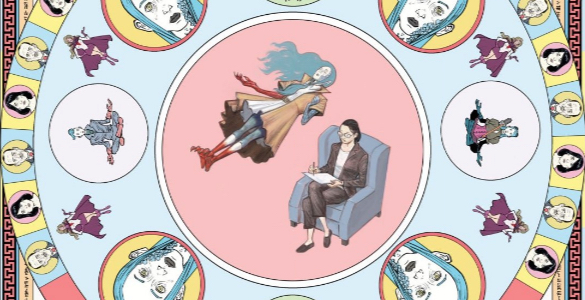
Losing (and Taking) Control in Eternity Girl 2

By Spencer Irwin

This article contains SPOILERS. If you haven’t read the issue yet, proceed at your own risk!

Caroline Sharp isn’t quite all there. I don’t mean that to be a dig at her mental health — she’s literally never just in one place at one time, but rather, being pulled in several directions at once, her consciousness torn between past and present, fantasy and reality, the planet Earth and the far reaches of space. I don’t think it’s the more far-out aspects of this situation that bothers Caroline — it’s the fact that she can’t control it. Continue reading

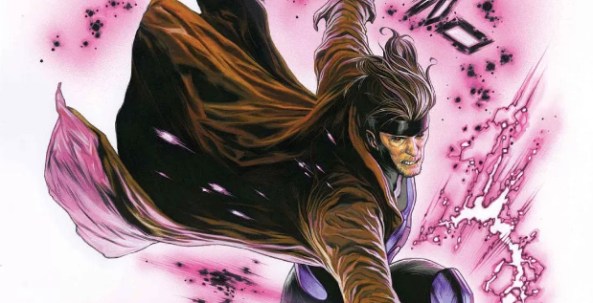
X-Men Red 3 Offers a Portrait of Our Time

by Drew Baumgartner

X-Men Red 3

This article containers SPOILERS. If you haven’t read the issue yet, proceed at your own risk.

…it occurred to me that instead of them just being heroes that everybody admired, what if I made other people fear and suspect and actually hate them because they were different? I loved that idea; it not only made them different, but it was a good metaphor for what was happening with the civil rights movement in the country at that time.

Stan Lee on creating the X-Men

That the mutants of the Marvel universe are reviled and oppressed has long made them an allegory for any number of minorities the world over, which in turn makes the X-Men an allegory for any number of civil rights activists. Much has been written about the MLK/Xavier and Malcolm X/Magneto parallels, but as the twentieth century churned on, those movements coalesced less and less around recognizable figureheads. These movements weren’t leaderless, by any means, but the leaders were no longer the household names they were in the early ’60s. X-Men comics responded in kind, broadening its cast and bringing in an array of perspectives to cover the more diffuse push for civil rights across the globe. This made the X-Men generalists in terms of their symbolic power — maybe they were drawing parallels to the gay rights movement, or apartheid, or even the holocaust. But that generalist nature may also have blunted any one of those parallels, limiting how specific any one of them can truly feel.

Or so I thought. I’d come to accept the X-Men as a broad comment on the nature of oppression and activism, but never turned to it for “ripped from the headlines” representations of discrete real-world events. Maybe I (and the rest of the world) wasn’t paying enough attention to real-world events to recognize them. Maybe those events weren’t being covered in the way they have been over the past few years. Whatever the case, I was completely bowled over by the unapologetic allegory for Charlottesville that Tom Taylor and Mahmud Asrar present in X-Men Red 3. Continue reading

Bats is a Good Boy in Doctor Strange 388

By Taylor Anderson

This article contains SPOILERS. If you haven’t read the issue yet, proceed at your own risk!

In the past, I’ve made no bones about how much I like the ghost-dog, Bats, in Doctor Strange. A lot of why I like him is because he’s a rude, talking animal that isn’t afraid to tell it the way it is. While that still plays a lot into why I like him as a character, in issue 388 I find I’m liking him more because of who he is instead of what he is. Continue reading

Sacrifice and the Long Fight in Darth Vader 14

by Spencer Irwin

This article contains SPOILERS. If you haven’t read the issue yet, proceed at your own risk!

Given how pervasive politics are in our current landscape, it’s no surprise that so much of the media being created nowadays contains political allusions and allegories. Both the allusions and especially the politics themselves can be exhausting at times, but given how dangerous so many political groups are today, getting involved and taking a stand seems absolutely necessary, no matter what the cost. That’s certainly the theme that runs throughout Charles Soule and Giuseppe Camuncoli’s Darth Vader 14, a clear allegory for our fraught modern political times that argues that great sacrifices must be made to fight oppression wherever it rears its face. Continue reading

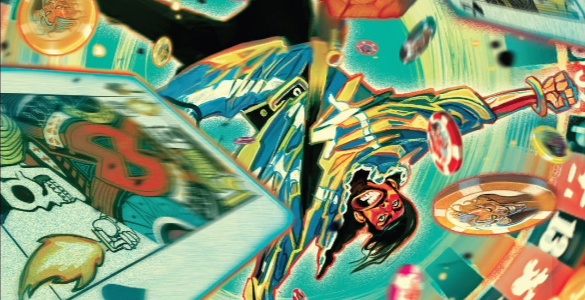
Authenticity in Sex Criminals 23

by Ryan Desaulniers

Sex Criminals 23

This article contains SPOILERS. If you haven’t read the issue yet, proceed at your own risk!

[He] felt he had to choose between being a failure and being a fake

Because going against our natural inclinations can make us feel like impostors, we tend to latch on to authenticity as an excuse for sticking with what’s comfortable.

Herminia Ibarra, The Authenticity Paradox

“Authenticity” is a big, nebulous word. I normally encounter the concept in the realm of art — whether it be performance or otherwise — as an indicator of a work’s sincerity or the artist’s commitment to an original, unique vision, but there’s no rubric or scale to truly measure these values. The same can be said about authenticity in one’s personal life. How can one accurately and honestly gauge whether their actions or behaviors come from one’s natural, earnest inclinations when any given person, on their journey through life, undergoes so much change due to a litany of reasons? At what point can the quest for authenticity become a detriment to further development instead of being a welcome pillar of deeply-held tenants? Matt Fraction and Chip Zdarsky’s Sex Criminals 23 reads as a very busy issue, featuring an array of close-ups on the characters of the series, and these moments succeed in showing the struggle for authenticity, though these moments occur within a messy-feeling broader plot. Continue reading

The Trap of Guilt in Green Arrow 39

by Spencer Irwin

This article contains SPOILERS. If you haven’t read the issue yet, proceed at your own risk!

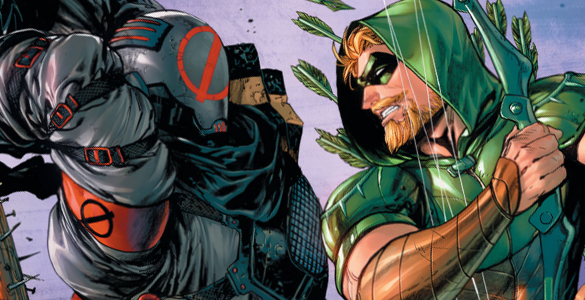
Spencer: For the first few decades of his existence, Green Arrow was just Batman with a bow and arrows. It wasn’t until the 1970s, when Oliver Queen lost his fortune and gained a social consciousness, that the character became something unique and important. In today’s divisive times, I appreciate Green Arrow’s status as a “social justice warrior” more than ever, but honestly, the fact that Ollie is often pretty bad at this aspect of his job is probably just as important. That Ollie often needs to be educated allows creators to explain unfamiliar concepts to the audience, but it also means confronting the kind of guilt and privilege that often plagues even the most well-meaning of activists. Continue reading

Pacing as Character in All-New Wolverine 33

By Patrick Ehlers

This article contains SPOILERS. If you haven’t read the issue yet, proceed at your own risk!

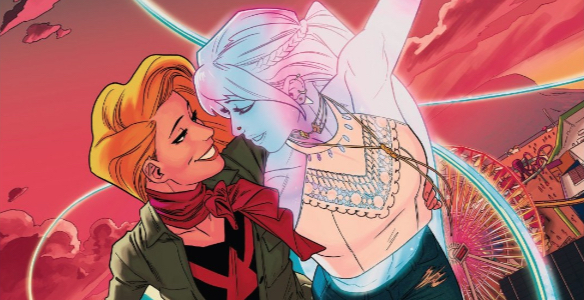
I love the idea of popping into a character’s far-flung future. It’s a way of taking a character’s essence and teasing out the results of a life lived in that essence — the ultimate if-then statement. If you’re a violent loner, then you end up alone and wracked with guilt. It’s all effect, and the cause is understood to be part of the character’s DNA. All-New Wolverine 33 kicks off the “Old Woman Laura” story, and writer Tom Taylor and artist Ramon Rosanas show the result of Laura’s legacy of positivity and leadership. Even in a world that was rocked by Doom World Wars, there’s still joy, prosperity, sorority and productivity in Laura’s future. Continue reading

(Not) Learning from Experience in Runaways 8

By Spencer Irwin

This article contains SPOILERS. If you haven’t read the issue yet, proceed at your own risk!

“My advice is: stand firm for what you believe in, until and unless logic and experience prove you wrong.”

Daria, Is It College Yet?

One major advantage of growing up and getting older is experience. Being young means screwing up (a lot), but every screw up teaches you something new, hopefully helping you avoid similar mistakes in the future. That’s only if you take those screw-ups to heart, though. That seems to be a problem for the Runaways (and even for the visiting Julie Powers) in Rainbow Rowell and Kris Anka’s Runaways 8 — they’re so busy holding on to what they once were that they can’t see how badly they need to grow. They can’t learn from their own mistakes. Continue reading

Virginity and Values in Betrothed 2

By Patrick Ehlers

This article contains SPOILERS. If you haven’t read the issue yet, proceed at your own risk!

Last month, Mark likened Betrothed to a manga series, citing a number aesthetic and thematic similarities. That observation is astute, but perhaps incomplete. Writer Sean Lewis and artist Steve Uy aren’t just playing the greatest hits of the manga medium, they’ve got the sheet music for The Hero’s Journey on the stand in front of them, and are dutifully playing every note Maestro Campbell wrote. The second step on this journey is the Refusal of the Call to Adventure, so that is precisely what Kieron and Tamara do in the second issue of Betrothed. Continue reading