Burying the Message in Infinity 8 1

by Drew Baumgartner

Infinity 8 1

This article contains SPOILERS. If you haven’t read the issue yet, proceed at your own risk!

Are science fiction and heart mutually exclusive? One word: Cocoon.

Steve Guttenberg, Party Down

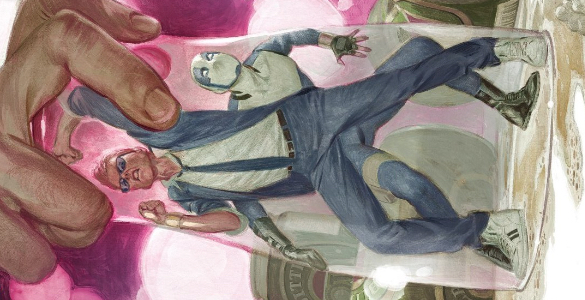
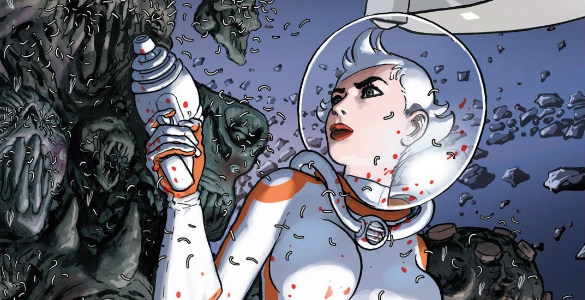
Like any sci-fi fan, I love a good high-concept premise. Those premises give us something to latch onto in the uncertain settings of science fiction, but are ultimately just the hook that draws us into the narrative. For any story — sci-fi or otherwise — to work, it needs to meaningfully comment on the human condition (even if, you know, the characters are aliens or robots or whatever). The story needs to connect on some deeper human level in order to be anything other than a series of things that happen. Unfortunately, Infinity 8 1 is too invested in its own competing high-concept premises to ever make that kind of connection. Continue reading

High School Memories in The Further Adventures of Nick Wilson 3

By Spencer Irwin

This article contains SPOILERS. If you haven’t read the issue yet, proceed at your own risk!

Whether they romanticize it or want to forget about it altogether, most people have pretty strong feelings about the time they spent in high school — or, at least, that’s how most popular media likes to portray things. In truth, I’m guessing far more people think about high school the way Nick Wilson does: with hazy indifference. In The Further Adventures of Nick Wilson 3, Eddie Gorodetsky, Marc Andreyko, and Stephen Sadowski send Nick to his high school reunion, which is probably the lamest — and, thus, the most realistic — high school reunion in the history of pop culture.  Continue reading

Quantum and Woody 4 Aims for the Audience

by Drew Baumgartner

Quantum and Woody 4

This article contains SPOILERS. If you haven’t read the issue yet, proceed at your own risk!

We live in a world torn between postmodernism and romanticism. We’re just as likely to encounter arguments based on The Death of the Author as we are those based in auteur theory. That we have different critical lenses at our disposal may not seem all that remarkable, but I’d argue that these two aesthetics have completely different opinions on what art is and how we consume it. Does art facilitate some kind of transfer of ideas between the creator and the audience, or is it simply a mirror that audiences use to reflect themselves? As mutually exclusive as those options appear, Quantum and Woody 4 seems to exist in a space between, riffing on classic tropes and even explicit references while still crafting a character all its own. Continue reading

Mighty Thor 705: Discussion

by Spencer Irwin and Ryan Mogge

Mighty Thor 705

This article contains SPOILERS. If you haven’t read the issue yet, proceed at your own risk!

Spencer: Jane Foster is willing to do what must be done, no matter how hard or dangerous, no matter what the consequences might be, even when nobody else can or will. It’s what makes her a hero, what makes her worthy; it’s also what brings about her downfall. The Mighty Thor 705 is the swan song our beloved Jane deserves, a beautiful, action-packed, heartbreaking issue that highlights everything that made Jane’s Thor an inspiration, everything that made her important both in-universe and out. Continue reading

The Faith and Fears of Green Lanterns 43

By Michael DeLaney

This article contains SPOILERS. If you haven’t read the issue yet, proceed at your own risk!

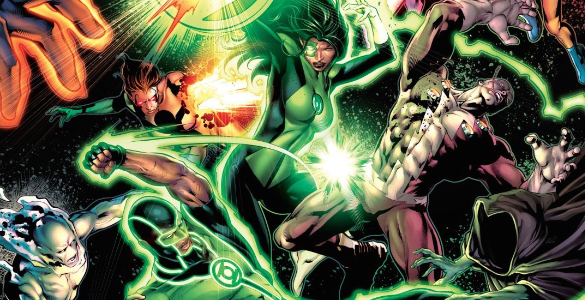
Green Lanterns 43 concludes the “Inhuman Trafficking” arc. In the span of four issues this tale has explored a wide range of themes including faith, self identity and even Tinder. Continue reading

Star Wars 45: Discussion

By Taylor Anderson and Mark Mitchell

This article contains SPOILERS. If you haven’t read the issue yet, proceed at your own risk!

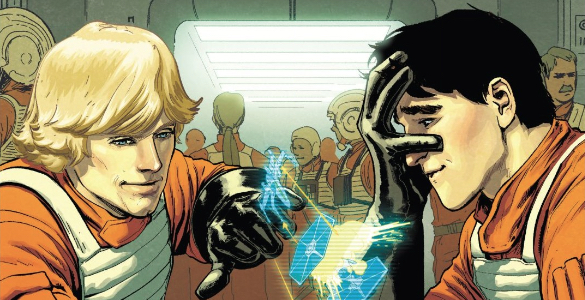
Taylor: Being a Star Wars fan who grew up with, and only with, the original trilogy, I would consider myself fairly protective of the movies which have spawned a pop-culture empire. This being the case, you might expect that I would hold the new movies to a high standard of excellence since I wouldn’t want their history besmirched. It turns out that the opposite is true. I’ve come to accept that nothing’s going to replicate my love of the original trilogy and that’s OK. That being said, as long as a Star Wars story is decent, I’m pretty happy just to get to spend more time in a galaxy far, far away. Sadly, this can’t be said for all Star Wars stories, which is the case in Star Wars 45.

Continue reading

Growth, Chemistry, History, and Change in Runaways 7

By Spencer Irwin

This article contains SPOILERS. If you haven’t read the issue yet, proceed at your own risk!

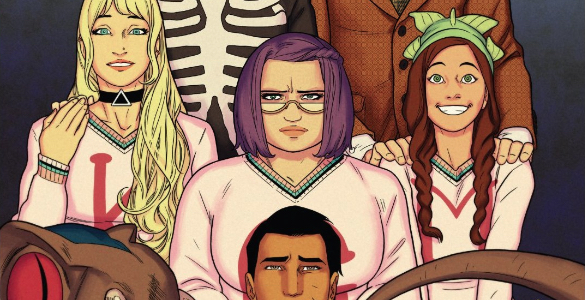
The density of prose, as well as the ample opportunities for dialogue and conversations, make novels a format that excels in rich, deep characterization; there’s just more room and opportunity to get into a character’s head than in most other mediums. It’s no surprise, then, that writer and novelist Rainbow Rowell would excel in this regard, but it is a pleasant surprise that she’s been able to translate those skills so perfectly to her comic book work on Runaways. This is a title where every character feels real and three dimensional, more than just archetypes or action stars but like actual kids with actual concerns, desires, deep-seated fears, and the ability to grow and change. Most importantly, Rowell makes us feel the effects of their history, of everything they’ve gone through since first being created 15 years ago. Continue reading

Strength in Teamwork in Batman 43

By Drew Baumgartner

Batman 43

This article contains SPOILERS. If you haven’t read the issue yet, proceed at your own risk!

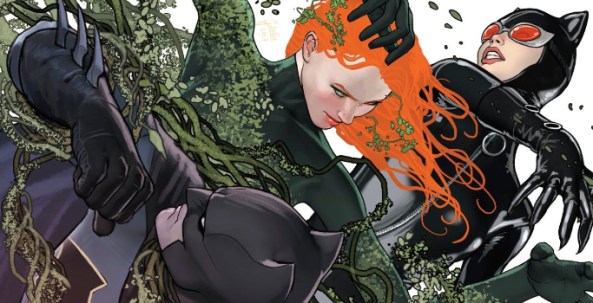
On the surface, grief and regret may not seem all that similar; one deals with an inescapable force of nature, the other is preoccupied with (potentially avoidable) personal failures. I might argue that regret is a kind of grief, albeit over the death of an idea or an opportunity, as opposed to a loved one, but there’s a more fundamental commonality between these two: how personal they feel. This can make both grief and regret feel very lonely, potentially driving us away from the friends and family who might want to support us through those difficult times. It’s a trap Ivy falls into, trying to go it alone in the face of her own grief and regrets, but Batman and Catwoman (and the entire creative team behind Batman 43) have a better way. Continue reading

There Are Things Only Comics Can Do in Teenage Mutant Ninja Turtles Universe 20

By Taylor Anderson

This article contains SPOILERS. If you haven’t read the issue yet, proceed at your own risk!

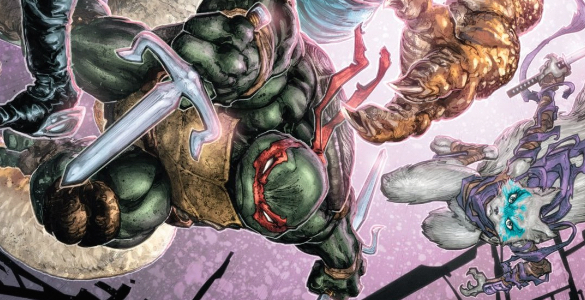
Taylor: Read enough comic books and you eventually begin to take for granted just how magical they can be. This is true of most things in life, whether it be eating pizza or using the internet, but this lesson is especially true for me with comics. When I think about it, the fact that sequential art makes any sort of sense to the human brain — that we can essentially fill in the blanks between panels — is nothing short of amazing. But this isn’t the only unique aspect of comic book making involving paneling, as TMNT Universe 20 so wonderfully demonstrates. Continue reading

Moonshine 8: Discussion

by Drew Baumgartner and Patrick Ehlers

Moonshine 8

This article contains SPOILERS. If you haven’t read the issue yet, proceed at your own risk!

Dyin’? Boy, he can have this little life any time he wants to. Do ya hear that? Are ya hearin’ it? Come on. You’re welcome to it, ol’ timer. Let me know you’re up there. Come on. Love me, hate me, kill me, anything. Just let me know it.

Luke, Cool Hand Luke

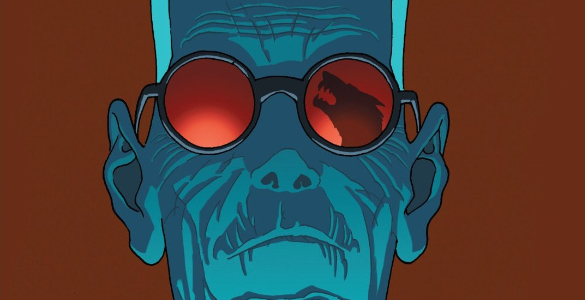
Drew: It’s hard for me to read genre fiction through anything other than a deconstructionist lens. I mean, it’s hard for me to read anything through anything other than a deconstructionist lens, but this is especially true of genre fiction, where by definition conventions must be explicitly followed. Fortunately for me, that postmodern generic awareness is just as prevalent in creators as it is in audiences, so I’m never struggling to find multidimensional, self-aware, fully postmodern genre fictions. But the good ones, the ones that actually force me to reexamine the genres they’re deconstructing (rather than just having fun with some winking references), are few and far between. But Brian Azzarello and Eduardo Risso’s collaborations have always gone a step further. Beyond cute self-awareness or even symphonic use of references, Azzarello and Risso’s work offer new perspectives on the foundational genre pieces they take on. That is to say, their comics don’t just gain meaning from their references — their references gain meaning from the comics. They’re almost a purer form of postmodernism, digesting entire genres in a few issues, offering new readings to even the most familiar works of art. Continue reading