X-Men Red 1: Discussion

by Spencer Irwin and Ryan Desaulniers
This article contains SPOILERS. If you haven’t read the issue yet, proceed at your own risk!

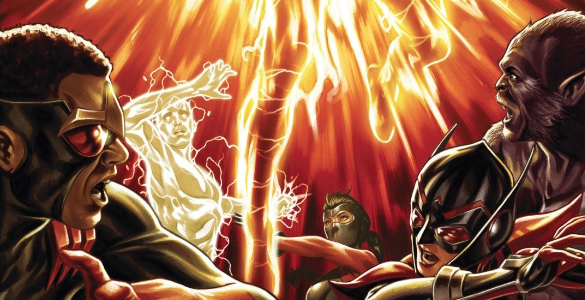
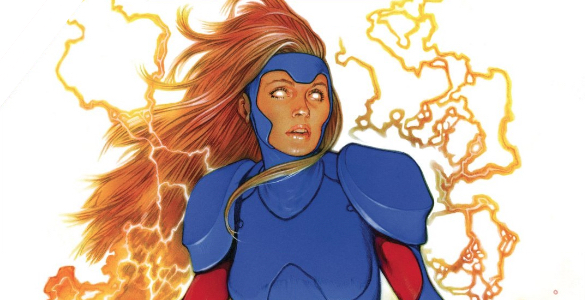
Spencer: What are the X-Men best known for? I’d honestly say that there’s two answers to this, because while thematically the X-Men are most often used to explore discrimination and social justice, in execution they’re just as well known for their unwieldy cast, soap opera dramatics, and byzantine continuity. I think what I like most about Tom Taylor and Mahmud Asrar’s debut issue of X-Men Red is how heavily it leans into that first aspect, while ignoring the latter almost entirely. There’s plenty of character within these pages, of course, but this is first-and-foremost a title with a mission and a message. Continue reading

Snow as Setting and Tone in Black Bolt 10

By Patrick Ehlers

This article contains SPOILERS. If you haven’t read the issue yet, proceed at your own risk!

Not only is it cliche to say that setting of a story becomes its own character, it’s also inaccurate. I don’t care how much you think New York City is a character in [whatever movie you’re talking about], characters have wants, desires, arcs — characters can change and be changed by the story. A location cannot. A good setting can be incredibly additive, coloring in emotional information and setting an appropriate tone, but, y’know — isn’t a character. In Black Bolt 10, writer Saladin Ahmed and artist Christian Ward use the ancient Inhuman city of Orollan, nestled away in Greenland, to emphasize the cold lonely journey Black Bolt has been on since issue 1. Continue reading

Letting the Moment Linger in Infinity Countdown: Adam Warlock 1

By Taylor Anderson

This article contains SPOILERS. If you haven’t read the issue yet, proceed at your own risk!

After a particularly difficult class period the other day, I found myself in the teacher’s lounge staring at a clock for several minutes. Another teacher came in at some point and commented on what I was doing. When I explained I was just enjoying the silence of the moment after my class, they completely understood. Teaching — or any stressful job — is like that. After moments of stress, it’s nice to just rest a moment and let everything sink in. The same goes for when your reading an exciting comic. After a momentous event, it’s nice when the creators give you a moment to breathe and process what just happened. Not sure what I’m talking about? Luckily, the excellent Infinity Countdown: Adam Warlock 1 provides a great example of what I mean. Continue reading

Green Lanterns 40: Discussion

by Michael DeLaney and Mark Mitchell

This article contains SPOILERS. If you haven’t read the issue yet, proceed at your own risk!

Michael: Tim Seeley’s Green Lanterns has the DC logo on the cover, but it feels like a very Marvel series, particularly The Amazing Spider-Man. In the heyday of the Stan Lee/Steve Ditko era, ASM had socially relevant messages, long-running narratives, and, of course, the down-on-his-luck protagonist. The modern Amazing Spider-Man tales try that same type of storytelling with an occasional social media flair — to varying success. With ties to prior issues and the constant personal problems of our heroes, and a superhero dating app, Green Lanterns 40 fits right in with that ASM mold. Continue reading

Different Kinds of Powers and Responsibilities in Incognegro Rennaisance 1

by Drew Baumgartner

Incognegro Renaissance 1

This article contains SPOILERS. If you haven’t read the issue yet, proceed at your own risk!

Way back in August of 1962, Peter Parker learned that with great power must also come great responsibility. It’s an important lesson, though the fact that Peter’s “power” manifests as literal superhuman abilities seems to leave some readers confused about what their own responsibilities are. In the intervening years, our discourse on power has gotten a lot more nuanced than whether someone can or can’t stick to walls, which has in turn changed our expectations of individual responsibility. Of course, the predominantly white, predominantly male world of superheroes might not be the best place to explore the more subtle (but no less powerful) issues of power and responsibility that come along with race and gender, which is exactly what made Mat Johnson and Warren Pleece’s Incognegro so remarkable when it hit stands in 2008. Indeed, the obvious differences between Incognegro and the superhero genre may make the comparison seem absurd — and it may well be — but their prequel series, Incognegro: Renaissance, takes on the familiar (and appropriate) form of the superhero origin story, complete with its own call to action about power and responsibility. Continue reading

Mulligans Are Good in Golf, Not in Amazing Spider-Man 795

By Taylor Anderson

This article contains SPOILERS. If you haven’t read the issue yet, proceed at your own risk!

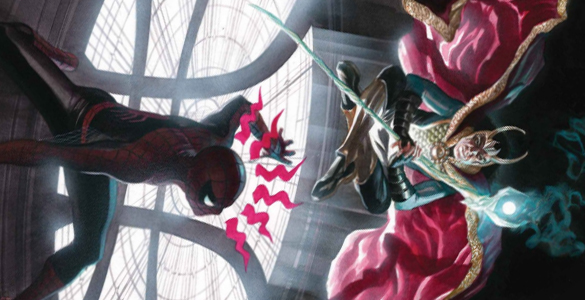
Anyone who knows anything about magic and time travel knows there’s always cost for either of them. Use magic to help yourself out, and you better bet your ass that some ironic malady will strike you later. Use time travel and you better be prepared for the consequences caused by your mucking up the time-space continuum. But if you’re Loki, these rules may not apply to you, and in that case, why not mess with both? He does just this with Peter Parker, but with there being no consequences to these actions, it seems like a pointless gesture in more ways than one.

Continue reading

Apologies in Batman 40

By Patrick Ehlers

This article contains SPOILERS. If you haven’t read the issue yet, proceed at your own risk!

Batman: This is new, but I’m trying.
Catwoman: Yes, well, try harder.

Batman 40

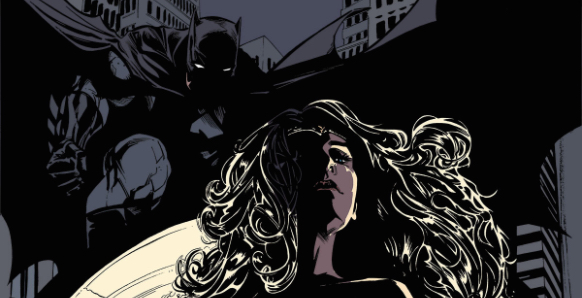
How do we admit our failings? The #MeToo movement is bringing a lot of stories of abuse to light, which means there have also been scores of written apologies. Some don’t use the word “sorry,” some make excuses, some try to deflect with their own surprise admissions. No matter how carefully crafted these statements are, they are all bound to fuck up and fall short. Words do no erase actions. Batman 40 sees creator and creation in similar roles, trying to explain they way they botched handling Wonder Woman. It’s messy, it’s riddled with mistakes, and it’s a genuine expression of how it feels to put your foot in your mouth. Continue reading

A Large Supporting Cast Weighs Down Green Arrow 37

by Michael DeLaney

This article contains SPOILERS. If you haven’t read the issue yet, proceed at your own risk!

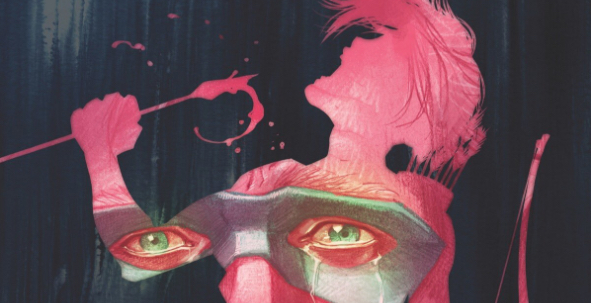
When you’re one issue away from the grand finale, it’s time to tie up a whole bunch of loose ends. Green Arrow 37 does a lot of wrapping up for several of the series’ supporting cast. At times, that makes the issue feel a little cluttered, but with Oliver’s big court date looming next issue, it makes sense to settle these plot points now. Continue reading

It’s All a Game in Avengers 679

by Drew Baumgartner

Avengers 679

This article contains SPOILERS. If you haven’t read the issue yet, proceed at your own risk!

We’ll often chide middle chapters for failing to maintain dramatic momentum while setting up the climax — when he actions in those middle chapters feel motivated more by what the climax needs than what came before. We refer to that phenomenon as “putting the pieces in place,” as it reduces the dramatic interest of a story to setting up a board game. It’s an unfortunate tendency that tends to crop up in event series with huge casts, and has already led to some consternation with “No Surrender,” but Avengers 679 hangs a lampshade on its game-iness, zooming out from the game board to focus on the real players. Continue reading

“High” and “Low” Art Collide in The Wicked + The Divine 1923AD

by Spencer Irwin

This article contains SPOILERS. If you haven’t read the issue yet, proceed at your own risk!

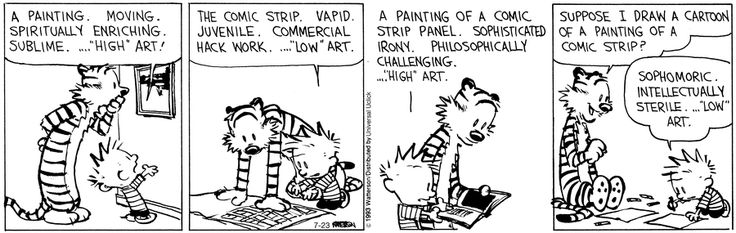
The difference between “high” and “low” art has always seemed rather arbitrary and elitist to me, but that hasn’t stopped debates about the two from raging in one way or another for centuries. That conflict is the heart of The Wicked + The Divine 1923AD, manifesting both in the actual plot and in the format in which Kieron Gillen chooses to tell his story, a tale and a format that can really only serve as celebrations of all kinds of art: “high,” “low,” or otherwise. Continue reading