Delayed Gratification in Avengers 2

by Mark Mitchell

This article contains SPOILERS. If you haven’t read the issue yet, proceed at your own risk!

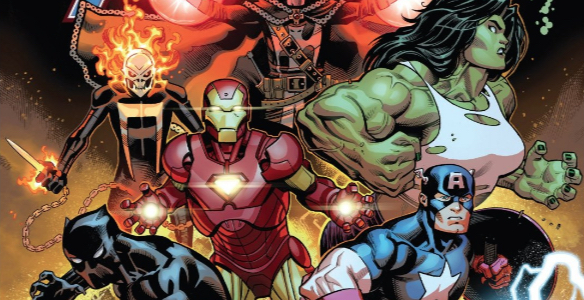
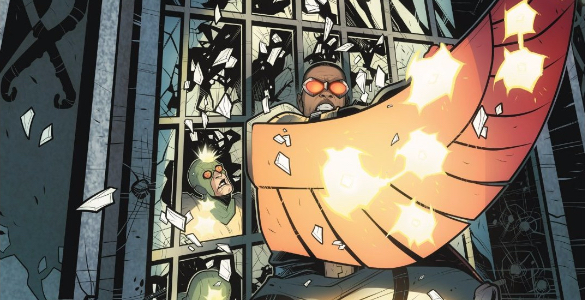
Avengers 2 finds writer Jason Aaron and artist Ed McGuinness still trying to explain just what their Avengers book is going to be. Like the premiere issue, Avengers 2 is incredibly chatty, stuffed to the gills with narration, banter, quips, and inner-monologue that try to help explain the presence (and absence) of various Avengers. There’s a delayed gratification aspect at play, and seeing the entire team finally all together (whenever that happens) will no doubt be cathartic, but spending so much ink explaining why this team-up book doesn’t yet have a team is a sometimes frustrating choice. Continue reading
A Bait-and-Switch in Hunt for Wolverine: Adamantium Agenda 1

By Spencer Irwin

This article contains SPOILERS. If you haven’t read the issue yet, proceed at your own risk!

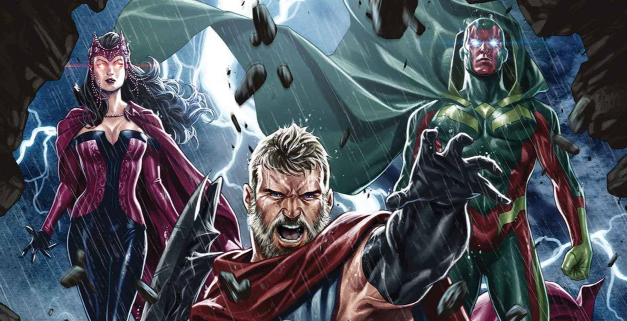
There’s a joke amongst fans that if a team exists in the Marvel Universe, Wolverine has been a part of it. This is an exaggeration — it’d be funny to see him joining up with the Champions or Young Avengers, but it hasn’t happened yet — but only slightly. Logan’s prolific stature in the Marvel Universe is what allows for an event like Hunt for Wolverine, which rounds up as many characters with connections to Logan as possible, no matter how tangential, from every corner of Marvel’s vast universe. It’s a bit of a bait-and-switch, as bringing in all these characters has so far (in the two issues of Hunt for Wolverine thus released) led to stories that are rather light on Wolverine himself. Tom Taylor and R.B. Silva lean into that idea in Hunt for Wolverine: Adamantium Agenda 1, pulling a bait-and-switch on their cast as well as their readers. Logan’s former New Avengers teammates think they’re rescuing Wolverine(‘s genetic code), but it turns out they’ve stumbled into a very different, much more personal scenario. Continue reading

Avengers 1: Discussion

by Taylor Anderson and Drew Baumgartner

This article contains SPOILERS. If you haven’t read the issue yet, proceed at your own risk!

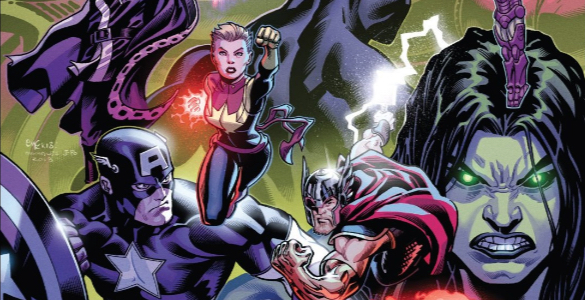
Taylor: In middle school, my favorite book was a archaeology tome titles Ancient Mysteries. The book is exactly what you would think — a survey of all the unsolved mysteries archaeologists have studied such as how the inhabitants of Easter Island made their statues and the relevancy of the Atlantis story. I was entranced by these mysteries because they suggested a history of Earth that was far bigger and far stranger than anything I had imagined up to that point. This was exciting at the time, and to this day my interest is still piqued by random archaeology articles on the BBC. It’s maybe for this reason that Avengers 1 intrigues me so much. It points to a deep, weird history of Earth I want to know more about. Continue reading

Generations Iron Man and Ironheart 1: Discussion

by Taylor Anderson and Patrick Ehlers 

This article contains SPOILERS. If you haven’t read the issue yet, proceed at your own risk!

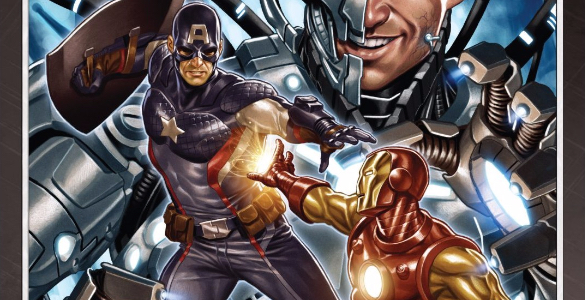
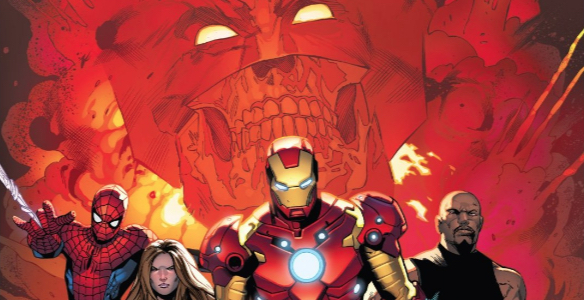
Taylor: The future is going to be weird, man. How do I know? Every day I stand before 25 middle schoolers and attempt to teach them important stuff about books. Frequently, I’ll make analogies that are too out of date for them to get or, more embarrassingly, I’ll pull a “back in my day” story out of the playbook. Thinking about the difference from when I was in middle school to the kids I teach today is a lesson in how fast things change. These kids (see, I’m already so old I can’t help it!) have never known a world without cell phones, the internet, and Justin Bieber. Generations: Iron Man and Ironheart 1 understands that change happens quickly, just as I do, but the world that the issue imagines is beyond anything I thought imaginable. Continue reading

Echoes of the Past, Pinocchio, and Barf in Captain America 25

by Michael DeLaney

This article contains SPOILERS. If you haven’t read the issue yet, proceed at your own risk!

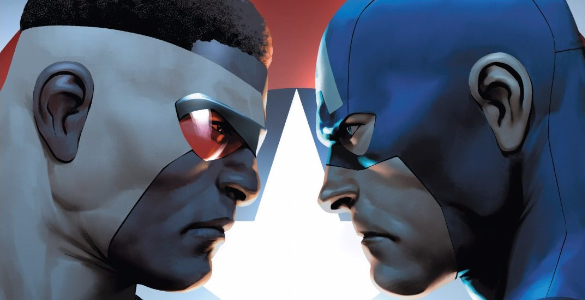
Like a meta comic book continuity retcon, Sam Wilson and Steve Rogers’ Captain America titles collapse into one in Captain America 25. One of the last times Marvel published a Captain America 25, Steve Rogers was shot “dead.” While this issue might not be as monumental as “The Death of Captain America,” it is a book that is almost essential as a Secret Empire tie-in. Continue reading

Secret Empire 6: Discussion

by Ryan Mogge and Michael DeLaney

This article contains SPOILERS. If you haven’t read the issue yet, proceed at your own risk!

Ryan: Wednesday is the worst day of the week for soap operas. The storylines all build to a Friday afternoon cliffhanger, so by mid week you are still wrapping up the fallout of last week and are too early for this week’s storylines to be very juicy. Nick Spencer and Leinil Francis Yu are mid-run in Secret Empire 6, and rather than an issue with a self-contained arc that can be completed, we get bits and pieces of several arcs, with only limited links holding them together. Continue reading

The Failings of Friendship in Desperate Times in Secret Empire 5

by Spencer Irwin

This article contains SPOILERS. If you haven’t read the issue yet, proceed at your own risk!

“The power of friendship” is a popular trope in most media. The idea that most situations can be overcome through the bonds we share with our friends is powerful in a lot of ways, but it’s one that never really seems applicable to war or espionage stories like Secret Empire. Make no mistake, Hydra is not going to be defeated by friendship or optimism alone, but in Secret Empire 5, Nick Spencer, Rod Reis, Andrea Sorrentino, Joshua Cassara, and Rachelle Rosenberg do explore the effect pre-existing relationships have on their conflict. It’s not always a good one. Continue reading

Secret Empire 4: Discussion

by Patrick Ehlers and Ryan Mogge

This article contains SPOILERS. If you haven’t read the issue yet, proceed at your own risk!

slim-banner

Patrick: The Secret Empire epic drives on an engine powered by dramatic irony. From the second Steve’s first “Hail Hydra” was uttered, the audience knew more about the threat the Marvel Universe faced better than any of its inhabitants. It is serendipitous (in the worst possible way) that the current political climate in the United States has made readers hyper-aware of this irony, as we’re able to draw obvious parallels between the rise of Hydra and the rise of white nationalism. We don’t need to parse out the rhetorical devices Steve uses to justify his abuses of power — we see them demonstrated by our president every day. Issue 4 doubles down on the practice of illustrating dramatic irony, giving the audience far more information than any of the characters are ever afforded. The result is an unsettling exercise in moral relativism. Continue reading

Serve the Community, or Save the World? The Dilemma of Captain America: Sam Wilson 23

by Ryan Mogge

Captain America Sam Wilson 23

This article contains SPOILERS. If you haven’t read the issue yet, proceed at your own risk!

The central conflict of Captain America: Sam Wilson 23 is not between the Avengers and the Mole Man. Instead, it’s a reverberation of the themes that Nick Spencer has been exploring throughout the series’ run. Sam Wilson is a hero because he believes in helping people. His work begins at a human level, functioning as part of a community. By contrast, the Avengers present a plan to save the world. Their goal to rescue Steve Rogers using the cosmic cube could alter the course of human history. Continue reading

Secret Empire 3

Alternating Currents: Secret Empire 3, Drew and Patrick

Today, Drew and Patrick are discussing Secret Empire 3, originally released May 31st, 2017. As always, this article contains SPOILERS.

Drew: That Secret Empire is about big ideas goes without saying. As with any tentpole summer event, it promises to change the Marvel universe as we know it (at least temporarily), but the bigger story is the way the event (and the stories leading to it) have reflected the real-world political climate, often in uncanny — and uncomfortable — ways. But issue 3 reveals that, underneath it all, writer Nick Spencer may have been building to an even bigger (albeit, perhaps less controversial) question about the very nature of the superhero genre in the present day: does it still have room for moral absolutes? Continue reading