Failure to World-Build in I Am Groot 2

by Mark Mitchell

This article contains SPOILERS. If you haven’t read the issue yet, read on at your own risk!

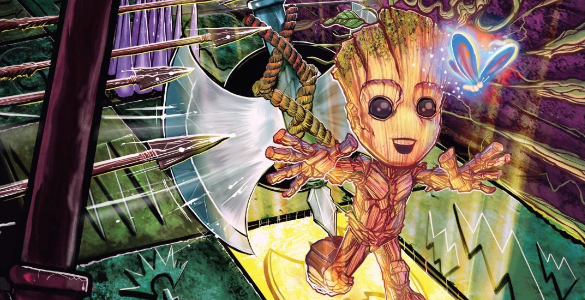
World building is delicate business. Finding the right balance between teasing the audiences’ imagination and leaving them impatient for answers can trip up even the most skilled artist. My go-to example for successful world building is 2015’s Mad Max: Fury Road. Director George Miller immediately throws the audience into the thick of an alien, hostile world, but it’s never confusing. Miller avoids confusion in two ways: first, he uses classic archetypes when constructing characters — Max Rockatansky is the silent hero, Immortan Joe is a mad king, the War Boys are his soldiers, etc. These archetypes are well-worn in fiction and require no further justification. Second, if something or someone is introduced that directly affects the plot and its utility in the world can’t be intuited by the audience, he explains it. Providing this concrete framework for the necessary elements of the film means many other details, like the infamous Crow Fishers, can go unexplained, teasing the audience and allowing their imaginations to run wild, without causing confusion. Continue reading
Explaining the Absurd in Eleanor and the Egret 3

by Drew Baumgartner

Eleanor and the Egret 3

This article contains SPOILERS. If you haven’t read the issue yet, proceed at your own risk!

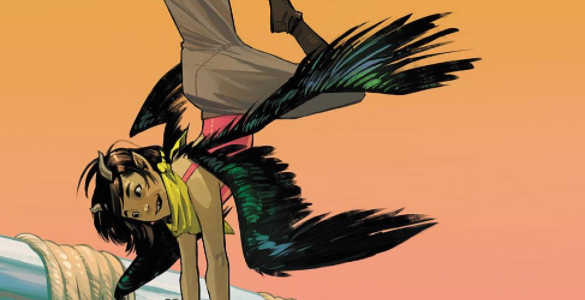
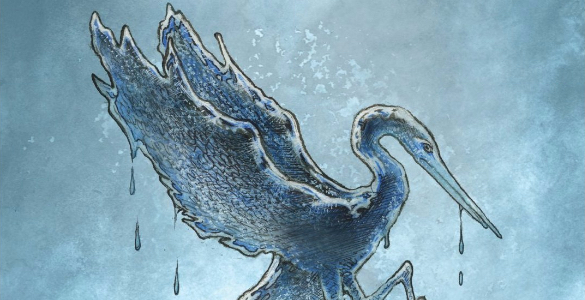
One of my favorite Loony Tunes premises was that of “Ralph Wolf and Sam Sheepdog,” the rival canines attempting to eat/protect a herd of sheep, respectively. Those cartoons are full of all of the great slapstick and expressions that make classic Chuck Jones cartoons such a pleasure, but by favorite gag is that, at the start and end of the day, Ralph and Sam punch their timecards — they’re just doing their jobs. Any other adversarial relationship in Loony Tunes, whether it’s Elmer Fudd and Bugs, Sylvester and Tweetie, or the (similarly designed) Wile E. Coyote and Roadrunner, needs no further explanation; the motivations of the characters are enough to carry the gags. Ralph and Sam, though, have a reason beyond their apparent animal natures, something that tilts at the nonsensical task of explaining the cartoon logic of these characters. It somehow grounds them in reality while simultaneously heightening the absurdity of the situations they’re in. Eleanor and the Egret has always reveled in its own kind of absurdity, but issue 3 starts to reveal Eleanor’s backstory, hinting at some human emotions at the core of this cartoony world. Continue reading

Clue 1: Discussion

by Spencer Irwin and Mark Mitchell

This article contains SPOILERS. If you haven’t read the issue yet, proceed at your own risk!

slim-banner

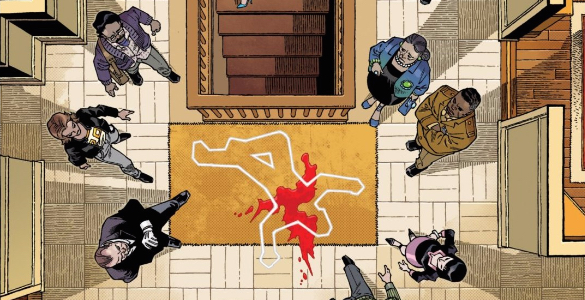
Spencer: I made as much fun of the Battleship movie as anyone, as well as of the other movies based off board games (such as Connect Four) announced around the same time, but even so, I’ve got to admit that basing a story off a board game isn’t automatically a bad idea — you just need the right game. The 1985 Clue film found a way to turn the game’s murder mystery concept into a compelling narrative, becoming a cult classic in the process. Can Paul Allor and Nelson Daniel’s new IDW adaptation of the game do the same? Continue reading

Who To Protect and Who to Serve in Hal Jordan and the Green Lantern Corps 23

by Patrick Ehlers

This article contains SPOILERS. If you haven’t read the issue yet, proceed at your own risk!

“To Protect and to Serve.”

LAPD motto

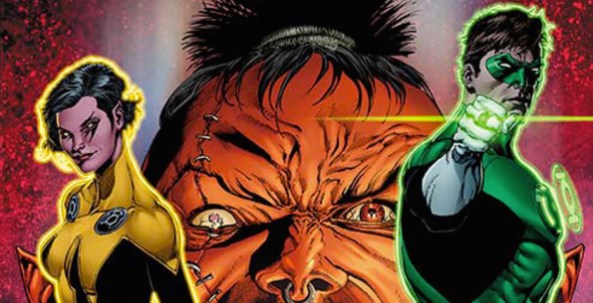
The motto above (or some variation thereof) is so commonplace among police forces that it’s easy to forget that the saying originated from a contest the Los Angeles Police Department held in 1955. They were gathering submissions for slogans for the police academy, and Officer Joseph P. Dorobeck submitted the now-famous five-word phrase. By the end of 1963, the motto was officially adopted by the LAPD. Less than two years later, the Watts Riots pitted police against civilians, in a role that was neither serving nor protecting them. The Los Angeles Police have had a rough history with the people they’re meant to protect, often revealing the population they serve to be themselves. In this week’s Hal Jordan and the Green Lantern Corps, writer Robert Venditti reminds us that the Green Lanterns are just cops, with all the same failings as the LAPD. Continue reading

Secret Weapons 1: Discussion

by Patrick Ehlers and Drew Baumgartner

This article contains SPOILERS. If you haven’t read the issue yet, proceed at your own risk!

slim-banner

Patrick: Thwip! Bamf! Snikt! You know those sound effects: respectively, they mean a) Spider-Man shooting some web fluid, b) Nightcrawler teleporting away, and c) Wolverine deploying his claws. It is perhaps illustrative of the predictability of their superpowers that there are immutable sound effects that accompany them. You know exactly what it sounds like when Wolvie pops his claws, but you also know exactly what he can do with them. These powers are used in unsurprising ways to save the day, but what happens when the superheroes have powers that aren’t so easy to understand? Well, then you’ve got the residents of The Willow and the cast of Secret Weapons. Continue reading

Definition by Contrast in Saga 44

by Ryan Mogge

This article contains SPOILERS. If you haven’t read the issue yet, proceed at your own risk!

When you are a kid, your family creates your idea of normal. It’s only when you go to a friend’s house and things are done just a little differently, that you can really define what makes your family unique. In Saga 44, Fiona Staples and Brian K. Vaughan reinforce what we know about Marko, Alana, and Hazel by giving us a fun-house mirror version of their family.

Continue reading

A New Take on an Old Myth in Batman/Shadow 3

by Michael DeLaney

This article contains SPOILERS. If you haven’t read the issue yet, proceed at your own risk!

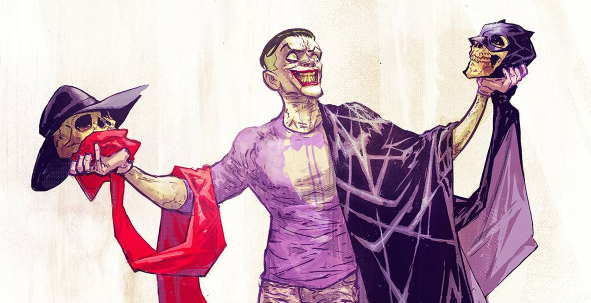
“Forget everything you think you know” is a phrase that has become overused in pop culture — particularly in marketing movies like last year’s Doctor Strange. Nevertheless, I couldn’t help but think about it while reading Batman/The Shadow 3. Steve Orlando and Scott Snyder challenge our presumptions on Batman’s origins by positing that he is destined to inherit the mantle of The Shadow. Continue reading

The Failings of Friendship in Desperate Times in Secret Empire 5

by Spencer Irwin

This article contains SPOILERS. If you haven’t read the issue yet, proceed at your own risk!

“The power of friendship” is a popular trope in most media. The idea that most situations can be overcome through the bonds we share with our friends is powerful in a lot of ways, but it’s one that never really seems applicable to war or espionage stories like Secret Empire. Make no mistake, Hydra is not going to be defeated by friendship or optimism alone, but in Secret Empire 5, Nick Spencer, Rod Reis, Andrea Sorrentino, Joshua Cassara, and Rachelle Rosenberg do explore the effect pre-existing relationships have on their conflict. It’s not always a good one. Continue reading

Wants, Needs, and Given Circumstances in The Wild Storm 5

by Ryan Desaulniers

Wild Storm 5

This article contains SPOILERS. If you haven’t read the issue yet, proceed at your own risk!

In a world as complicated as this one, replete with conspiracies between corporations, technology theft, aliens living among us puny humans, and a gigantic cast of characters, it helps to find ways to keep things simple. In The Wild Storm 5, writer Warren Ellis and artist Jon Davis-Hunt introduce many new, somewhat confusing elements to the narrative, but underscore these revelations with a firm grounding in characters’ wants and needs. Continue reading

Secrets, Surprises and Criminality in All-New Guardians of the Galaxy 4

by Patrick Ehlers

All-New Guardians of the Galaxy 4

This article contains SPOILERS. If you haven’t read the issue yet, proceed at your own risk!

Liars. Thieves. Con men. They’ve all got secrets. It’s no wonder that the Galaxy’s rascally Guardians, who are more criminals than they are heroes, have a whole host of surprises and secrets up their collective sleeve. Writer Gerry Duggan and artist Aaron Kuder keep the reader in the role of the mark, setting us up to be as surprised as everyone else in their story. It’s a little frustrating to be kept at such a distance, but it is perfectly in-line with what it must be like to know these guys. Continue reading