Color and Foreshadowing in Astonishing X-Men 6

by Patrick Ehlers

This article contains SPOILERS. If you haven’t read the issue yet, proceed at your own risk!

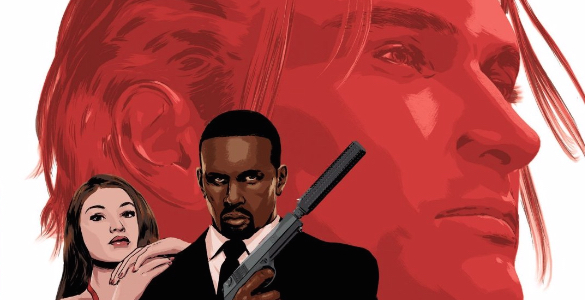
Patrick: Over the weekend, a friend who had fallen out of comics asked me how the Iron Man comics were these days. He was last reading like four years ago, when Kieron Gillen was writing about the secret origin of Tony Stark. Between the Tony Stark A.I., Riri Williams, and a reformed Doctor Doom, I realized it was almost impossible to walk him through all of it in any meaningful way. I mean, just explaining how / why Doom could be a good guy requires briefing him on all of Jonathan Hickman’s Avengers and Secret Wars run. And in summary, it all sounds nuts — like the ramblings of a lunatic — but the moment-to-moment fireworks display that brought us to that point was exciting, compelling, and fun. That’s exactly what we get in Astonishing X-Men, a technicolor extravaganza content to sell the spectacle of the moment over the logic of the scene. But, man: what a spectacle it is! Continue reading
Steve Goes Freelance in Captain America 696

by Drew Baumgartner

Captain America 696

This article will contain SPOILERS. If you haven’t read the issue yet, proceed at your own risk!

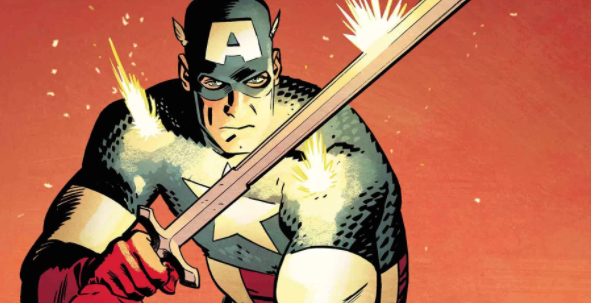
Do the citizens of the Marvel Universe adequately compensate their superheroes? There’s little doubt that the entire planet benefits from the efforts of Captain America and his ilk, but whatever gratefulness the citizens feel doesn’t put food on the table. Which is why so many superheroes either take day jobs (with S.H.I.E.L.D. or the Heroes for Hire, for example), institutionalizing their heroic output, are already independently wealthy (like Tony Stark), or have some wealthy patron (like Tony Stark). That notion of patronage hints at what I’m getting at: superheroism is a bit like making art — society may value the idea of it generally, but that doesn’t exactly translate to money in the bank. It’s a lesson Steve Rogers is learning as his journey as a freelance superhero begins in earnest in Captain America 696. Continue reading

Understanding History is Key in Teenage Mutant Ninja Turtles 77

By Taylor Anderson

Teenage Mutant Ninja Turtles 77

This article contains SPOILERS. If you haven’t read the issue yet, proceed at your own risk!

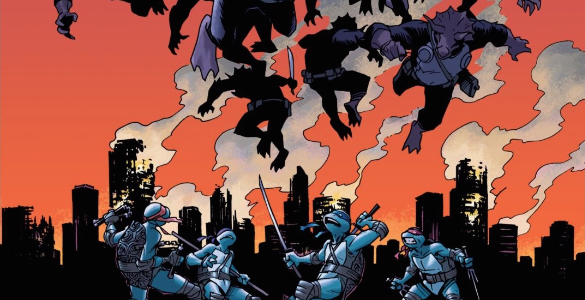
The past is a powerful thing that both enchants and horrifies. It’s amazing that a simple picture of a familiar place can bring on nostalgia. On the other hand, the past can be misremembered as being better than it was, leading people down a dangerous path to recreate a time and place that never existed. The Triceratons, who haven’t had a home planet for ages, know their history, and unfortunately for Earth, that means they long for a time, the Creatacious period, that they feel is rightfully theirs. Continue reading

Batman 36: Discussion

By Spencer Irwin and Mark Mitchell

Batman 36

This article contains SPOILERS. If you haven’t read the issue yet, proceed at your own risk!

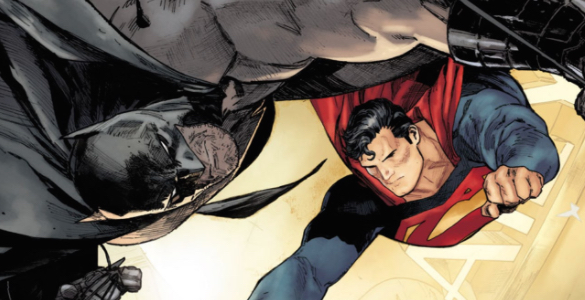
Spencer: Is Bruce Wayne the mask, or is Batman? Which one is “real”? It’s a long-standing debate amongst the comic book community, and given the myriad of different interpretations of the character, probably one that will never have a definitive answer. My own feelings about this question have shifted and evolved over time, but if you asked me right this second, I’d say that both Bruce and Batman are masks of sorts — the millionaire playboy and the dark knight, respectively. We don’t see him too often, but there’s a real Bruce beneath both those facades, one with real human emotions that often get buried beneath the weight of his own mythology. The best parts of Tom King’s run on Batman have been the moments where he’s let that real Bruce shine through, and more than anything it’s been Catwoman who has allowed this Bruce to do just that. In Batman 36, King adds another tool to his storytelling arsenal that similarly cuts right to Batman’s hidden humanity: his best friend, Superman. Continue reading

Earned Ultimatums in Archie 26

by Ryan Mogge

This article contains SPOILERS. If you haven’t read the issue yet, proceed at your own risk!

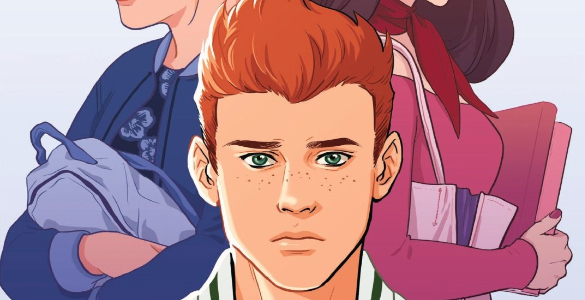
Ultimatums are a hallmark of melodrama. They immediately raise the stakes, making the next move carry the weight of future. Usually this is an unfair burden. Since the time that I realized that the relationships on Beverly Hills 90210 weren’t healthy, ultimatums in romance get a healthy dose of side-eye from me. When a person says “do this or we’re done” it’s usually a cop-out or a cheap way to turn a pot-hole into a roadblock. Ultimatums are the cliffhanger of choice in romance, perching a relationship’s entire future on the next moment. Given my skepticism, it’s impressive how much empathy Mark Waid and Audrey Mok are able to elicit from me for Dilton and Veronica at the end of Archie #26. Continue reading

A Dog’s Day in Doctor Strange 382

By Taylor Anderson

Doctor Strange 382

This article contains SPOILERS. If you haven’t read the issue yet, proceed at your own risk!

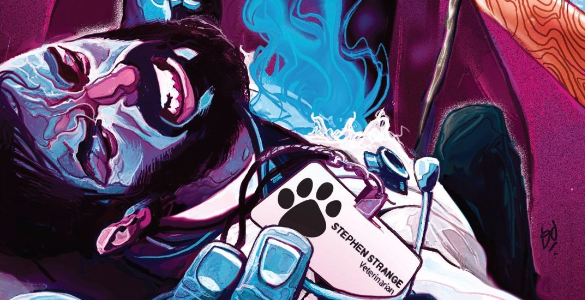
A couple months ago, my wife and I fulfilled our destiny as newlyweds and took one step closer to actual adulthood by buying a dog. She’s an unholy mix between a labrador retriever and a dachshund, and perhaps the cutest dog on the planet. Even when she chews up favorite bookmarks I’ve had for years or drinks water so compulsively fast that she barfs it all back up one minute later forcing me to clean it up, I can’t help but love her. I blame the eyes. One sad puppy-dog look from her an all is forgiven. This is all to say I understand why people love dogs and why they seemingly go to the ends of the earth for them. As it turns out, that’s something I have in common with Stephen Strange, as well. Continue reading

The Fix 10: Discussion

by Drew Baumgartner and Patrick Ehlers

The Fix 10

This article contains SPOILERS. If you haven’t read the issue yet, proceed at your own risk!

slim-banner

You either die a hero, or you live long enough to see yourself become the villain.

Harvey Dent, The Dark Knight

Drew: If that quote doesn’t feel like it fits this issue, it’s because it doesn’t. Where The Dark Knight explores the ideas of good, evil, and the moral relativism that exists in between, The Fix is gleefully amoral, concerned less with good and bad as it is with whatever its protagonists can get away with. Which is to say, a quote about heroes and villains doesn’t make a whole lot of sense in the world of The Fix. But I wonder if we strip away the morality from that quote, if we might get something a bit more universal (if still deeply pessimistic): you either die happy, or you live long enough to see yourself become miserable. The ordering of those outcomes betrays a cynical worldview that The Dark Knight (or at least Harvey Dent) shares with The Fix, one that presumes things are inclined to get worse. Of course, while The Dark Knight spun that cynicism into tragedy, The Fix funnels it into dark humor, making any successes Roy or Mac may enjoy are but haughty spirits before the inevitable fall. Continue reading

Kill or be Killed 14: Discussion

By Drew Baumgartner and Ryan Desaulniers

Kill or be Killed 14

This article contains SPOILERS. If you haven’t read the issue yet, proceed at your own risk!

Remove everything that has no relevance to the story. If you say in the first chapter that there is a rifle hanging on the wall, in the second or third chapter it absolutely must go off. If it’s not going to be fired, it shouldn’t be hanging there.

Anton Chekhov

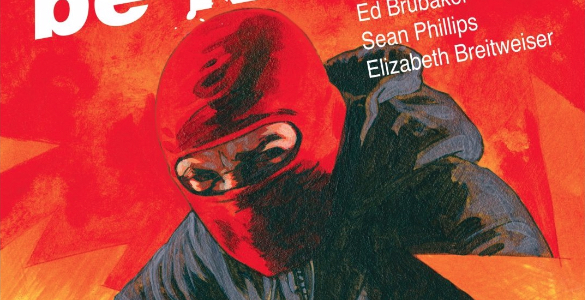
Drew: I feel like we tend to talk about Chekhov’s Gun backwards: we often frame it as “a gun introduced in the first chapter must go off in the third,” but that “must” kind of scrambles the causality — guns don’t go off in narratives because they’ve been introduced; they’re introduced because they need to go off. If the gun doesn’t go off, it’s as irrelevant to the narrative as the rings of Saturn. It’s an essential concept for narrative efficiency, but my awareness of it undoubtedly influences my own understanding of what a story is. While a child may think of a story as “everything that happens to the characters between the beginning and the end” (I know I did), anyone familiar with Chekov’s Gun must recognize that a good story is, at the very least least, pared down to only the relevant events transpiring between the beginning and the end. It’s a notion that assures us that whatever we’re reading is important, which in turn provides some clues about what the narrative finds important. 14 issues in, one might think that we’d already have a great handle on what Kill or be Killed finds important, but this issue managed to surprise me with the details it chose to focus on. Continue reading

The Press Finds a Way to be Free in Lazarus X+66 5

by Drew Baumgartner

Lazarus X+66 5

This article contains SPOILERS. If you haven’t read the issue yet, proceed at your own risk!

Our liberty cannot be guarded but by the freedom of the press, nor that be limited without danger of losing it.

Thomas Jefferson

I think it would be difficult to overstate how much the founding fathers valued a free, independent press. In their minds, it was an essential check on power, providing the citizenry with vital information about the actions of the government. In that way, the press can be framed as an antagonist of those in power, but only when the actions of those in power are at odds with the will of the people. Unfortunately, recent cults of personality have made certain people more inclined to root for those in power rather than the citizens, managing to tar the press as the enemy of the people. At the same time, news sources have become increasingly consolidated and corporatized, calling into question exactly how “free” and “independent” the press truly is. As ever, the world of Lazarus exists in the space made by playing out these trends to their logical conclusion, creating a world where the press is intended as the PR arm of the family, even as it’s made up of people who are deeply suspicious of them. Continue reading

More Than Just Offensive Accents in Star Wars: Poe Dameron 21

by Taylor Anderson

This article contains SPOILERS. If you haven’t read the issue yet, proceed at your own risk!

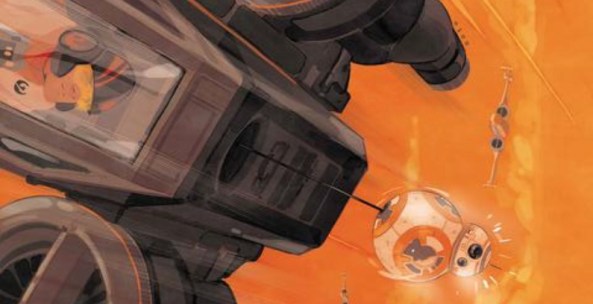
There are few aliens in the Star Wars universe who are hated as much by fans as the Neimoidians. True, Jar-Jar Binks makes the all of the Gungans disagreeable to a certain extent, but the Neimoidians seem especially hated. Maybe that has to do with the fact that they instigated much of the political unrest that caused the Clone Wars, or maybe it’s because George Lucas made the highly questionable decision to give them all accents that border on the offensive, given that they sound like a caricatures of a Japanese accent, but the Neimoidians have always been disliked by fans. While they aren’t necessarily likable in Poe Dameron 21, at least we get to see that there’s more to them than just a silly accent. Continue reading