Oh, Thank God, C-3PO Still Sucks in Star Wars 47

by Patrick Ehlers

This article contains SPOILERS. If you haven’t read the issue yet, proceed at your own risk!

slim-banner

When I was a kid, I hated C-3PO. Hated him. I thought his bumbling antics severely hurt the movies I loved. But something strange happened on my first viewing of The Phantom Menace: I was relieved to see him. Hell, I was excited to see proto-Threepio in Anakin’s bedroom. He was an island of familiarity in a sea of characters that were significantly more annoying. That’s largely how the newest Star Wars movies have been treating Threepio — as a sort of elder statesman of the franchise, commanding respect. Sure, he’s still annoying, but that all stems from his hoity toity affectations. Kieron Gillen and Salvador Larroca’s Star Wars 47 reminds us that C-3PO sucks, not just superficially, but deep down to his core. Continue reading

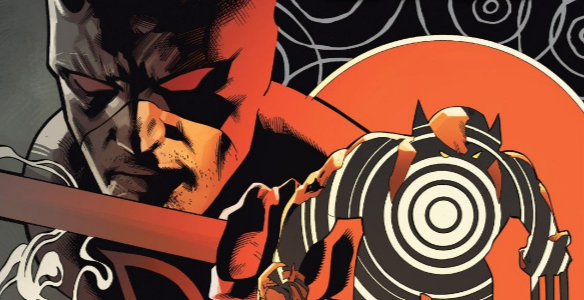
Assembling the Team in Hunt for Wolverine: Weapon Lost 1

By Drew Baumgartner

Hunt for Wolverine Weapon Lost 1

This article contains SPOILERS. If you haven’t read the issue yet, proceed at your own risk!

There’s something fun about watching a team put itself together. It lends urgency to everyone’s presence, making their utility to the team explicit in a way that isn’t inherently true of pre-existing teams. That is, while Iceman is coming on this X-Men mission whether or not anything needs to be iced, Danny Ocean is only adding someone to the team if their skills are essential to the plan. With so many pre-existing teams in comics, we don’t always get to see purpose-built teams with quite so narrow a focus as the one in Charles Soule and Matteo Buffagni’s Hunt for Wolverine: Weapon Lost, which is exactly what makes its first issue so fun. Continue reading

A Rare Quiet Moment in East of West 37

by Taylor Anderson

This article contains SPOILERS. If you haven’t read the issue yet, read on at your own risk!

In the hustle and bustle of a busy day, I find that it’s the quiet moments that make me happiest. After dealing with hectic pace and many demands of the classroom, it’s nice to come home and enjoy a quiet, evening walk with my wife and dog. As nice as these quiet moments are, they’re only pleasant because they are set against the larger backdrop of a busy day. If I hadn’t had a long day, I’m not sure they would be quite as sweet. This same thing can be said of grand, dark stories like East of West. While the big narrative about the apocalypse is the main bill, it’s the quiet, smaller moments I think I enjoy best. Continue reading

Becoming Part of the Adventure in You Are Deadpool 1

by Spencer Irwin

This article contains SPOILERS. If you haven’t read the issue yet, proceed at your own risk!

slim-banner

You Are Deadpool isn’t the first attempt to turn a comic book into a “Choose Your Own Adventure” story, but that doesn’t make it any less impressive. Not only is Deadpool — the irreverent, fourth-wall crashing, meta-joke of a character — a perfect choice to star in this kind of story, but creators Al Ewing and Salva Espin find inventive, intuitive ways to not only put readers into Deadpool’s shoes, but to make their choices, skills, and even luck truly have an effect on their adventure. Continue reading

Harbinger Wars II Prelude 1: Discussion

By Patrick Ehlers and Ryan Mogge

This article contains SPOILERS for both this issue and Avengers Infinity War. If you haven’t read the issue or seen the movie yet, proceed at your own risk! 

Patrick: Every big superhero event story needs to kick off with some kind of world-altering, morality-testing incident. A kind of “what did you just do?” moment that our characters will spend the next however-many-issues sorting out. Hell, the climax of Avengers Infinity War happened like 15 pages into the first issue of Jim Starlin’s The Infinity Gauntlet. Where writer Eric Heisserer distinguishes his story is in giving that catastrophic action to our hero, and making damn sure we understand why. Continue reading

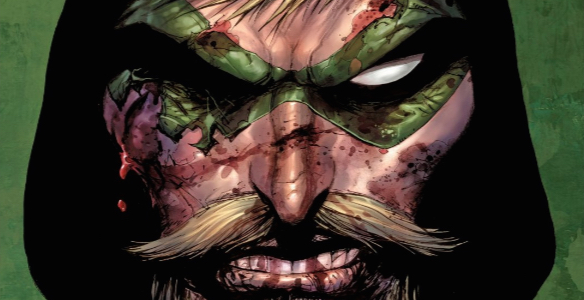
Being an Ally in Green Arrow 40

by Spencer Irwin

This article contains SPOILERS. If you haven’t read the issue yet, proceed at your own risk!

Spencer: One of the biggest challenges for many people — but especially for straight, white, cis-gendered males — is realizing that not every story is your story. We don’t always need to be the center of attention, our opinions don’t always need to be voiced, our methods and plans aren’t always right, much less the best ones for everyone else involved. That’s certainly what Oliver Queen was reminded of in last month’s Green Arrow 39 as his attempt to help out the war-torn country of Rhapastan backfired on him. He never should have gotten involved at all, right?

Wrong. Ollie’s conscious is his best feature — his mistake wasn’t getting involved, but charging head-first into a strange land without truly understanding the problem and working with the locals to address the root causes. The people of Rhapastan didn’t need a savior — they needed an ally, and that’s exactly what Ollie becomes in Jackson Lanzing, Collin Kelly, and Marcio Takara’s Green Arrow 40. Continue reading

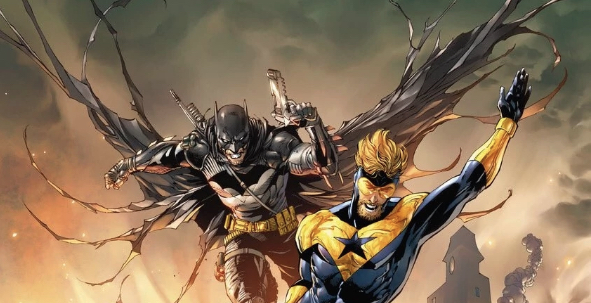
The Darkest Timeline in Batman 46

By Drew Baumgartner

Batman 46

This article contains SPOILERS. If you haven’t read the issue yet, proceed at your own risk!

From now on, I am Evil Abed. We are the Evil Study group, and we have but one evil goal: return somehow to the Prime Timeline, the one that I stopped you from rolling that die. Then we destroy the good versions of ourselves and reclaim our proper lives.

Evil Abed, Community

The notion of the “darkest timeline” seems to have entered the zeitgeist, mostly through tongue-in-cheek suggestions that we’re currently living in it, but it’s a relatively common concept in science fiction. Indeed, there are so many examples, I kind of split my metaphor on my discussion of Batman 45, touching on everything from Back to the Future Part II to It’s a Wonderful Life to that “Treehouse of Horror” episode of The Simpsons where Homer keeps accidentally changing the timeline. But none are more explicit about the superlativeness of the badness of the timeline than Community‘s darkest timeline.

It stands as a kind of conceptual opposite of Gottfried Leibniz’s “best of all possible worlds” theory — his explanation for human suffering that any other “world” (effectively, a different timeline) would be worse. The Back to the Future franchise suggests that the original timeline was neither the best nor the worst (Marty improves it in the first movie, turning his father into a successful science fiction writer, Biff makes it worse in the second, turning himself into a Trump-ian real-estate mogul), but most of these other examples only show changes to the timeline making things worse — effectively, that we’re actually living in the best of all possible worlds. This is definitely supported in the horrific timeline Booster Gold created as Bruce’s wedding gift, which is undeniably worse than the DC Universe as we know it, though on the surface appeared better for Bruce. That is, until Booster tries to fix things in this issue. Continue reading

Death or Glory 1: Discussion

By Spencer Irwin and Mark Mitchell

This article contains SPOILERS. If you haven’t read the issue yet, proceed at your own risk!

Spencer: A few weeks ago I covered Isola 1, a comic I praised for its subtlety and its trust and respect for its readers’ intelligence; there was very little hand-holding, exposition, or lore, and the issue was all the stronger for it. Rick Remender and Bengal are attempting something similar in the debut of their new Image series, Death or Glory, but it unfortunately doesn’t work quite as well. By the end of the issue — and especially on a second read — the story and structure, the characters and their relationships, they all snap together in a satisfying way, but I spent much of my first read puzzled; moreover, there’s still a few elements that don’t mesh even on that second time around. Continue reading

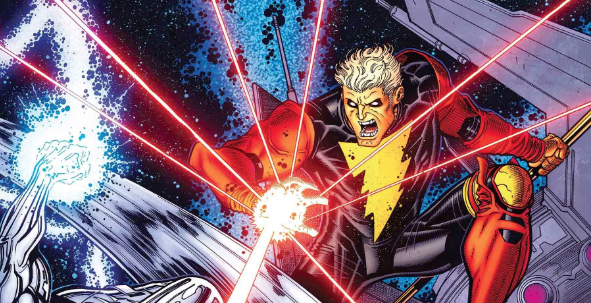
A Good Laugh Goes a Long Way in Infinity Countdown 3

by Taylor Anderson

This article contains SPOILERS! If you haven’t read the issue, proceed at your own risk.

One of the things that the Marvel Cinematic Universe has done right since its inception is to make their movies funny. Of course, some movies are funnier than others. Thor: Ragnarok has more humor than the first two Thor movies combined. Even the grandiose Avengers movies always find time for a laugh in between the action and making sure every hero has their proper amount of screen time. This humor isn’t always present in Marvel comics, and huge crossover events are often more muted in their humor. Luckily, that’s not the case with Infinity Countdown 3. Continue reading

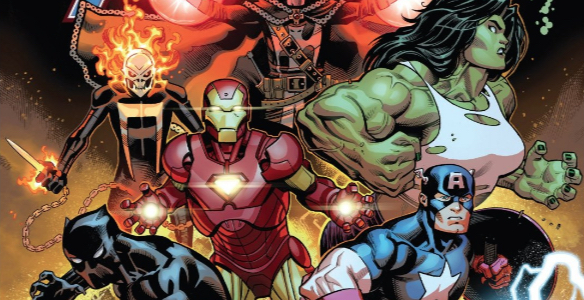
Avengers 1: Discussion

by Taylor Anderson and Drew Baumgartner

This article contains SPOILERS. If you haven’t read the issue yet, proceed at your own risk!

Taylor: In middle school, my favorite book was a archaeology tome titles Ancient Mysteries. The book is exactly what you would think — a survey of all the unsolved mysteries archaeologists have studied such as how the inhabitants of Easter Island made their statues and the relevancy of the Atlantis story. I was entranced by these mysteries because they suggested a history of Earth that was far bigger and far stranger than anything I had imagined up to that point. This was exciting at the time, and to this day my interest is still piqued by random archaeology articles on the BBC. It’s maybe for this reason that Avengers 1 intrigues me so much. It points to a deep, weird history of Earth I want to know more about. Continue reading