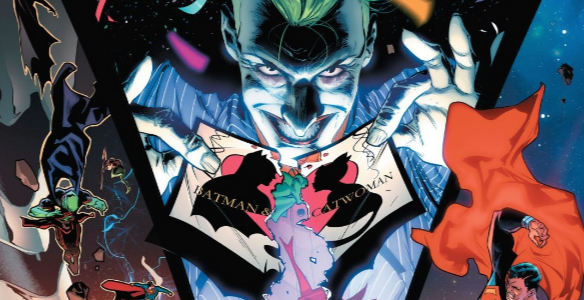
The Art of the Tease in DC Nation 0

by Michael DeLaney

This article contains SPOILERS. If you haven’t read the issue yet, proceed at your own risk!

DC Nation 0 provides teases for three different types of upcoming books: Tom King’s continuing run on Batman, Brian Michael Bendis’ upcoming turn on the Superman books and the Scott Snyder-helmed Justice League: No Justice series. Different books lead to different teases. Continue reading

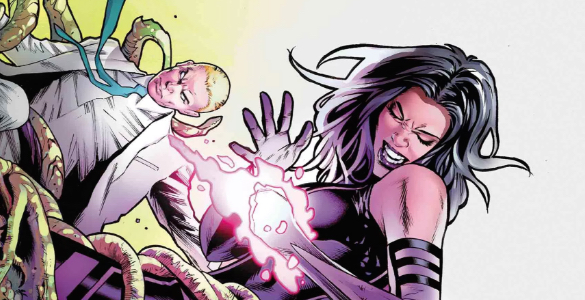
Lettering Through the Psychic Fog in Astonishing X-Men 11

By Patrick Ehlers

This article contains SPOILERS. If you haven’t read the issue yet, proceed at your own risk!

CORRECTION (5/3/18): A previous version of this piece credited Clayton Cowles with the lettering, as is indicated in the credits. The issue was actually lettered by Travis Lanham.

Astonishing X-Men is one of those telepathic mutant clusterfucks. You know the type: there are psychics and reality warpers and a shapeshifter all int he mix at once. The audience’s ability to tell what is happening and what is not happening will likely vary from reader to reader, but I had a hell of a time tracking who was where and what specific threats they faced. This disorientation cues the reader up for that mind-bending twist on the final page. But you can’t just be confused for 20 pages, can you? With Ron Garney’s artwork and Charles Soule’s script both actively working to distance themselves from the reader, we have to look to letterer Travis Lanham for signposts of stability. Continue reading

Conscience as a Bug and as a Feature in Coda 1

by Mark Mitchell

This article contains SPOILERS. If you haven’t read the issue yet, proceed at your own risk!

There’s little point in being nice to people unless the act of being kind itself brings you happiness. Rude people are not unhappy — not categorically, anyway — because they don’t care that they’re rude, and there’s an undeniable freedom in not caring. Having a conscience is arguably a bug as well as a feature, since it’s easier to achieve your goals if you don’t care about the people you hurt in your pursuit of them.

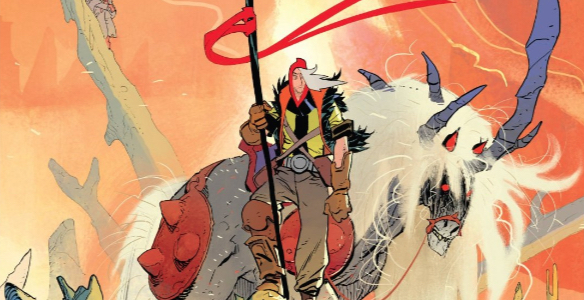
In Simon Spurrier and Matias Bergara’s Coda 1, former bard Hum is determined to rescue his wife from a clan of savage orc-like creatures at the cost of everything and everyone else; as the issue closes he’s willing to potentially sacrifice the population of an entire city if it gets him one step closer to her. But it’s clear that Hum’s selfishness can’t last, and Coda is poised to be a series about one man in a terrible situation learning to put others above himself. Continue reading

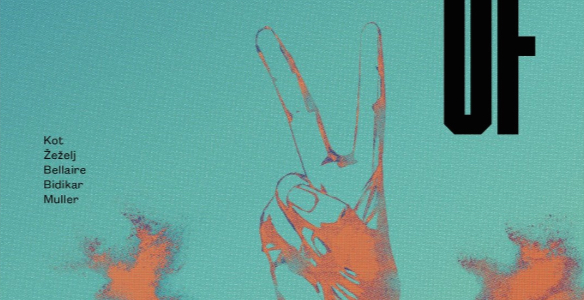
Days of Hate 4: Discussion

By Patrick Ehlers and Drew Baumgartner

This article contains SPOILERS. If you haven’t read the issue yet, proceed at your own risk!

Patrick: Aleš Kot and Danijel Žeželj’s Days of Hate is the story of a future chillingly extrapolated from our social and political present. It’s an authoritarian hellscape where liberal and conservative are less policy preferences and more tribal banners. Ideologies are buried under the methodologies of success. Our characters are tools of either the regime or the revolution, so it’s tempting to say that their motivations are obvious: do whatever it takes so their side wins. But… that’s incomplete. People are more than just their beliefs — they are also the places and people they love. Days of Hate 4 shows how love anchors our heroes, but it also shows how it puts them in very serious danger of drowning.

Continue reading

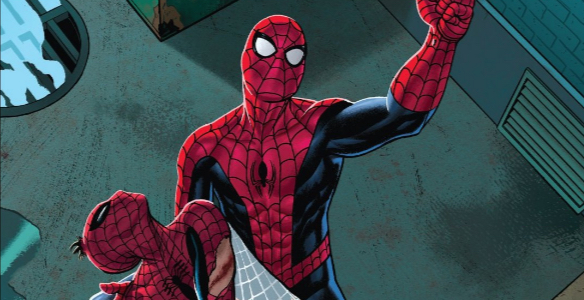
The Burden of Tomorrow in Peter Parker: the Spectacular Spider-Man 303

by Taylor Anderson

This article contains SPOILERS. If you haven’t read the issue yet, proceed at your own risk!

More so than most superheroes, Spider-Man knows just how much of a sacrifice it takes to use his powers for good. In fact, the very reason he decided to become a hero at all revolves around the loss of his Uncle Ben. The list of hits doesn’t end there, though: Gwen Stacy, Aunt May, and and the sometimes friendly Osborns have all died at some point or another due to Spider-Man. This means that he’s a character as much defined by his tragic circumstances as he is by his superpowers, which begs the question: if he knew how terrible it is to be Spider-Man, would Peter Parker choose to be him anyway? Continue reading

Dread, Anticipation, and Waiting in Saga 51

by Spencer Irwin

This article contains SPOILERS. If you haven’t read the issue yet, proceed at your own risk!

The current arc of Saga has, in many ways, been a slower one. That’s not a complaint — Brian K. Vaughan and Fiona Staples know exactly how to make even simple moments of domestic bliss, strife, or harmony absolutely riveting — just an observation. With Ianthe plotting in the background, and with Saga‘s track record of major twists and deaths coming at a fairly regular pace, there are likely some readers waiting impatiently to get to the next “big” moment and see exactly where this is all leading. Saga 51 brings us one step closer to a major reckoning, but it also reminds readers why these quieter issues are so essential to the series as a whole. Continue reading

Lockjaw 3 is a Cartoony Romp

By Drew Baumgartner

Lockjaw 3

This article contains SPOILERS. If you haven’t read the issue yet, proceed at your own risk!

Gordie: Alright, alright. Mickey’s a mouse. Donald’s a duck. Pluto’s a dog. What’s Goofy?
[…]
Teddy: Goofy’s a dog, he’s definitely a dog.
[…]
Chris: He can’t be a dog. Wears a hat and drives a car.
[…]
Vern: God, that’s weird. What the hell is Goofy?

Stand By Me

There are no rules inherent to a cartoon world. Maybe this is one where dragons exist. Maybe this is one where elephants can fly. Maybe this is one where an anthropomorphized mouse can own a regular (albeit cartoon) dog. We can accept those conceits on the terms they’re given, because it’s a cartoon. Audiences balk at other media for being “unrealistic,” but “cartoony” — effectively stylized unrealism — is a compliment. At least, that’s how I tend to think of cartooniness: a fun relaxations of the “rules” that govern fictional worlds, making room for a heck of a lot more imagination and fun. Such is certainly the case with Lockjaw 3, which finds even more fun to mine from relaxing its already madcap rules. Continue reading

Narrative Twists and Powerful Love in Hunt for Wolverine 1

By Michael DeLaney

This article contains SPOILERS. If you haven’t read the issue yet, proceed at your own risk!

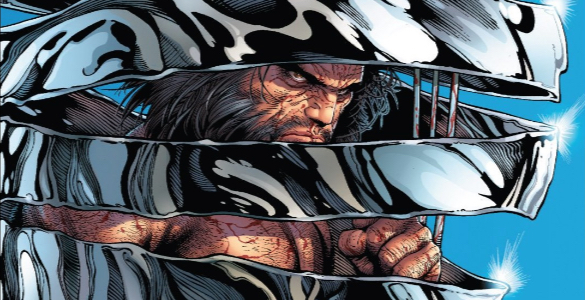
Modern storytelling loves a narrative twist — you could argue that most stories are exclusively centered around them. With that in mind, do we let the success of a twist dictate the overall reception of a story? Hunt for Wolverine 1 may be such an example. Continue reading