Too Many Cooks Clash in Avengers 676

by Drew Baumgartner

Avengers 676

This article contains SPOILERS. If you haven’t read the issue yet, proceed at your own risk!

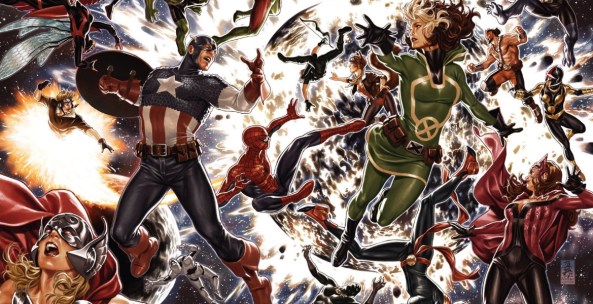
I still read my old college newspaper, but the older I get, the more I recognize how terrible it is. Case in point: they recently published an article about a meeting on campus, but failed to put the meeting into any kind of context — there were no quotes from anyone involved, no explanation for why the meeting might be necessary, no connections to similar issues at other schools (I’ll apologize now for being vague, but the point isn’t to dunk on this particular article, so I’ll leave it at that). The result was something closer to meeting minutes than an actual article, overemphasizing the “what” in place of any “why”. I found myself thinking the same thing in Avengers 676, which has so many characters and events to cram in, there really isn’t any room to properly examine any of them. Continue reading

Amazing Spider-Man & Venom: Venom Inc. Omega Spoils Itself

by Drew Baumgartner

Venom Inc Omega

This article contains SPOILERS. If you haven’t read the issue yet, proceed at your own risk!

How do we feel about Marvel’s “alpha” and “omega” strategy to crossovers? That is, mostly embedding the crossover in already-running monthlies, reducing the event series to just the first and last chapters of the story. They’re harder to skip by design — where you might be able to simply ignore an entire event series, you might be pulled into a crossover if a book you’re following is participating — but that can be frustrating to otherwise disinterested readers. Another downside that I hadn’t considered is that the stakes of an omega issue are kind of necessarily neutered — their inessential nature means they lack the ballast to make any changes that would be too earth-shattering to its participating series. Any big changes must have already happened in the series it would most effect, leaving the omega to tie up the loose ends with as little disruption to the status quo as possible. I don’t love to lead with these kind of meta-critiques of an issue (honestly, most superhero story arcs wrap up with the same kind of predictable return-to-normal), but Amazing Spider-Man & Venom: Venom Inc. Omega seems determined to keep it at the forefront of my mind, stymying any tension at every chance it gets. Continue reading

Batman 39: Discussion

By Drew Baumgartner and Mark Mitchell

Batman 39

This article contains SPOILERS. If you haven’t read the issue yet, proceed at your own risk!

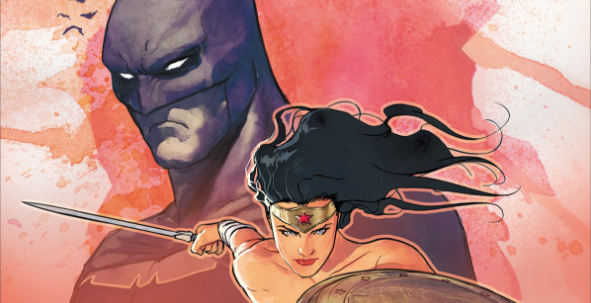
Drew: Hey, so what is fidelity? I think we all understand the general concept, but the exact borders of the definition are not entirely well defined. If your significant other dies, for example, very few people would classify moving on to another relationship as “cheating,” so we might fairly define “death” as one of the hard edges of fidelity. But what if they’re just presumed dead — say, on a desert island for years and years? Do we consider Helen Hunt’s marriage in Cast Away to be cheating on Tom Hanks? What if it had been Tom Hanks who forged the new relationship (on the island, somehow) — he knows he’s not dead (and could reasonably assume Helen Hunt isn’t), but do the rules of fidelity extend to seemingly hopeless circumstances of languishing in a remote corner of the world? These are certainly unlikely hypotheticals, but unlikely hypotheticals are what superhero comics are all about, and exactly what Batman 39 needs in order to maybe-kinda-sorta justify Batman and Wonder Woman hooking up. Continue reading

A Different Set of Stakes in Old Man Hawkeye 1

by Drew Baumgartner

Old Man Hawkeye 1

This article contains SPOILERS. If you haven’t read the issue yet, proceed at your own risk!

There are plenty of valid critiques of individual prequels, but I’ll never understand the argument that prequels are robbed of stakes because we know who survives the story. This ties into my wariness of spoiler concerns that privilege plot over all other aspects of consuming a story, but with the added twist of fetishizing death as the only stakes a story could possibly have. It falls apart under even the slightest scrutiny — the protagonist’s survival can be assumed for the vast majority of stories, and I reject the notion that this fact inherently makes those stories inferior. We know Vito must survive the flashback story in The Godfather Part II, but it is also regarded as one of the greatest movies of all time — held in higher esteem than virtually all movies where the protagonist might maybe die in the third act. Not all stories are life-and-death stories, and not all life-and-death stories require us to actually believe that the character might die. Such is the case with Old Man Hawkeye, which tells the story of Clint Barton before he went on that fateful road trip in Old Man Logan. (So, you know, heads up about spoilers for that series after the jump.)  Continue reading

The Unbeatable Squirrel Girl 28 Piles on the Grifts

by Drew Baumgartner

Unbeatable Squirrel Girl 28

This article contains SPOILERS. If you haven’t read the issue yet, proceed at your own risk!

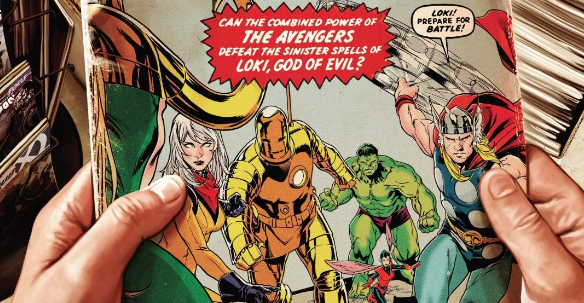
Loki stories are fun — and have been for literal millennia — because of the dynamic way storytellers let us in on his tricks. Sometimes, we’re only tipped off to the trick after the fact, allowing us to be fooled along with his audience. In other cases, we get to be “in” on the trick, effectively seeing it from his perspective. Or our perspective can shift at any point, allowing us to be fooled for a time before revealing the trick to us halfway through, introducing that bit of dramatic irony that makes trickster stories so fun. Ryan North and Erica Henderson understand the fun of all of those approaches, and mix and match them to glorious effect in Squirrel Girl 28. Continue reading

Fisk Keeps His Enemies Closer in Daredevil 597

by Drew Baumgartner

Daredevil 597

This article contains SPOILERS. If you haven’t read the issue yet, proceed at your own risk!

What rock did these morally pure creatures crawl out from under and, more important, how do you go from innocent millipede to White House staffer without becoming soiled or disillusioned by the dirty realities of politics along the way?

Heather Havrilesky, “Will The West Wing go south?”

There are a lot of things to nitpick about The West Wing, between its heavy-handed Sorkin-isms and its penchant for too-saccharine resolutions, but the one criticism that I can’t stand is that it isn’t realistic enough. Of course it isn’t — it’s fiction. No, these aren’t how actual White House staffers would talk about issues, because how they actually talk would be totally impenetrable to the audience the show is actually made for. Tone-deaf critics would dismiss this as dumbing-down, but the alternative is a highly accurate but totally unwatchable bore. Policy wonks may lament that there’s no television truly tailored to their niche interests, but the rest of us want something, you know, entertaining. Moreover, we understand that in order to generate drama, characters in fiction may need to speak and act in ways that real people wouldn’t (hint: real people don’t only sit on one half of a dining room table or speak in iambic pentameter). Which means the hero sometimes has to be naive in their hopes and dreams — if they know they’re going to crash on the rocks, they might just call the whole adventure off, which doesn’t leave us with much of a story. Such is the case with Matt’s attempt to keep a watchful eye on Fisk. Continue reading

Avengers 675: Discussion

by Drew Baumgartner and Michael DeLaney

Avengers 675

This article contains SPOILERS. If you haven’t read the issue yet, proceed at your own risk!

Drew: The Marvel Universe is big. That much is clear from the very beginning of Avengers 675, which skips across the globe to catch up with Marvel’s countless superhero teams and fictional countries as they deal with the Earth suddenly being transported…somewhere. Characters helpfully repeat each other’s names (and the names of their respective teams) to orient us, but being overwhelmed is kind of the point — these characters are facing down utter chaos, and that chaos is everywhere. Crossover events will often feature these kinds of “cash in all the chips” moments, straining our familiarity with Marvel’s lesser-known characters to really sell the massive scope of the story. But that’s where this issue differs from the standard crossover; where other stories simply revel in the bombast of throwing all of these characters together, Avengers 675 uses it as a cover to inject a new character into the narrative. [Phew, are there SPOILERS to follow.]  Continue reading

Rise of the Black Panther 1: Discussion

by Drew Baumgartner and Ryan Desaulniers

Rise of the Black Panther 1

This article contains SPOILERS. If you haven’t read the issue yet, proceed at your own risk!

“Spinoff!” Is there any word more thrilling to the human soul?

Troy McClure, “The Simpsons Spin-Off Showcase”

Drew: That epigraph might seem a bit glib, but while I understand the criticisms spinoffs get for being uninspired or safe, I’d never dismiss a spinoff as a matter of course. Case in point: The Simpsons is technically a spinoff from The Tracey Ullman Show, but that didn’t stop it from becoming arguably the greatest sitcom of all time. And actually, the discrete nature of The Tracey Ullman Show might just have been part of what makes The Simpsons so successful — there isn’t the temptation to feature cameos from the original show, the way Frasier might with Cheers, for example. That is, The Simpsons could operate in its own world, untethered to the sensibilities of its origin. Unfortunately, despite the decades that separate The Rise of the Black Panther from its main series, it never really manages to form its own identity. Continue reading

Best of 2017: Best Series

Series

We all love a good one-off or anthology, but it’s the thrill of a series that keeps us coming back to our comic shop week-in, week-out. Whether it’s a brand new creator-owned series or a staple of the big two, serialized storytelling allows for bigger casts, bigger worlds, and bigger adventures. That bigness was on full display this year, as series made grand statement after grand statement about what they were all about. These are our top 10 series of 2017.  Continue reading

A Statement of Purpose in Black Lightning: Cold Dead Hands 3

by Drew Baumgartner

Black Lightning Cold Dead Hands 3

This article contains SPOILERS. If you haven’t read the issue yet, proceed at your own risk!

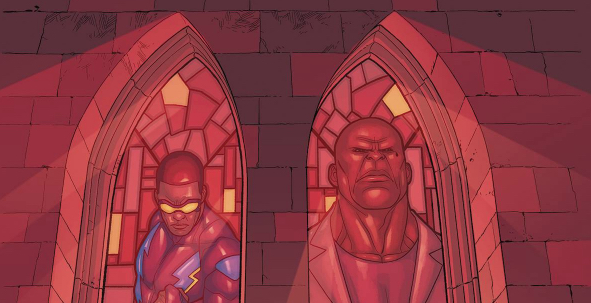
Superheroes have become so ubiquitous, we sometimes take their motivations for granted. Not everyone has a well-known origin story, so we often just accept that a given hero is fighting crime without any further explanation necessary. That may seem odd, but it’s also how most police stories go — we don’t always need an explanation for why the protagonist became a cop in the first place. But it does leave some personal investment on the table. Police stories often get around this by somehow making the case at hand personal, but that personal connection can have a lot more resonance if it reaches back to the character’s past — perhaps the very thing that drove them down this path in the first place. I hadn’t really been sweating Jefferson Pierce’s motivations — he’s a community-minded guy that happens to have superpowers, so I could believe him feeling some sense of duty — but Black Lighting: Cold Dead Hands gets specific, drawing from the real-world shooting of Tamir Rice as a kind of Uncle Ben moment. Continue reading