Misplaced Trust in Coda 2

by Drew Baumgartner

Coda 2

This article contains SPOILERS. If you haven’t read the issue yet, proceed at your own risk!

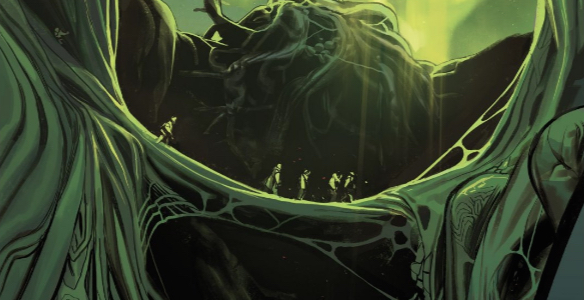
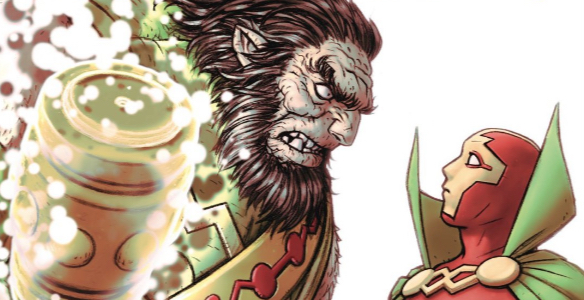
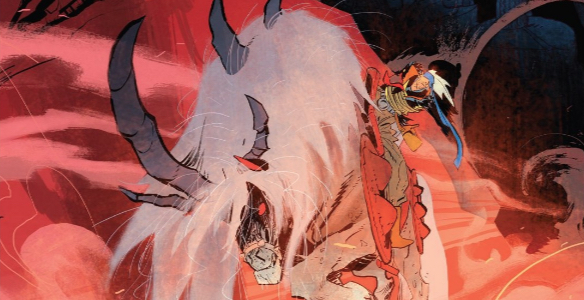
There’s a scene in Coda 1 where our protagonist hesitates to smell the wine he’s just been handed — he knows his host too well to trust them. It’s a revealing moment that also cleverly sets up a spiked wine gag a few pages later, driving home the point that nobody in this world can be trusted, least of all the characters we know. And it’s a point Simon Spurrier and Matías Bergara reemphasize towards the start of this issue, revealing their glowing wizard’s tower to be little more than a dank cave. The protagonist’s senses may be as difficult to fool as ever, but now we have to know not to trust our own eyes. And yet, the rest of the issue lulls us into putting our guards down, allowing us to believe we’ve found a refuge from the violence and deceit of the outside world. Which makes it all the more shocking when we learn all of those assumptions were bad, and that there really is no honesty left in this world. Continue reading
The Symbiote Stands for Addiction in Venom 2

by Ryan Desaulniers

This article contains SPOILERS. If you haven’t read the issue yet, proceed at your own risk!

slim-banner

If you have never been addicted, you can have no clear idea what it means to need junk with the addict’s special need. You don’t decide to be an addict. One morning you wake up sick and you’re an addict.

William S. Burroughs, Junkie

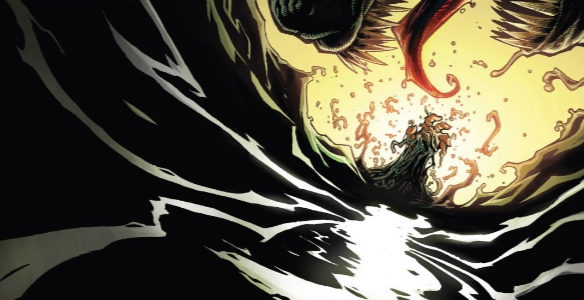
Is it possible to explain addiction to someone who has never been addicted? The closest parallel I can draw is the deep, resounding heartache felt when ending a long-term relationship, when the hurt is so big that it is all-encompassing, physically affecting you, turning your stomach, switching your brain off from rationality. Maybe that’s close, but there’s plenty less stigma associated with heartbreak than addiction and its corresponding mental health cycles. Different forms of media endeavor to bring addiction out of the shadows and prove that it is no indication of a flaw in a person’s character, but even a well-told story like that of Requiem for a Dream might offer the non-addict a catharsis based upon their security in never living that experience as opposed to an understanding of those who have. Venom 2 offers a compelling look at a character in a narrative rife with addiction imagery and symbolism which might just lend a window into the life of someone struggling with their relationship to a substance. Continue reading

Oblivion Song 4 Doesn’t Waste Time Rehashing the Plot

by Michael DeLaney

This article contains SPOILERS. If you haven’t read the issue yet, proceed at your own risk!

Perhaps I’m getting (even more) irritable in my old age, but more and more I find myself cringing at excessive expositional dialogue. It may not always be the case, but I like to think that comic book readers are an intelligent and intuitive bunch, making clunky fact-establishing dialogue a little jarring. As a veteran of creating his own universes and mythologies, Robert Kirkman knows the right balance of give and take when it comes to expositional dialogue. Continue reading

One Impressive Spread is an Issue in Microcosm in Exiles 4

by Spencer Irwin

This article contains SPOILERS. If you haven’t read the issue yet, proceed at your own risk!

slim-banner

Exiles 4 is the series’ best issue yet, and not just because of the puns (although the “Juggernautical” joke alone certainly earned this issue a spot high in my rankings). Saladin Ahmed and Javier Rodriguez slow down just a bit, devoting the entire issue to one dimension and one story, allowing the world the Exiles visit to feel interesting and fleshed out and for a full, self-contained adventure to play out there in a way that previous issues haven’t always had room for — all while still advancing the overarcing Time-Eater plot. It’s impressive plotting, pulled off with aplomb by every member of the creative team, who never allow the issue’s density to choke out the detail, character work, or fun this series has come to be known for. It’s a killer combination, and there’s one perfect moment that epitomizes everything that’s great about this issue. Continue reading

Rage is Ugly in Teenage Mutant Ninja Turtles Universe 23

by Patrick Ehlers

Teenage Mutant Ninja Turtles Universe 23

This article contains SPOILERS. If you haven’t read the issue yet, proceed at your own risk!

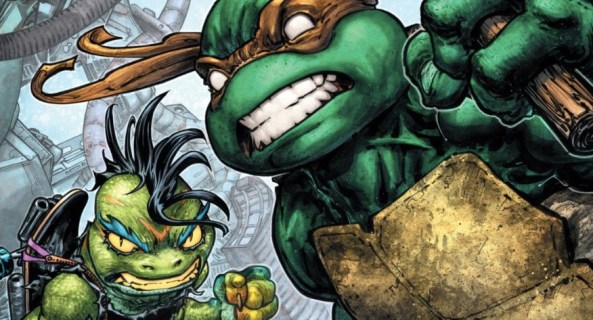
I think we all need a little mental health check in. How are you doing? At the time I sit down to analyze Teenage Mutant Ninja Turtles Universe 23, the only news I can catch on my social media feeds are the infuriating reports of migrant children separated from their technically-criminal parents. This is an unspeakably cruel policy, enacted by opportunistic monsters, and enforced by a criminally unrestrained agency. It makes me mad to the point of being physically sick. And powerless. Ryan Ferrier and Pablo Tunica’s “…And Out Came the Reptiles” story from TMNTU 23 perfectly captures this sickening feeling of desperation, inflicting the ugliness of Mondo Gecko’s impotent rage on the whole issue. Continue reading

Thor 1: Discussion

by Taylor Anderson and Patrick Ehlers

This article contains SPOILERS. If you haven’t read the issue yet, proceed at your own risk!

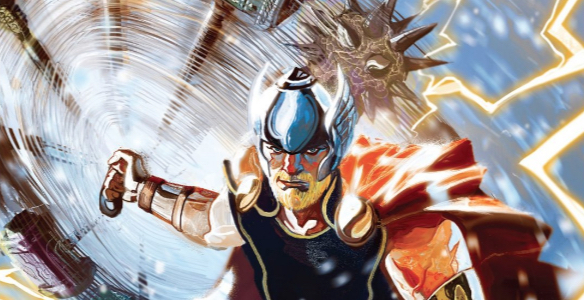
Taylor: When I’m teaching my students about tone and mood in class, my go-to lesson involves a Marry Poppins trailer. First I show them the original trailer for the movie and then I show them a trailer that Christopher Rule cut together, which makes the classic film look like a horror movie. It’s a great way of showing the kids that the same content can have a drastically different tone and mood based on how the artist presents the story. I was thinking of this as I read Thor 1, because the issue shares the same characters, settings, and even the same writer as the Mighty Thor, but it feels drastically different. It’s a textbook example of how a skilled writer can shift the tone of a story, and in this case, that shift is a refreshing change of direction for the Thor series. Continue reading

A Story Deepened by Shades of Gray in Darth Vader 17

by Spencer Irwin

This article contains SPOILERS. If you haven’t read the issue yet, proceed at your own risk!

Throughout their run on Darth Vader Charles Soule and Giuseppe Camuncoli have created (and/or reintroduced) a fascinating set of supporting and one-off characters, but for my money, the most intriguing is Jedi Master Ferren Barr. Last month Patrick already seemed suspicious of Barr’s methods, and in Darth Vader 17 the creative team doubles down on the shades of gray surrounding Barr. It’s the questions surrounding him and his methods that make Barr so interesting, especially as a Jedi. Continue reading

Malice in Civility in Mister Miracle 9

By Patrick Ehlers

This article contains SPOILERS. If you haven’t read the issue yet, proceed at your own risk!

War is hell. It is economically, physically, and psychologically catastrophic for both those waging war and anyone unfortunate enough to be in war’s orbit. But ending a war? Ending a war requires one of two things: one side to be completely destroyed, or an agreement to be reached between the warring parties. Most wars end the second way. Which is borderline unfathomable, right? Imagine sitting down to negotiate with someone who has been systematically, enthusiastically, killing your friends and family every day for months or years. Tom King and Mitch Gerads’ Mister Miracle 9 wrestles with the dissonance of trying to make peace out of war. Continue reading

Character Drives the Drama in Marvel Rising Alpha 1

by Drew Baumgartner and Ryan Mogge

Marvel Rising Alpha

This article contains SPOILERS. If you haven’t read the issue yet, proceed at your own risk!

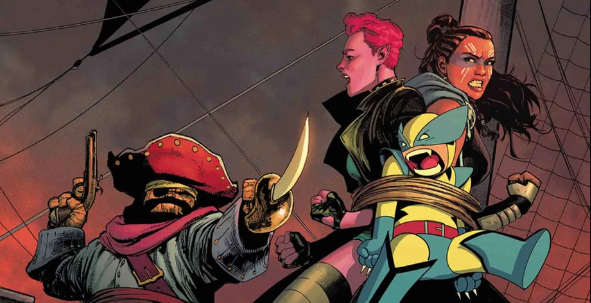
Drew: For most of my mid-20s, I worked for an academic summer program — basically, summer camp for nerds. As with most work with youth, the job was both rewarding and frustrating, with unexpected problems often interrupting the flow of what we might imagine a “normal” day to be. Indeed, those unexpected problems came up so regularly, that my boss’s regular refrain was “don’t let the urgent crowd out the important” — that is, don’t forget the part of the job that isn’t putting out fires. It’s straightforward advice, insisting that every part of the job is important, but I think it’s particularly salient when dealing with kids — you don’t want the loudest, most poorly-behaved students to command all of the attention, as the quiet, well-behaved students might be struggling just as much. It’s a hard balance to strike, especially for the college-aged students we hired as instructors, so I understand exactly why Doreen Green makes the missteps she does in Marvel Rising: Alpha 1. Continue reading

Eternity Girl 4 Skips Through the Comics Multiverse

By Drew Baumgartner

Eternity Girl 4

This article contains SPOILERS. If you haven’t read the issue yet, proceed at your own risk!

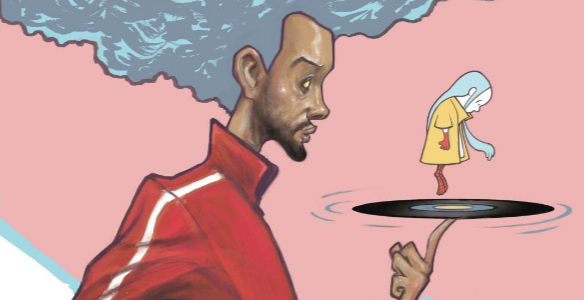
Comics critics are bad at talking about art. I suspect there are a few overlapping causes — some critics are diehard fans of specific characters, so are more invested in what happens to those characters than they are acknowledging that they live in a fictional world created by real human beings; others are (nominally) writers, so are have an affinity towards writing, which doesn’t leave much room (or knowledge) for anything else. And to be clear, I’m not suggesting that I’m any better. As a non-artist, it’s easy for me to get caught up in the most superficial elements of a given artist’s style. Defying that tendency has always been what excites me about artist Sonny Liew. My first exposure to Liew’s work was his original graphic novel The Art of Charlie Chan Hock Chye, which is part biography, part retrospective on a fictional comics artist, requiring that Liew modulate his style between the docudrama and epistolary elements. The effect was downright magical, creating the sense that there truly was a second artist creating all of the diegetic comics. It effectively defies my tendency to pigeonhole an artist based on “their” style. It’s that skill that Liew taps into with Eternity Girl 4, offering us multiple iterations (and styles) of the life and times of Caroline Sharp. Continue reading