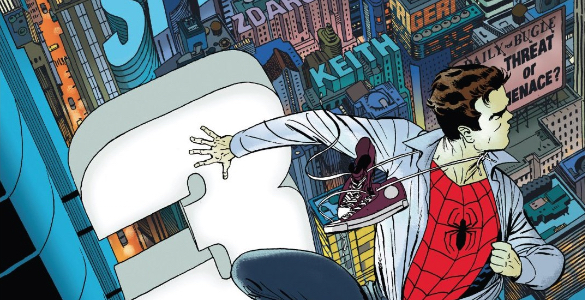
Spidey in a Nutshell in Peter Parker: The Spectacular Spider-Man 300

by Taylor Anderson

This article contains SPOILERS. If you haven’t read the issue yet, proceed at your own risk!

Over the years, Spider-Man has come to mean a lot of different things to a lot of different people. That being the case, it’s still interesting to ponder what about Spidey resonates with so many fans. After all, there are plenty of superheroes who have had comics, but few who are as popular as the web-slinger. I can’t help but feel that there must be something about Spider-Man that all people enjoy — something that makes him almost universal in his appeal. Figuring that out is perhaps a taller order than I can accomplish in this article, but in issue 300 of the Spectacular Spider-Man, there are hints which suggest why he is such a likable hero. Continue reading

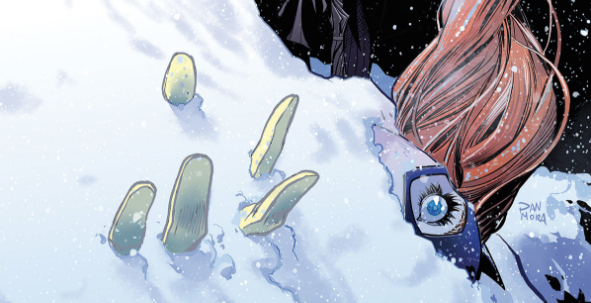
Memories Leave their Mark in Batgirl 20

By Drew Baumgartner

Batgirl 20

This article contains SPOILERS. If you haven’t read the issue yet, proceed at your own risk!

Batgirl’s eidetic memory has long been one of her most valuable assets as a crime fighter. Remembering crime scenes in intricate detail or the face of every suspect she encounters makes detective work almost a natural extension of her being. Indeed, her eidetic memory has proven so essential to her detective work, it’s easy to forget that it has dramatic possibilities beyond that. Or, at least, other creative teams have made it easy to forget — not so with Hope Larson’s run, which has found countless inventive ways to use Batgirl’s eidetic memory. With issue 20, Larson finds yet another great use for it, as Batgirl takes a drive down some literal memory lanes. Continue reading

The Perfect Team-Up in All-New Wolverine 31

by Patrick Ehlers

This article containers SPOILERS. If you haven’t read the issue yet, proceed at your own risk.

While reading All-New Wolverine 31, I realized that I have been measuring Deadpool team-ups by how good of a foil the other character is for the Merc with the Mouth. I like Deadpool with Captain America because their differences are obvious and legion. I like Deadpool with Logan, because while they’re both immortal murder machines, Logan sees the tragedy in his existence, while Wade somehow twists that into comedy. I like Deadpool with Spider-Man because there’s a sort of one-ups-manship there: “you think that’s goofy, Pete? WATCH THIS.” All-New Wolverine 31 presents a new kind of pairing: Deadpool and a character who is excited to learn from his example. Gabby’s not a foil, but their relationship is basically perfect. Continue reading

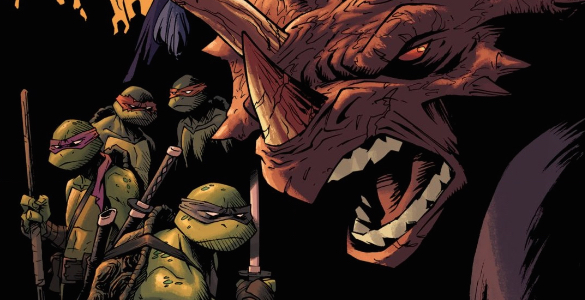
Learning Your Parents Aren’t Perfect in Teenage Mutant Ninja Turtles 79

By Taylor Anderson

This article contains SPOILERS. If you haven’t read the issue yet, proceed at your own risk!

When I was 15 my parents got a divorce, which, in so many words, sucked. I’m not going to bore you with all the details of my emotional state at that time, but one important and hard lesson I learned is that my parents aren’t perfect. The splitting up of a family is difficult and makes for ripe pickings for acknowledging the shortcomings of your loved ones. That being said, this lesson isn’t unique to me or other people whose parents have split. At some point, most children realize that their parents aren’t perfect and that they are indeed very flawed, just like we all are. This lesson is tough, but as Teenage Mutant Ninja Turtles 79 shows, acknowledging it is a key step in the maturation process. Continue reading

The Wilds 1: Discussion

by Drew Baumgartner and Mark Mitchell
Wilds 1

This article contains SPOILERS. If you haven’t read the issue yet, proceed at your own risk!

They might not have done so with elaborate ritual, since there has never been solid evidence that they included symbolic objects in graves, but it is clear that they did not just dump their dead with the rest of the trash to be picked over by hyenas and other scavengers.

Francesco d’Errico

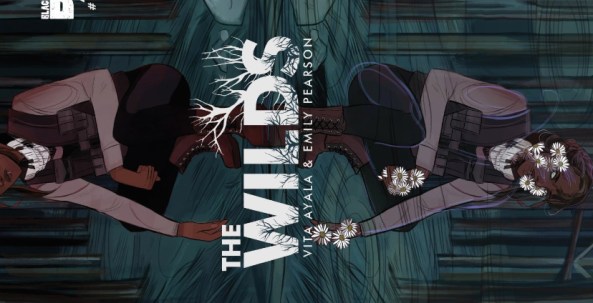
Drew: What makes us human? As with any attempt to draw hard lines around a vague concept, there seem to be exceptions to every feature we might describe as human, forcing us to consider that other species might just qualify for whatever working definition we land on. Such is the case with Neanderthals — the “they” in the quote at the top of this piece — which display enough of what we understand as culture and morality for me to be satisfied with their humanity. But were their contemporary Homo sapiens? The trouble with that nebulous definition of humanity is that our gut tends to default to speciesism, especially in the moment. It’s easy for me to rule Neanderthals in now, but what about chimpanzees or dolphins? They have irrefutably human-like use of tools and language, but they just don’t feel human — they inspire a kind of visceral “this is an animal” feeling that requires a great deal of rational thought to overcome. That confusing, blurry line between human and non-human has long been a point of fascination for sci-fi writers, whether the non-human is a robot, alien, or some kind of mutated human, literalizing the struggle Homo sapiens seem to have in even recognizing the humanity of one another. This is far from the only intriguing theme in Vita Ayala and Emily Pearson’s The Wilds 1, but it might be the most unexpected. Continue reading

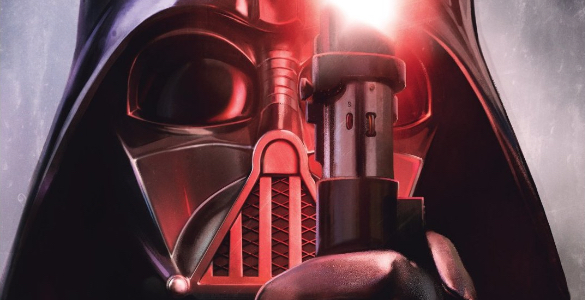
Vader’s Uncertainty Threatens All — Including Himself — in Star Wars: Darth Vader 12

by Spencer Irwin

This article contains SPOILERS! If you haven’t read the issue, proceed at your own risk.

Why is Darth Vader scary? It’s not necessarily because he’s so powerful, or because he’s so evil, although he’s obviously both. It’s because he’s unknowable, robotic, relentless, opaque. His mask betrays no expression, his words and actions only rarely betray emotion, and his motives often seem inscrutable. That kind of ambiguity begets strong reactions from almost everyone who sees Vader, be it outright fear or the kind of resentment festering in the Imperial Officers who place a hit on him in Star Wars: Darth Vader 12, not realizing what he’s done to gain his authority. In many ways, Vader’s unknowability is his greatest strength (only those who truly know Vader — such as Luke or even Jocasta Nu — ever manage to defeat or one-up him), but it also might be his greatest weakness, because as Charles Soule and Giuseppe Camuncoli suggest, even Vader doesn’t seem to fully understand himself, and his frustration over that is tearing him apart inside. Continue reading

Suffocating Ugliness in The Beef 1

by Mark Mitchell

This article contains SPOILERS. If you haven’t read the issue yet, proceed at your own risk!

I’m overwhelmed by the relentless ugliness on display in Richard Starkings, Tyler Shainline, and Shaky Kane’s The Beef 1. The issue closes with the image of a man transforming into a skinless, muscle-bound freak, and it’s a welcome respite from the grotesqueries that come before. Continue reading

Lockjaw 1: Discussion

by Taylor Anderson and Patrick Ehlers

This article contains SPOILERS. If you haven’t read the issue yet, proceed at your own risk!

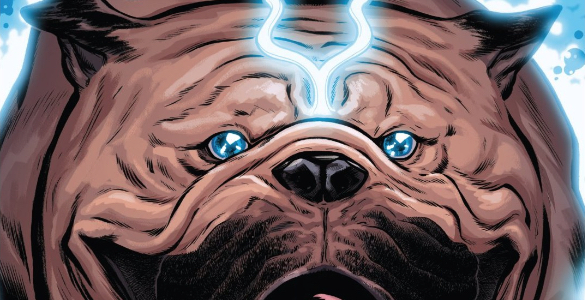
Taylor: Ancient wisdom states that you should never judge a book by it’s cover. We’re all familiar with this phrase and know that this metaphor extends far beyond assessing books by their cover art. Don’t judge people by the way they look and don’t assume a video game is good based on the franchise it hails from. Yet while I’m familiar with this sage advice, I often find it extremely hard to follow. Take Lockjaw 1, for example. It’s tempting to think this comic will be about its titular character, given his name splayed across the cover and the oversize likeness of this same dog. However, that’s not the case here, so how much you are inclined to judge a book by its cover might determine what you think of this issue. Continue reading

Disposable Supporting Characters in Despicable Deadpool 295

by Michael DeLaney

This article contains SPOILERS. If you haven’t read the issue yet, proceed at your own risk!

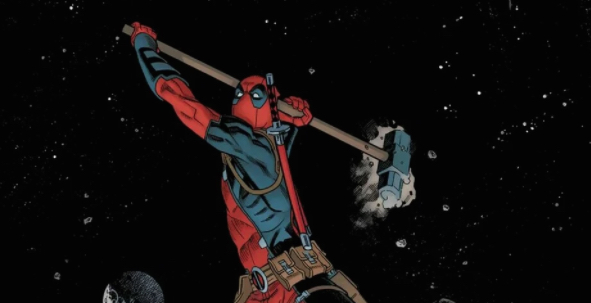
In the world of popular fiction, there’s a very low risk of the main characters — or the most recognizable ones — dying. We know that our protagonists are safe in any given story, so there’s a higher likelihood that any supporting cast member will meet their end. As entertaining and touching as Despicable Deadpool 295 is, I can’t help but feel that it’s just another story where the characters we like stay safe while the nameless ones die off. Continue reading

Mata Hari 1: Discussion

by Mark Mitchell and Patrick Ehlers

This article contains SPOILERS. If you haven’t read the issue yet, proceed at your own risk!

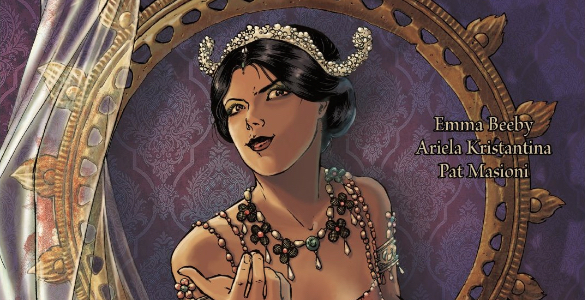
Mark: One of the corollaries to the Harvey Weinstein revelations and the #METOO and #TIMESUP movements is the healthy reexamination of other women in history who were victims, in one way or another, of systemic misogyny. Though they were produced before the movements began, last year’s Oscar nominated film I, Tonya makes the case for re-examining the way the media portrayed Tonya Harding — regardless of her guilt — and FX’s 2016 American Crime Story: The People vs OJ Simpson television series was a notably empathetic portrayal of lead prosecutor Marcia Clark. The point of these and other reexaminations isn’t to canonize these women, but to consider that the truth of their stories is more complicated than the convenient daytime talk show-like narratives that surround them.

Writer Emma Beeby calls out Harvey Weinstein by name in her author’s note at the end of Mata Hari 1, noting specifically that “now is the perfect moment to tell the story of what happens when women are without power.” Continue reading