Lazarus 27: Discussion

By Spencer Irwin and Ryan Desaulniers

This article contains SPOILERS. If you haven’t read the issue yet, proceed at your own risk!

Spencer: An interlude is meant to be a break, a diversion, something different from the norm. In the case of Lazarus 27 — specifically billed as part one of a two-part interlude — it means that Greg Rucka and Michael Lark are taking a break from the story of Forever Carlyle to instead focus on her brother Jonah. Jonah’s adventure isn’t just an interlude for readers, though; it’s one for Jonah as well, a chance for him to experience a lifestyle far different than anything he’s ever seen before. Unfortunately, like most interludes, I fear this experience may be a temporary one for Jonah. Continue reading
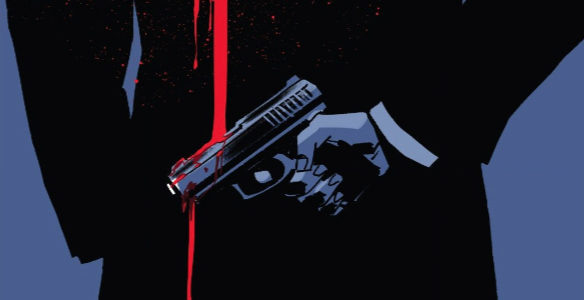
The Illusion of Control in James Bond: The Body 4

By Spencer Irwin

This article contains SPOILERS. If you haven’t read the issue yet, proceed at your own risk!

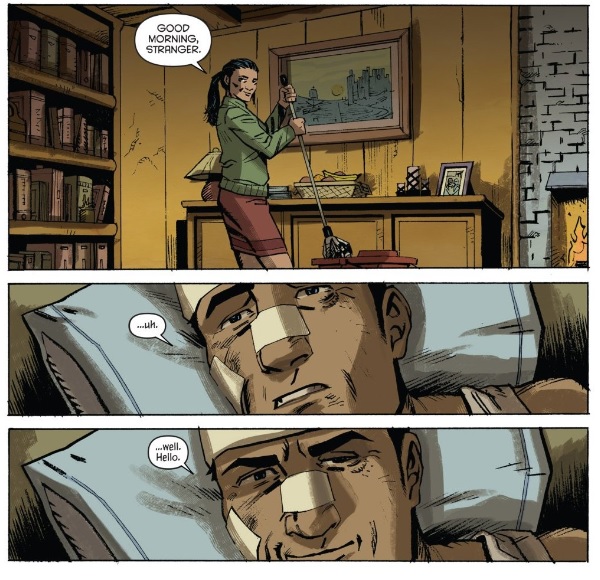
We all know what happens when James Bond meets a beautiful woman. It’s one of the most (in?)famous aspects of the franchise, and it’s an assumption creators Ales Kot and Eoin Marron clearly lean into when their injured Bond runs into a woman named Moira early in James Bond: The Body 4. Even Bond himself, if only momentarily, thinks he knows exactly how things are going to play out.

It never happens. Moira isn’t a conquest; she’s a complicated woman with her own desires and internal life that Bond can barely begin to fathom. That’s really the idea behind this entire issue: James Bond is a professional who thinks he understands how the world works, but control is far more elusive than he ever truly realized. Continue reading

Action Comics 1000: Discussion

by Drew Baumgartner, Michael DeLaney, Patrick Ehlers, and Spencer Irwin

Action Comics 1000

This article contains SPOILERS. If you haven’t read the issue yet, proceed at your own risk!

“From the City that Has Everything”

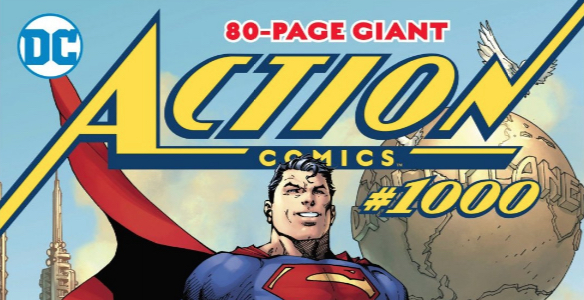
Drew: Superman changed the world. That’s obvious enough in-universe, but it’s just as true of our world. Action Comics 1 created (or at least codified) the superhero genre, a genre that came to define both the 20th and 21st centuries, and is still growing as Action Comics rings in its 1000th issue. It’s a singular achievement, but celebrating it as such might not be in the spirit of Superman, for whom humbleness is as much a part of his character as heroism. He’s not one to take compliments easily, let alone brag, so any efforts to do so on his behalf run the risk of feeling crass. Most of the stories in this issue opted to ignore lionizing Superman outright, aiming instead to illustrate what it is that makes him so laudable, but in the issue’s opening chapter, Dan Jurgens came up with a way to address the issue with Superman himself, providing a commentary on the whole exercise of a huge anniversary issue, and offering a justification that even Superman can get behind. Continue reading

Dialogue and Internal Monologue as an Introduction in Domino 1

by Spencer Irwin

This article containers SPOILERS. If you have not read the issue yet, proceed at your own risk!

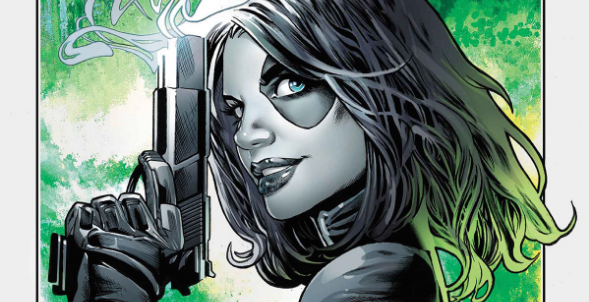
First issues have an almost impossible amount of work to do. They have to introduce (or reintroduce) the lead character, their supporting cast, their unique perspective, the series’ premise, and they have to do it all within 20 pages. Every creative team has their own unique approach to this task, and for Gail Simone and David Baldeon in Domino 1, that approach largely comes down to dialogue and internal monologue. Continue reading

Things Get Serious in Super Sons 15

by Spencer Irwin

This article contains SPOILERS. If you haven’t read the issue yet, proceed at your own risk!

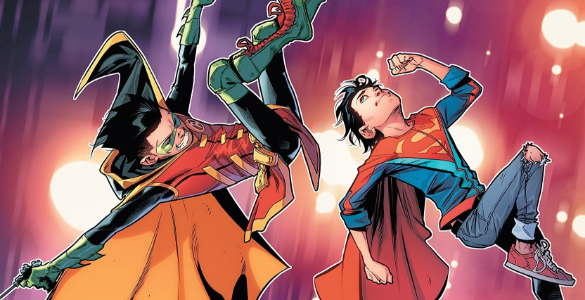
Even though they’re child heroes, writer Peter Tomasi has never hesitated to put his young protagonists, Robin and Superboy, into dangerous, even life-threatening situations. Still, even when facing down killer androids, navigating alternate dimensions, or racing to save the life of Jon’s mother, Tomasi has always managed to keep Super Sons’ tone light and playful. That’s not the case in issue 15, an adventure that feels that much more weighty and dangerous for the sudden change in tone. Continue reading

Fun With Familiar Ideas in The Amazing Spider-Man 799

by Spencer Irwin

This article contains SPOILERS. If you haven’t read the issue yet, proceed at your own risk!

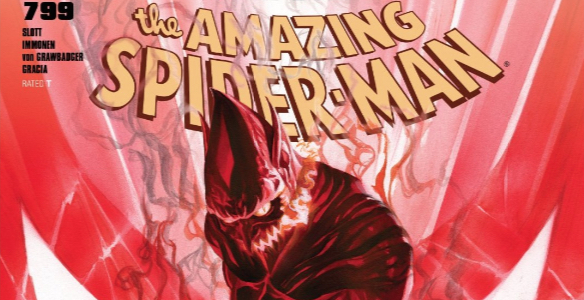
The end of a creative team’s run often finds the team building to a story that spans their entire tenure on the title, bringing together all their loose ends into one grand climax. Dan Slott, though, has simply been writing The Amazing Spider-Man too long to realistically do that; in fact, he’s tied up most of his long-running plots over the last few storylines, instead using much of his final arc to return Peter Parker to a kinda-sorta classic status quo for future creators to play with. Slott, though, has always found quite a bit to mine from classic status quos, from familiar plots and the immutable core of his characters. Even stories as well-known as “Norman Osborn returns to terrorize Peter and Harry” and “Spider-Man and Goblin fight” find a new life under Slott’s pen, and that’s no different in The Amazing Spider-Man 799, which finds Slott and Stuart Immonen tackling these familiar stories from new angles, from different perspectives, with a few surprises hiding up their sleeves. Continue reading

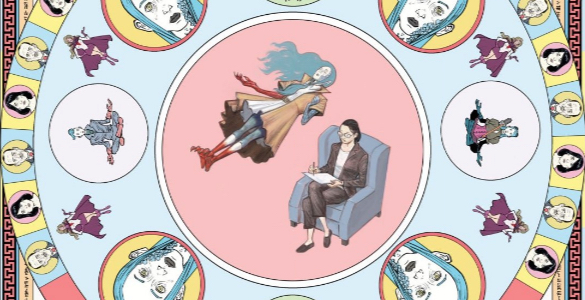
Losing (and Taking) Control in Eternity Girl 2

By Spencer Irwin

This article contains SPOILERS. If you haven’t read the issue yet, proceed at your own risk!

Caroline Sharp isn’t quite all there. I don’t mean that to be a dig at her mental health — she’s literally never just in one place at one time, but rather, being pulled in several directions at once, her consciousness torn between past and present, fantasy and reality, the planet Earth and the far reaches of space. I don’t think it’s the more far-out aspects of this situation that bothers Caroline — it’s the fact that she can’t control it. Continue reading

Sacrifice and the Long Fight in Darth Vader 14

by Spencer Irwin

This article contains SPOILERS. If you haven’t read the issue yet, proceed at your own risk!

Given how pervasive politics are in our current landscape, it’s no surprise that so much of the media being created nowadays contains political allusions and allegories. Both the allusions and especially the politics themselves can be exhausting at times, but given how dangerous so many political groups are today, getting involved and taking a stand seems absolutely necessary, no matter what the cost. That’s certainly the theme that runs throughout Charles Soule and Giuseppe Camuncoli’s Darth Vader 14, a clear allegory for our fraught modern political times that argues that great sacrifices must be made to fight oppression wherever it rears its face. Continue reading

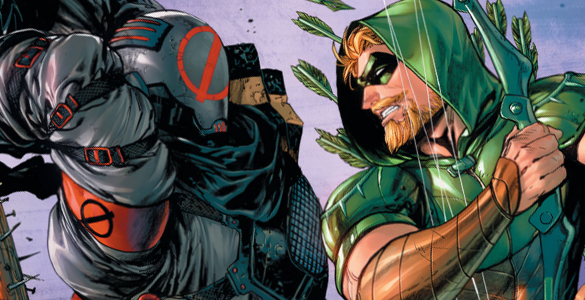
The Trap of Guilt in Green Arrow 39

by Spencer Irwin

This article contains SPOILERS. If you haven’t read the issue yet, proceed at your own risk!

Spencer: For the first few decades of his existence, Green Arrow was just Batman with a bow and arrows. It wasn’t until the 1970s, when Oliver Queen lost his fortune and gained a social consciousness, that the character became something unique and important. In today’s divisive times, I appreciate Green Arrow’s status as a “social justice warrior” more than ever, but honestly, the fact that Ollie is often pretty bad at this aspect of his job is probably just as important. That Ollie often needs to be educated allows creators to explain unfamiliar concepts to the audience, but it also means confronting the kind of guilt and privilege that often plagues even the most well-meaning of activists. Continue reading

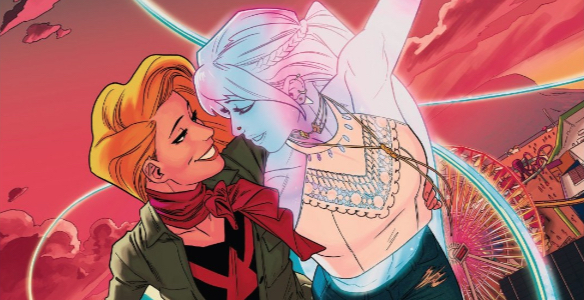
(Not) Learning from Experience in Runaways 8

By Spencer Irwin

This article contains SPOILERS. If you haven’t read the issue yet, proceed at your own risk!

“My advice is: stand firm for what you believe in, until and unless logic and experience prove you wrong.”

Daria, Is It College Yet?

One major advantage of growing up and getting older is experience. Being young means screwing up (a lot), but every screw up teaches you something new, hopefully helping you avoid similar mistakes in the future. That’s only if you take those screw-ups to heart, though. That seems to be a problem for the Runaways (and even for the visiting Julie Powers) in Rainbow Rowell and Kris Anka’s Runaways 8 — they’re so busy holding on to what they once were that they can’t see how badly they need to grow. They can’t learn from their own mistakes. Continue reading