Love Doesn’t Conquer All in Descender 32

by Spencer Irwin

This article contains SPOILERS. If you haven’t read the issue yet, proceed at your own risk!

Much like our own, the world of Descender is full of prejudice, hatred, and war. These various traits all fuel each other in some sort of endless, infinite loop — the only way to break the cycle is to come together, to learn from each other, to empathize with each other, to love instead of hate. Like in so many stories — and, again, perhaps like our own world as well — love is the answer, but it’s not a solution that comes easily. In Descender 32, the final issue of Jeff Lemire and Dustin Nguyen’s saga, love may be the answer, but love doesn’t conquer all. Continue reading

Appearance Affects Identity in Runaways 11

By Spencer Irwin

This article contains SPOILERS. If you haven’t read the issue yet, proceed at your own risk!

Our appearance and how we present ourselves to the world are vital parts of our personal identities, especially as teenagers. The way we look can be used to rebel or conform, to highlight and emphasize our strengths or conceal our flaws and insecurities. Sometimes our appearance perfectly reflects who we want to be, while at other times it just reminds us of everything we hate about ourselves. Our appearance can even have an affect on others, for better or for worse. All of these various facets of appearance and identity play vital, central roles in Rainbow Rowell and Kris Anka’s Runaways 11. Continue reading

Thor 3: Discussion

by Spencer Irwin and Drew Baumgartner

Thor 3

This article contains SPOILERS. If you haven’t read the issue yet, proceed at your own risk!

Spencer: Last weekend my grandmother was sent to the hospital. Thankfully she’s recovering nicely, but the actual task of getting her treated was complicated by the sheer amount of her children and grandchildren gathered in one place, bickering over treatments, supposedly-rude doctors, and the usual family gossip. For better or for worse, I think this kind of behavior is typical when almost any family gets together; there’s no task so important that some family drama can’t derail it. That’s certainly the case for the Odinson clan in Thor 3, who nearly bicker each other into oblivion even as the Queen of Cinders is on the verge of conquering Hel.  Continue reading

Individuality is Growth, and Regression Danger in X-23 1

By Spencer Irwin

This article contains SPOILERS. If you haven’t read the issue yet, proceed at your own risk!

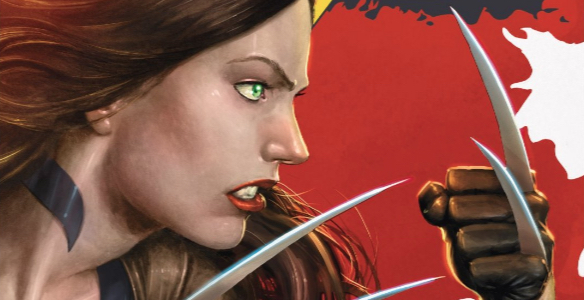
It’s hard not to view Laura’s return to the name “X-23,” after wearing the mantle of “Wolverine,” as a demotion, even a regression for the character. X-23 1 does all it can to smooth over this transition — writer Mariko Tamaki’s pitch-perfect channeling of Laura and Gabby’s voices combined with the return of one-time All-New Wolverine artist Juann Cabal gives this issue a lot of forward momentum, making it feel like a continuation of the story Tom Taylor began rather than a radically new take — but never explicitly addresses the change of code-names or the reason behind it. Instead, Tamaki and Cabal tackle the ideas of identity, growth, and regression head-on through the examples of Laura, Gabby, and the Stepford Cuckoos. I wouldn’t be surprised if it was all leading towards an argument for “X-23” later in the storyline. Continue reading

Everybody Has Their Role to Play in Exiles 5

by Spencer Irwin

This article contains SPOILERS. If you haven’t read the issue yet, proceed at your own risk!

slim-banner

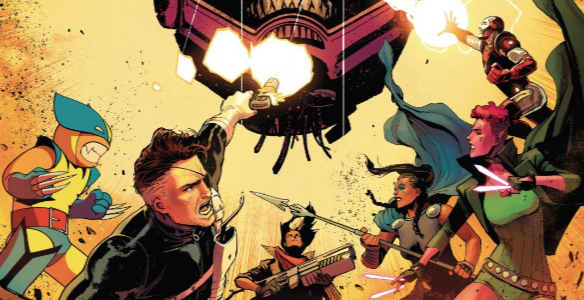
Since the very first issue of Exiles the Tallus, an interdimensional, time-traveling gauntlet, has been calling the shots, pulling our heroes from reality to reality with its own agenda in mind. In many ways, it’s the true mastermind behind the defeat of the Time Eater, having charted a path towards victory and collecting heroes and allies all with vital and specific roles to play in its plan. Early on in the series this sometimes felt like it robbed the characters of their agency, but as we reach the finale of Saladin Ahmed and Javier Rodriguez’s story in Exiles 5 that couldn’t be further from the truth. It’s interesting to see the role each Exile has to play, but far more interesting to see them all embrace their roles enthusiastically and of their own volition. Continue reading

The Many Irreconcilable Definitions of Redemption in The Unbeatable Squirrel Girl 34

By Spencer Irwin

This article contains SPOILERS. If you haven’t read the issue yet, proceed at your own risk!

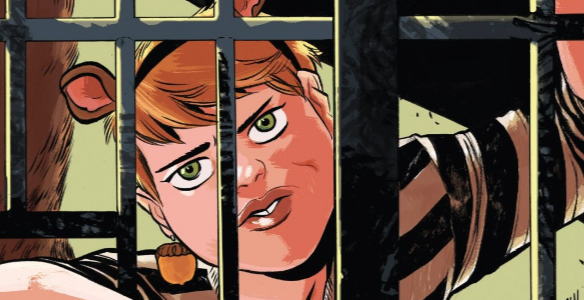
Kraven the Hunter is not only the very first enemy Doreen Green defeated way back when Ryan North and Erica Henderson launched The Unbeatable Squirrel Girl, but he’s also the first enemy she reformed. Unlike the other villains whose lives Doreen has helped turn around, Kraven has continued to pop up as a recurring character ever since, allowing the creative team to explore life after redemption and just what, exactly, Kraven looks like as a “good guy.” With this image now firmly in place, North and artist Derek Charm use The Unbeatable Squirrel 34 to muddy and complicate it in fascinatingly complex and nuanced ways. What redemption means for Kraven may not be the same for Doreen, or Spider-Man, or the police, or the people of NYC, and there may simply be no way to reconcile these various viewpoints.  Continue reading

Superman 1: Discussion

by Spencer Irwin and Patrick Ehlers

This article contains SPOILERS. If you haven’t read the issue yet, proceed at your own risk!

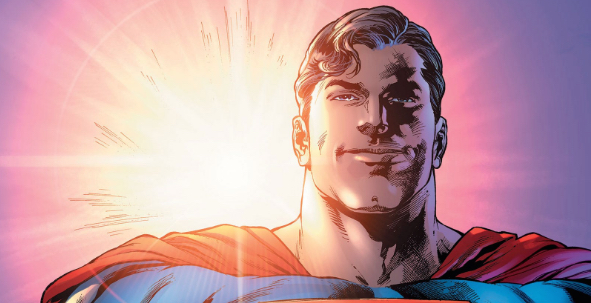
Spencer: One of the biggest criticisms I’ve seen thrown around about Superman as a character is that he’s “too powerful,” that nothing can challenge a man who can quite literally juggle planets. There’s a bit of truth to this, to be sure, but it’s a narrow criticism, one that only takes into consideration physical challenges; the most interesting Superman stories are the ones that challenge him morally, ethically, or in ways that make his physical abilities useless. Superman 1 is such a story, an issue that finds the character at his most physically competent, yet feeling more lost and helpless than ever before.  Continue reading

The Virtues and Dangers of Information in Paper Girls 22

By Spencer Irwin

This article contains SPOILERS. If you haven’t read the issue yet, proceed at your own risk!

Like with most of Brian K. Vaughan’s books, one of Paper Girls’ best qualities is its letter column. Issue 22’s column ends on one of the more interesting letters the series has received; Vaughan’s avatar, Dash-Dash Dot, rightly calls out the writer for his regressive politics and use of cringeworthy expressions like “beta male,” but as much as I hate to admit it, I also found the writer echoing some criticisms I myself have stated on occasion, particularly his assertion that “twenty issues in, and [the Paper Girls] (and the reader) still don’t know what is happening, or why, or what to do about it.”

I haven’t been shy in calling Paper Girls out on its nearly impenetrable lore and over-arcing plot myself — thankfully, the characters, art, and the individual stories of each arc are strong enough to make Paper Girls a must-read comic despite those larger flaws. But this most recent arc has made it more clear than ever that Vaughan — and Paper Girls itself — has a complicated relationship with information, and that no matter how frustratingly paced its doling out of information may sometimes be, it’s a deliberate, meaningful choice. Continue reading

How to Maintain a Balanced View of Technology in Nightwing 46

by Spencer Irwin

This article contains SPOILERS. If you haven’t read the issue yet, proceed at your own risk!

slim-banner

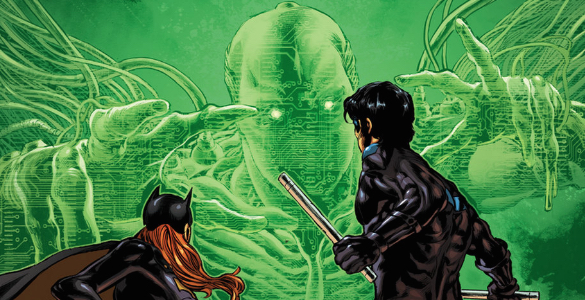
I’ve spent a lot of time recently making fun of “Alexa” and other similar voice activated assistants — the idea of willingly installing what ultimately amounts to a wire-tapping device in my own home seems patently absurd to me. Yet, I can’t deny the fact that I carry a smartphone with me at all times, a device that not only has similar surveillance abilities, but the power to track my every movement as well. I guess the question I should really be asking, then, isn’t “why would someone willingly buy a device like this?,” but “what would it take to make someone willingly buy a device like this?” Sometimes it’s convenience, sometime it’s the unparalleled access to information, and sometimes it’s simple denial. All these seem to be in play in Benjamin Percy, Christopher Mooneyham, and Lalit Kumar Sharma’s Nightwing 46, as Blüdhaven embraces technology that’s clearly attempting to data-mine the entire city. Continue reading

Catwoman 1: Discussion

by Spencer Irwin and Mark Mitchell

This article contains SPOILERS. If you haven’t read the issue yet, proceed at your own risk!

Spencer: I’ve only recently become familiar with Joëlle Jones, but it was immediately apparent from her work that she not only cares about fashion, but that she has a real talent for bringing it out on the page. It should be no surprise, then, that fashion — at least in a sense — seems to be one of the underlying themes of Jones’ Catwoman 1. I don’t necessarily mean fashion as in runways and models, although Jones’ take on Selina Kyle could certainly put Tyra Banks to shame — I mean fashion as in the idea of clothing, costumes, and disguises, what they mean to the public, and what they mean to the individuals wearing them. Continue reading