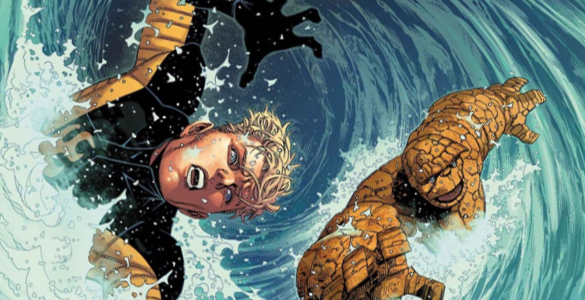
Lettering Reveals Status and Power in Marvel Two-In-One 3

By Patrick Ehlers

This article contains SPOILERS. If you haven’t read the issue yet, proceed at your own risk!

Marvel Two-in-One 3 is all about characters either rediscovering or redefining their relationship to their super powers. Our titular pair of marvels even goes to doctor Rachina Koul in the middle of nowhere Wyoming to jump-start Johnny’s powers. Ben describes Johnny as “broken” and whether that’s just referring to his ability to flame on, or more holistically applies to the man is left up to the reader’s discretion. But the implication is clear: without their defined roles as superheroes and supervillains, these guys just don’t know how to function. The damn Mad Thinker is going so crazy he’s styled his facial hair to look like Reed Richards and claiming to launch a “New Fantastic Four.” Basically: everyone goes nuts without boundaries. Today, I want to explore how lettering emphasizes the connection between a character, their powers, and how they view themselves in this universe. Continue reading
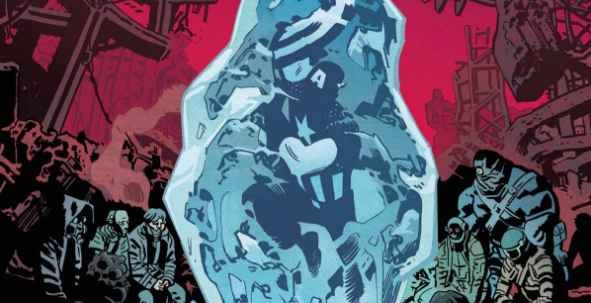
Dystopia in the Not-So-Distant Future in Captain America 698

by Spencer Irwin

This article will contain SPOILERS. If you haven’t read the issue yet, proceed at your own risk!

I was raised on classic television, and as a kid I remember always getting a big kick out of the fact that the original Lost in Space series took place in the “distant future” of 1997. As a general rule, ascribing a specific date to your fictional future is a great way to rob it of its power and wonder, but Captain America 698 turns that rule completely on its head, finding its most effective twist in the “when” of its dystopian future. Continue reading

Biological Truths in the Details of Sideways 1

By Patrick Ehlers

This article contains SPOILERS. If you haven’t read the issue yet, proceed at your own risk!

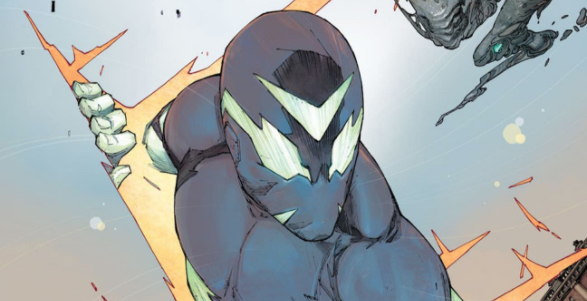
Kenneth Rocafort’s art is so packed with detail that shapes, lines and colors often find themselves marooned in the gutter and in the space between his panels. His visually noisy style gives the impression that Rocafort has so much creative energy that it simply cannot be contained by the incidents of the story he’s tasked with telling. As the rift-opening hero Sideways, Derek literally exists between spaces, and Rocafort is long practiced in filling those voids with exciting, vital details. Sideways 1 is marvelous introduction to a character I can’t wait to see more of. Continue reading

War, Religion, and Slavery in Angelic 6

by Spencer Irwin


This article contains SPOILERS. If you haven’t read the issue yet, proceed at your own risk!

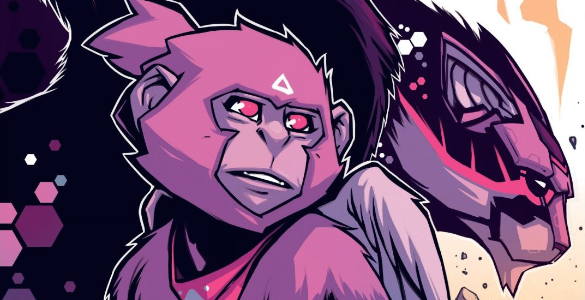
Angelic 6 is a massive issue. Writer Simon Spurrier recalls every seed of plot he’s planted throughout this arc, and artist Caspar Wijngaard brings the mass of ideas to life in a way that’s big and exciting, chaotic but never hard to follow. Even as the issue’s plot goes big, though, Spurrier and Wijngaard zoom in thematically, finding the one idea that connects the themes of religion, war, and blind faith that have run throughout this entire series. That theme, of course, is slavery. Continue reading

Doctor Strange 385: Discussion

by Patrick Ehlers and Michael DeLaney

This article contains SPOILERS. If you haven’t read the issue yet, proceed at your own risk!

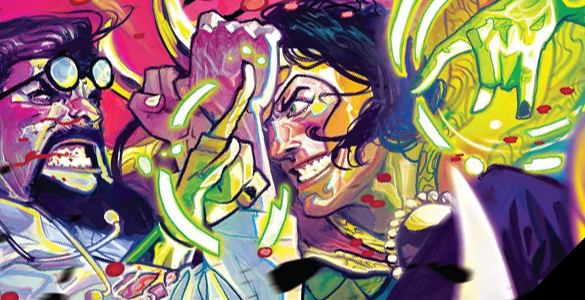
Patrick: Where does trust come from, narratively speaking? It’s almost a process of subtraction: audiences trust what they are presented with until they are given a reason not to. We’ll be dubious of anything a villain says because they demonstrate themselves to be dishonest, or greedy, or whatever it is that triggers our own feeling of moral superiority. Heroes are, of course, the opposite: we will trust them, even give them the benefit of the doubt when they make bad calls. Ultimately, we’re acting on our faith in narrative structure and we trust our hero to be in the right by the end of the story. Doctor Strange 385 twists our assumptions about right and wrong, about heroism and villainy without ever truly violating our expectations for Stephen Strange or Loki. Continue reading

The Makings of a Monster in Lazarus X+66 6

by Drew Baumgartner

Lazarus X+66 6

This article contains SPOILERS. If you haven’t read the issue yet, proceed at your own risk!

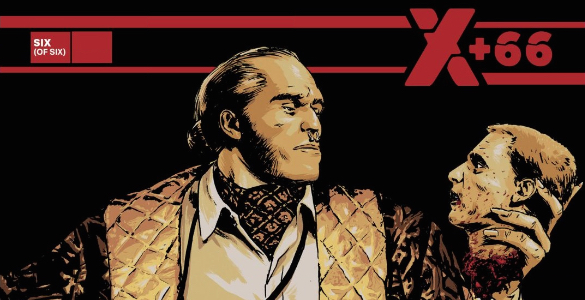
Comics tend to make a big deal about the prosocial mission of superheroes. That is, their origin isn’t just about why they can leap tall buildings or outrun a bullet, but why they choose to use those powers to protect innocent people. It’s interesting that creators emphasize this point — the choice to don a cape and charge into a burning building is a certainly a remarkable one, but it’s also understandable. That is, even if we don’t all have the courage and strength to do those things, we immediately grasp the desire to help people. Villains, on the other hand, demand a much more thorough explanation — if stopping a massacre is remarkable but understandable, causing a massacre is both remarkable and baffling. Creators are rarely up to the task, vaguely suggesting an overgrown thirst for power or money, but never quite convincing us how those things add up to a homicidal maniac. Those creators would do well to check out Lazarus X+66 6, which offers an origin for the Zmey that covers both his superhuman abilities and his monstrous psychology. Continue reading

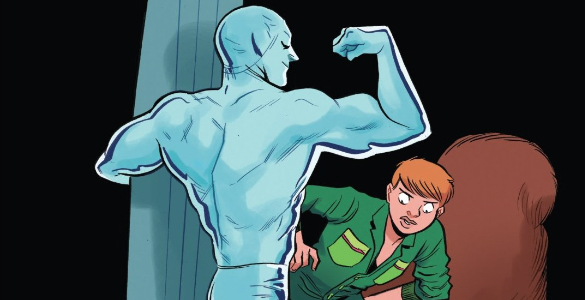
Friends Start as Foes in The Unbeatable Squirrel Girl 29

by Taylor Anderson

This article contains SPOILERS. If you haven’t read the issue yet, proceed at your own risk!

Back when the first Avengers movie came out, audiences were thrilled to see a fight between Thor and Iron Man. Fast-forward to last year, and many of the same audiences were similarly thrilled to see Thor fight the Hulk. That audiences love to see heroes fight each other is nothing new. There’s a very specific reason why people enjoy fights between comic book protagonists so much: it’s essentially a cinematic version of arguments comic book nerds have been having for ages — “who would win in a fight?” And truthfully, it isn’t only comic book fans who have been asking this question. Comic book creators have been discussing the question in issues for decades now. This debate continues in Unbeatable Squirrel Girl 29, only now it’s accompanied by Ryan North’s distinctive humor and irony. Continue reading

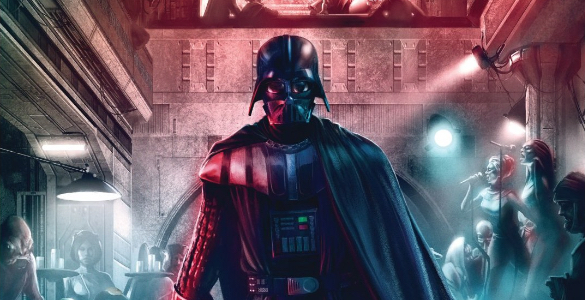
The Hunter Becomes The Hunted In Star Wars: Darth Vader 11

by Mark Mitchell

This article contains SPOILERS! If you haven’t read the issue, proceed at your own risk.

In the modern Star Wars era, Darth Vader is like the Freddy Krueger of the greater universe — ostensibly a villain, but really the one everyone is rooting for. Charles Soule and Giuseppe Camuncoli’s Darth Vader 11 leans into Vader’s anti-hero persona by reversing the usual Vader story and turning him into the prey.

Continue reading

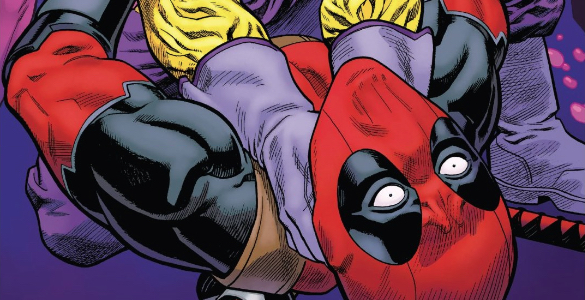
Music and Misery in Despicable Deadpool 294

by Michael DeLaney

This article contains SPOILERS. If you haven’t read the issue yet, proceed at your own risk!

Despicable Deadpool 294 takes a break from Wade’s indentured murder-itude to Stryfe for a Madcap-themed interlude. Madcap has returned to enact terrible vengeance on his former mental roommate Deadpool. But in the wake of Secret Empire, Madcap realizes that Wade Wilson has already ruined his life himself. Continue reading

New Super-Man and the Justice League of China 20: Discussion

by Spencer Irwin and Mark Mitchell

This article contains SPOILERS. If you haven’t read the issue yet, proceed at your own risk!

Spencer: There’s a common belief that kids raised in sheltered, restrictive environments will go absolutely wild at their very first taste of freedom. I don’t know if the truth is that extreme — I was about as sheltered as they came as a child, and all my rebellions have been rather tame — but there is a lot of truth to the idea that needless restrictions and censorship just hurt people, regressing emotions and hindering growth and in many cases leading to actual physical punishment for meaningless offenses. New Super-Man and the Justice League of China 20 taps into the latter when it introduces its new “Aquaman,” Ahn Kwang-Jo. Continue reading