Taking Control of Your Own Story in The Wicked + The Divine 39

by Spencer Irwin

This article contains SPOILERS. If you haven’t read the issue yet, proceed at your own risk!

See, I refuse to think of rock and roll as my career
Tell me all my opportunities, ask me if I care
The rock star lifestyle ain’t for me
I quit
Got somewhere else I’d rather be
So I quit
I quit, I quit

“I Quit” — Descendents

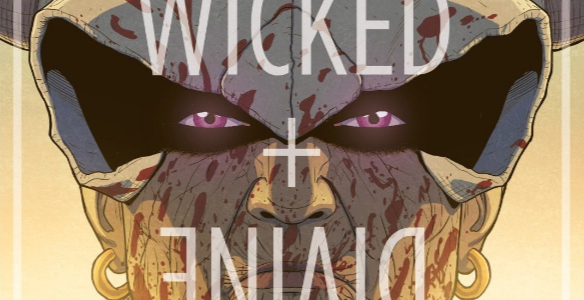
Fame isn’t for everyone; hell, fame isn’t for most people. But fame is also a trap, and something that takes a lot of work and luck to achieve, so I admire the hell out of anyone who’s willing to give it up, whether it be to broaden into less lucrative aspects of their medium or to get out of show business altogether. It takes a lot of clarity and guts to make that decision, and in The Wicked + The Divine 39, Laura Wilson — no longer Persephone — has both in droves. Continue reading

Subjectivity in Symbols and Characters in The Seeds 2

by Patrick Ehlers

This article contains SPOILERS. If you haven’t read the issue yet, proceed at your own risk!

Ann Nocenti and David Aja’s Seeds is, on the surface, about a race of aliens that comes to earth to document, or possibly expedite, the extinction of the human race. But even from the end of the first issue, this tidy sci fi premise has already been upset: one of these aliens has feelings for a human woman. Those are clearly defined roles for the humans and the aliens, right? And even that little twist falls into the dramatically convenient theme of love blossoming on the battlefield. Issue 2 of Seeds more thoroughly explores the difference between what is expected of an actor and how they actually act. Continue reading

It’s Power vs Responsibility in The Amazing Spider-Man 5

by Drew Baumgartner

Amazing Spider-Man 5

This article contains SPOILERS. If you haven’t read the issue yet, proceed at your own risk!

O, it is excellent
To have a giant’s strength, but it is tyrannous
To use it like a giant.

William Shakespeare, Measure for Measure

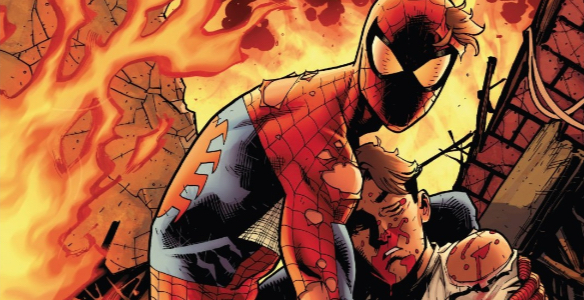
We tend to define power optimistically — we might list the duties of say, the President of the United States, for example, with the expectation that they’ll wield their power responsibly. But there’s another (perhaps more timely) way to define power, not by the amount of good it allows someone to do, but by the amount of harm it allows someone to inflict. Try as we (or Uncle Ben) might to link the two, power and responsibility are independent variables. That is, “With great power must also come great responsibility” isn’t a statement of some inviolable rule of the world, but a goal to strive towards. That’s why the “must also” part is so essential (and so missed from Sam Raimi’s Spider-Man) — it makes it clear Uncle Ben isn’t just stating a fact. Indeed, that power can be separated from responsibility is precisely what this first arc of Nick Spencer and Ryan Ottley’s Amazing Spider-Man has focused on, demonstrating the inefficacy of either without the other. Continue reading

How Directionality Sells the Drama in Ms. Marvel 34

by Drew Baumgartner

Ms. Marvel 34

This article contains SPOILERS. If you haven’t read the issue yet, proceed at your own risk!

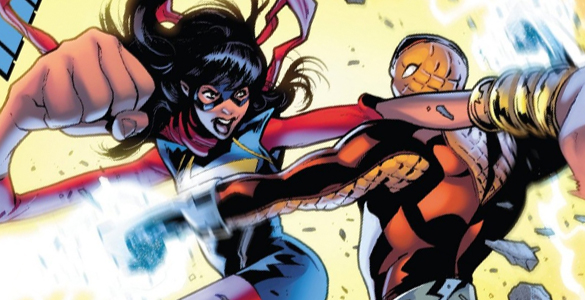
The only limits in comics are those of the imagination and the page itself. That sounds grandiose, but I genuinely believe that to be true. There are no CGI budgetary restrictions or limits of practical effects that could make a shot or a sequence impossible (though time constraints may make big crowds on horseback less likely), no locations on earth (or off) that can’t be used, no detail to small that can’t be captured in a panel. That means comics are a medium with nearly infinite potential for flashy epicness, which can easily hog our attention. But its the fundamentals — nearly universal to all storytelling — that ultimately make a comic sing: characters, clarity, and heart. Sometimes those flashy elements can help connect us to those fundamentals, but sometimes it’s the simpler details that sell the story. Such is the case with G. Willow Wilson and Nico Leon’s Ms. Marvel 34, which utilizes one of the most basic givens in the medium to remarkably effective results. Continue reading

The Mercenary Gamers of Leviathan 2

by Michael DeLaney

Leviathan 2

This article contains SPOILERS. If you haven’t read the issue yet, proceed at your own risk!

There is a not-so-subtle “might makes right” mentality that is associated with America. Our overprotectiveness of the Second Amendment, the immense firepower of our military, and just the general “America Fuck Yeah” of it all often makes us look arrogant and overconfident. In John Layman and Nick Pitarra’s Leviathan 2, we see that arrogance and overconfidence of the American military-industrial complex in action. Continue reading

Imposter Syndrome in The Dreaming 1

by Drew Baumgartner

The Dreaming 1

This article contains SPOILERS. If you haven’t read the issue yet, proceed at your own risk!

The Lord of the Dreaming has abandoned his post, leaving his realm in the hands of his followers and beneficiaries. That’s the premise of The Dreaming, but it’s also a reasonable explanation of “The Sandman Universe” group, where a handful of hand-picked creators have been given the keys to the settings and characters Neil Gaiman created back before Vertigo was even a glimmer in Karen Berger’s eye. I’m fascinated at Gaiman’s mentorship role here, and how Si Spurrier and Bilquis Evely have addressed those real-world elements as meta-commentaries in the narrative, but I’ll limit the focus here to how they address the notion of reverence for what has come before. Continue reading

Time Travel is a Threat, Not a Savior in Paper Girls 24

By Spencer Irwin

Paper Girls 24

This article contains SPOILERS. If you haven’t read the issue yet, proceed at your own risk!

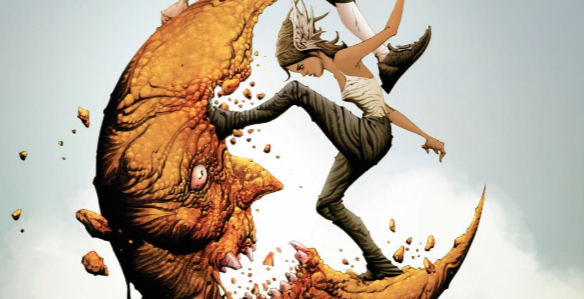
The cast of Paper Girls continually look to time travel for salvation, as a cure-all to whatever ails them. The problem is that time travel caused almost all of their problems in the first place, and only threatens to cause more in the future. Brian K. Vaughan, Cliff Chiang, and Matthew Wilson make this clearer than ever in Paper Girls 24, an issue that paints time travel as something that’s actively destructive and malicious. Continue reading

Justice League 7/Adventures of the Super Sons 2: Discussion

by Spencer Irwin and Michael DeLaney

Adventures of the Super Sons 2:Justice League 7

This article contains SPOILERS. If you haven’t read the issue yet, proceed at your own risk!

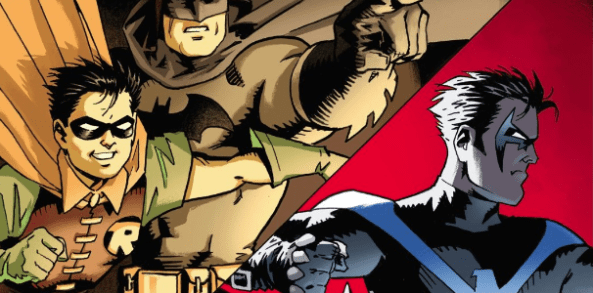
Spencer: No two people experience the same piece of media the same way. That’s actually the entire foundation of what we do here at Retcon Punch — we exist to examine the different ways our various writers interpret weekly comic books.  Two books released by DC this week dive into this theme as well — Adventures of the Super Sons 2 explores how the same stories led two members of the Gang down very different life paths, while Justice League 7 finds three very different people reacting to some harsh truths about the universe in very different ways. Both drive home the same point: our natures and preconceived notions often have as much to do with how we interpret media as the actual media itself does, for better or for worse, no matter what the creators’ original intent may be. Continue reading

Razing Mash-Up City in Cosmic Ghost Rider 3

by Patrick Ehlers

This article contains SPOILERS. If you haven’t read the issue yet, proceed at your own risk!

The very concept of “Cosmic Ghost Rider” is a great example of Writer Donny Cates  using disparate ideas from all around the Marvel universe as the building blocks for something wholly new and exciting. In my write-up of issue #1, I called it “Mythological Omnivorism”, a turn of phrase that I like, but which feels a least a little dishonest. Cates and artist Dylan Burnett weren’t consuming this mythology so much as they were shuffling, repackaging, and repurposing it. Issue three is where the consumption begins – and all of those jumbled-up building blocks are devoured to sate the gluttonous reader’s appetite. Continue reading

Past and Present Trauma Collapse into One in Batman 54

by Patrick Ehlers

This article contains SPOILERS. If you haven’t read the issue yet, proceed at your own risk!

slim-banner

More than any other medium, comics have a rigidly prescriptive relationship with scenic transitions. Settings change on a page turn. Not every turn of the page will give the reader a new scene, but every new scene requires a new page. There are exceptions, of course. Creators can cut away to a quick one- or two-panel scene to provide context to a page. It’s also pretty common to run two scenes simultaneously on alternating panels on a page, like in Watchmen. But even in these cases, the scene or scenes at play are allowed to end at a page turn. With Batman 54, writer Tom King and artist Matt Wagner toss that conventional wisdom out the window, transitioning into and out of extended flashbacks part-way through the page. The result is a conflation of past with present, and of suffering with healing. Continue reading