Don’t Trust Authority in New Super-Man and the Justice League of China 22

by Mark Mitchell

This article contains SPOILERS. If you haven’t read the issue yet, proceed at your own risk!

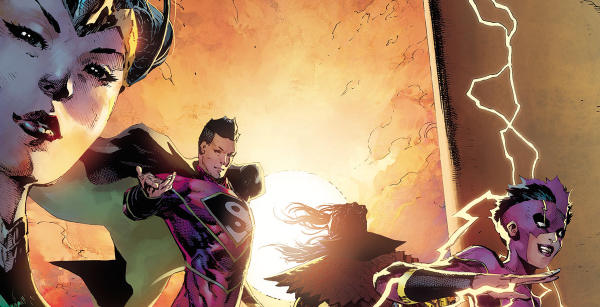
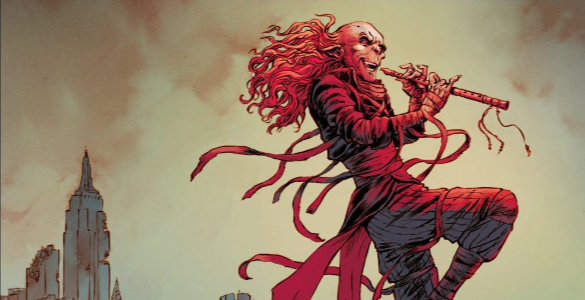
Ahn Kwang-Jo, aka the Aqua-Man of North Korea, aka Dragonson, is so conditioned by his life under the authoritarian regime of North Korea to accept the word of authority figures as truth that when the old sea dragon bones responsible for his powers commands him to generate a flood large enough to kill millions of his countrymen, Kwang-Jo feels compelled to obey. He’s briefly conflicted, but his resistance is met with anger by his “true father”, and Kwang-Jo quickly acquiesces.

Continue reading

Exiles 1: Discussion

by Mark Mitchell and Ryan Desaulniers

This article containers SPOILERS. If you have not read the issue yet, proceed at your own risk!

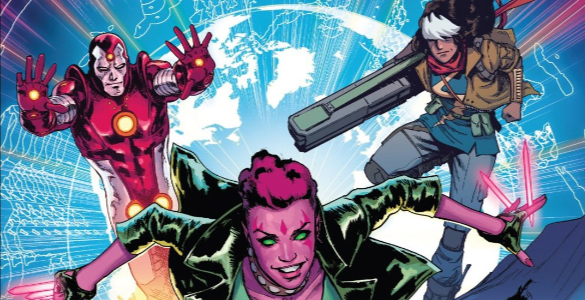
Mark: The best teams are made up of strong, diverse personalities that bring out the best in each other. This is especially true in fiction. The individual members don’t need to always get along, conflict drives any story, but a certain baseline level of respect is necessary. One of the most impressive feats of team building in recent history has to be 2012’s The Avengers. Looking back with full knowledge of the incredible success Marvel Films has achieved almost unblemished since Iron Man ten years ago, it’s easy to take for granted the fact that The Avengers worked at all, but at the time it was incredibly risky. Going back and watching The Avengers now, the first two-thirds of the movie drag quite a bit as writer and director Joss Whedon works to establish the team dynamics, but that groundwork was necessary not just for the first movie, but for the Marvel Films team-ups to come. Again, we take for granted now that all of these characters can seamlessly interact with each other, but that’s only because the hard work was done by that essential first Avengers film. In Exiles 1, Saladin Ahmed, Javier Rodriguez, and Alvaro Lopez begin the work of building their own superhero team, and, like The Avengers, their patience in this premier issue sets them up for long term success. Continue reading

Hope Springs Eternal in Captain America 700

by Drew Baumgartner

Captain America 700

This article will contain SPOILERS. If you haven’t read the issue yet, proceed at your own risk!

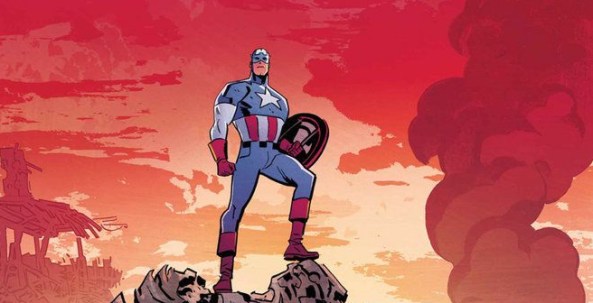
Superheroes don’t get endings. They might die, sure, but are inevitably resurrected months, years, or decades down the line. And they’re brought back for the same reason superheroes don’t get endings: there’s always another story to tell (and another dollar to be made telling it). Fans may sometimes get jaded about this — especially when a hero is killed off for the umpteenth time — but that lack of closure keeps superheroes in a holding pattern in the middle of the hero’s journey. They may have momentary successes, sure, but they never get to kick up their heels at the end of a career well-served. You know, unless you can find some kind of alternate universe/timeline workaround that allows your hero some sense of closure while still allowing him to carry on the fight tomorrow. That’s exactly the kind of workaround Mark Waid and Chris Samnee cook up in Captain America 700, giving Steve the kind of heroic end he can only have if there’s some kind of trick. Continue reading

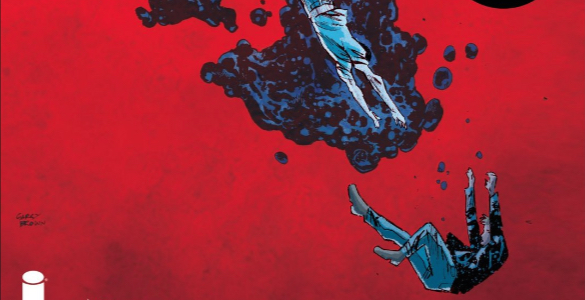
Oblivion Song 2 Explores Different Approaches to Loss and Grief

by Michael DeLaney

This article contains SPOILERS. If you haven’t read the issue yet, proceed at your own risk!

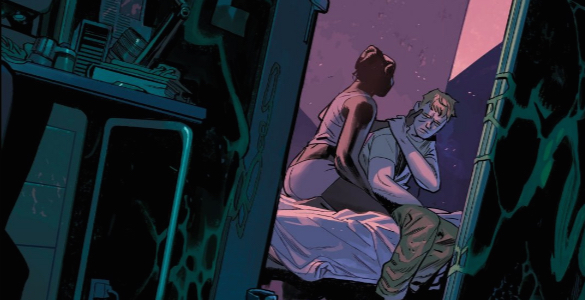
The sad truth of our lives is that we will all eventually have to say goodbye to the person or persons we care about most. The thing that differs is how we all cope with that grief. Robert Kirkman and Lorenzo De Felici’s Oblivion Song 2 explores a few different ways in which we handle that loss. Continue reading

An Early Start Sets Crude 1 on an Unusual Course

by Drew Baumgartner

Crude 1

This article contains SPOILERS. If you haven’t read the issue yet, proceed at your own risk!

Every story is a mystery at its start. Themes, settings, characters, and their motivations are all unknown to us at the outset, so the opening chapters of stories are often defined by which of these questions they answer, and which they leave open. In that way, a story ultimately defines what its hanging questions are by where it begins. Does it open generations before the protagonist is born or on the day of the inciting incident? Does its scope start wide and zoom in, or does it start in tight and zoom out? Or, more to the point in many mainstream comics, do we meet the protagonist before or after their loved one is murdered, propelling them on some kind of quest for justice/vengeance? With Crude 1, Steve Orlando and Garry Brown’s choices on where and when to start their narrative reveal a great deal about what they think is interesting about their narrative, but in doing so, may have buried the lede. Continue reading

Teenage Mutant Ninja Turtles 81: Discussion

By Drew Baumgartner and Taylor Anderson

Teenage Mutant Ninja Turtles 81

This article contains SPOILERS. If you haven’t read the issue yet, proceed at your own risk!

Drew: Homicidal mutants. Power-hungry ninja clan leaders. Aliens bent on world domination. The Teenage Mutant Ninja Turtles franchise has had a ton of villains over the years, but they all tend to share one thing in common: obvious evilness. IDW’s incarnation has done a great deal to complicate and question the morals and perspectives of those familiar villains, but never so much to make the Turtles frame the choices of their adversaries as “misguided.” Which is precisely why Splinter’s slow heel turn has added so much depth to the series. It’s fine for the Turtles to be battling an evil, cackling warmonger when they’re appearing on a Saturday morning cartoon, but in this age where people seem to believe there are “very good people on both sides” of every argument, we may need more nuanced depictions of evil. The road to Hell, they say, is paved with good intentions, which is all anyone seems to have in this series at the moment. You know, besides the Rat King. Continue reading

Expressive Lettering Fills in the Gaps in Despicable Deadpool 298

by Patrick Ehlers

This article contains SPOILERS. If you haven’t read the issue yet, proceed at your own risk!

slim-banner

“All that people care about is the look. There’s figures on this: 70% of what people react to is the look, 20% is how you sound, and only 10% is what you say.”

-Eddie Izzard, Dressed to Kill

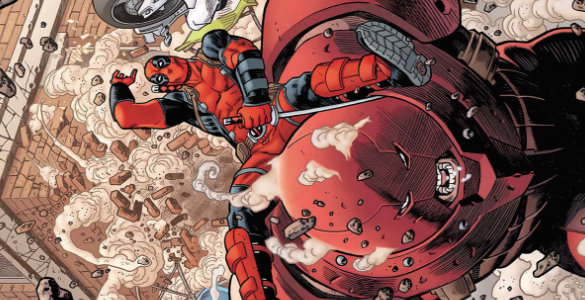
Here’s something that’s true about comics: it’s a medium full of speaking characters that we will never actually hear speaking. By Izzard’s math, that means there’s a full fifth of a character’s essence we’re never really going to get through images and words on the page. As Deadpool pulls out all the stops to finally achieve suicide-by-mercenary, so too does the creative team pull out all the stops to express the height of his desperation. All the usual gears are spinning perfectly: Gerry Duggan’s writing is as simultaneously tight and chaotic as ever, and Mike Hawthorne’s impeccable layouts convey an almost grueling understanding of the setting of this issue-long brawl. But I want to focus on that elusive final 20% — “how you sound” — with Joe Sabino’s excellent lettering in this issue. Continue reading

Losing (and Taking) Control in Eternity Girl 2

By Spencer Irwin

This article contains SPOILERS. If you haven’t read the issue yet, proceed at your own risk!

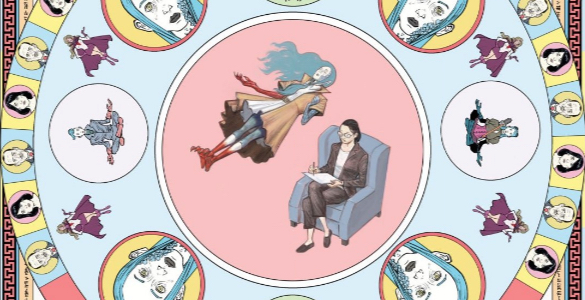
Caroline Sharp isn’t quite all there. I don’t mean that to be a dig at her mental health — she’s literally never just in one place at one time, but rather, being pulled in several directions at once, her consciousness torn between past and present, fantasy and reality, the planet Earth and the far reaches of space. I don’t think it’s the more far-out aspects of this situation that bothers Caroline — it’s the fact that she can’t control it. Continue reading

X-Men Red 3 Offers a Portrait of Our Time

by Drew Baumgartner

X-Men Red 3

This article containers SPOILERS. If you haven’t read the issue yet, proceed at your own risk.

…it occurred to me that instead of them just being heroes that everybody admired, what if I made other people fear and suspect and actually hate them because they were different? I loved that idea; it not only made them different, but it was a good metaphor for what was happening with the civil rights movement in the country at that time.

Stan Lee on creating the X-Men

That the mutants of the Marvel universe are reviled and oppressed has long made them an allegory for any number of minorities the world over, which in turn makes the X-Men an allegory for any number of civil rights activists. Much has been written about the MLK/Xavier and Malcolm X/Magneto parallels, but as the twentieth century churned on, those movements coalesced less and less around recognizable figureheads. These movements weren’t leaderless, by any means, but the leaders were no longer the household names they were in the early ’60s. X-Men comics responded in kind, broadening its cast and bringing in an array of perspectives to cover the more diffuse push for civil rights across the globe. This made the X-Men generalists in terms of their symbolic power — maybe they were drawing parallels to the gay rights movement, or apartheid, or even the holocaust. But that generalist nature may also have blunted any one of those parallels, limiting how specific any one of them can truly feel.

Or so I thought. I’d come to accept the X-Men as a broad comment on the nature of oppression and activism, but never turned to it for “ripped from the headlines” representations of discrete real-world events. Maybe I (and the rest of the world) wasn’t paying enough attention to real-world events to recognize them. Maybe those events weren’t being covered in the way they have been over the past few years. Whatever the case, I was completely bowled over by the unapologetic allegory for Charlottesville that Tom Taylor and Mahmud Asrar present in X-Men Red 3. Continue reading

Bats is a Good Boy in Doctor Strange 388

By Taylor Anderson

This article contains SPOILERS. If you haven’t read the issue yet, proceed at your own risk!

In the past, I’ve made no bones about how much I like the ghost-dog, Bats, in Doctor Strange. A lot of why I like him is because he’s a rude, talking animal that isn’t afraid to tell it the way it is. While that still plays a lot into why I like him as a character, in issue 388 I find I’m liking him more because of who he is instead of what he is. Continue reading