It’s OK to Keep Secrets in Ms. Marvel 30

by Taylor Anderson

This article contains SPOILERS. If you haven’t read the issue yet, proceed at your own risk!

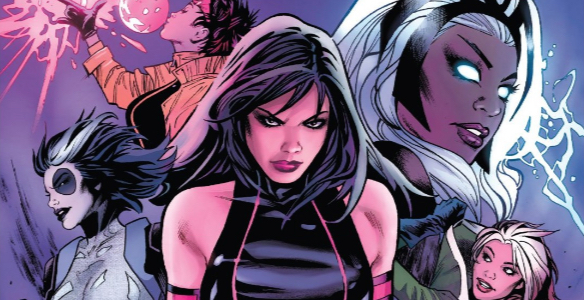
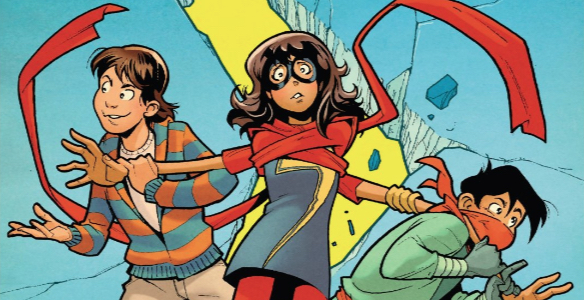
In any relationship, romantic or otherwise, there are bound to be secrets. For a long time, there was belief that prevailed which said your partner was entitled to know everything about you, which basically meant no secrets were kept. However, times have changed, and people have begun to accept that it’s healthy and natural to not tell your partner everything. That’s not being duplicitous, that’s just being human and respectful. This is healthy turn of events, but as with all things, it’s more complicated if you’re a superhero, just as Kamala find out in Ms. Marvel 30. Continue reading
Matt Murdock Holds the Puppet Strings in Daredevil 603

by Michael DeLaney

This article contains SPOILERS. If you haven’t read the issue yet, proceed at your own risk!

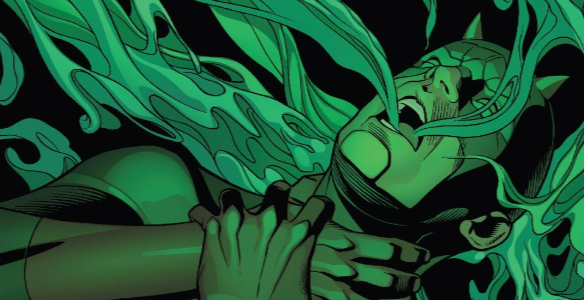
Matt Murdock’s modern history is a delightful roller coaster of changing status quo: he’s been a vigilante, the kingpin of crime, a vessel of The Hand and now Mayor of New York City. In Daredevil 603 Charles Soule draws upon these experiences to highlight the fact that Matt is a master strategist and impressive leader. “The Man Without Fear” preys upon others’ fears in order to manipulate them. Continue reading

Justice League: No Justice 4: Discussion

by Drew Baumgartner and Spencer Irwin

Justice League No Justice 4

This article contains SPOILERS. If you haven’t read the issue yet, proceed at your own risk!

Everything changes here!

Comics solicit, traditional

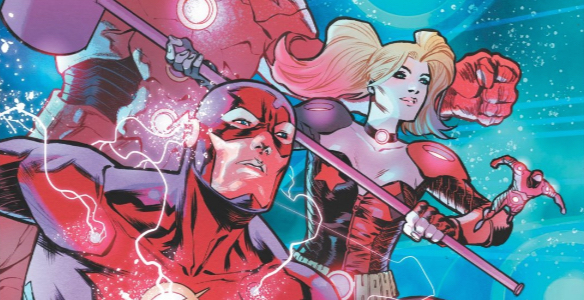
Drew: Okay, that epigraph is maybe too cute by half, but seriously, what does it mean for “everything” to change? The closest parallel I can draw to real life is the conventional wisdom that “a baby changes everything,” but even then, we understand “everything” to be decidedly limited in its scope. Certain events might be life-changing, but only for those with some connection to said events. And yet: comics. Big crossover events are promoted with the promise that the events with change “everything,” and while we might understand “everything” to be limited to the folks involved (in the same way that it is for a birth), there’s also tons of details we might assume exempt from “everything,” from the laws of physics to the peculiarities of english grammar — some things never change. Even so: some comics events are bigger than others, so there’s a range of just what “everything” means. Maybe it’s interpersonal dynamics of the superheroes involved, maybe it’s the principles of the universe as we know it. In its finale, Justice League: No Justice reveals that it falls almost entirely into that latter category, sending the DC Universe into decidedly uncharted territory. Continue reading

Shifting the Narrative in Hunt for Wolverine: Mystery in Madripoor 1

by Drew Baumgartner

Hunt for Wolverine Mystery in Mardipoor 1

This article contains SPOILERS. If you haven’t read the issue yet, proceed at your own risk!

The Bechdel Test

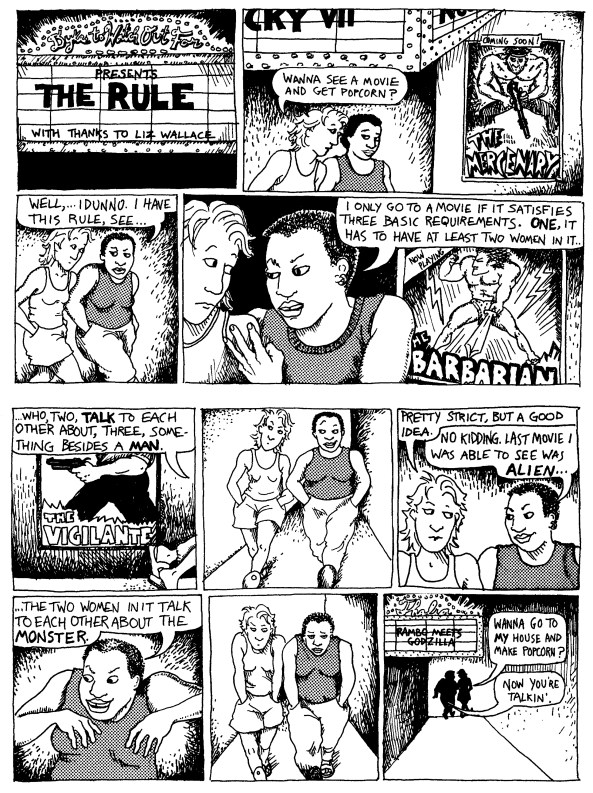
Drew: This particular Dykes to Watch Our For premiered in 1985, and its premise is still ringing in the ears of writers and readers everywhere. Now known as “The Bechdel Test,” these criteria insist on something beyond simple representation (though it’s remarkable how many films fail to satisfy even that first requirement), aiming for a dialogue that features no males (even as subjects of conversation). And that last bit is a huge stumbling block for narratives to this day. Plenty will feature two women and even manage to put them in a scene together, but the conversation will still revolve around the male characters. It’s the kind of problem you might expect to plague any all-female tie-in to the “Hunt for Wolverine” event to suffer from — Logan is necessarily absent, but that fact is likely to be the subject of discussion — but Jim Zub and Thony Silas manage to shift the focus in Mystery in Madripoor 1, pulling the story in totally unexpected directions. Continue reading

“Why?” in Days of Hate 5

by Patrick Ehlers

This article contains SPOILERS. If you haven’t read the issue yet, proceed at your own risk!

Why am I watching this scene?

Screenwriter Advice, Traditional

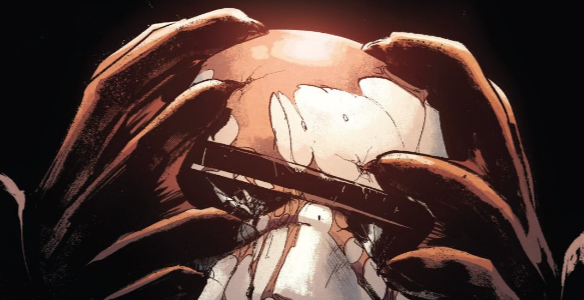
While the “who,” “what,” and “where” of a scene is crucial to the audience’s understanding of what they’re experiencing in the moment, it’s the “why” of a scene that ends up being the most meaningful. If there’s no reason for the scene, then it doesn’t belong in the piece. This is one of those pieces of writerly advice that’s actually kind of intuitive, and readers and audiences feel it without having to be told. If we start reading about a man climbing a tree, then we assume something happens to him in that tree. Writer Aleš Kot and artist Danijel Žeželj take the conflict inherent the mere existence of a scene — three scenes, actually — to tease out a slowly burning tension-inferno in Days of Hate 5. Continue reading

Finding Balance in Justice League: No Justice 3

by Spencer Irwin

This article contains SPOILERS. If you haven’t read the issue yet, proceed at your own risk!

slim-banner

We here at Retcon Punch, sadly, haven’t had much of a chance to discuss Justice League: No Justice until now, but I’ve been enjoying it immensely from the start. It has many of the same strengths as its predecessor, Dark Nights: Metal, but since No Justice is working with only four issues, avoids most of its excesses. No Justice is focused and easy to follow, yet still has a grand scope and a firm grasp on the characters and history of the DC Universe. It’s well-balanced, which plays right into the themes of the series and the goals of its various League factions. Continue reading

Aesthetic Takes Center Stage in Curse Words 14

by Patrick Ehlers

This article contains SPOILERS. If you haven’t read the issue yet, proceed at your own risk!

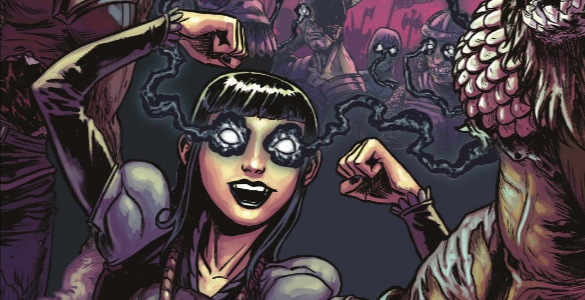
There’s an intangible quality to most of your favorite art that belongs solely to that work. Maybe it’s a voice, or a take, or a perspective, or a rhythm. It’s that magical X factor that makes you say “that’s a Farside joke” or “that’s a Stevie Wonder horn line.” Curse Words’ DNA is so hard to nail down — a mix of crass irreverence and hopelessness, with a jolly veneer that just barely hides some genuine darkness. Issue 14 drifts away from Wizord and lets this lurching aesthetic take center stage. Continue reading

Leia is The Great White Savior in Star Wars 48

by Michael DeLaney

This article contains SPOILERS. If you haven’t read the issue yet, proceed at your own risk!

Science fiction has always been known for its social commentary. Different races of aliens have been stand-ins for all kinds of different cultures and subcultures in the real world. But as much as a show like Star Trek depicted the importance of diversity and inclusion, Captain Kirk was still cast in the role of “The Great White Savior.” Thought it’s not as overt, the ending of Star Wars 48 leaves me with that same uneasy feeling. Continue reading

Doctor Aphra 20: Discussion

by Patrick Ehlers and Mark Mitchell

This article contains SPOILERS. If you haven’t read the issue yet, proceed at your own risk!

Darth Vader: You are overly fond of talking.
Doctor Aphra: I’m nervous.

-Darth Vader 3

Patrick: Chelli Lona Aphra is a motormouth. She’ll unleash a torrent of words when she’s confident, when she’s nervous, when she’s got something to hide, and when she’s got something to say. It makes it tough to get a read on her, but after 20 issues of her own series and a bunch of appearances in Darth Vader, the reader has the benefit of familiarity. By this point in our journey with her, we sorta know Doctor Aphra. The Imperial chumps trying to probe her for information, on the other hand, don’t stand a chance of untangling the truth. Writer Si Spurrier leverages dramatic irony, both in the form of the reader’s past experiences with Aphra and by contrasting his words with Kev Walker’s art, to dig deeper into the character of Doctor Aphra. Continue reading

The Past is Rosy in Lumberjanes 50

by Taylor Anderson

This article contains SPOILERS. If you haven’t read the issue yet, proceed at your own risk!

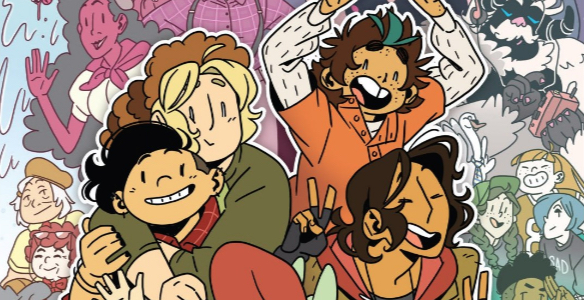
The ancient Greeks had an idea that the past was always better than the present. They arrived at this notion by comparing their present society to those which existed in ancient times. When they did this, they compared the men of their present day to the likes of Heracles and Achillies, which explains why they thought of their time as inferior. Modern day society has the propensity to look at the past as better than the present in the same way. The fact that our current president won the election by claiming the 1950s were the pinnacle of society proves this true. Still, consensus these days is that the past isn’t all that rosy, but that would be a hard point to prove if you were using Lumberjanes 50 as evidence. Continue reading