The Evasiveness of Identity in Mister Miracle 2

by Drew Baumgartner

Mister Miracle 2

This article contains SPOILERS. If you haven’t read the issue yet, proceed at your own risk!

You are what you think all day long.

Ralph Waldo Emerson

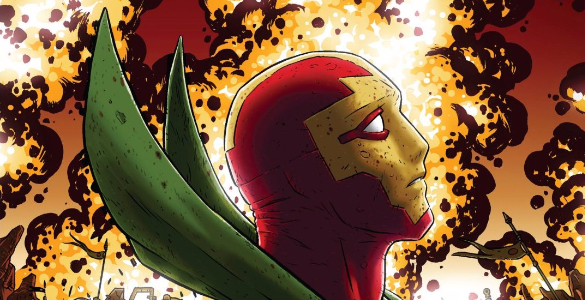
Identity is a frustratingly slippery thing. We all have one, but most of us would be hard pressed to describe what it actually is — what it is that actually makes us who we are. Is it our life experiences? Our relationships? Our interests? The information we absorb? It’s both none of and all of those things (and more). It’s the messiness of that notion that makes characters like Scott Free so compelling; born of New Genesis, raised on Apokolips, he has two families that are now locked in war with one another. The question of who he sides with slips into the messy details of who he is, an issue already strained by the questions he has regarding the very nature of his reality. To extrapolate from Emerson: who are you if you don’t know what to think? Continue reading

Action Comics 987: Discussion

by Mark Mitchell and Michael DeLaney  

Action Comics 987

This article contains SPOILERS. If you haven’t read the issue yet, proceed at your own risk!

slim-banner

Mark: Modern comic books are built on tropes. After nearly a century of storytelling in the medium, the particulars of what makes a Superman story different from a Batman story are so deeply engrained that creators have a binary choice when sitting down to craft a tale: embrace the tropes or react against them. And while longtime comic book readers tend to seek out and reward stories that are willing to subvert and contort their expectations, either choice can be successful if executed well. Continue reading

Diana Faces a Familiar, Puzzling Foe in Wonder Woman 30

by Taylor Anderson

This article contains SPOILERS. If you haven’t read the issue yet, proceed at your own risk!

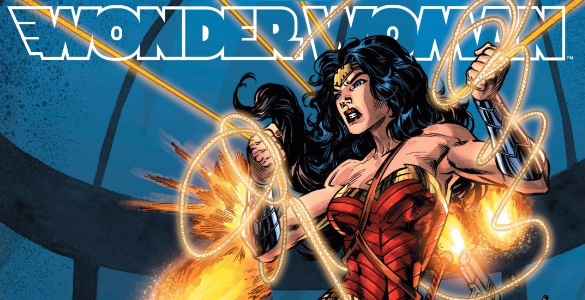
Collectively, superheroes have always freaked the government out, and it’s not hard to see why. With their augmented abilities and their penchant for vigilantism, it’s easy to understand why they threaten institutions which claim to uphold order and society. This being the case, the conflict between heroes and governments has been explored in comics in hundreds, if not thousands, of stories. Wonder Woman 30 does the same, but the question is, does it have anything new to add to the conversation? Continue reading

Blowing Up the Page in Green Lanterns 30

by Patrick Ehlers

This article contains SPOILERS. If you haven’t read the issue yet, proceed at your own risk!

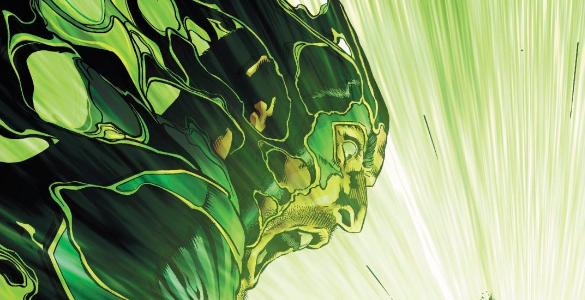
Halfway through Green Lantern 30, Simon Baz praises Jessica Cruz’ plan to fight Volthoom. His narration says “A power ring requires incredible concentration. Volthoom has no ideas what he’s doing. Keep him off balance. All hands on deck. Never let up.” Her plan, like so many Green Lantern plans, boils down to “everyone punch him at the same time.” The dramatic subversion is that the plan doesn’t appear to be working. Artist Carlo Barberi elevates the drama by blowing up the format, only reining in it once our heroes are back in control. Continue reading

Scary Space Science in Green Arrow 30

by Michael DeLaney 

This article contains SPOILERS. If you haven’t read the issue yet, proceed at your own risk!

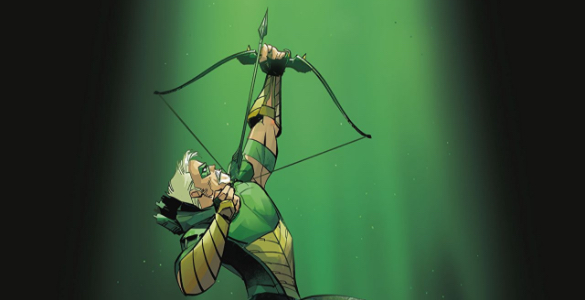
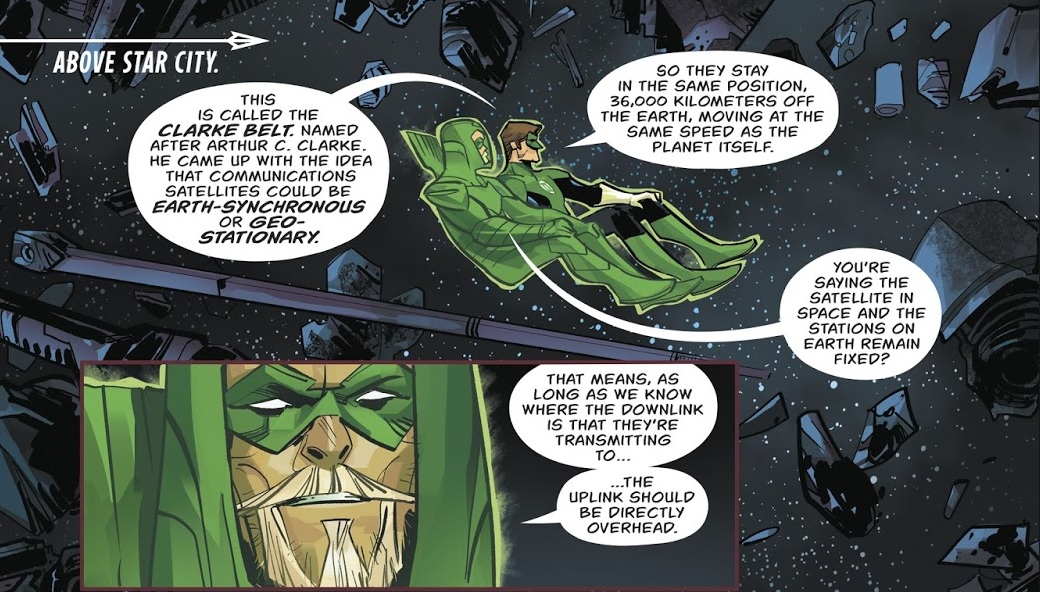
My name is Michael and I learned the basics of satellites from Green Arrow 30. Along with the series’ social justice narrative, “Flash facts” like this are what makes Green Arrow such an impressive book.

Continue reading

Batman 30: Discussion

by Michael DeLaney and Drew Baumgartner 

This article contains SPOILERS. If you haven’t read the issue yet, proceed at your own risk!

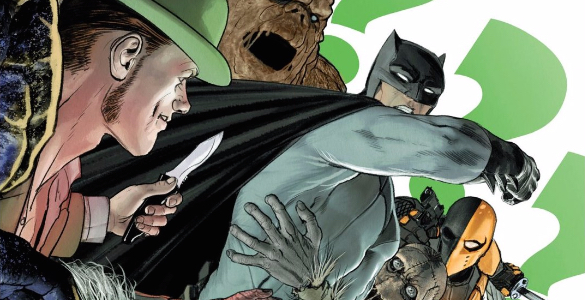
Michael: I’ll admit, I haven’t really understood Tom King’s fascination with Kite Man during his tenure on Batman. King placed Kite Man in the middle of “The War of Jokes and Riddles” in Batman 27 and his tragic origin — Riddler poisoning and killing his son — still left me unmoved. Batman 30 marks the second part of “The Ballad of Kite Man” as well as my cold heart thawing to Kite Man’s tragic existence. Continue reading

The Details Drag Down a Strong Premise in Superman 30

by Spencer Irwin

This article contains SPOILERS. If you haven’t read the issue yet, proceed at your own risk!

There’s a particular brand of story that eschews hard logic or consistent rules for pure emotional storytelling: think Doctor Who at its best, where rules are often bent or changed to support the emotional thrust a given episode, or even the old Teen Titans animated series, where Trigon was defeated by the metaphor of Raven growing up, even if there was never explanation given as to how she gained so much raw power. This kind of storytelling can be tricky: if the emotions and metaphors work well enough readers will forgive (or perhaps not even notice) any gaps in logic, but there’s always the risk that they won’t. For my money, Superman 30 falls a little too close to the latter category; there’s a strong emotional core here, but also a lot of details that don’t fully add-up or make sense. Continue reading

[Obscuring] Place in All-Star Batman 13

by Patrick Ehlers

This article contains SPOILERS. If you haven’t read the issue yet, proceed at your own risk!

When I was a kid, my family used to spend parts of our summer vacation at a cabin in the woods outside of Hayward, Wisconsin with our good family friends, the Pfarrs. The Cabin — which was all we ever called it — had a kind of romantic mythology about it, slowly crafted by years upon years of family bonding. There was a ill-used road into town that we had nicknamed “sneak path,” and which carried a (probably bogus) story about a young couple driving too fast along it and slipping in raccoon guts and driving off the road. We were all told that the Cabin itself was drunkenly constructed backwards, so that delightful front porch was meant to be in back, overlooking the lake. I have no idea if that last one is true, but to this day it feels right. I close my eyes and I see this space – it’s a comfort, a complete flash-memory, and the most common setting for my dreams. It’s a place of subconscious and unconditional love. In All-Star Batman 13, writer Scott Snyder and artist Rafael Albuquerque tap into the connection between place and relationships. Continue reading

Diana Stays Political in Wonder Woman 29

by Mark Mitchell

Wonder Woman 29

This article contains SPOILERS. If you haven’t read the issue yet, proceed at your own risk!

It’s heartening that after Greg Rucka concluded his run on Wonder Woman — a run that found its greatest success when focusing on Diana of Themyscira as a reflection of real life issues — Shea Fontana doesn’t shy away from keeping the book political during these troubling times in America. In Wonder Woman 29, Diana lingers by the US Capitol Building as she considers the purpose of her powers. She wants to do good, to help others and ease their burden, but as she stands on the dome of the Capitol, she realizes there are no higher authorities she can appeal to for assistance; the power lies with her to affect change. Continue reading

Batman is Always Right in Batman/The Shadow 5

by Michael DeLaney

This article contains SPOILERS. If you haven’t read the issue yet, proceed at your own risk!

After Frank Miller turned Batman into an angry grumpypuss, many modern Bat-tales involved The Dark Knight’s allies showing him that there might be a better way than un-trusting ultraviolence. In Batman/The Shadow 5, Scott Snyder and Steve Orlando place Batman on the opposite side of that dynamic while embracing another trope of the character: Batman is always right. Continue reading