Scarlet 1 Bridges the Narrative Gap

By Michael DeLaney


This article contains SPOILERS. If you haven’t read the issue yet, proceed at your own risk!

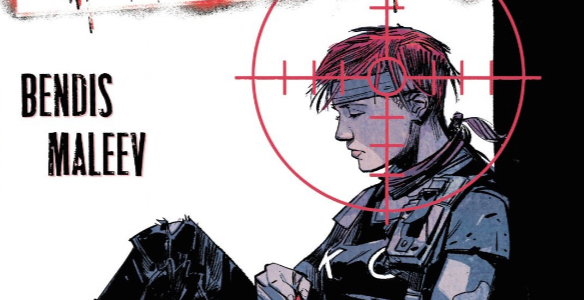
The medium of comic books isn’t an ancient indecipherable text, but it does have its own language that is learned and acquired by readers over time. Along with the significant portions of sequential art, readers must become accustomed to multiple forms of word-based storytelling. In Scarlet 1, writer Brian Michael Bendis, artist Alex Maleev, and letterer Joshua Reed showcase an additional storytelling device not often seen in comic books. Continue reading

No One is Infallible in Justice League 6

by Michael DeLaney

Justice League 6

This article contains SPOILERS. If you haven’t read the issue yet, proceed at your own risk!

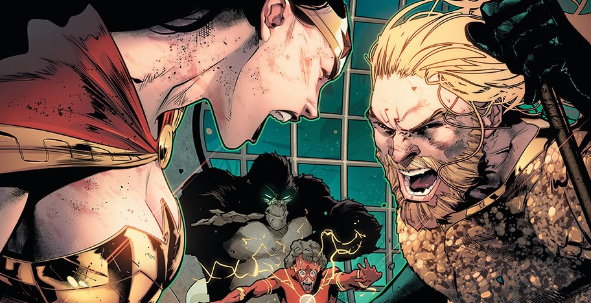
The Justice League is often elevated to a status akin to the gods of myth: immensely powerful, iron-willed and nearly unstoppable. The Trinity of Batman, Superman, and Wonder Woman is at the head of that pantheon of gods, with two veritable immortals and one mortal man who we consider incorruptible and infallible. With the epic cosmic stakes of Justice League 6, we are reminded that no one is infallible, and that a little humility might actually save the universe. Continue reading

Shot Compositions Sell the Relationships in The Wild Storm 16

by Drew Baumgartner

The Wild Storm 16

This article contains SPOILERS. If you haven’t read the issue yet, proceed at your own risk!

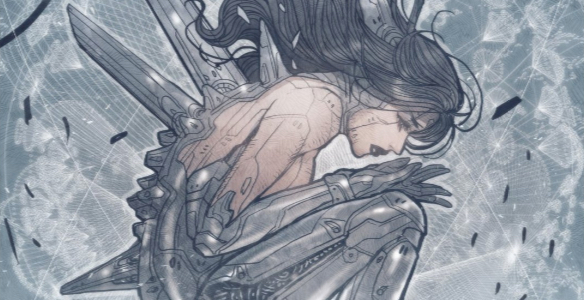
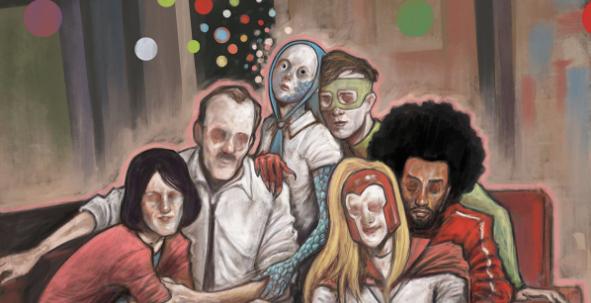
We met Angela Spica at a weird point in her life. While she was (mostly) passing as an eccentric engineer, her relationship to the world changed when she revealed her stolen transkeletal drysuit. That moment marked her as a fugitive, but she was already becoming something different before that, as her cybernetic makeup marks her as something more than “human.” That’s how she fell in with a group of oddities and aliens, but The Wild Storm 16 makes the case for Jenny Mei Sparks as a more natural peer. Their first meeting here doesn’t offer much more than the two simply sizing each other up, but Jon Davis-Hunt’s shot choices suggest that the two are on the same level — a stark contrast to the other big meeting in this issue. Continue reading

Batman 53: Discussion

by Spencer Irwin and Patrick Ehlers

This article contains SPOILERS. If you haven’t read the issue yet, proceed at your own risk!

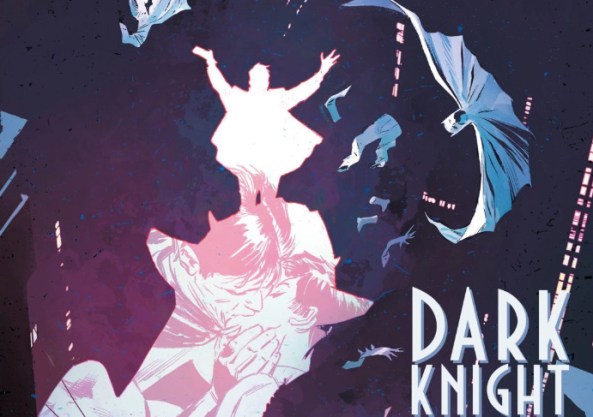
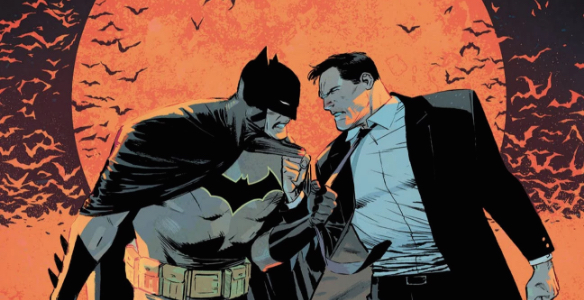
Spencer: The “Cold Days” storyline in Batman 51-53 has almost been sort of a mystery story, but the mystery isn’t “did Mr. Freeze commit murder,” it’s “why is Batman defending him?” Retcon Punch’s own Drew and I had a small debate about it in the comments of our discussion of issue 52; I believed that Batman, in his grief over Selina leaving him at the altar, had falsely incriminated Freeze, and was now looking to find justice for him, while Drew countered that Bruce buying his way onto a jury and pitching his own defense of Freeze isn’t justice at all. It turns out that, in a way, we were both right; Bruce is indeed driven by his grief over Selina and the mistakes it’s led him to make, but he isn’t seeking justice, he’s seeking absolution. Continue reading

Pain as a Prescription in Catwoman 2

by Spencer Irwin

Catwoman 2

This article contains SPOILERS. If you haven’t read the issue yet, proceed at your own risk!

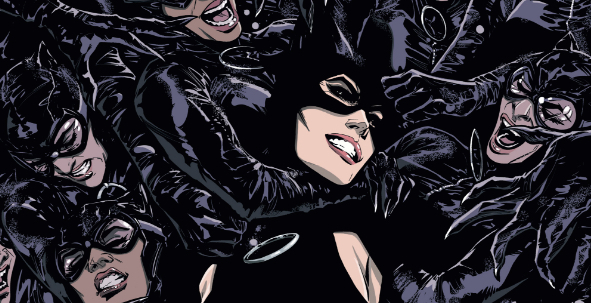
Catwoman 2 continues the series’ fascination with the qualities that tie Selina Kyle and her nemesis, Raina Creel, together, even when the way they express those shared qualities couldn’t be more different. While last month’s premiere focused on the two women’s contrasting takes on fashion and identity, issue two zeroes in on the idea of pain, specifically on treating pain like a tool, a solution, even a prescription. Continue reading

Ideologies Collide in Superman 2

by Michael DeLaney

This article contains SPOILERS. If you haven’t read the issue yet, proceed at your own risk!

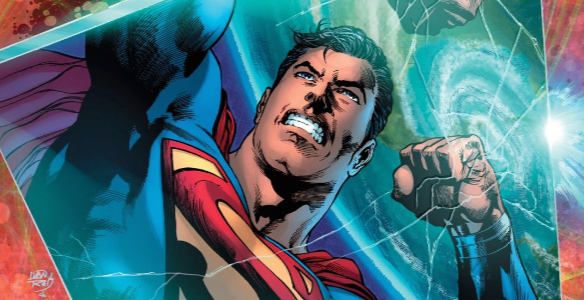
Michael: Brian Michael Bendis continues to prove that he has an excellent handle on the mindset and disposition of The Man of Steel. Superman is a tireless force for good who refuses to see the glass half empty. This steadfast optimism even applies while he’s trapped in the Phantom Zone in Superman 2. Continue reading

Eternity Girl 6: Discussion

by Drew Baumgartner and Mark Mitchell

Eternity Girl 6

This article contains SPOILERS. If you haven’t read the issue yet, proceed at your own risk!

Through our research, we discovered a disturbing statistic: 41% of transgender people have attempted suicide due to lack of societal acceptance. The national average is 4.6%. We were not willing to take that risk. For Ryland’s well-being, we were advised to allow him to transition as soon as possible.

The Whittington Family: Ryland’s Story

Drew: I first encountered this video as part of a training session for my job at a summer camp. It’s style, mostly still photos and text, doesn’t suggest a particularly moving experience, but the focus on Ryland as an individual helps pull the statistics in the excerpt above down to the human level. That is, anyone’s half-baked opinions about gender are rendered irrelevant in light of this kid’s very real risk of suicide if not accepted for who they are. Indeed, it’s a case that skirts the issue of gender almost entirely, finding the rate of attempted suicide in the trans community to be a much more pressing issue. These are issues that affect both Dani and Caroline but how they navigate their own choices (and their reactions to each other’s choices) lends further nuance to those dry statistics. Continue reading

Bruce Wayne Confronts His Assumptions (and Our Own) in Batman 52

by Drew Baumgartner

Batman 52

This article contains SPOILERS. If you haven’t read the issue yet, proceed at your own risk!

slim-banner

We’ve written a lot over the years about how the disparate tones of various incarnations of Batman have created a kind of range that the character operates in. Maybe he’s light and campy, maybe he’s dark and serious. Maybe he’s a high-tech wizard, maybe he’s a low-tech sleuth. Maybe he’s a bitter loner, maybe he’s cultivating an ever-growing family of friends and allies. That range applies just as much to the look of Batman, as different character designs emphasize different aspects of his character. Is his costume scary, or silly? Is humanity obscured by his costume, or made more obvious by it? In practice, the platonic image of Batman we keep in our minds might be just as diffuse as his mood — a kind of pastiche of the designs from, say, our favorite comics runs, Batman: The Animated Series, and maybe even a few movies. High in the mix for most modern comics fans, though, must be David Mazzucchelli’s distinctively line-smart Batman: Year One, which distilled Batman down to as few brush strokes and dabs of color as possible, creating a kind of shorthand iconography for the character that perfectly suited the early-days nature of that story. It’s a style that Lee Weeks and colorist Elizabeth Breitweiser evoke in Batman 52, though rather than celebrating that iconography, they’re interrogating it. Continue reading

The Complexities of Internet Social Justice in Green Arrow 43

by Spencer Irwin

This article contains SPOILERS. If you haven’t read the issue yet, proceed at your own risk!

Spencer: The internet can be a powerful tool for justice, often simply because it allows information to get to more people than ever before, faster than ever before. It allows the voices of the oppressed and downtrodden to be heard, and I think the #metoo movement may be the greatest sign of this: great things have been accomplished, impossible targets have been taken down, thanks to the platform for social justice the internet provided.

Like any tool, though, the internet’s platform can also be misused. Let’s look at the recent situation where Guardians of the Galaxy director James Gunn was fired by Disney. I’m not condoning Gunn’s offending tweets, though it should be noted that Gunn acknowledged and apologized for them years ago and never did anything like them again, and Disney was well aware of those tweets when they hired him. What’s significant about this situation is that Gunn’s firing was orchestrated in poor faith, by an alt-right goon who couldn’t have cared less about Gunn’s tweets; he wanted Gunn fired for criticizing the president, and the tweets were the easiest way to do it. He took a platform for social justice and misused it to serve his own agenda, and it’s scary not only that there’s no safeguard against this, but that organizations like Disney can’t see the difference; they simply bow to the “Court of Public Opinion” no matter who’s behind it.

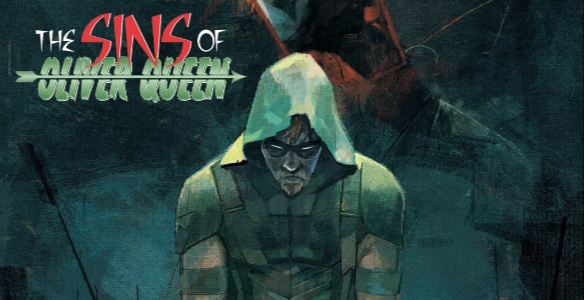
This danger is front-and-center in Green Arrow 43, an issue that finds Oliver and company facing an internet vigilante, an angry public, and a tricky moral dilemma. Continue reading

The Inevitability of Hal Jordan and the Green Lantern Corps 49

by Michael DeLaney

This article contains SPOILERS. If you haven’t read the issue yet, proceed at your own risk!

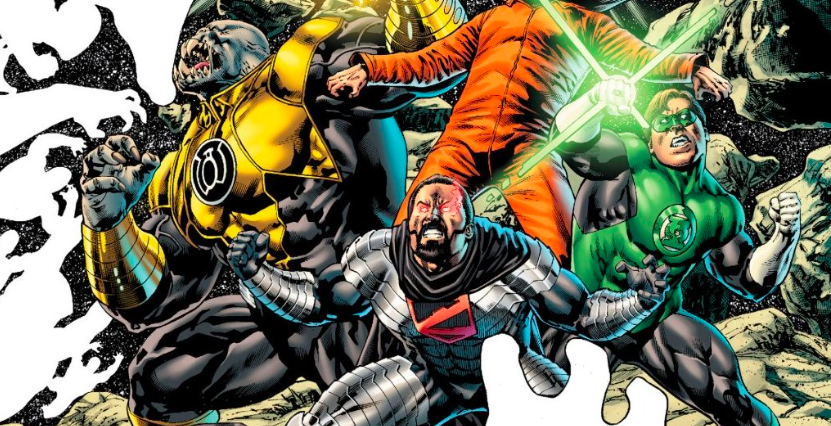
If you couldn’t tell from the title Hal Jordan and the Green Lantern Corps, the series places a lot of emphasis on one Harold “Hal” Jordan. Hal Jordan and the Green Lantern Corps 49 continues that trend, underlining the importance and inevitability that is Hal Jordan. Continue reading