“Why?” in Days of Hate 5

by Patrick Ehlers

This article contains SPOILERS. If you haven’t read the issue yet, proceed at your own risk!

Why am I watching this scene?

Screenwriter Advice, Traditional

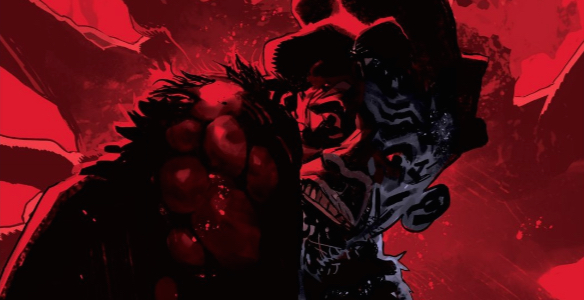
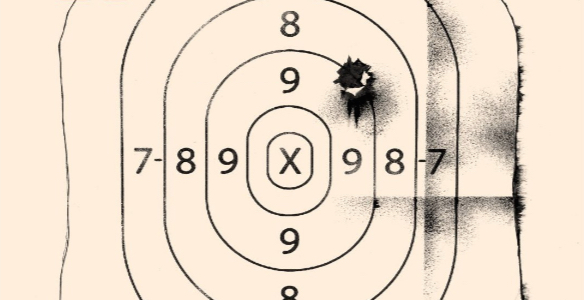
While the “who,” “what,” and “where” of a scene is crucial to the audience’s understanding of what they’re experiencing in the moment, it’s the “why” of a scene that ends up being the most meaningful. If there’s no reason for the scene, then it doesn’t belong in the piece. This is one of those pieces of writerly advice that’s actually kind of intuitive, and readers and audiences feel it without having to be told. If we start reading about a man climbing a tree, then we assume something happens to him in that tree. Writer Aleš Kot and artist Danijel Žeželj take the conflict inherent the mere existence of a scene — three scenes, actually — to tease out a slowly burning tension-inferno in Days of Hate 5. Continue reading
Aesthetic Takes Center Stage in Curse Words 14

by Patrick Ehlers

This article contains SPOILERS. If you haven’t read the issue yet, proceed at your own risk!

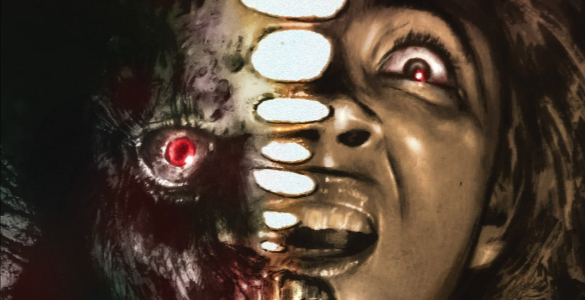
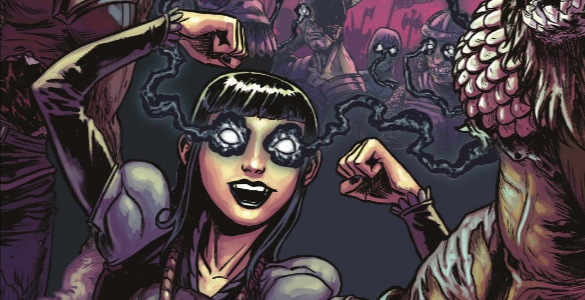
There’s an intangible quality to most of your favorite art that belongs solely to that work. Maybe it’s a voice, or a take, or a perspective, or a rhythm. It’s that magical X factor that makes you say “that’s a Farside joke” or “that’s a Stevie Wonder horn line.” Curse Words’ DNA is so hard to nail down — a mix of crass irreverence and hopelessness, with a jolly veneer that just barely hides some genuine darkness. Issue 14 drifts away from Wizord and lets this lurching aesthetic take center stage. Continue reading

Finding Heroism and Victory in the Mundane in The Further Adventures of Nick Wilson 5

By Spencer Irwin

This article contains SPOILERS. If you haven’t read the issue yet, proceed at your own risk!

None of us, no matter how many years we’ve spent dreaming about it, are ever going to get superpowers, and few of us will ever have a real chance to change the world. Those aren’t the only ways to be a hero, though. Sometimes being a hero simply means helping or standing up for one person, or even yourself — sometimes it’s heroic just to show up, to try and get your life in order even when you’re scared. Eddie Gorodetsky, Marc Andreyko, and Stephen Sadowski’s The Further Adventures of Nick Wilson has always been a series that’s found adventure in life’s mundane moments, so it’s no surprise that its finale finds heroism in the same kind of small, relatable victories. Continue reading

Breaking the Cycle in The Wicked + The Divine 36

by Spencer Irwin

This article contains SPOILERS. If you haven’t read the issue yet, proceed at your own risk!

It’s happening now. It’s happening again.

The Wicked + The Divine

Endless cycles are a motif that runs deep throughout The Wicked + The Divine, from the unending dysfunction and madness of the Pantheon, to the circle that makes up their logo and meeting table, to the very nature of their perpetual rise and fall, a neverending cycle of death and rebirth. In fact — if anything she’s said can ever be believed — one of Ananke’s greatest fears seemed to be the idea that this cycle could somehow be broken.

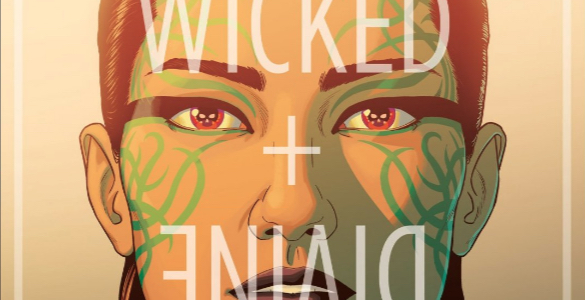
These are both ideas that Kieron Gillen, Jamie McKelvie, Matthew Wilson, and Clayton Cowles dig into in The Wicked + The Divine 36, an issue that spends a shocking amount of space detailing yet another endless cycle, and the rest of the issue breaking an entirely different one. Continue reading

Moonshine 10: Discussion

by Drew Baumgartner and Patrick Ehlers

Moonshine 10

This article contains SPOILERS. If you haven’t read the issue yet, proceed at your own risk!

Remove everything that has no relevance to the story. If you say in the first chapter that there is a rifle hanging on the wall, in the second or third chapter it absolutely must go off. If it’s not going to be fired, it shouldn’t be hanging there.

Anton Chekhov

Drew: Chekhov’s gun has parallels in virtually every artform (at least in aesthetics that value clarity); whether it’s a brushstroke in illustration, a word in prose, or a note in music, if it doesn’t have an explicit purpose, it shouldn’t be there. But, of course, our knowledge of this principle lends a sense of foreshadowing to every object, character, or concept that is introduced in a narrative (again, if we can assume the narrative is playing by Chekhov’s rules). But because narratives are driven by drama (that is, difficulties for the protagonist), Chekhov’s gun mostly applies to things that can somehow harm or disrupt the characters’ lives — there’s a reason it’s not called “Chekhov’s birthday present.” Which creates very different expectations for things going right and wrong — things going wrong are far more likely to be introduced ahead of time (per Chekhov’s rules), while the drama of things going right is left best to the last possible moment. In that way, narratives reflect our own experience of reality, where we’ve given the name “Murphy’s law” to the notion that things will go wrong if they can, but no similar expectation for things going right. That is, we expect things to go wrong, so things going right is always a pleasant surprise. Or, as Lou Pirlo puts it in Moonshine 10, “God works in mysterious ways,” but “Old Lucifer…he was direct.” Continue reading

The Worst Horrors in Infidel 3 are Real

by Drew Baumgartner

Infidel 3

This article contains SPOILERS. If you haven’t read the issue yet, proceed at your own risk!

slim-banner

Last month, Patrick remarked on how both real and scary Infidel is — that is, the horrors of this book come from societies worst (but all too real) problems. And they really do seem to come from those problems. For some reason, when I read the solicit for this series, I imagined that the specters in this series somehow caused the islamophobia that runs rampant throughout Aisha’s building; that it was somehow responsible for making people hateful. As we spend more time with them, however, (and as more residents seem to encounter them), it seems like they aren’t so much the cause of the bigotry, but the result of it. That is, they are the manifestation of the fear minorities feel when encountering bigotry. Continue reading

Loving the Dimension You’re With in Oblivion Song 3

by Drew Baumgartner

Oblivion Song 3

This article contains SPOILERS. If you haven’t read the issue yet, proceed at your own risk!

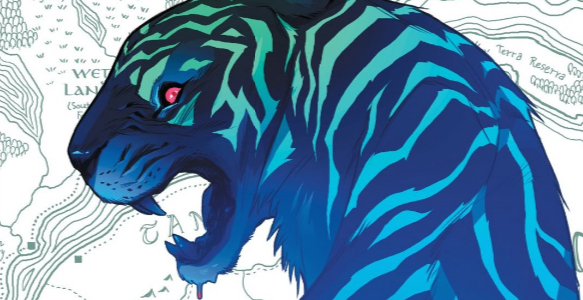
Hey, can you get Stockholm syndrome for a place? For a set of circumstances? When generalized in this way, Stockholm syndrome seems less like a pathology and more like a testament to human resilience. We can come to love whatever hand life deals us, even when we initially wanted something completely different. Maybe that’s a coping mechanism to keep us from dwelling on what could have been, but it’s potent, either way. Anywhere you look, from crumbling cities to evacuated war zones, you’ll find people who refuse to leave because this is their home. Or, more precisely, this is their life — they can’t just chuck it all away for something they might have preferred a decade ago. It’s not an attitude that makes a whole lot of sense from the outside looking in, but that may be exactly what the remaining survivors in Oblivion are feeling. Continue reading

A Journey Through Color in Isola 2

By Spencer Irwin

This article contains SPOILERS. If you haven’t read the issue yet, proceed at your own risk!

Using color to differentiate settings and characters is not new — even television shows such as Heroes or The Defenders have done it — but I’m still amazed by how well Isola uses the technique. It helps that Msassyk’s colors (combined with Karl Kerschl’s crisp, animation-worthy artwork) are so jaw-droppingly gorgeous — they’d take readers on an immersive journey by that merit alone — yet Msassyk takes things to the next level by constantly varying palettes throughout the issue, shifting his color schemes to indicate new locations, introduce new characters (or bring back old ones), and even just show the passing of time. By the end of the issue things look completely different from the outset, making readers feel like they’ve truly taken a journey with Rook and Olwyn, truly spent a night making their way through this lush fantasy world with them. Continue reading

Defeat and Retaliation in Analog 2

by Patrick Ehlers

This article contains SPOILERS. If you haven’t read the issue yet, proceed at your own risk!

slim-banner

Normal Person + Anonymity + Audience = Total Fuckwad

Penny Arcade, 2004

Back in 2004, the Penny Arcade guys were disgusted by the behavior of some people playing Unreal Tournament online, leading to them publishing the strip referenced above. Fourteen years later, and we know better than to ever be shocked by a faceless teenager hiding behind the gamertag “6ftcock” using hate speech in PU:BG. Vile behavior begets other vile behavior, and as long as the bullies never have to meet their victims, that fuckwadery is as make-believe as the game they’re playing. At least, that’s what John Gabriel’s Greater Internet Fuckwad Theory postulates. But what if those hateful impulses, those destructive anti-social tendencies are just part of who we are, with or without the internet? Gerry Duggan and David O’Sullivan’s Analog 2 dutifully moves the series’ plot mechanics forward, while continuing to mine this thematically rich vein. Continue reading

A Rare Quiet Moment in East of West 37

by Taylor Anderson

This article contains SPOILERS. If you haven’t read the issue yet, read on at your own risk!

In the hustle and bustle of a busy day, I find that it’s the quiet moments that make me happiest. After dealing with hectic pace and many demands of the classroom, it’s nice to come home and enjoy a quiet, evening walk with my wife and dog. As nice as these quiet moments are, they’re only pleasant because they are set against the larger backdrop of a busy day. If I hadn’t had a long day, I’m not sure they would be quite as sweet. This same thing can be said of grand, dark stories like East of West. While the big narrative about the apocalypse is the main bill, it’s the quiet, smaller moments I think I enjoy best. Continue reading