Impossible Decisions at Impossible Ages in Runaways 10

By Spencer Irwin

This article contains SPOILERS. If you haven’t read the issue yet, proceed at your own risk!

Teacher: Daria, what about your goal?
Daria: Uhmmm, I don’t have any.
Teacher: Oh come, Daria! You must have some goal.
Daria: My goal is not to wake up at forty with the bitter realization that I’ve wasted my life in a job I hate, because I was forced to decide on a career in my teens.

Daria, Gifted

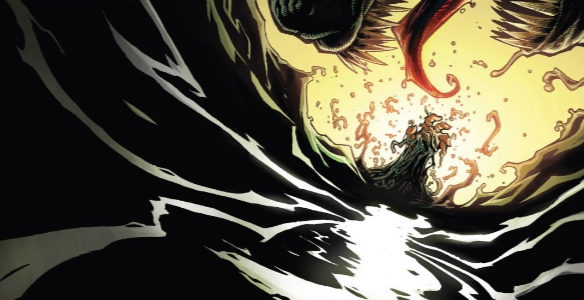
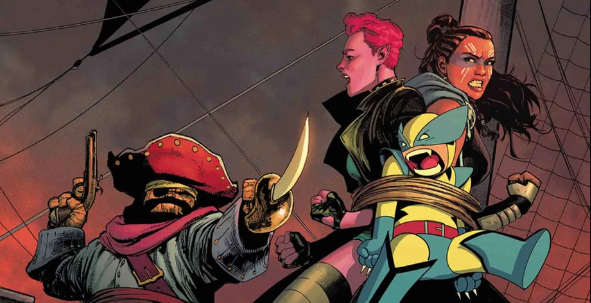
Society asks a lot of teenagers, especially when it comes to big decisions. These same children who aren’t allowed to drink, vote, or often even have a say in how they present themselves to the world are expected to commit to a career path, often burying themselves in debt to do it; it’s a daunting decision for anyone, but especially for young people who aren’t quite sure who they really are and what they want out of life yet. None of the young heroes (or “villains”) of Runaways 10 are contemplating college at the moment, but they’re nonetheless faced with similarly difficult, life-altering decisions that they simply just aren’t ready, or even qualified, to make yet. Continue reading
Who Controls the Page in Daredevil 604?

By Patrick Ehlers

This article contains SPOILERS. If you haven’t read the issue yet, proceed at your own risk!

“I’m gonna need the room.”

Father Jordan, Daredevil 604

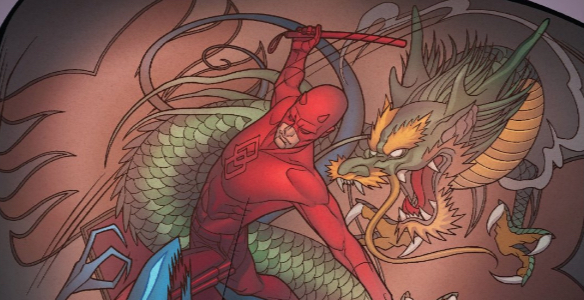
Charles Soule and Mike Henderson’s Daredevil 604 is all about controlling space. Within the world of the story, that’s about dispersing satanic mists, or driving out swarms of ninjas. On the metatextual level, that’s about which character commands the space on the page. With the introduction of the Order of the Dragon (or Ordo Dragonum, if you’re nasty), the pages become thick with both action and potential, but it’s still on Daredevil to take control of every square inch of the city… and by extension, every inch of the page. Continue reading

Serviceable is Not Enough in Avengers 3

by Spencer Irwin

This article contains SPOILERS. If you haven’t read the issue yet, proceed at your own risk!

I’ve been reading, collecting, and following weekly American comics for well over a decade now, and I’ve watched not only the industry grow, but my own tastes as well; the type of standard, “heroes beat villain and saves the world” stories that were once exciting have become a bit routine. That’s not to say that there isn’t room for these kind of stories within the industry, but they need a little something special to stand out and really feel worth investing in, and unfortunately, I haven’t found that spark yet in Jason Aaron and Ed McGuinness’ run on Avengers. Continue reading

Tony is the Team in Tony Stark Iron Man 1

by Patrick Ehlers

This article contains SPOILERS. If you haven’t read the issue yet, proceed at your own risk!

There’s no “i” in “team”.

Traditional

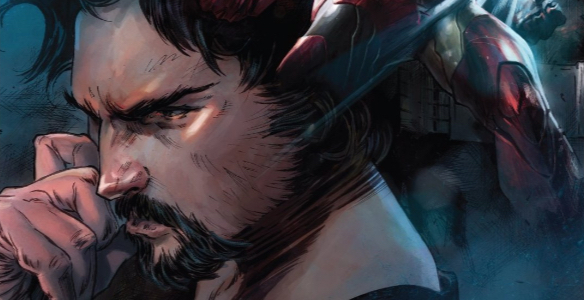
Tony Stark is a selfish jerk. It’s one of the things we like best about him! But there’s no denying that his success as Iron Man is contingent on the hard, capable work of thousands of employees, and countless robots and A.I. systems. As writer Dan Slott and artist Valerio Schiti take the Iron reins, they pitch Iron Man as a team venture, while casually undermining the autonomy of every individual on the team. Aside, of course, from Tony Stark. Tony remains a singular genius, more of a puppeteer than a team leader. Continue reading

Approaching Old Stories From a New Angle in Poe Dameron 28

by Spencer Irwin

This article containers SPOILERS. If you have not read the issue yet, proceed at your own risk!

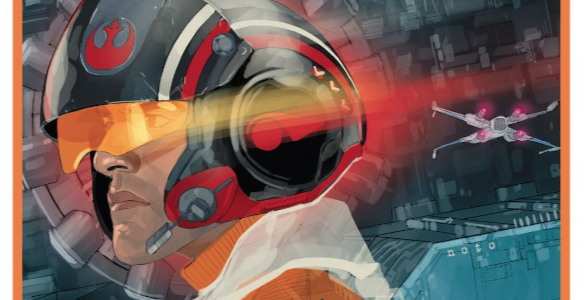
The fact that The Last Jedi picks up almost immediately where The Force Awakens left off leaves the Poe Dameron comic in a bit of a tight spot — the Star Wars comics have been mining the fertile ground between A New Hope and The Empire Strikes Back for decades now, but Poe Dameron doesn’t have that kind of space to work in, instead leaving Charles Soule and Angel Unzueta only tiny blank gaps of backstory to fill in. We here at Retcon Punch have been a bit frustrated by this over the past few issues, generally preferring the sweet, chemistry-filled framing device (a conversation between Poe, Rey, and Finn) to the actual stories it’s being used to tell. Poe Dameron 28, though, finds success by approaching these vignettes from a new angle, building a mystery around who actually is telling the story. Continue reading

Narrative Efficiency in Captain America 704

by Drew Baumgartner

Captain America 704

This article contains SPOILERS. If you haven’t read the issue yet, proceed at your own risk!

Superhero stories are high-concept endeavors. Beyond the origin of the hero’s powers and commitment to justice, there are villains and supporting characters that might require just as much explanation. Monthly comics tend to smooth this over by taking our knowledge of those high concepts for granted, cramming all of that exposition into a logline on the cover page in order to make room for actual action. It’s a popular solution, so ubiquitous that explaining it in this way feels almost unnecessary. But then we encounter those superhero stories — perhaps it’s a miniseries with a new character or an alternate universe — that have to fit that logline into the story itself, forcing us to recognize just how much explaining really is necessary in the genre. Captain America 704 is one such story, catching us up with (and ultimately thwarting) a multi-generational plan and addressing some long-standing Cap mythology. Continue reading

Amazing Spider-Man 801: Discussion

By Spencer Irwin and Patrick Ehlers

This article contains SPOILERS. If you haven’t read the issue yet, proceed at your own risk!

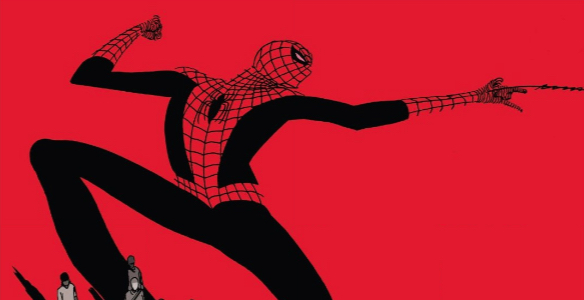
Spencer: Dan Slott has written more issues of The Amazing Spider-Man than any other creator ever. That’s not something one achieves if they merely “like” a character — Slott clearly loves Spider-Man in a way even the most die-hard of fans can only dream of. Writing his adventures has certainly changed Slott’s world for the better, and that’s a sentiment he expresses beautifully in The Amazing Spider-Man 801, his final issue on the title. It’s a love letter to the power of Spider-Man told in the only way that kind of story really can be told — through the perspective of a fan. Continue reading

Peter Parker: the Spectacular Spider-Man Annual 1 Offers a Secret History for J. Jonah Jameson

by Drew Baumgartner

Peter Parker The Spectacular Spider-Man Annual 1

This article contains SPOILERS. If you haven’t read the issue yet, proceed at your own risk!

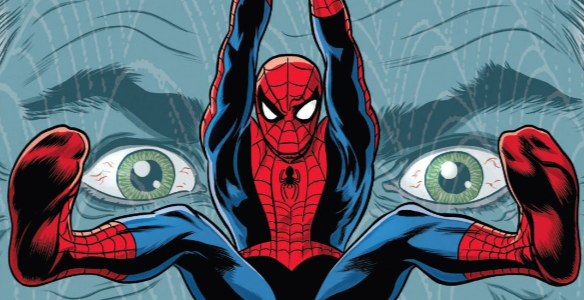
All fictional characters — especially in the compressed world of superhero comics — start as types. It’s only as we spend more time with them that they can be fleshed out into more fully-realized, nuanced characters. But, of course, being a type is often all a given character may need to be. And so, for decades, J. Jonah Jameson was little more than the irritable, muckraking editor of the Daily Bugle. That’s not a failure — it’s all he really needed to be to move the story forward, and he was still plenty entertaining. But as with any character that’s around for the better part of a century, those little glimpses we got of him started to add up, and creators started exploring who he was behind all of that bluster, giving us the JJJ we all know and love. He’s still that irritable muckraker, but we understand that there’s more too him. Indeed, there’s enough there that Jameson can anchor a story himself every now and then, as he does in Peter Parker: The Spectacular Spider-Man Annual 1. Continue reading

The Symbiote Stands for Addiction in Venom 2

by Ryan Desaulniers

This article contains SPOILERS. If you haven’t read the issue yet, proceed at your own risk!

slim-banner

If you have never been addicted, you can have no clear idea what it means to need junk with the addict’s special need. You don’t decide to be an addict. One morning you wake up sick and you’re an addict.

William S. Burroughs, Junkie

Is it possible to explain addiction to someone who has never been addicted? The closest parallel I can draw is the deep, resounding heartache felt when ending a long-term relationship, when the hurt is so big that it is all-encompassing, physically affecting you, turning your stomach, switching your brain off from rationality. Maybe that’s close, but there’s plenty less stigma associated with heartbreak than addiction and its corresponding mental health cycles. Different forms of media endeavor to bring addiction out of the shadows and prove that it is no indication of a flaw in a person’s character, but even a well-told story like that of Requiem for a Dream might offer the non-addict a catharsis based upon their security in never living that experience as opposed to an understanding of those who have. Venom 2 offers a compelling look at a character in a narrative rife with addiction imagery and symbolism which might just lend a window into the life of someone struggling with their relationship to a substance. Continue reading

One Impressive Spread is an Issue in Microcosm in Exiles 4

by Spencer Irwin

This article contains SPOILERS. If you haven’t read the issue yet, proceed at your own risk!

slim-banner

Exiles 4 is the series’ best issue yet, and not just because of the puns (although the “Juggernautical” joke alone certainly earned this issue a spot high in my rankings). Saladin Ahmed and Javier Rodriguez slow down just a bit, devoting the entire issue to one dimension and one story, allowing the world the Exiles visit to feel interesting and fleshed out and for a full, self-contained adventure to play out there in a way that previous issues haven’t always had room for — all while still advancing the overarcing Time-Eater plot. It’s impressive plotting, pulled off with aplomb by every member of the creative team, who never allow the issue’s density to choke out the detail, character work, or fun this series has come to be known for. It’s a killer combination, and there’s one perfect moment that epitomizes everything that’s great about this issue. Continue reading