There’s Power Hidden in the Style of Black Magick 11

by Drew Baumgartner

Black Magick 11

This article contains SPOILERS. If you haven’t read the issue yet, proceed at your own risk!

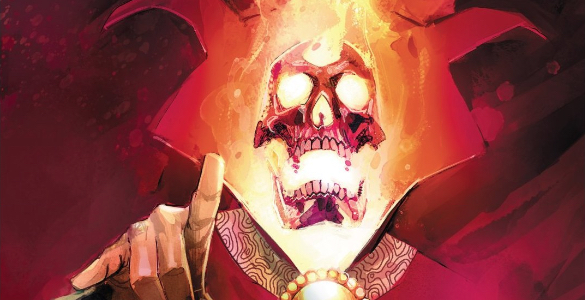
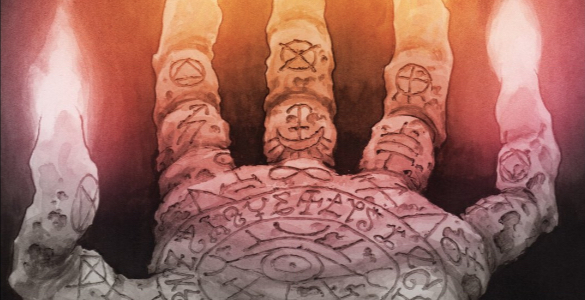
As a medium, comics are limited to two dimensions and single moments in time, but those are really the only limitations. Even so, it can be easy to forget that comics art can be anything but representational, as so many mainstream comics tend to default to some much more restrictive rules. This is particularly strange given the popularity of supernatural or superhuman powers in comics. In a medium with infinite possibilities, these powers tend to be depicted in the same ways, again and again; a hard punch (like, a really hard punch), a big explosion (like, a really big explosion, a massive spaceship (like, a really massive spaceship), etc. It takes a much more thoughtful, much more subtle hand to actually take advantage of the medium’s possibilities to represent the otherworldly, which is exactly what Nicola Scott does in Black Magick 11, cashing in some of the stylistic choices she’s made from the beginning of the series to really sell the magic at hand. Continue reading

How Camera Angles Raise Stakes in Despicable Deadpool 297

by Patrick Ehlers

This article contains SPOILERS. If you haven’t read the issue yet, proceed at your own risk!

slim-banner

Superheroes have an insane amount of mobility. Whether they’re fwipping around on spider webs, or flying through the air, or just brooding on a gargoyle on top of a skyscraper, there’s always a sense that the whole city is laid out before them. Artists can achieve this effect with dynamic camera angles, revealing the city below, and hopefully inducing a touch of vertigo in their readers. Despicable Deadpool 297 shows just how effectively Mike Hawthorne can use those same techniques to sell a change of setting and raise the stakes in Wade’s non-stop-slay-a-thon Continue reading

Dark Nights: Metal 6: Discussion

by Spencer Irwin and Mark Mitchell 

This article contains SPOILERS. If you haven’t read the issue yet, proceed at your own risk!

slim-banner

Spencer: Now that the series has come to an end, I can safely say that I have very mixed feelings about Dark Nights: Metal as a whole. So much of this event has been about embracing gonzo, bonkers, throwback action, but much of that fun is buried under attempts to overexplain every aspect of the (often impossible to follow) plot. The stakes of the event never fully sank in for me, as aside from artist Greg Capullo’s hellish landscapes, most of the nightmarish aspects of the Dark Multiverse were buried away in tie-in issues, while the main series focused on fun, but straightforward action beats. That said, there were a few areas where this series shined, and Dark Nights: Metal 6 exemplifies them all. It’s a strong metaphor for embracing hope and community over nihilism and isolation, a powerful reminder of stories’ ability to inspire, and an ode to the past (and future) of the DC Universe. Continue reading

Doomsday Clock 4: Discussion

By Michael DeLaney and Drew Baumgartner 

This article contains SPOILERS. If you haven’t read the issue yet, proceed at your own risk!

Michael: I’d rather not spend each issue of Doomsday Clock comparing it to Watchmen, but dammit if that’s not what Geoff Johns and Gary Frank want me to do. Doomsday Clock 4 takes a break from the new ensemble of “heroes and villains” that has been established, and instead zeroes in on the new Rorschach. Much like Walter Kovacs in the sixth chapter of Watchmen, Doomsday Clock 4 deals with Rorschach’s current incarceration, as well as his origins. Continue reading

Finding Purpose in the Journey in Lockjaw 2

By Patrick Ehlers

This article contains SPOILERS. If you haven’t read the issue yet, proceed at your own risk!

“Animals may not understand our every word, but when it comes to tone? They understand perfectly.”

-Ka-Zar, Lockjaw 2

Throughout this issue, D-Man repeatedly states his confusion about what’s going on. He doesn’t know what it takes to survive in the Savage Land, he doesn’t know what Lockjaw is really up to, he doesn’t know what “the Beast” is. And it’s not just a good running gag: he doesn’t know what the D in D-Man stands for anymore. Writer Daniel Kibblesmith gifts the reader with Dennis’ confusion, greedily keeping most of the series’ explanation and exposition off the page. We are left to intuit was is right and what is wrong, just like D-Man does. We’re reading tone — and we understand that perfectly. Continue reading

The Philosophy of The Last Jedi in Star Wars: Poe Dameron 25

By Michael DeLaney

This article contains SPOILERS. If you haven’t read the issue yet, proceed at your own risk!

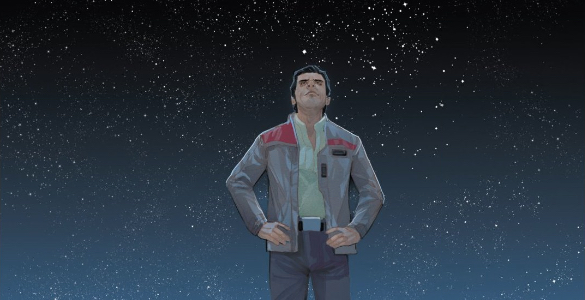
Up to this point, Lor San Tekka has basically been a human McGuffin. When Poe & Co. finally retrieve the old man in Poe Dameron 25 however, he doesn’t yet know where Luke Skywalker is. You can’t blame that on Charles Soule, the guy’s gotta line stuff up for The Force Awakens. Interestingly, the movie that Soule pulls from the most is The Last Jedi. Continue reading

Sometimes a Comic is Actually Comedic in Ms. Marvel 28

By Taylor Anderson

This article contains SPOILERS. If you haven’t read the issue yet, proceed at your own risk!

Comics as a medium suffer from a case of poor branding. They’re called “comics” even though a majority of what we think of when we think of comics aren’t comedic at all. One has only to pick up an issue of Batman to get what I mean — the Dark Knight’s adventures aren’t exactly full of laughs (Joker antics aside). There are reasons for this nomenclature, of course, but it’s always kind of rewarding when comic treats its content with levity. This proves true in Ms. Marvel 28, but G. Willow Wilson accomplishes this without losing any of the series’ heart. Continue reading

Racism, Homophobia and Hypocrisy in James Bond: The Body 3

By Patrick Ehlers

This article contains SPOILERS. If you haven’t read the issue yet, proceed at your own risk!

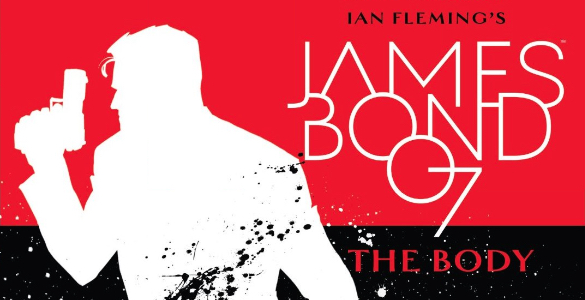
James Bond is an agent of the state. His actions seldom need to be motivated beyond “for Queen and Country.” We can infer some other values that the character holds from his choice of career. For example: he believes that violence can (and should) be used to bring about justice. He’s pro sex, but possibly in a way that devalues his relationships with his sexual partners. Issue three of James Bond: The Bond reveals another of Bond’s values — he hates white supremacy.

Or… is that it? The thing that seems to really get Bond going is the hypocrisy inherent in white supremacy. His appetite for sweet, violent, humiliating revenge seems to be fueled less by his desire to stamp out intolerance and more to do with people and organizations neither understanding nor practicing what they preach. Continue reading

Usagi Yojimbo: The Hidden 1

by Patrick Ehlers & Michael DeLaney

This article contains SPOILERS. If you haven’t read the issue yet, proceed at your own risk!

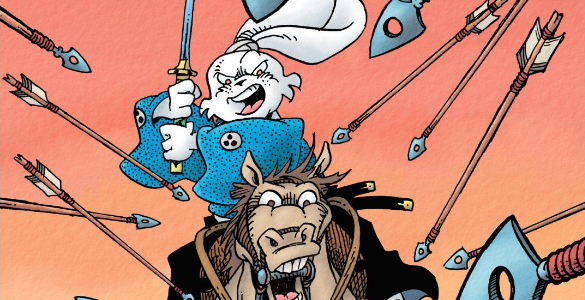
Patrick: I saw the new Wes Anderson movie, Isle of Dogs, this weekend. It’s cute, moody and starkly graphic — it fulfills the promise made by the phrase “Directed by Wes Anderson.” But the film also has a weird relationship with its setting: the Japanese language and and culture represent the alien in its own country. The dogs that we follow around, who are the heroes of this story, are all voiced, speaking English, by white American actors. A note tells us early on that barks and translated into English, but Japanese will remain untranslated (unless when done diegetically). For whatever argument you can make for Anderson’s reverence of the language and the culture (to say nothing of employing a bunch of Japanese actors and film folk), there’s no denying that the Japanese-ness of Isle of Dogs is meant to be novel and out of the ordinary. Usagi Yojimbo: The Hidden 1 takes the exact opposite route, making damn sure that the East is familiar and the West is exotic. Continue reading

Doctor Strange Damnation 3 is Cool

By Patrick Ehlers

This article contains SPOILERS. If you haven’t read the issue yet, proceed at your own risk!

“Okay, sounds cool.”

-Blade, Doctor Strange Damnation 3

There’s a lot of heady framework supporting Doctor Strange Damnation. Writers Nick Spencer and Donny Cates are playing with some of the most amoral and immoral heroes in the Marvel Universe as they navigate the fallout of the biggest heel turn in comics history. Plus the goddamn devil is there collecting the wages of sin. So, y’know: a lot of loose morality to sort through. Issue three of this miniseries lets all of that set-up take a back seat. For 20 glorious pages, Spencer, Cates and artist Szymon Kudranski just let cool shit happen. Continue reading