Doomsday Clock 5 Meanders

By Drew Baumgartner

Doomsday Clock 5

This article contains SPOILERS. If you haven’t read the issue yet, proceed at your own risk!

The essence of drama, and especially melodrama, is compression. Show only what’s important. So start the scene as late as possible and once the dramatic point is made, end it.

Dennis O’Neil, The DC Comics Guide to Writing Comics

Pound for pound, this might be some of the best writing advice I know. But in this age of sequels, prequels, spin-offs and tie-ins, it seems like it’s all but been forgotten. That is, the artistic discipline of narrative efficiency is no match for the commercial demands of more familiar content. I don’t mean to dismiss all sequels etc. out of hand (The Godfather: Part II is a goddamned masterpiece, and is both a sequel and a prequel), but I do think they need to work a bit harder to justify their existence — if the details of this prequel story truly are essential, why weren’t they included in the original. And that scrutiny goes double when augmenting a beloved masterpiece. It’s absolutely possible for a sequel to justify itself, even under those circumstances (again, The Godfather: Part II), but it’s no easy feat. Unfortunately, the longer Doomsday Clock wears on, the less it seems up to that task, not only failing to justify its existence, but pretty much every storytelling choice it makes. Continue reading

Finding Balance in Justice League: No Justice 3

by Spencer Irwin

This article contains SPOILERS. If you haven’t read the issue yet, proceed at your own risk!

slim-banner

We here at Retcon Punch, sadly, haven’t had much of a chance to discuss Justice League: No Justice until now, but I’ve been enjoying it immensely from the start. It has many of the same strengths as its predecessor, Dark Nights: Metal, but since No Justice is working with only four issues, avoids most of its excesses. No Justice is focused and easy to follow, yet still has a grand scope and a firm grasp on the characters and history of the DC Universe. It’s well-balanced, which plays right into the themes of the series and the goals of its various League factions. Continue reading

Trust Saves the Day in Super Sons 16

by Spencer Irwin

This article contains SPOILERS. If you haven’t read the issue yet, proceed at your own risk!

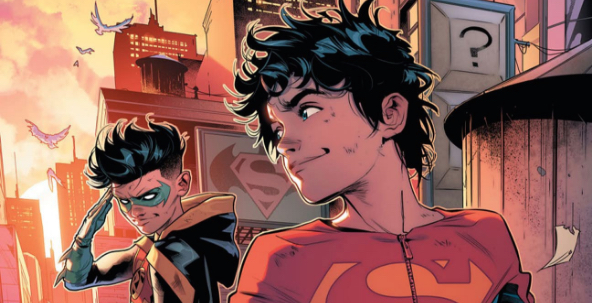
This month’s issue 16 marks the end of Super Sons (for now — a continuation is already solicited), so it only makes sense that writer Peter Tomasi, along with artists Carlo Barberi and Brent Peeples, would want to close on a milestone victory for Superboy and Robin. More important than the actual victory, though, is how they achieve it — partially by channeling their parents, but mostly by trusting in each other. Continue reading

Exploring Dick Grayson in the Here-And-Now in Nightwing 44

By Michael DeLaney

This article contains SPOILERS. If you haven’t read the issue yet, proceed at your own risk!

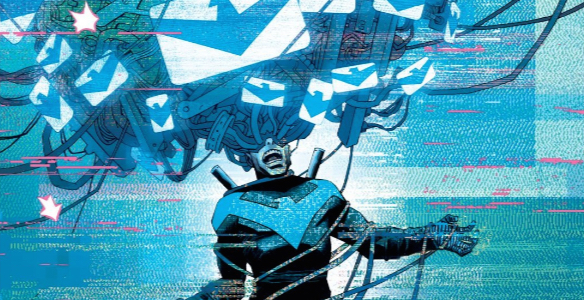
Michael: As a whole, DC comic book readers are very protective of Dick Grayson. He’s the first Robin, the first one to leave the short pants behind, lauded as the sexiest man in the DCU, and just an all-around great guy. Nevertheless Mr. Grayson can never seem to completely escape Batman’s shadow — I can name a slew of my favorite Batman stories but barely any Nightwing stories. Nightwing 44 is Benjamin Percy and Christopher Mooneyham’s inaugural issue on the title, and they are setting out to explore what makes Dick Grayson unique from the very first page. Continue reading

The Darkest Timeline in Batman 46

By Drew Baumgartner

Batman 46

This article contains SPOILERS. If you haven’t read the issue yet, proceed at your own risk!

From now on, I am Evil Abed. We are the Evil Study group, and we have but one evil goal: return somehow to the Prime Timeline, the one that I stopped you from rolling that die. Then we destroy the good versions of ourselves and reclaim our proper lives.

Evil Abed, Community

The notion of the “darkest timeline” seems to have entered the zeitgeist, mostly through tongue-in-cheek suggestions that we’re currently living in it, but it’s a relatively common concept in science fiction. Indeed, there are so many examples, I kind of split my metaphor on my discussion of Batman 45, touching on everything from Back to the Future Part II to It’s a Wonderful Life to that “Treehouse of Horror” episode of The Simpsons where Homer keeps accidentally changing the timeline. But none are more explicit about the superlativeness of the badness of the timeline than Community‘s darkest timeline.

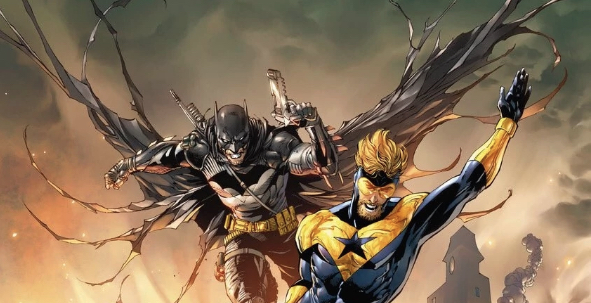
It stands as a kind of conceptual opposite of Gottfried Leibniz’s “best of all possible worlds” theory — his explanation for human suffering that any other “world” (effectively, a different timeline) would be worse. The Back to the Future franchise suggests that the original timeline was neither the best nor the worst (Marty improves it in the first movie, turning his father into a successful science fiction writer, Biff makes it worse in the second, turning himself into a Trump-ian real-estate mogul), but most of these other examples only show changes to the timeline making things worse — effectively, that we’re actually living in the best of all possible worlds. This is definitely supported in the horrific timeline Booster Gold created as Bruce’s wedding gift, which is undeniably worse than the DC Universe as we know it, though on the surface appeared better for Bruce. That is, until Booster tries to fix things in this issue. Continue reading

The Timeline Skews in Batman 45

By Drew Baumgartner

Batman 45

This article contains SPOILERS. If you haven’t read the issue yet, proceed at your own risk!

Here’s the present, 1985, the future, and the past. Prior to this point in time, somewhere in the past…the time line skewed into this tangent…creating an alternate 1985. Alternate to you, me, and Einstein…but reality for everyone else.

Doc Brown, Back to the Future Part II

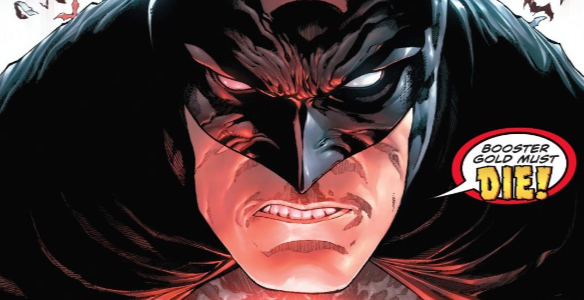
We’re all familiar enough with the notion of alternate timelines and the butterfly effect by this point that any reasonable time-traveler would have to fear ever changing past events — indeed, it’s a sci-fi concept so ubiquitous, even Abe Simpson thought to offer Homer a warning about it on his wedding day. And yet, we still like to imagine “what if” scenarios about making different decisions in only our own pasts, but those of fictional characters. The most well-known “what if” story in superhero comics might well be “For the Man Who Has Everything,” Alan Moore and Dave Gibbon’s clever parable about fantasy wish fulfillment. Superman’s fantasy necessarily focuses on his own experiences on a non-exploded Krypton, but the absence of Superman would obviously have profound effects back on Earth. That is, there are butterfly effects in that fantasy timeline we never see, that a Krypton-based Kal-El wouldn’t even know about. Cleverly, Tom King and Tony Daniel open on the butterfly effects of their alternate timeline in Batman 45 before circling back to explain how and why this alternate timeline was created in the first place. Continue reading

Batman 44: Discussion

by Mark Mitchell and Taylor Anderson

This article contains SPOILERS. If you haven’t read the issue yet, proceed at your own risk!

Mark: Comic book characters locked into perpetual monthly stories can never really change; someone like Batman is an archtype unto himself, and if you mess with that alchemy too much, you threaten to change what Batman is. I used to think of this limitation as a bug in serialized comic storytelling, that the lack of permanent change in a character somehow devalued the overall impact any specific authorial choices could have, but I’m beginning to see it as a huge advantage. Continue reading

Dark Nights: Metal 6: Discussion

by Spencer Irwin and Mark Mitchell 

This article contains SPOILERS. If you haven’t read the issue yet, proceed at your own risk!

slim-banner

Spencer: Now that the series has come to an end, I can safely say that I have very mixed feelings about Dark Nights: Metal as a whole. So much of this event has been about embracing gonzo, bonkers, throwback action, but much of that fun is buried under attempts to overexplain every aspect of the (often impossible to follow) plot. The stakes of the event never fully sank in for me, as aside from artist Greg Capullo’s hellish landscapes, most of the nightmarish aspects of the Dark Multiverse were buried away in tie-in issues, while the main series focused on fun, but straightforward action beats. That said, there were a few areas where this series shined, and Dark Nights: Metal 6 exemplifies them all. It’s a strong metaphor for embracing hope and community over nihilism and isolation, a powerful reminder of stories’ ability to inspire, and an ode to the past (and future) of the DC Universe. Continue reading

Doomsday Clock 4: Discussion

By Michael DeLaney and Drew Baumgartner 

This article contains SPOILERS. If you haven’t read the issue yet, proceed at your own risk!

Michael: I’d rather not spend each issue of Doomsday Clock comparing it to Watchmen, but dammit if that’s not what Geoff Johns and Gary Frank want me to do. Doomsday Clock 4 takes a break from the new ensemble of “heroes and villains” that has been established, and instead zeroes in on the new Rorschach. Much like Walter Kovacs in the sixth chapter of Watchmen, Doomsday Clock 4 deals with Rorschach’s current incarceration, as well as his origins. Continue reading

Strength in Teamwork in Batman 43

By Drew Baumgartner

Batman 43

This article contains SPOILERS. If you haven’t read the issue yet, proceed at your own risk!

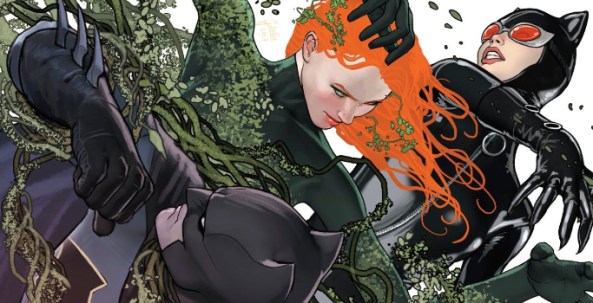
On the surface, grief and regret may not seem all that similar; one deals with an inescapable force of nature, the other is preoccupied with (potentially avoidable) personal failures. I might argue that regret is a kind of grief, albeit over the death of an idea or an opportunity, as opposed to a loved one, but there’s a more fundamental commonality between these two: how personal they feel. This can make both grief and regret feel very lonely, potentially driving us away from the friends and family who might want to support us through those difficult times. It’s a trap Ivy falls into, trying to go it alone in the face of her own grief and regrets, but Batman and Catwoman (and the entire creative team behind Batman 43) have a better way. Continue reading