A Loss of Focus Drains the Drama from All-New Wolverine 24

by Drew Baumgartner

All-New Wolverine 24

This article contains SPOILERS. If you haven’t read the issue yet, proceed at your own risk!

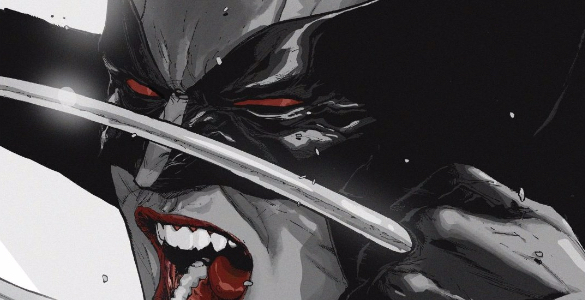
There has been plenty to love about Tom Taylor’s run on All-New Wolverine, from its adventurous cameos to its wry sense of humor, but I’d have to say my favorite aspect has always been its emotional intensity. Each storyline has been distinguished by its intense personal connection to Laura, whether it was battling (or teaming up with) her clone sisters, or settling a score from her earliest days. Every one seemed to leave a meaningful impact on Laura, ending or beginning new chapters in her life. It’s a breathless feat to keep that amount of emotional weight moving for that long, which is why I’m almost willing to forgive issue 24 for being the complete antithesis of that kind of importance. Continue reading

The Evasiveness of Identity in Mister Miracle 2

by Drew Baumgartner

Mister Miracle 2

This article contains SPOILERS. If you haven’t read the issue yet, proceed at your own risk!

You are what you think all day long.

Ralph Waldo Emerson

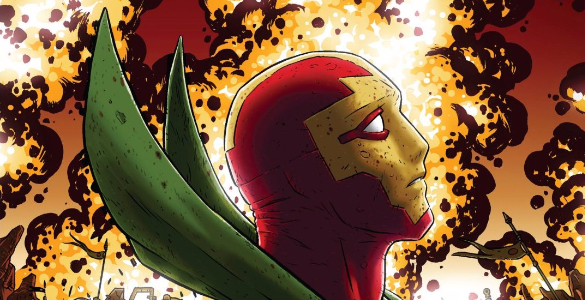
Identity is a frustratingly slippery thing. We all have one, but most of us would be hard pressed to describe what it actually is — what it is that actually makes us who we are. Is it our life experiences? Our relationships? Our interests? The information we absorb? It’s both none of and all of those things (and more). It’s the messiness of that notion that makes characters like Scott Free so compelling; born of New Genesis, raised on Apokolips, he has two families that are now locked in war with one another. The question of who he sides with slips into the messy details of who he is, an issue already strained by the questions he has regarding the very nature of his reality. To extrapolate from Emerson: who are you if you don’t know what to think? Continue reading

A Heartbreaking Loss of Innocence in Ms. Marvel 22

by Drew Baumgartner

Ms. Marvel 22

This article contains SPOILERS! If you haven’t read the issue, proceed at your own risk.

The song I’d like to do for you is a song that I had the pleasure of doing when I was 15 years old…it’s a song that will last, unfortunately, for a long, long time. And when I say “unfortunately,” I’m talking about the fact that it will always be relevant to something that is going on in this world of ours.

Stevie Wonder, introducing “Blowin’ in the Wind”

Love, loss, betrayal, greed. There are a number of timeless themes we might trace back to the earliest stories we can find. But there are other themes, just as timeless, that have not always been featured in our stories in this same way — themes kept so out-of-sight that some people refuse to acknowledge that they exist at all. Of course, for the people actually affected by those timeless truth of oppression, it is simply a part of life. If we are any more aware of those themes in this day and age, it is only through listening to the people who actually experience them. As ever, G. Willow Wilson’s Ms. Marvel presents a frank account of what life is like for a young muslim woman in America, bringing hard truths to those of us who might not see them, otherwise. Continue reading

A Study in War Preparations in Outcast 30

by Drew Baumgartner

Outcast 30

This article contains SPOILERS. If you haven’t read the issue yet, proceed at your own risk!

It’s easy to feel optimistic at the start of Outcast 30 — Simon and Kyle have just discovered a new Outcast, Daphne, and they all seem stronger than ever. Or, they will be, but right now they’re exhausted after clearing out a huge safehouse for the merge (or the possessed — we need something to call these antagonists). There’s a bit of tension as Kyle has to convince his family to take in a complete stranger, but even the resolution of that is played for maximum hopefulness, as both Simon and Amber comment on how much stronger they feel in Daphne’s presence. It’s almost enough to feel like they might be in a position of strength — especially after the way last month’s issue ended. Continue reading

The Wicked + The Divine 31: Discussion

by Drew Baumgartner and Spencer Irwin
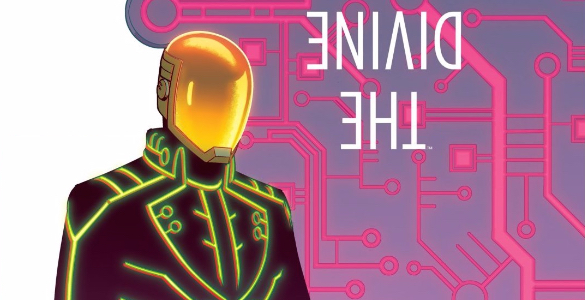
Wicked + The Divine 31

This article contains SPOILERS. If you haven’t read the issue yet, proceed at your own risk!

In order to increase the likelihood that students will call for medical assistance in an alcohol-related emergency, some colleges and universities have instituted “Good Samaritan” or medical amnesty policies that eliminate or reduce judicial consequences for students involved in alcohol-related medical emergencies. Other schools may reject this type of strategy based on arguments such as the need to “avoid sending the wrong message” about the seriousness of underage drinking.

Doborah K. Lewis & Timothy C. Marchell,
Safety first: a medical amnesty approach
to alcohol poisoning at a U.S. university”

Drew: I first encountered the notion of a medical amnesty policy in college, though I can’t say I gave it much thought at the time. Indeed, it wasn’t until I was in a position to be worried about dangerously drunk/overdosing students not coming forward (I worked for several years at a summer camp for high-school students) that I started to appreciate how boneheaded the “avoid sending the wrong message” camp truly is. Mostly, it just forgets that the rules against drinking and alcohol use are there for the safety of the students in the first place, somehow valuing the sanctimonious tut-tutting of saying “you shouldn’t drink” over, you know, saving the life of a kid who broke the rules. It’s such an obviously flawed attitude, I was honestly taken aback when I saw reports that some sheriff in Florida was explicitly not offering amnesty to folks with warrants seeking shelter from Hurricane Irma. Or, more specifically, he was insisting on conducting unconstitutional ID checks in order to deter anyone with a warrant from seeking the refuge of a hurricane shelter, endangering their lives because he somehow values laws — the things society makes in order to protect people — more than actually protecting people.

Before I get too off topic, my point is that we’re often too preoccupied with the letter of the law to really parse its spirit. Certain things may be illegal because they’re dangerous, but if coming forward about illegal activity makes things objectively less dangerous, we should encourage that behavior. The article I quoted at the top of this piece offers objective data in support of that idea after studying a medical amnesty policy at Cornell, but I think it’s crucial to note that this type of thinking doesn’t just operate at the institutional level. Even in our daily lives we often react badly to honesty simply because we dislike the truths being revealed, but like the researchers at Cornell, we must recognize how that attitude only makes the situation worse. I found myself thinking about this phenomenon a great deal as I read The Wicked + The Divine 31, as issues of amnesty (and lack thereof) cropped up throughout the issue. Continue reading

The Past is Both a Strength and a Weakness in Black Bolt 5

by Drew Baumgartner

Black Bolt 5

This article contains SPOILERS. If you haven’t read the issue yet, proceed at your own risk!

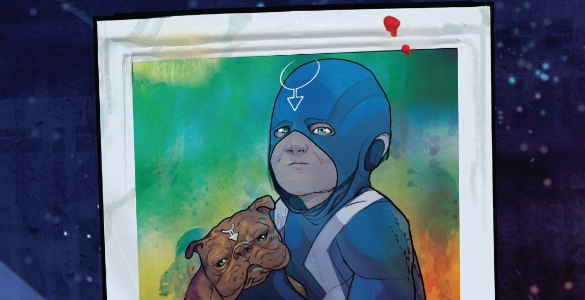
I had a boss who used to say “your greatest weapon is ultimately also the sword you fall upon.” That is, our strengths tend to secretly carry weaknesses. He usually meant it in terms of workplace skills — natural leaders might not make for great team players, for example — but I’ve found this idea remarkably insightful in people’s personal lives, as well. Maybe you draw strength from your extended family, though that may tie you down geographically, or from a hobby that also sucks up most of your free time. It’s an idea that’s relatively well-worn in superhero comics, but is generally limited to loved ones becoming liabilities. Black Bolt 5 offers a different take, injecting its usual style and emotional depth to both Blackagar’s strength and his weaknesses. Continue reading

Recursive Redundancy in Faith and the Future Force 2

by Drew Baumgartner

Faith and the Future Force 2

This article contains SPOILERS. If you haven’t read the issue yet, proceed at your own risk!

Hey, how long do you think Bill Murray repeated that day in Groundhog Day? There have been a few attempts to estimate some approximate number, but the only answer that really matters is “a lot.” We don’t need to see every day, or even be told about every day, so long as we get the idea that he’s repeating the day a ton. I mean, can you imagine if even the second day was chronicled in as much detail as the first one? That sounds interminable, but is largely what we get in Faith and the Future Force 2, with the added monotony that the arc of the issue is also more or less identical to the first issue. Continue reading

Rowan’s Defenses May be Lacking in Black Magick 7

by Drew Baumgartner

Black Magick 7

This article contains SPOILERS. If you haven’t read the issue yet, proceed at your own risk!

We don’t often talk about procedurals in terms of “putting the pieces in place” — there’s too much directionality to all of the clue finding for the endgame to feel anything other than inevitable. Of course, for all of the procedural elements in Black Magick, it isn’t strictly a procedural. This issue is full of procedural scenes — all showing some degree of cause and effect — from Rowan’s “investigation” into Bruce Dunridge to her (and Alex’s separate) spellcasting, to Stepan Hahn’s own detective work. He’s the noose we’re consciously aware of (especially as the end of the issue puts him on a collision course with Ro), but it’s the procedures we don’t quite see the fallout of that intrigue me most. Continue reading

Secret Empire 10: Discussion

by Drew Baumgartner and Patrick Ehlers 

Secret Empire 10

This article contains SPOILERS. If you haven’t read the issue yet, proceed at your own risk!

Truth is stranger than fiction, but it is because Fiction is obliged to stick to possibilities; Truth isn’t.

Mark Twain

Drew: This may seem like an odd quote to kick off a discussion about a comic featuring superpowered heroes battling over bits of a cube that can rewrite reality, but I think it’s safe to say Secret Empire has really never been about superpowers or cosmic cubes. Those are the trappings of a big summer event series, sure, but the story was actually about how seemingly good people can be corrupted by toxic ideologies. That’s immediately recognizable as Steve Roger’s arc through Steve Rogers: Captain America and Secret Empire, but it’s also an arc that has been running in the background of Hydra’s America throughout this series, one that is far more unsettling than seeing Steve hail Hydra ever could be. Continue reading

Lazarus X+66 2 Presents a Cyborg as a Rorschach Test

by Drew Baumgartner

Lazarus X+66 2

This article contains SPOILERS. If you haven’t read the issue yet, proceed at your own risk!

People see what they want to see. It’s a fact that’s fundamental to our perception of the world, but also the thing that prevents us from agreeing on anything. Rorschach tests represent the most fundamental expression of this notion, asking subjects to project their own meaning onto meaningless inkblots, but it’s something we see every day, from our simplest hopes and fears to the way we evaluate political candidates. That’s not to say there aren’t objective truths, just that, individually, we’re terrible at recognizing (and respecting) them, so their existence is almost incidental to our attitudes about the world. This is enervating enough when discussing climate change or which way toilet paper rolls should be oriented, but becomes all the more heartbreaking when the debate questions your very humanity, as it does for Joacquim Morray in Lazarus X+66 2. Continue reading