Unknown history sits at the heart of Batgirl 14

by Drew Baumgartner

Batgirl 14

This article contains SPOILERS. If you haven’t read the issue yet, read on at your own risk!

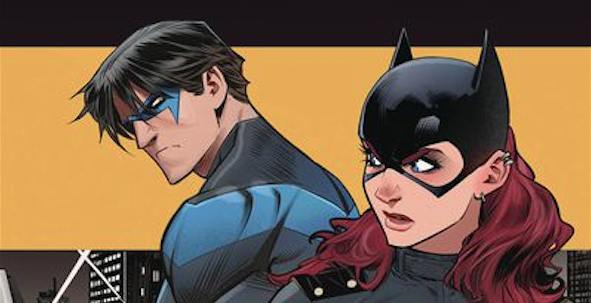
I’ve never been a huge fan of dramatic irony — I can appreciate how giving us more information than the characters have can produce tension (or humor), but that information kind of gets in the way of relating to the characters. Still, I have a heck of a lot more patience for dramatic irony than I do its exact opposite, where characters are privy to information that is deliberately withheld from the audience. Not only does the tension it create feel cheaper (amounting to little more than a narrative chant of “I know something you don’t know”), it makes the characters even harder to relate to, as we’re necessarily left in the dark about what they might be thinking or feeling. All of which kept me from truly enjoying Batgirl 14. Continue reading
Overcoming the Refusal of the Call in Green Lanterns 29

by Drew Baumgartner

Green Lanterns 29

This article contains SPOILERS. If you haven’t read the issue yet, proceed at your own risk!

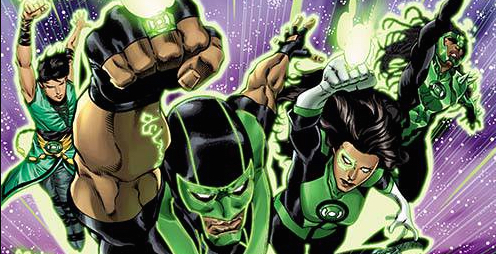
Superheroes are locked in a permanent state of adventure, so their stories never really end. For that reason, it might seem absurd to apply narrative structures like Joseph Campbell’s “Hero’s Journey” to superhero narratives, as there is little hope of “return,” and notions of “known” and “unknown” start to break down once the hero has been around for a while. But I’ll be damned if the first few beats of any Superhero origin doesn’t more or less follow the first few beats of the Hero’s Journey — especially if the “hero” undergoing the journey happens to be a supporting character. Such is the case in Sam Humphries and Eduardo Pansica’s Green Lanterns 29, which finds all of the original Green Lanterns (OGLs) refusing the call to adventure before ultimately deciding that they have no choice. Continue reading

The Chilling Adventures of Sabrina 8 Highlights “Teenage” and “Witch” in Equal Measure

by Drew Baumgartner

Chilling Adventures of Sabrina 8

This article contains SPOILERS. If you haven’t read the issue yet, proceed at your own risk!

Teenagers are exhausting to argue with. The reasons for this are both biological (an underdeveloped prefrontal cortex soaking in teenage hormones isn’t the best recipe for critical reasoning) and psychological (the complex mix of rebellion and conformity that makes up the teenage psyche makes acquiescing to even the most persuasive argument difficult), but anyone who has ever had to tell a teen “no” will have a much more practical understanding. Lacking the perspective of a longer, more worldly life, teens tend to be over-invested in everything from romantic relationships to whether or not they can borrow the family car, so everything feels like the end of the world. That means teens don’t have a lot of headroom for when something is actually a big deal, so can come off as almost blasé on matters of life and death even as they might throw a tantrum about having to mow the lawn. This is exactly the situation in which Hilda and Zelda find themselves in this issue as they try (and fail) to make a love-drunk Sabrina see just how reckless she’s being. Continue reading

Generations: Wolverine & All-New Wolverine 1: Discussion

by Drew Baumgartner and Michael DeLaney

Generations Wolverine & All-New Wolverine 1

This article contains SPOILERS. If you haven’t read the issue yet, proceed at your own risk!

slim-banner

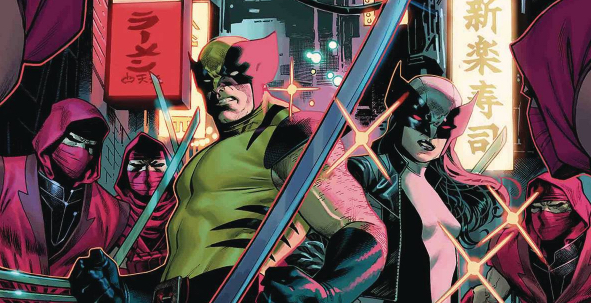
Drew: Superhero comics have always been about wish fulfillment. We might think of a lot of those wishes (from flying to standing up to bullies) as childish, but adults are far from immune from impossible fantasies. While the wealth and power of many superheroes is certainly appealing, I’m thinking more of the more existential wishes adults may have, at once more fantastical and easier to imagine than leaping tall buildings in a single bound. The most elemental of these wishes might be to have just one more conversation with a deceased loved one. This is exactly the fantasy Tom Taylor and Ramon Rosanas mine in Generations: Wolverine & All-New Wolverine, giving Laura Kinney one last chance to interact with her father. Continue reading

Stripping Down to Basics in Amazing Spider-Man 31

by Drew Baumgartner

Amazing Spider-Man 31

This article contains SPOILERS. If you haven’t read the issue yet, proceed at your own risk!

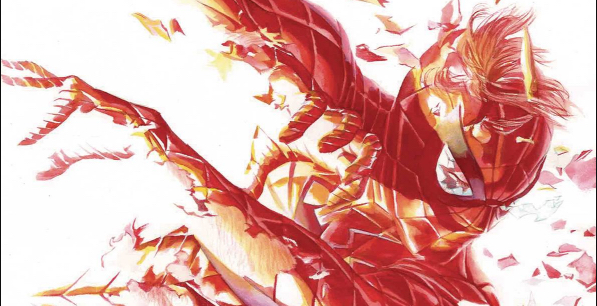
This volume of Amazing Spider-Man has always been about amplifying Uncle Ben’s famous mantra that “with great power must also come great responsibility,” forcing both global power and responsibility on Peter Parker’s shoulders. It’s an elegant way of further dramatizing Peter’s relationship to that mantra, taking a naturally street-level character responsible for resolving international conflicts and global pandemics. But, as with any change in superhero comics, this new status quo came with an expiration date — even if we didn’t know what it was. Amazing Spider-Man 31 doesn’t necessarily represent the end of Parker Industries, but it returns Spider-Man so convincingly to his platonic form that it’s easy to see it as the conclusion of that particular chapter of Peter’s life. Continue reading

All-New Wolverine 23 Subverts a Familiar Setup

by Drew Baumgartner

All-New Wolverine 23

This article contains SPOILERS. If you haven’t read the issue yet, proceed at your own risk!

Get away from her you bitch!

Ellen Ripley, Aliens

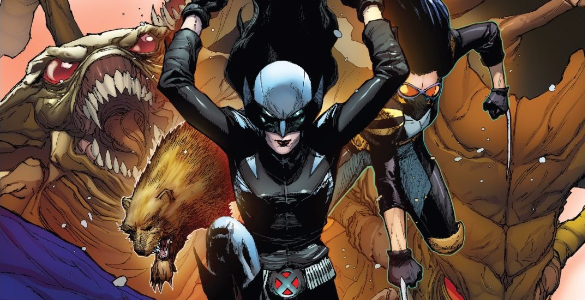
As action movie quips go, Ripley’s command to the Alien Queen is far from inventive, but I’ll be damned if it isn’t one of the most iconic. Indeed, on repeat viewings, the the tension of Ripley’s descent into the Alien nest is more or less subsumed by my anticipation of that scene. Indeed, once you know the showdown between Ripley and the Queen is inevitable, everything leading up to it feels like unnecessary padding. The Queen exists for the sole purpose of Ripley defeating her, so the movie is really just ticking boxes once she has Newt. In All-New Wolverine 23, Tom Taylor and Leonard Kirk reproduce that setup with uncanny accuracy, teasing us with the promise of Laura facing down the Brood Queen only to snatch that possibility away at the last second. Continue reading

Making a Connection in Black Bolt 4

by Drew Baumgartner

Black Bolt 4

This article contains SPOILERS. If you haven’t read the issue yet, proceed at your own risk!

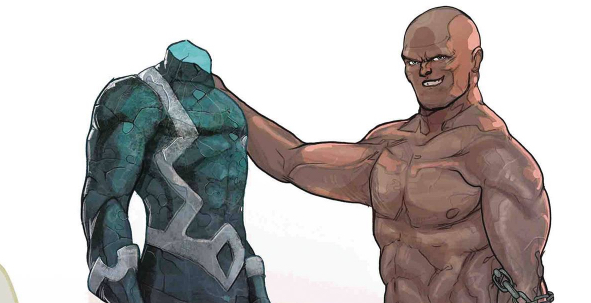
Black Bolt and Crusher Creel are about as different as characters get in the Marvel universe. Sure, Black Bolt is generally a good guy and Creel is generally a bad guy, but they’re also on opposite ends of the relatability spectrum. Creel has that sympathetic backstory that makes his decisions understandable, while Black Bolt’s regality and silence make him almost impenetrably aloof. Black Bolt’s abilities stem from his genetics, while Creel’s came to him later in life. All of these things make Black Bolt and Creel unlikely bedfellows, but Black Bolt 4 finds them forging a connection, even as Saladin Ahmed and Christian Ward do everything the can to illustrate how different these characters are. Continue reading

Emphasizing Theme in Injection 14

by Drew Baumgartner

Injection 14

This article contains SPOILERS. If you haven’t read the issue yet, proceed at your own risk!

Sandwiches are important.

Brigid Roth

When do you know something in a given narrative is important? Is it someone in the story saying as much? Is it that that element keeps coming back? Or is it some subtler means of emphasis that can make even the first appearance of an idea feel meaningful? Ultimately, these methods aren’t mutually exclusive, but I do see them as existing on a kind of continuum of obviousness, with someone stating the importance of something as “impossible to miss,” and those subtler methods covering a wide range from “clear” to “ambiguous” (the scale theoretically continues into “unclear” and “impossible to detect,” though those will obviously be difficult to notice from a reader’s perspective). Then again, those elements can be used in ways beyond their perceived meaning. That is, a character could say something was important in order to mislead the audience, or, in the case of Injection 14, to draw our attention to what really matters. Continue reading

Wonder Woman 27: Discussion

By Drew Baumgartner and Ryan Mogge

Wonder Woman 27

This article contains SPOILERS. If you haven’t read the issue yet, proceed at your own risk!

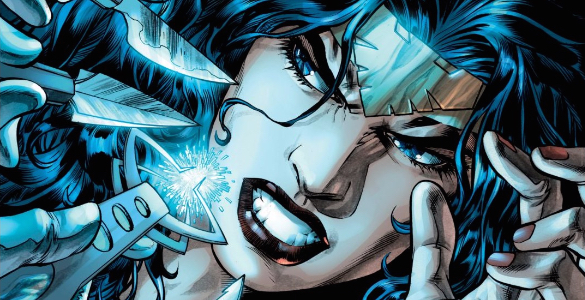
Drew: I think it’s safe to say our society is obsessed with patrilineage. Our last names (generally) come from our fathers. We have sayings about the sins of the father. And daddy issues abound in modern storytelling. This holds very true for superhero comics, where characters like Batman and Superman only survived their initial tragedies thanks to the heroic efforts of their fathers (at least in some versions). But Wonder Woman has always been different in that regard. As an Amazon born of clay, she has no father, nor a father-like figure in her life — this is a character poised to emphasize the roles of mothers. With issue 27, Shea Fontana and Mirka Andolfo do just that, albeit in unexpected ways. Continue reading

Oppression Makes Strange Bedfellows in Black Panther 16

By Drew Baumgartner

Black Panther 16

This article contains SPOILERS. If you haven’t read the issue yet, proceed at your own risk!

The king who is situated anywhere immediately on the circumference of the conqueror’s territory is termed the enemy. The king who is likewise situated close to the enemy, but separated from the conqueror only by the enemy, is termed the friend (of the conqueror).

Kautilya, Arthasastra

Understood more colloquially as “the enemy of my enemy is my friend,” the above sentiment was first recorded in a 4th Century treatise on statecraft. That is, while we might be most familiar with the concept as its used in interpersonal dramas or forming political coalitions, it was first composed to conceptualize a concept in city-state diplomacy. More importantly, Kautilya is quite specific in when this attitude should be applied — basically, only when the “conquerer” stands to lose nothing from the alliance. Such is the case when T’Challa approaches Dr. Eliot Augustus Franklin (better known as Thunderball of the Wrecking Crew) — T’Challa has nothing to lose, and Franklin has everything to gain from cooperating. Continue reading