Harbinger Wars II Prelude 1: Discussion

By Patrick Ehlers and Ryan Mogge

This article contains SPOILERS for both this issue and Avengers Infinity War. If you haven’t read the issue or seen the movie yet, proceed at your own risk! 

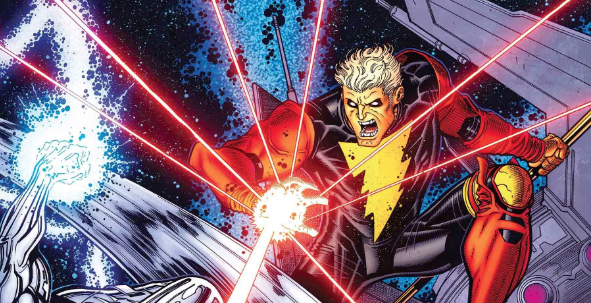
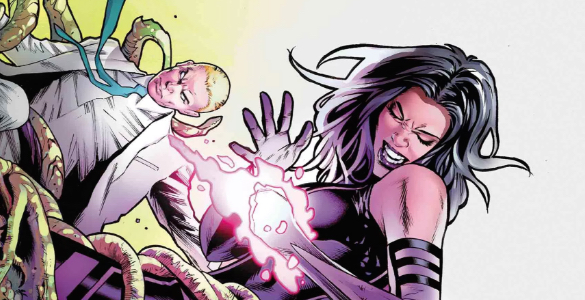
Patrick: Every big superhero event story needs to kick off with some kind of world-altering, morality-testing incident. A kind of “what did you just do?” moment that our characters will spend the next however-many-issues sorting out. Hell, the climax of Avengers Infinity War happened like 15 pages into the first issue of Jim Starlin’s The Infinity Gauntlet. Where writer Eric Heisserer distinguishes his story is in giving that catastrophic action to our hero, and making damn sure we understand why. Continue reading

Being an Ally in Green Arrow 40

by Spencer Irwin

This article contains SPOILERS. If you haven’t read the issue yet, proceed at your own risk!

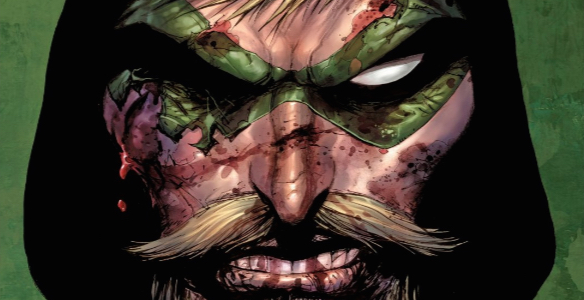
Spencer: One of the biggest challenges for many people — but especially for straight, white, cis-gendered males — is realizing that not every story is your story. We don’t always need to be the center of attention, our opinions don’t always need to be voiced, our methods and plans aren’t always right, much less the best ones for everyone else involved. That’s certainly what Oliver Queen was reminded of in last month’s Green Arrow 39 as his attempt to help out the war-torn country of Rhapastan backfired on him. He never should have gotten involved at all, right?

Wrong. Ollie’s conscious is his best feature — his mistake wasn’t getting involved, but charging head-first into a strange land without truly understanding the problem and working with the locals to address the root causes. The people of Rhapastan didn’t need a savior — they needed an ally, and that’s exactly what Ollie becomes in Jackson Lanzing, Collin Kelly, and Marcio Takara’s Green Arrow 40. Continue reading

The Darkest Timeline in Batman 46

By Drew Baumgartner

Batman 46

This article contains SPOILERS. If you haven’t read the issue yet, proceed at your own risk!

From now on, I am Evil Abed. We are the Evil Study group, and we have but one evil goal: return somehow to the Prime Timeline, the one that I stopped you from rolling that die. Then we destroy the good versions of ourselves and reclaim our proper lives.

Evil Abed, Community

The notion of the “darkest timeline” seems to have entered the zeitgeist, mostly through tongue-in-cheek suggestions that we’re currently living in it, but it’s a relatively common concept in science fiction. Indeed, there are so many examples, I kind of split my metaphor on my discussion of Batman 45, touching on everything from Back to the Future Part II to It’s a Wonderful Life to that “Treehouse of Horror” episode of The Simpsons where Homer keeps accidentally changing the timeline. But none are more explicit about the superlativeness of the badness of the timeline than Community‘s darkest timeline.

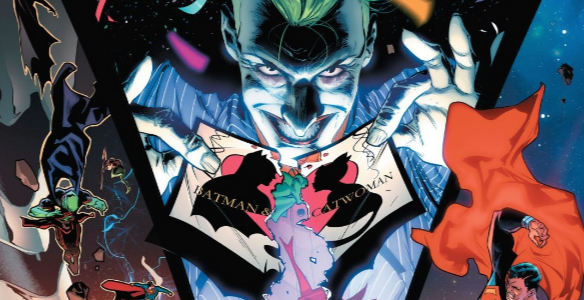
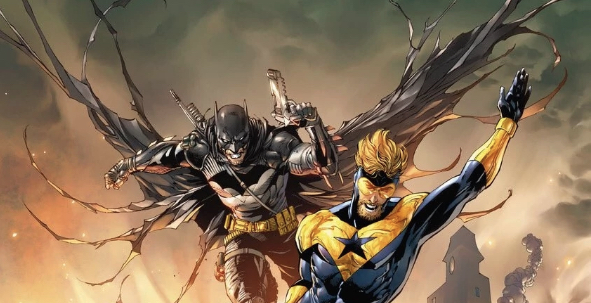
It stands as a kind of conceptual opposite of Gottfried Leibniz’s “best of all possible worlds” theory — his explanation for human suffering that any other “world” (effectively, a different timeline) would be worse. The Back to the Future franchise suggests that the original timeline was neither the best nor the worst (Marty improves it in the first movie, turning his father into a successful science fiction writer, Biff makes it worse in the second, turning himself into a Trump-ian real-estate mogul), but most of these other examples only show changes to the timeline making things worse — effectively, that we’re actually living in the best of all possible worlds. This is definitely supported in the horrific timeline Booster Gold created as Bruce’s wedding gift, which is undeniably worse than the DC Universe as we know it, though on the surface appeared better for Bruce. That is, until Booster tries to fix things in this issue. Continue reading

Death or Glory 1: Discussion

By Spencer Irwin and Mark Mitchell

This article contains SPOILERS. If you haven’t read the issue yet, proceed at your own risk!

Spencer: A few weeks ago I covered Isola 1, a comic I praised for its subtlety and its trust and respect for its readers’ intelligence; there was very little hand-holding, exposition, or lore, and the issue was all the stronger for it. Rick Remender and Bengal are attempting something similar in the debut of their new Image series, Death or Glory, but it unfortunately doesn’t work quite as well. By the end of the issue — and especially on a second read — the story and structure, the characters and their relationships, they all snap together in a satisfying way, but I spent much of my first read puzzled; moreover, there’s still a few elements that don’t mesh even on that second time around. Continue reading

A Good Laugh Goes a Long Way in Infinity Countdown 3

by Taylor Anderson

This article contains SPOILERS! If you haven’t read the issue, proceed at your own risk.

One of the things that the Marvel Cinematic Universe has done right since its inception is to make their movies funny. Of course, some movies are funnier than others. Thor: Ragnarok has more humor than the first two Thor movies combined. Even the grandiose Avengers movies always find time for a laugh in between the action and making sure every hero has their proper amount of screen time. This humor isn’t always present in Marvel comics, and huge crossover events are often more muted in their humor. Luckily, that’s not the case with Infinity Countdown 3. Continue reading

Avengers 1: Discussion

by Taylor Anderson and Drew Baumgartner

This article contains SPOILERS. If you haven’t read the issue yet, proceed at your own risk!

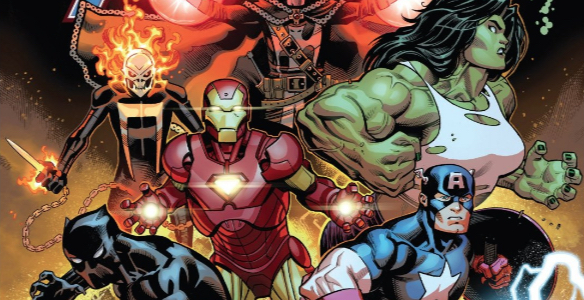
Taylor: In middle school, my favorite book was a archaeology tome titles Ancient Mysteries. The book is exactly what you would think — a survey of all the unsolved mysteries archaeologists have studied such as how the inhabitants of Easter Island made their statues and the relevancy of the Atlantis story. I was entranced by these mysteries because they suggested a history of Earth that was far bigger and far stranger than anything I had imagined up to that point. This was exciting at the time, and to this day my interest is still piqued by random archaeology articles on the BBC. It’s maybe for this reason that Avengers 1 intrigues me so much. It points to a deep, weird history of Earth I want to know more about. Continue reading

The Art of the Tease in DC Nation 0

by Michael DeLaney

This article contains SPOILERS. If you haven’t read the issue yet, proceed at your own risk!

DC Nation 0 provides teases for three different types of upcoming books: Tom King’s continuing run on Batman, Brian Michael Bendis’ upcoming turn on the Superman books and the Scott Snyder-helmed Justice League: No Justice series. Different books lead to different teases. Continue reading

Lettering Through the Psychic Fog in Astonishing X-Men 11

By Patrick Ehlers

This article contains SPOILERS. If you haven’t read the issue yet, proceed at your own risk!

CORRECTION (5/3/18): A previous version of this piece credited Clayton Cowles with the lettering, as is indicated in the credits. The issue was actually lettered by Travis Lanham.

Astonishing X-Men is one of those telepathic mutant clusterfucks. You know the type: there are psychics and reality warpers and a shapeshifter all int he mix at once. The audience’s ability to tell what is happening and what is not happening will likely vary from reader to reader, but I had a hell of a time tracking who was where and what specific threats they faced. This disorientation cues the reader up for that mind-bending twist on the final page. But you can’t just be confused for 20 pages, can you? With Ron Garney’s artwork and Charles Soule’s script both actively working to distance themselves from the reader, we have to look to letterer Travis Lanham for signposts of stability. Continue reading

Conscience as a Bug and as a Feature in Coda 1

by Mark Mitchell

This article contains SPOILERS. If you haven’t read the issue yet, proceed at your own risk!

There’s little point in being nice to people unless the act of being kind itself brings you happiness. Rude people are not unhappy — not categorically, anyway — because they don’t care that they’re rude, and there’s an undeniable freedom in not caring. Having a conscience is arguably a bug as well as a feature, since it’s easier to achieve your goals if you don’t care about the people you hurt in your pursuit of them.

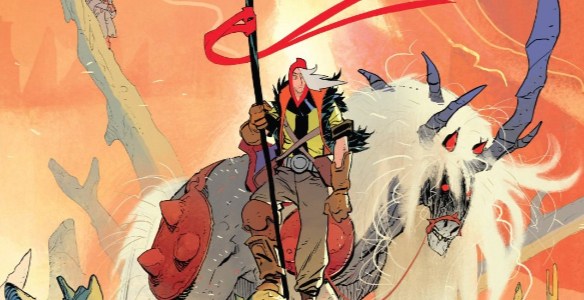
In Simon Spurrier and Matias Bergara’s Coda 1, former bard Hum is determined to rescue his wife from a clan of savage orc-like creatures at the cost of everything and everyone else; as the issue closes he’s willing to potentially sacrifice the population of an entire city if it gets him one step closer to her. But it’s clear that Hum’s selfishness can’t last, and Coda is poised to be a series about one man in a terrible situation learning to put others above himself. Continue reading

Days of Hate 4: Discussion

By Patrick Ehlers and Drew Baumgartner

This article contains SPOILERS. If you haven’t read the issue yet, proceed at your own risk!

Patrick: Aleš Kot and Danijel Žeželj’s Days of Hate is the story of a future chillingly extrapolated from our social and political present. It’s an authoritarian hellscape where liberal and conservative are less policy preferences and more tribal banners. Ideologies are buried under the methodologies of success. Our characters are tools of either the regime or the revolution, so it’s tempting to say that their motivations are obvious: do whatever it takes so their side wins. But… that’s incomplete. People are more than just their beliefs — they are also the places and people they love. Days of Hate 4 shows how love anchors our heroes, but it also shows how it puts them in very serious danger of drowning.

Continue reading