The Same World, but Two Different Realities in Paper Girls 16

By Spencer Irwin

This article contains SPOILERS. If you haven’t read the issue yet, proceed at your own risk!

One of my most vivid memories is a day in first grade when we had a substitute teacher. I opened a little tupperware container full of alphabet flash cards and it fell on the floor, scattering the cards all over. When I started to pick them up, the teacher came over and yelled at me for “crawling around on the floor,” wouldn’t listen to a word of my protest, and sent me to detention. The flash cards remained on the floor for the rest of the day.

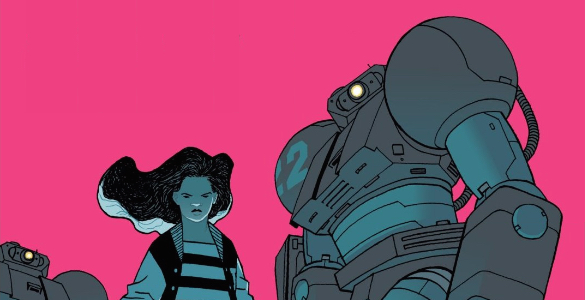
When you’re young, it often feels like you and adults live in two different worlds, but that specific scenario was one where I quite literally felt like the teacher and I were seeing and experiencing two very different realities. That rift between generations is illustrated just as literally by Cliff Chiang, Brian K. Vaughan, and Matthew Wilson in Paper Girls 16. Continue reading

Agency and Sacrifice in Black Bolt 6

by Drew Baumgartner

Black Bolt 6

This article contains SPOILERS. If you haven’t read the issue yet, proceed at your own risk!

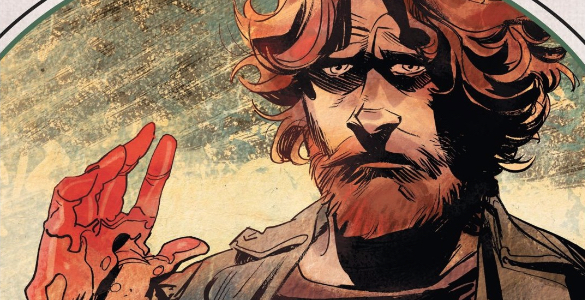
“Freedom isn’t free” has become the insulting platitude gun advocates offer to justify the United States’ unrivaled gun violence numbers. Never mind that countless countries enjoy similar freedoms without the same body counts — the freedom to own a gun, the logic goes, is worth the lives of any number of concertgoers, congressmen, nightclubbers, pedestrians, or schoolchildren. It’s strange that the notion of the cost of freedom has gone from personal costs one might make in order to secure freedom for themselves and their country to some kind of blood sacrifice we demand of others, since the two couldn’t really be more different. One is about noble sacrifice, the other is about throwing someone else under the bus to save your own skin. It’s a point that Saladin Ahmed and Christian Ward make elegantly in Black Bolt 6, as the mad scramble for freedom yields some unexpected costs. Continue reading

Artwork is Metal in Green Arrow 32

by Michael DeLaney 

This article contains SPOILERS. If you haven’t read the issue yet, proceed at your own risk!

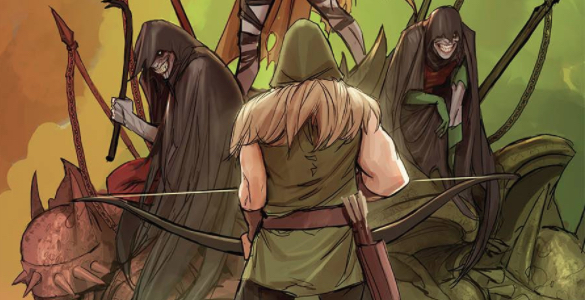
Green Arrow 32 is the conclusion to the Dark Nights: Metal tie-in “Gotham Resistance,” so you could be forgiven for your confusion if you haven’t been following the previous chapters in Teen Titans, Nightwing and Suicide Squad. As much as “Gotham Resistance” is one story, each individual title manages to maintain a piece of its own unique identity. A large part of Green Arrow‘s Rebirth identity has been artist Juan E. Ferreyra, who is far and away the most memorable thing about this issue. Continue reading

The Other Sickness in Cannibal 8

by Patrick Ehlers

This article contains SPOILERS. If you haven’t read the issue yet, proceed at your own risk!

I think we can all agree that cannibals are bad. Right? They feast on the flesh of human beings, their survival requires murder of innocent people — that’s pretty cut and dried. But there’s a second sickness that’s infested the town of Willow, Florida, and it’s proving just as deadly. Issue 8 of Cannibal focuses on those infected with affection for a cannibal. Symptoms include: viewing some people as “garbage people,” poor judgement, and prolonged cases of severe, obvious dishonesty. Continue reading

Surprises in the Details of Eleanor and the Egret 4

by Drew Baumgartner

Eleanor and the Egret 4

This article contains SPOILERS. If you haven’t read the issue yet, proceed at your own risk!

We call this story “Man in Hole,” but it needn’t be about a man and it needn’t be about somebody getting into a hole — it’s just a good way to remember it: Somebody gets into trouble and gets out of it again. People love that story. They never get sick of it.

Kurt Vonnegut

I’ve always been attracted to the kind of abstract narrative shapes Vonnegut famously catalogued in his Master’s Thesis — there’s something fascinating at the thought that virtually all stories draw from a narrow range of narrative trajectories. But, of course, looking at narratives in such an abstract way overlooks a lot of the texture and details that actually makes stories so thrilling in the first place. That is, while we might take it for a given that the man gets out of the whole, we can still be surprised at exactly how that happens. Those details are what distinguishes one narrative from another, yet even then, they can often feel rote and predictable. Not so with Eleanor and the Egret 4, which uses the cartoon logic of its high-concept premise to deliver some truly unexpected twists. Continue reading

War Gets Gritty in Star Wars 37

by Taylor Anderson

This article contains SPOILERS. If you haven’t read the issue yet, proceed at your own risk!

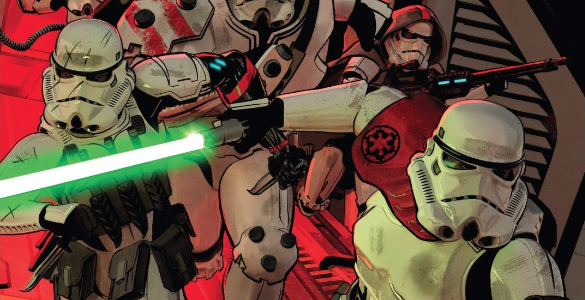
One of the things that sets Rogue One apart from the other Star Wars movies is just how gritty it is. This isn’t a movie with whirling Jedis and fuzzy Ewoks. Most people who see it comment on just how much of a “war movie” it is — which is to say it forgoes the more family-friendly entertainment in favor of action that is grueling and violent. Star Wars 37 follows much in this same and while it might not be as compelling as Rogue One, it’s still a welcomely fresh take on the Star Wars universe. Continue reading

A Quiet, Touching Pay-Off in All-Star Batman 14

by Mark Mitchell

This article contains SPOILERS. If you haven’t read the issue yet, proceed at your own risk!

All-Star Batman has been an interesting coda to Scott Snyder’s prolific run on Batman. While never reaching the sustained highs of Batman in its best years, All-Star has allowed Snyder to experiment with the type of Batman stories he tells. Not every arc has been a knockout — I don’t know how into Alfred-Pennyworth-as-ninja I am, really — but there is something inherently interesting in watching an artist stretch himself. Continue reading

There’s No Innocence in Punisher: The Platoon 1

by Michael DeLaney

This article contains SPOILERS. If you haven’t read the issue yet, proceed at your own risk!

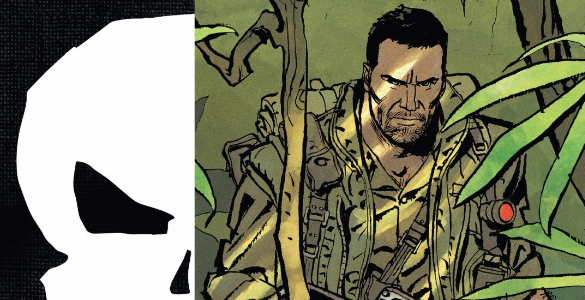
The Vietnam War is often pointed to as a clear turning point in modern American History. The confluence of improvements in broadcast television and questionable international interference led to disastrous results – taking millions of lives and leaving a devastating impact on those who walked away with their lives. Among those survivors – in the fictional Marvel world – was Frank Castle. Continue reading

Hawkeye 11: Discussion

by Taylor Anderson & Patrick Ehlers

This article contains SPOILERS. If you haven’t read the issue yet, proceed at your own risk!

slim-banner

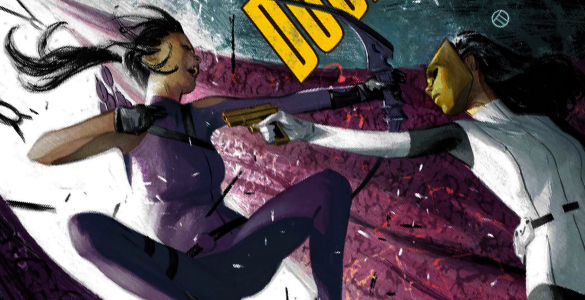
Taylor: If you read enough ancient ancient Greek myths you quickly realize that people have had complicated relationships with their parents since history began. Cronus was afraid his son Zeus would kill him and take over the world so he tried to eat him. Cronus failed. Zeus did indeed come to rule Mt. Olympus but not, without inheriting his father’s fear of his own children. Kate Bishop shares a similarly complicated relationship with her father, the only difference is that she doesn’t fear him so much as she fears to become him one day. This relationship is part of what defines Kate and the way she responds to it is fascinating in Hawkeye 11.

Continue reading

Deathstroke’s Murky Morality in Superman 32

by Spencer Irwin

This article contains SPOILERS. If you haven’t read the issue yet, proceed at your own risk!

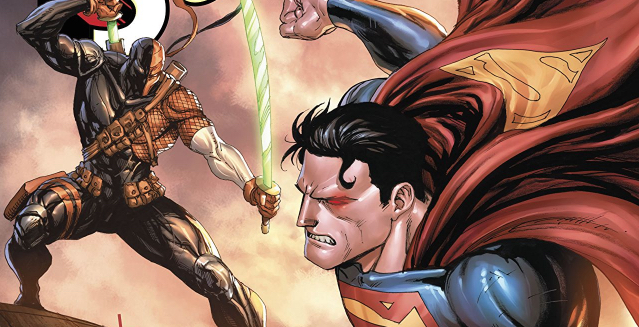
Superman’s moral code is not complex, and that’s a great thing about him as far as I’m concerned. Superman does good simply because it’s the right thing to do, and he never kills — Man of Steel nonwithstanding, he always finds a way to win without sacrificing his morals, because that’s just who Superman is. Deathstroke’s morality is far more murky, and that leads to some interesting juxtaposition in Superman 32. Continue reading