X-Men Red 4 Battles Real-World Threats

by Drew Baumgartner

X-Men Red 4

This article containers SPOILERS. If you haven’t read the issue yet, proceed at your own risk.

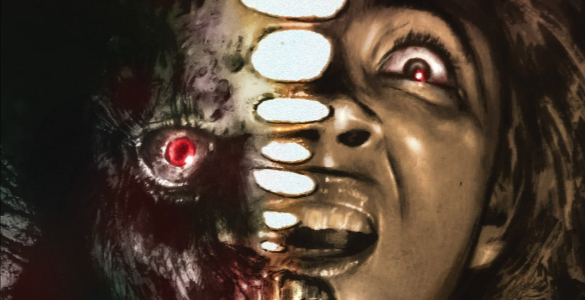
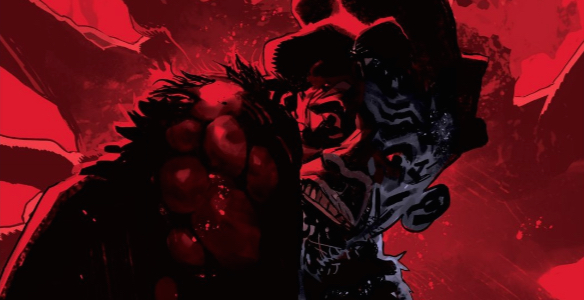
Comics have always reflected our real-world fears — from inner-city crime or nuclear panic — by heightening them to exaggerated extremes. Except, I’d argue, when it comes to the X-Men’s persecution. Sure, the X-Men’s superpowers would qualify as an “exaggerated extreme” of the types of differences that normally mark a minority class, but it’s straight-up not possible for writers to come up with more exaggerated ways societies persecute their minorities. From apartheid to lynchings to genocides, there’s nothing the X-Men have faced that real-world minorities haven’t already suffered, grounding even their most fanciful stories in sober reality. It’s a fact that Tom Taylor and Mahmud Asrar have leaned into from the start of X-Men Red, lending the series a “ripped from the headlines” approach that is truly unique in superhero comics. Continue reading
The Shield as Excalibur in Captain America 702

by Drew Baumgartner

Captain America 702

This article contains SPOILERS. If you haven’t read the issue yet, proceed at your own risk!

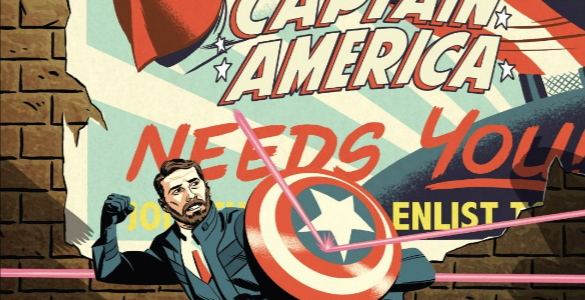
Drew: Comics historians are obsessed with Wonder Woman’s Lasso of Truth. There’s fun parallels to draw between the lasso and Wonder Woman creator William Moulton Marston’s invention of the lie detector, but another essential point is that a lasso isn’t a phallus in the same way that a sword or gun is. That is, it’s a feminine weapon, designed to entwine Wonder Woman’s enemies, rather than pierce their flesh. I think that reading certainly has utility, but I think practically, the effect of that choice is that Wonder Woman is less concerned with injuring and maiming her enemies as she is neutralizing them — her weapon of choice embodies her compassion. I think Captain America’s shield represents a similar compassion, positioning as a defender, rather than an aggressor. That fact becomes particularly salient as Mark Waid and Leonardo Romero explicitly draw parallels between the shield and Excalibur, effectively highlighting the difference between a shield and a sword. Continue reading

Moonshine 10: Discussion

by Drew Baumgartner and Patrick Ehlers

Moonshine 10

This article contains SPOILERS. If you haven’t read the issue yet, proceed at your own risk!

Remove everything that has no relevance to the story. If you say in the first chapter that there is a rifle hanging on the wall, in the second or third chapter it absolutely must go off. If it’s not going to be fired, it shouldn’t be hanging there.

Anton Chekhov

Drew: Chekhov’s gun has parallels in virtually every artform (at least in aesthetics that value clarity); whether it’s a brushstroke in illustration, a word in prose, or a note in music, if it doesn’t have an explicit purpose, it shouldn’t be there. But, of course, our knowledge of this principle lends a sense of foreshadowing to every object, character, or concept that is introduced in a narrative (again, if we can assume the narrative is playing by Chekhov’s rules). But because narratives are driven by drama (that is, difficulties for the protagonist), Chekhov’s gun mostly applies to things that can somehow harm or disrupt the characters’ lives — there’s a reason it’s not called “Chekhov’s birthday present.” Which creates very different expectations for things going right and wrong — things going wrong are far more likely to be introduced ahead of time (per Chekhov’s rules), while the drama of things going right is left best to the last possible moment. In that way, narratives reflect our own experience of reality, where we’ve given the name “Murphy’s law” to the notion that things will go wrong if they can, but no similar expectation for things going right. That is, we expect things to go wrong, so things going right is always a pleasant surprise. Or, as Lou Pirlo puts it in Moonshine 10, “God works in mysterious ways,” but “Old Lucifer…he was direct.” Continue reading

The Worst Horrors in Infidel 3 are Real

by Drew Baumgartner

Infidel 3

This article contains SPOILERS. If you haven’t read the issue yet, proceed at your own risk!

slim-banner

Last month, Patrick remarked on how both real and scary Infidel is — that is, the horrors of this book come from societies worst (but all too real) problems. And they really do seem to come from those problems. For some reason, when I read the solicit for this series, I imagined that the specters in this series somehow caused the islamophobia that runs rampant throughout Aisha’s building; that it was somehow responsible for making people hateful. As we spend more time with them, however, (and as more residents seem to encounter them), it seems like they aren’t so much the cause of the bigotry, but the result of it. That is, they are the manifestation of the fear minorities feel when encountering bigotry. Continue reading

Loving the Dimension You’re With in Oblivion Song 3

by Drew Baumgartner

Oblivion Song 3

This article contains SPOILERS. If you haven’t read the issue yet, proceed at your own risk!

Hey, can you get Stockholm syndrome for a place? For a set of circumstances? When generalized in this way, Stockholm syndrome seems less like a pathology and more like a testament to human resilience. We can come to love whatever hand life deals us, even when we initially wanted something completely different. Maybe that’s a coping mechanism to keep us from dwelling on what could have been, but it’s potent, either way. Anywhere you look, from crumbling cities to evacuated war zones, you’ll find people who refuse to leave because this is their home. Or, more precisely, this is their life — they can’t just chuck it all away for something they might have preferred a decade ago. It’s not an attitude that makes a whole lot of sense from the outside looking in, but that may be exactly what the remaining survivors in Oblivion are feeling. Continue reading

The Timelines Dissociate in Eternity Girl 3

By Drew Baumgartner

Eternity Girl 3

This article contains SPOILERS. If you haven’t read the issue yet, proceed at your own risk!

Spoiler alert for season one of Westworld, but I’m now deeply suspicions of non-explicit linearity in sci-fi. Fiction has long featured flashbacks and achronological storytelling, but usually by being up-front about when and where those things are happening. Westworld reminded us that stories don’t have to be transparent about when things are happening in relation to one another, and with characters that are impervious to age, we might make bad assumptions (or be intentionally misled). It’s unclear to me how much this applies to Eternity Girl, but that’s exactly why I’m so wary of jumping to any conclusions. Continue reading

Luck vs. Skill in Domino 2

by Drew Baumgartner

Domino 2

This article containers SPOILERS. If you have not read the issue yet, proceed at your own risk!

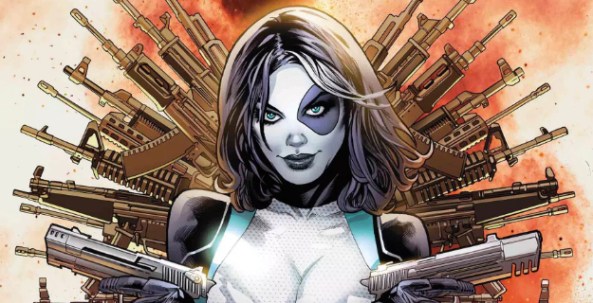
Is privilege just luck that we don’t recognize as luck? The failure to recognize the benefits afforded by our race, gender, class, nationality, or any other number of inborn factors in our lives? That is, a privileged person is a lucky person, but specifically one that misattributes their luck as merit or skill. This helps protect Domino from coming off as too privileged — she absolutely recognizes how lucky she is — though Gail Simone and David Baladeón take pains to make it clear that she’s not that lucky, and that much of her success is ultimately attributable to her skills, too. Continue reading

Despicable Deadpool 300: Discussion

by Drew Baumgartner & Patrick Ehlers

Despicable Deadpool 300

This article contains SPOILERS. If you haven’t read the issue yet, proceed at your own risk!

slim-banner

Drew: Five years into this run, pointing out that Deadpool is a Sad Clown would be lazy analysis — not only has that point been well established, but the series itself has managed to explore it so thoroughly, reducing the character’s emotional journey to a two-word summary couldn’t possibly do it justice. And yet, I couldn’t think of a more appropriate way to begin this piece than embedding Smokey Robinson’s “Tears of a Clown,” not because of a shallow similarity between the content of these two works, but because of some profound similarities in how they treat that content. The lyrics describe a narrator who puts on a good face in spite of his profound sadness, but the music doesn’t betray that sadness for a second — it sounds like any other Motown hit (though that bouncy bassoon that maybe hints that this song is about a clown). By this point in the story, Wade Wilson has completely dropped that fascade of silliness, but just like the instruments in “Tears of a Clown,” the series itself maintains that clownish exterior. Continue reading

Assembling the Team in Hunt for Wolverine: Weapon Lost 1

By Drew Baumgartner

Hunt for Wolverine Weapon Lost 1

This article contains SPOILERS. If you haven’t read the issue yet, proceed at your own risk!

There’s something fun about watching a team put itself together. It lends urgency to everyone’s presence, making their utility to the team explicit in a way that isn’t inherently true of pre-existing teams. That is, while Iceman is coming on this X-Men mission whether or not anything needs to be iced, Danny Ocean is only adding someone to the team if their skills are essential to the plan. With so many pre-existing teams in comics, we don’t always get to see purpose-built teams with quite so narrow a focus as the one in Charles Soule and Matteo Buffagni’s Hunt for Wolverine: Weapon Lost, which is exactly what makes its first issue so fun. Continue reading

The Darkest Timeline in Batman 46

By Drew Baumgartner

Batman 46

This article contains SPOILERS. If you haven’t read the issue yet, proceed at your own risk!

From now on, I am Evil Abed. We are the Evil Study group, and we have but one evil goal: return somehow to the Prime Timeline, the one that I stopped you from rolling that die. Then we destroy the good versions of ourselves and reclaim our proper lives.

Evil Abed, Community

The notion of the “darkest timeline” seems to have entered the zeitgeist, mostly through tongue-in-cheek suggestions that we’re currently living in it, but it’s a relatively common concept in science fiction. Indeed, there are so many examples, I kind of split my metaphor on my discussion of Batman 45, touching on everything from Back to the Future Part II to It’s a Wonderful Life to that “Treehouse of Horror” episode of The Simpsons where Homer keeps accidentally changing the timeline. But none are more explicit about the superlativeness of the badness of the timeline than Community‘s darkest timeline.

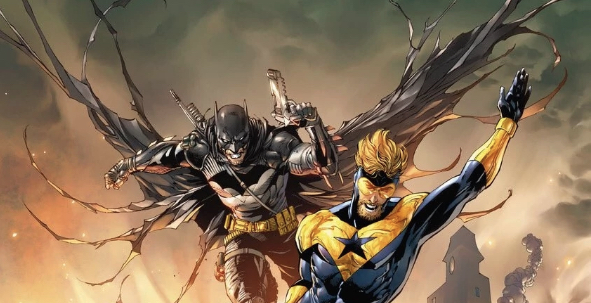
It stands as a kind of conceptual opposite of Gottfried Leibniz’s “best of all possible worlds” theory — his explanation for human suffering that any other “world” (effectively, a different timeline) would be worse. The Back to the Future franchise suggests that the original timeline was neither the best nor the worst (Marty improves it in the first movie, turning his father into a successful science fiction writer, Biff makes it worse in the second, turning himself into a Trump-ian real-estate mogul), but most of these other examples only show changes to the timeline making things worse — effectively, that we’re actually living in the best of all possible worlds. This is definitely supported in the horrific timeline Booster Gold created as Bruce’s wedding gift, which is undeniably worse than the DC Universe as we know it, though on the surface appeared better for Bruce. That is, until Booster tries to fix things in this issue. Continue reading