Batman 30: Discussion

by Michael DeLaney and Drew Baumgartner 
This article contains SPOILERS. If you haven’t read the issue yet, proceed at your own risk!

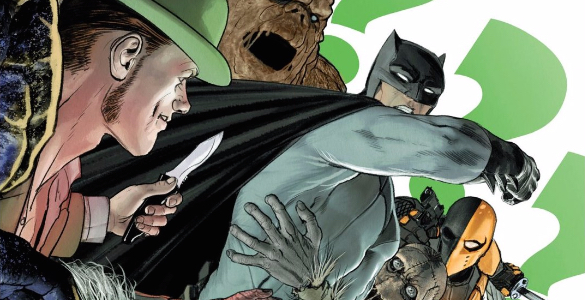
Michael: I’ll admit, I haven’t really understood Tom King’s fascination with Kite Man during his tenure on Batman. King placed Kite Man in the middle of “The War of Jokes and Riddles” in Batman 27 and his tragic origin — Riddler poisoning and killing his son — still left me unmoved. Batman 30 marks the second part of “The Ballad of Kite Man” as well as my cold heart thawing to Kite Man’s tragic existence. Continue reading
The Past is Both a Strength and a Weakness in Black Bolt 5

by Drew Baumgartner

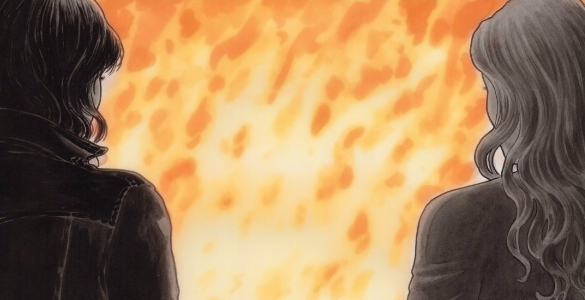
Black Bolt 5

This article contains SPOILERS. If you haven’t read the issue yet, proceed at your own risk!

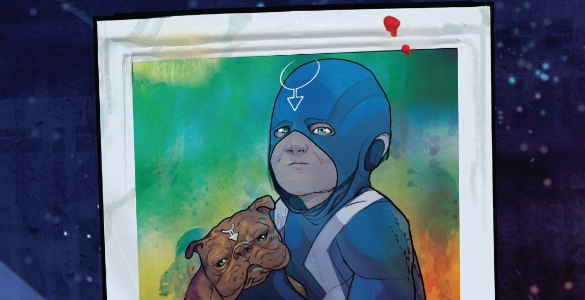
I had a boss who used to say “your greatest weapon is ultimately also the sword you fall upon.” That is, our strengths tend to secretly carry weaknesses. He usually meant it in terms of workplace skills — natural leaders might not make for great team players, for example — but I’ve found this idea remarkably insightful in people’s personal lives, as well. Maybe you draw strength from your extended family, though that may tie you down geographically, or from a hobby that also sucks up most of your free time. It’s an idea that’s relatively well-worn in superhero comics, but is generally limited to loved ones becoming liabilities. Black Bolt 5 offers a different take, injecting its usual style and emotional depth to both Blackagar’s strength and his weaknesses. Continue reading

Recursive Redundancy in Faith and the Future Force 2

by Drew Baumgartner

Faith and the Future Force 2

This article contains SPOILERS. If you haven’t read the issue yet, proceed at your own risk!

Hey, how long do you think Bill Murray repeated that day in Groundhog Day? There have been a few attempts to estimate some approximate number, but the only answer that really matters is “a lot.” We don’t need to see every day, or even be told about every day, so long as we get the idea that he’s repeating the day a ton. I mean, can you imagine if even the second day was chronicled in as much detail as the first one? That sounds interminable, but is largely what we get in Faith and the Future Force 2, with the added monotony that the arc of the issue is also more or less identical to the first issue. Continue reading

Rowan’s Defenses May be Lacking in Black Magick 7

by Drew Baumgartner

Black Magick 7

This article contains SPOILERS. If you haven’t read the issue yet, proceed at your own risk!

We don’t often talk about procedurals in terms of “putting the pieces in place” — there’s too much directionality to all of the clue finding for the endgame to feel anything other than inevitable. Of course, for all of the procedural elements in Black Magick, it isn’t strictly a procedural. This issue is full of procedural scenes — all showing some degree of cause and effect — from Rowan’s “investigation” into Bruce Dunridge to her (and Alex’s separate) spellcasting, to Stepan Hahn’s own detective work. He’s the noose we’re consciously aware of (especially as the end of the issue puts him on a collision course with Ro), but it’s the procedures we don’t quite see the fallout of that intrigue me most. Continue reading

Secret Empire 10: Discussion

by Drew Baumgartner and Patrick Ehlers 

Secret Empire 10

This article contains SPOILERS. If you haven’t read the issue yet, proceed at your own risk!

Truth is stranger than fiction, but it is because Fiction is obliged to stick to possibilities; Truth isn’t.

Mark Twain

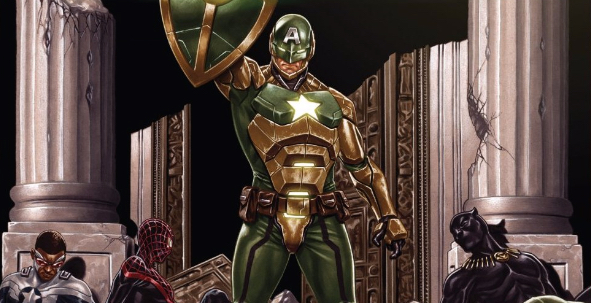
Drew: This may seem like an odd quote to kick off a discussion about a comic featuring superpowered heroes battling over bits of a cube that can rewrite reality, but I think it’s safe to say Secret Empire has really never been about superpowers or cosmic cubes. Those are the trappings of a big summer event series, sure, but the story was actually about how seemingly good people can be corrupted by toxic ideologies. That’s immediately recognizable as Steve Roger’s arc through Steve Rogers: Captain America and Secret Empire, but it’s also an arc that has been running in the background of Hydra’s America throughout this series, one that is far more unsettling than seeing Steve hail Hydra ever could be. Continue reading

Lazarus X+66 2 Presents a Cyborg as a Rorschach Test

by Drew Baumgartner

Lazarus X+66 2

This article contains SPOILERS. If you haven’t read the issue yet, proceed at your own risk!

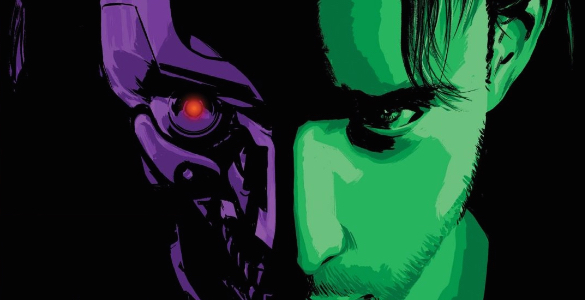
People see what they want to see. It’s a fact that’s fundamental to our perception of the world, but also the thing that prevents us from agreeing on anything. Rorschach tests represent the most fundamental expression of this notion, asking subjects to project their own meaning onto meaningless inkblots, but it’s something we see every day, from our simplest hopes and fears to the way we evaluate political candidates. That’s not to say there aren’t objective truths, just that, individually, we’re terrible at recognizing (and respecting) them, so their existence is almost incidental to our attitudes about the world. This is enervating enough when discussing climate change or which way toilet paper rolls should be oriented, but becomes all the more heartbreaking when the debate questions your very humanity, as it does for Joacquim Morray in Lazarus X+66 2. Continue reading

Unknown history sits at the heart of Batgirl 14

by Drew Baumgartner

Batgirl 14

This article contains SPOILERS. If you haven’t read the issue yet, read on at your own risk!

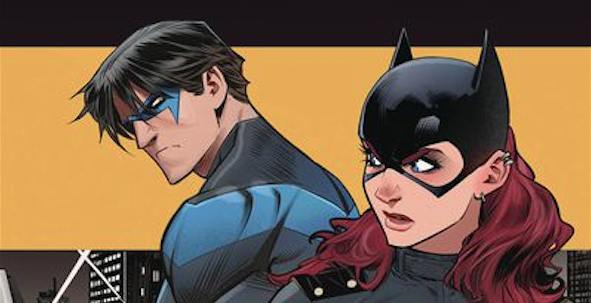
I’ve never been a huge fan of dramatic irony — I can appreciate how giving us more information than the characters have can produce tension (or humor), but that information kind of gets in the way of relating to the characters. Still, I have a heck of a lot more patience for dramatic irony than I do its exact opposite, where characters are privy to information that is deliberately withheld from the audience. Not only does the tension it create feel cheaper (amounting to little more than a narrative chant of “I know something you don’t know”), it makes the characters even harder to relate to, as we’re necessarily left in the dark about what they might be thinking or feeling. All of which kept me from truly enjoying Batgirl 14. Continue reading

Discussion: Generations: The Unworthy Thor and the Mighty Thor 1

by Taylor Anderson and Drew Baumgartner

This article contains SPOILERS. If you haven’t read the issue yet, proceed at your own risk!

Taylor: I never have high hopes for crossover issues simply because, more than anything else, they tend to be really goofy. Goofy can be a good thing, but the kind of goofy I’m talking about here isn’t. Going into this issue, I was prepared to be underwhelmed simply because the the idea of pre-Mjolnir Thor teaming up with the current Thor felt, well, goofy in a bad way. However, I am delighted by this issue because it knows exactly what it is. Writer Jason Aaron is firing on all cylinders in an issue that is at once funny, brazenly over the top, full of great character moments. Continue reading

Overcoming the Refusal of the Call in Green Lanterns 29

by Drew Baumgartner

Green Lanterns 29

This article contains SPOILERS. If you haven’t read the issue yet, proceed at your own risk!

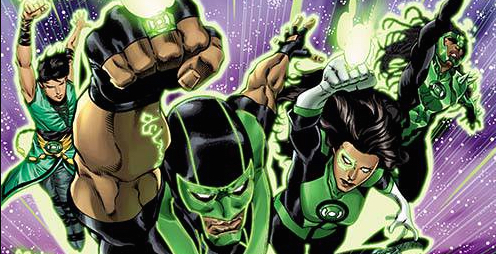
Superheroes are locked in a permanent state of adventure, so their stories never really end. For that reason, it might seem absurd to apply narrative structures like Joseph Campbell’s “Hero’s Journey” to superhero narratives, as there is little hope of “return,” and notions of “known” and “unknown” start to break down once the hero has been around for a while. But I’ll be damned if the first few beats of any Superhero origin doesn’t more or less follow the first few beats of the Hero’s Journey — especially if the “hero” undergoing the journey happens to be a supporting character. Such is the case in Sam Humphries and Eduardo Pansica’s Green Lanterns 29, which finds all of the original Green Lanterns (OGLs) refusing the call to adventure before ultimately deciding that they have no choice. Continue reading

The Chilling Adventures of Sabrina 8 Highlights “Teenage” and “Witch” in Equal Measure

by Drew Baumgartner

Chilling Adventures of Sabrina 8

This article contains SPOILERS. If you haven’t read the issue yet, proceed at your own risk!

Teenagers are exhausting to argue with. The reasons for this are both biological (an underdeveloped prefrontal cortex soaking in teenage hormones isn’t the best recipe for critical reasoning) and psychological (the complex mix of rebellion and conformity that makes up the teenage psyche makes acquiescing to even the most persuasive argument difficult), but anyone who has ever had to tell a teen “no” will have a much more practical understanding. Lacking the perspective of a longer, more worldly life, teens tend to be over-invested in everything from romantic relationships to whether or not they can borrow the family car, so everything feels like the end of the world. That means teens don’t have a lot of headroom for when something is actually a big deal, so can come off as almost blasé on matters of life and death even as they might throw a tantrum about having to mow the lawn. This is exactly the situation in which Hilda and Zelda find themselves in this issue as they try (and fail) to make a love-drunk Sabrina see just how reckless she’s being. Continue reading