Vader’s Uncertainty Threatens All — Including Himself — in Star Wars: Darth Vader 12

by Spencer Irwin

This article contains SPOILERS! If you haven’t read the issue, proceed at your own risk.

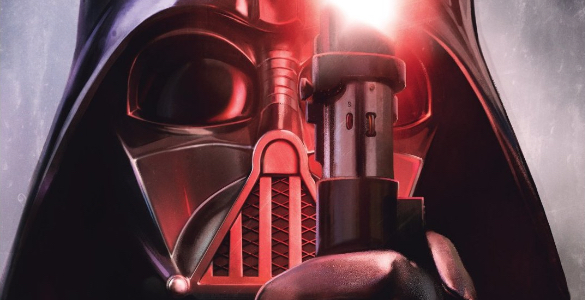
Why is Darth Vader scary? It’s not necessarily because he’s so powerful, or because he’s so evil, although he’s obviously both. It’s because he’s unknowable, robotic, relentless, opaque. His mask betrays no expression, his words and actions only rarely betray emotion, and his motives often seem inscrutable. That kind of ambiguity begets strong reactions from almost everyone who sees Vader, be it outright fear or the kind of resentment festering in the Imperial Officers who place a hit on him in Star Wars: Darth Vader 12, not realizing what he’s done to gain his authority. In many ways, Vader’s unknowability is his greatest strength (only those who truly know Vader — such as Luke or even Jocasta Nu — ever manage to defeat or one-up him), but it also might be his greatest weakness, because as Charles Soule and Giuseppe Camuncoli suggest, even Vader doesn’t seem to fully understand himself, and his frustration over that is tearing him apart inside. Continue reading
Kingpin Drowns Out Everything Else in Daredevil 599

by Spencer Irwin

This article contains SPOILERS. If you haven’t read the issue yet, proceed at your own risk!

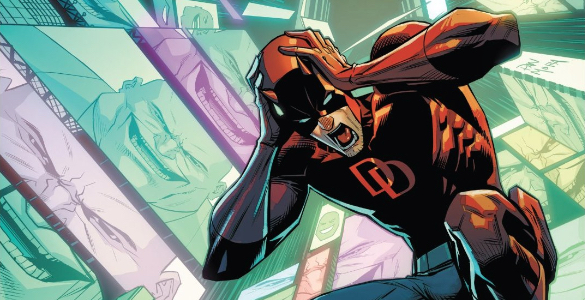
Ever since Donald Trump was elected president, the media has been a constant bombardment of scandals, missteps, and outrage. Every new sound bite is accused of being a “distraction” from something more important, but the truth is that almost every one of these stories is important (and horrifying) in their own way. Still, so many stories flying around at once can be absolutely overwhelming — nobody can get their bearings straight or agree on which scandals to tackle first. There’s just no way to focus in a world absolutely overwhelmed by Trumpian horrors, which is exactly what Matt Murdock is discovering in Daredevil 599, where newly-elected Mayor Fisk is just as divisive, dangerous, and all-encompassing a figure. Continue reading

Learning New “Normals” in Super Sons 13

by Spencer Irwin

This article contains SPOILERS. If you haven’t read the issue yet, proceed at your own risk!

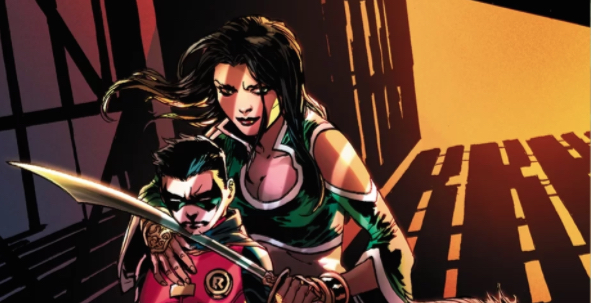
Growing up, we tend to think of our families as “normal.” Even if we think our family and their routines are weird or embarrassing, a lack of reference and experience often leave us assuming that this is just what every family is like — it isn’t until we get older and start spending time with friends and meeting new people that we realize how varied the human experience actually is. As always, Super Sons continues to use its two leads’ wildly different life experiences as learning aids for both, expanding their understanding of what “normal” is. Continue reading

Doctor Strange: Damnation 1: Discussion

by Spencer Irwin and Taylor Anderson

This article contains SPOILERS. If you haven’t read the issue yet, proceed at your own risk!

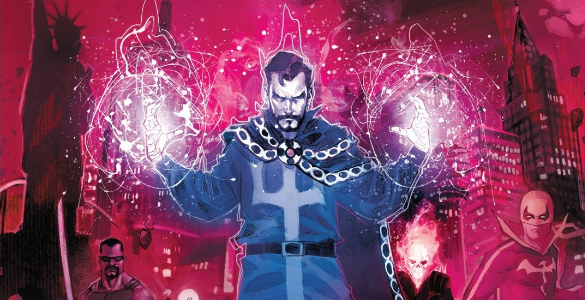
Spencer: Since our audience has excellent taste, I’m going to assume that you’re all watching NBC’s The Good Place, right? Essentially a show about lost souls trying to earn their way into Heaven by becoming better people, one of the more interesting concepts percolating beneath the show’s surface is the idea that the rules dictating what afterlife you’re sent to are inherently flawed and unfair. It’s almost impossible to earn your way into the Good Place — only the most selfless and charitable of souls make it — leaving plenty of folks who led wholly mediocre lives (or whose greatest crimes were being born in Florida) facing an eternity of torture and punishment. I couldn’t help but think of this while reading Nick Spencer, Donny Cates, and Rod Reis’ Doctor Strange: Damnation 1, which finds the city of Las Vegas, the Avengers, and perhaps the entire world being judged by equally biased, unfair rules. Continue reading

Dystopia in the Not-So-Distant Future in Captain America 698

by Spencer Irwin

This article will contain SPOILERS. If you haven’t read the issue yet, proceed at your own risk!

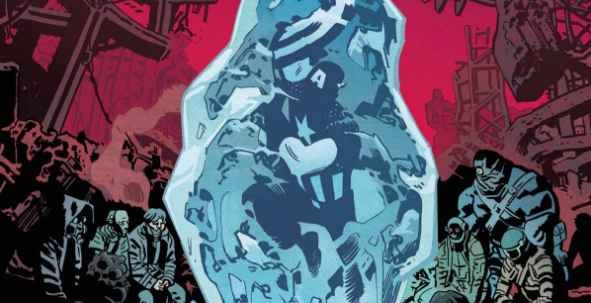
I was raised on classic television, and as a kid I remember always getting a big kick out of the fact that the original Lost in Space series took place in the “distant future” of 1997. As a general rule, ascribing a specific date to your fictional future is a great way to rob it of its power and wonder, but Captain America 698 turns that rule completely on its head, finding its most effective twist in the “when” of its dystopian future. Continue reading

War, Religion, and Slavery in Angelic 6

by Spencer Irwin


This article contains SPOILERS. If you haven’t read the issue yet, proceed at your own risk!

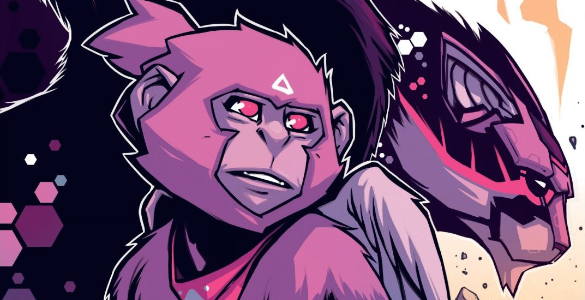
Angelic 6 is a massive issue. Writer Simon Spurrier recalls every seed of plot he’s planted throughout this arc, and artist Caspar Wijngaard brings the mass of ideas to life in a way that’s big and exciting, chaotic but never hard to follow. Even as the issue’s plot goes big, though, Spurrier and Wijngaard zoom in thematically, finding the one idea that connects the themes of religion, war, and blind faith that have run throughout this entire series. That theme, of course, is slavery. Continue reading

New Super-Man and the Justice League of China 20: Discussion

by Spencer Irwin and Mark Mitchell

This article contains SPOILERS. If you haven’t read the issue yet, proceed at your own risk!

Spencer: There’s a common belief that kids raised in sheltered, restrictive environments will go absolutely wild at their very first taste of freedom. I don’t know if the truth is that extreme — I was about as sheltered as they came as a child, and all my rebellions have been rather tame — but there is a lot of truth to the idea that needless restrictions and censorship just hurt people, regressing emotions and hindering growth and in many cases leading to actual physical punishment for meaningless offenses. New Super-Man and the Justice League of China 20 taps into the latter when it introduces its new “Aquaman,” Ahn Kwang-Jo. Continue reading

It’s Family That Hurts the Most in Runaways 6

By Spencer Irwin

This article contains SPOILERS. If you haven’t read the issue yet, proceed at your own risk!

I love this line, not only because it’s so perfectly in character for the prickly Gert, but because it really sums up the relationship all these kid had with their parents: the people who raised them, who tried to kill them, each other, and the entirety of the human race, the people whose deaths they were partially responsible for, and the people whose deaths they still feel guilty for, even years later. In Runaways 6 Rainbow Rowell and Kris Anka add another complex, loving, evil guardian to the list of loved ones who will forever haunt these kids: Molly’s grandmother. Continue reading

Welcome Nuance Enriches Batman: White Knight 5

by Spencer Irwin

This article contains SPOILERS. If you haven’t read the issue yet, proceed at your own risk!

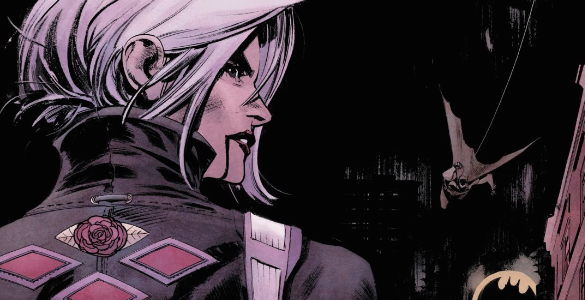
This is the first installment of Batman: White Knight where Batman has really felt like Batman to me. Sean Murphy digs into the character’s nuances in a way that he hasn’t in previous issues. This is the Batman who will buy Harley Quinn a dress and support her sincere, if bungled, efforts to reform, because under his gruff exterior he truly does care about people, even villains. This is the brilliant detective who has managed to piece together a good 95% of Neo-Harley’s plan when most of the other heroes barely even realize she has a scheme at all. Even Batman’s failed attack on Neo-Harley that closes the issue — which results in the destruction of one of Gotham’s bridges and Batman becoming a fugitive — is motivated by Neo-Harley’s personal attack on him and a desire to protect his family, not wild, unreasonable vengeance. This isn’t the gruff madman of previous issues — this is a complex Batman who still wants what is best for Gotham City. He’s just blinded by his hatred of the Joker. Continue reading

X-Men Red 1: Discussion

by Spencer Irwin and Ryan Desaulniers

This article contains SPOILERS. If you haven’t read the issue yet, proceed at your own risk!

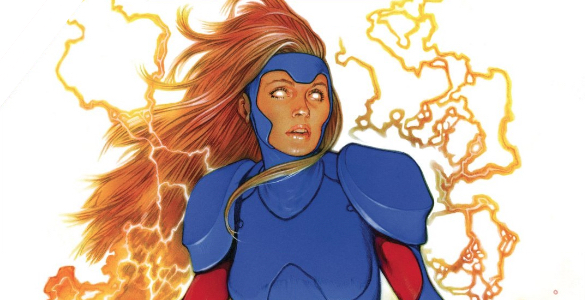
Spencer: What are the X-Men best known for? I’d honestly say that there’s two answers to this, because while thematically the X-Men are most often used to explore discrimination and social justice, in execution they’re just as well known for their unwieldy cast, soap opera dramatics, and byzantine continuity. I think what I like most about Tom Taylor and Mahmud Asrar’s debut issue of X-Men Red is how heavily it leans into that first aspect, while ignoring the latter almost entirely. There’s plenty of character within these pages, of course, but this is first-and-foremost a title with a mission and a message. Continue reading