The Man of Steel 3 Highlights Superman’s Great Compassion and Guilt

by Michael DeLaney 

This article contains SPOILERS. If you haven’t read the issue yet, proceed at your own risk!

slim-banner

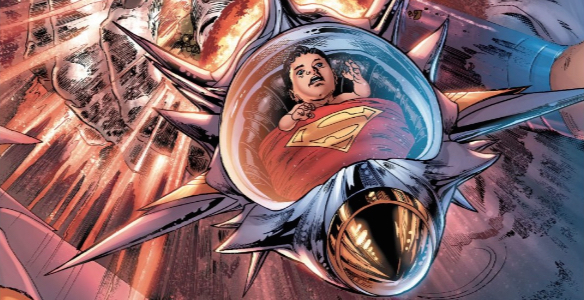
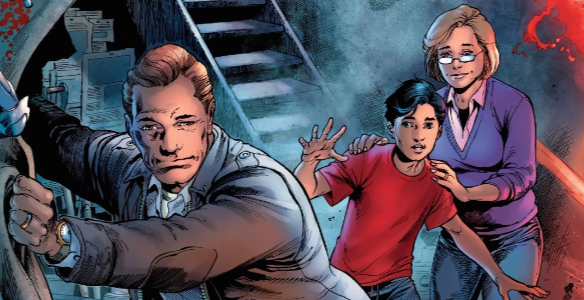
Any seasoned comic book reader — or really anyone who knows their pop culture — should know that you can never be sure that a character is dead unless you find their body. And even when they do find a body there’s the chance that it’s a clone, robot, time traveler, impostor, etc. While we haven’t found any bodies per se, in Man of Steel 3 it seems that Brian Michael Bendis has just killed…The Bottle City of Kandor. Continue reading

The Social Media Nightmare in Nightwing 45

by Michael DeLaney 

This article contains SPOILERS. If you haven’t read the issue yet, proceed at your own risk!

slim-banner

I try to ignore how attached I am to social media, my smart phone and the like, because the reality of the matter is both frightening and depressing. Benjamin Percy taps into that real fear in Nightwing 45 with his villain Wyrm. Wyrm is literally a computer virus, but what he represents may be the targeted marketing and social media manipulation. Continue reading

A Reveal as a Punchline in Batman 48

by Spencer Irwin

This article contains SPOILERS. If you haven’t read the issue yet, proceed at your own risk!

slim-banner

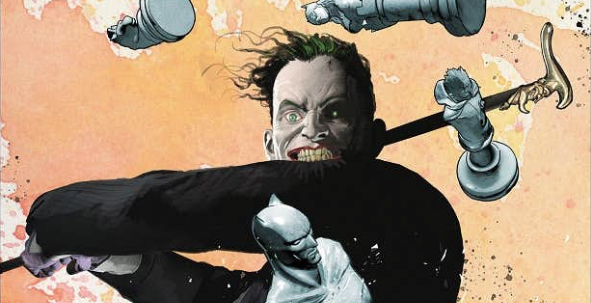
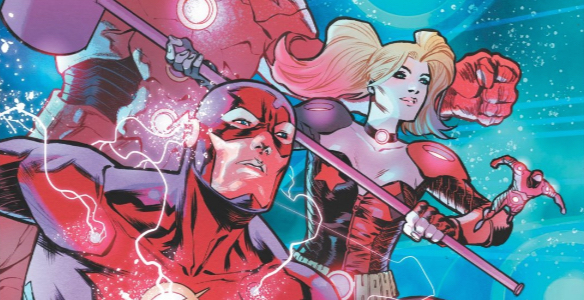
Last time Tom King and Mikel Janin put out a Joker story — in “The War of Jokes and Riddles” — the Clown Prince of Crime wasn’t exactly himself. Batman 48, then, gives King and Janin a chance to show their take on a more platonic form of the Joker. He’s probably more manic and scrambled than usual, but just as devious, cunning, and ruthless as ever. Most importantly, though, this Joker is wickedly funny. Batman 48 is jam-packed with black humor and perfectly constructed (albeit remarkably morbid) jokes. In fact, the entire issue can be viewed as one long set-up to a perfect punchline. Continue reading

Compassion vs. Accountability in Green Lanterns 48

by Patrick Ehlers

This article contains SPOILERS. If you haven’t read the issue yet, proceed at your own risk!

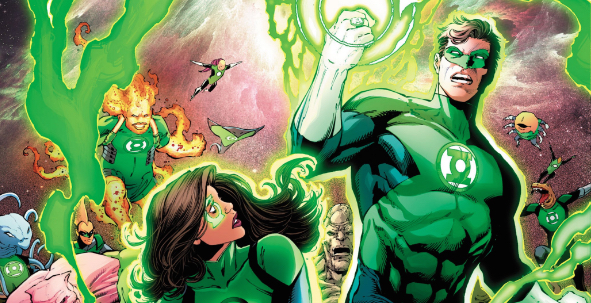
One of my coworkers was really upset about Kanye West a couple weeks ago. No shit, right? Her problem wasn’t that West was tweeting racist things about slavery probably being a choice, or even his support of Trump (who she also loathes), but that the entire would was holding a mentally ill man on a psychotic break accountable for his actions. Her argument goes that someone in West’s condition isn’t being themselves — they are literally being their illness. I began to stammer back with some feeble counterargument, something about the illness being made manifest by that person, so while we can practice compassion, we do still have to hold them accountable. “So you think he… put his own spin on mental illness?” she exhaled back at me. Shit. No. What the hell point was I trying to make? All I can really say is that I want anyone who does something wrong to face consequences, but is a mentally ill person really the one “doing” it? We are bad at talking about, dealing with, and even understanding mental illness. Aaron Gillespie and Ronan Cliquet’s Green Lanterns 48 takes our capacity for compassion and places it squarely against law and order. Continue reading

Justice and Symbolism in Justice League 1

By Drew Baumgartner

Justice League 1

This article contains SPOILERS. If you haven’t read the issue yet, proceed at your own risk!

There was no word for justice on my planet. The closest was the symbol on this table. It meant going beyond what was supposed to be possible, the natural laws. Imposing on the universe a higher standard. An ideal.

Martian Manhunter, Justice League 1

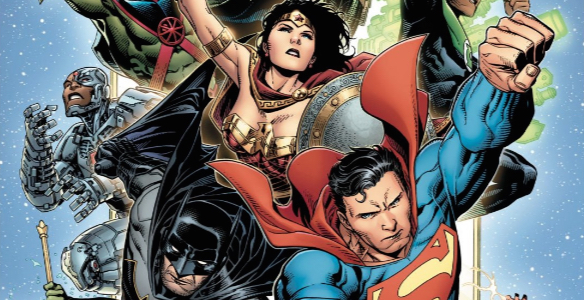
Our conceptions of justice hinge on fairness and impartiality — the notion that we are all held to the same standards of behavior (and face the same punishment for flaunting those standards). We understand how that can break down in practice (humans aren’t great at partiality), but we can imagine justice as a kind of platonic ideal we can strive towards. And that may be the best way to think about it, but closer inspection reminds us that, if it’s a platonic ideal, it’s one that varies from society to society and changes over time. We might reflect on the “justice” of the past (or of other cultures) and find it to be decidedly unjust, but that’s not how justice works — it’s not an objective monolith, but a deeply subjective, dynamic concept. That is, justice is a moral construct that only makes sense in light of the values of the society that construct it. Martian Manhunter’s approximation of justice reflects that idea, adding no moral spin to the “ideal” he mentions — in J’onn’s estimation, any ideologically motivated action “beyond what was supposed to be possible” is justice. In short, J’onn’s brief for the Justice League works just as well for the Legion of Doom. Continue reading

Man of Steel 2: Discussion

by Michael DeLaney and Drew Baumgartner

This article contains SPOILERS. If you haven’t read the issue yet, proceed at your own risk!

Michael: Batman is a subject that frequents many pages of my sketchbooks and I assume everyone else’s.  Unlike the versatile Batman, I find that Superman is a harder character to draw, especially in his facial features. The face of Superman has to simultaneously convey strength, joy and a decent amount of charm. Thus far, I am enjoying Brian Michael Bendis’ depiction of Superman, and in Man of Steel 2, he is joined by 3 artists who tap into that Clark Kent Charm. Continue reading

Man of Steel 1 Reclaims Superman

by Patrick Ehlers

This article contains SPOILERS. If you haven’t read the issue yet, proceed at your own risk!

“Let’s make America great again / by making racists ashamed again.
Let’s make compassion in fashion again; / let’s make America great again.”

“Make America Great Again,” Frank Turner

In isolation, the words “make America great again” shouldn’t elicit a strong negative biological/emotional response. But this fairly innocuous phrase has been twisted beyond recognition by white nationalism, isolationism, and just general shitheadery. On Frank Turner’s newest record, Be More Kind, he attempts to overwrite the listener’s associations with those four little words on track five, boldly titled “Make America Great Again.” The song is big, joyful and rebellious at the same time, like all of Turner’s best tunes. I like it a lot, but I still flinch when chorus comes around. Some words and some symbols are just too thoroughly corrupted to be reformed. Brian Michael Bendis and Ivan Reis’ Man of Steel 1 has a similar hurdle to overcome: attempting to return Superman to the platonic ideal that maybe only exists in the imaginations of Kal El’s biggest fans. The results are miraculous. Continue reading

Doomsday Clock 5 Meanders

By Drew Baumgartner

Doomsday Clock 5

This article contains SPOILERS. If you haven’t read the issue yet, proceed at your own risk!

The essence of drama, and especially melodrama, is compression. Show only what’s important. So start the scene as late as possible and once the dramatic point is made, end it.

Dennis O’Neil, The DC Comics Guide to Writing Comics

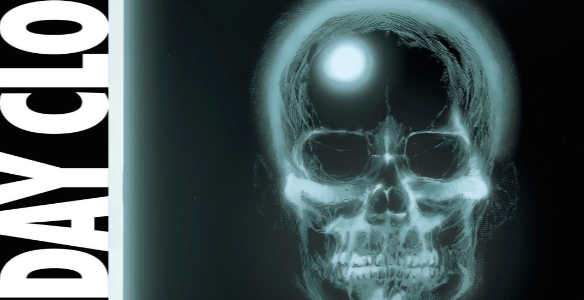
Pound for pound, this might be some of the best writing advice I know. But in this age of sequels, prequels, spin-offs and tie-ins, it seems like it’s all but been forgotten. That is, the artistic discipline of narrative efficiency is no match for the commercial demands of more familiar content. I don’t mean to dismiss all sequels etc. out of hand (The Godfather: Part II is a goddamned masterpiece, and is both a sequel and a prequel), but I do think they need to work a bit harder to justify their existence — if the details of this prequel story truly are essential, why weren’t they included in the original. And that scrutiny goes double when augmenting a beloved masterpiece. It’s absolutely possible for a sequel to justify itself, even under those circumstances (again, The Godfather: Part II), but it’s no easy feat. Unfortunately, the longer Doomsday Clock wears on, the less it seems up to that task, not only failing to justify its existence, but pretty much every storytelling choice it makes. Continue reading

Justice League: No Justice 4: Discussion

by Drew Baumgartner and Spencer Irwin

Justice League No Justice 4

This article contains SPOILERS. If you haven’t read the issue yet, proceed at your own risk!

Everything changes here!

Comics solicit, traditional

Drew: Okay, that epigraph is maybe too cute by half, but seriously, what does it mean for “everything” to change? The closest parallel I can draw to real life is the conventional wisdom that “a baby changes everything,” but even then, we understand “everything” to be decidedly limited in its scope. Certain events might be life-changing, but only for those with some connection to said events. And yet: comics. Big crossover events are promoted with the promise that the events with change “everything,” and while we might understand “everything” to be limited to the folks involved (in the same way that it is for a birth), there’s also tons of details we might assume exempt from “everything,” from the laws of physics to the peculiarities of english grammar — some things never change. Even so: some comics events are bigger than others, so there’s a range of just what “everything” means. Maybe it’s interpersonal dynamics of the superheroes involved, maybe it’s the principles of the universe as we know it. In its finale, Justice League: No Justice reveals that it falls almost entirely into that latter category, sending the DC Universe into decidedly uncharted territory. Continue reading

Finding Balance in Justice League: No Justice 3

by Spencer Irwin

This article contains SPOILERS. If you haven’t read the issue yet, proceed at your own risk!

slim-banner

We here at Retcon Punch, sadly, haven’t had much of a chance to discuss Justice League: No Justice until now, but I’ve been enjoying it immensely from the start. It has many of the same strengths as its predecessor, Dark Nights: Metal, but since No Justice is working with only four issues, avoids most of its excesses. No Justice is focused and easy to follow, yet still has a grand scope and a firm grasp on the characters and history of the DC Universe. It’s well-balanced, which plays right into the themes of the series and the goals of its various League factions. Continue reading