Ms. Marvel 29: Discussion

by Taylor Anderson and Ryan Mogge

This article contains SPOILERS. If you haven’t read the issue yet, proceed at your own risk!

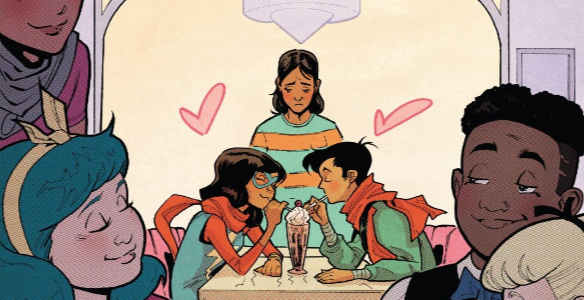
Taylor: There’s a reason why Archie comics are still around almost 80 years after the first issue was published. The lives of teenagers, to a certain extent, will always be the same, and Archie comics have traditionally done a pretty good job of chronicling what it’s like to be a high-schooler. In particular, the series’ focus on the romantic and emotional lives of its characters is what has made it an enduring title. After all, it’s not necessarily your AP Biology class you remember so much as the crush who happened to sit next to you in it. But it would be a mistake to think that Archie comics have cornered the market when it comes to teen dramas, or, as Ms. Marvel 29 shows, that teen dramas can’t include super heroes. Continue reading

Failure Defeated by Pure Action in Daredevil 601

By Patrick Ehlers

This article contains SPOILERS. If you haven’t read the issue yet, proceed at your own risk!

Daredevil is a punching bag. I know all superheroes suffer — conflict is the engine of story, and masked dudes with superpowers have to really be put through the ringer for a desensitized audience to feel anything. But Matt Murdock is a special case: his default state seems to be “just got beat up.” I mean, look at the cover to this issue. No one’s going to ask “oh no, is Matt gonna be okay?” Yeah, sure — he’ll be fine. He always bleeds from the face when he’s working on a plan. So part of what makes Daredevil 601 feel so unsettling is how smoothly everything goes for the Mayor Without Fear. Continue reading

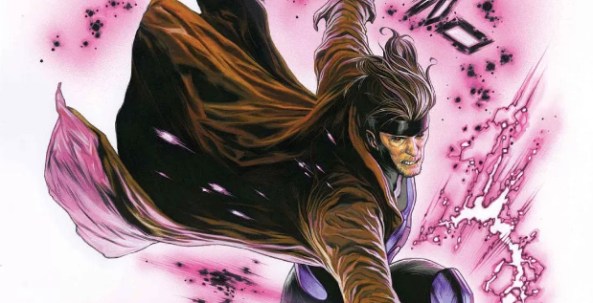
Dialogue and Internal Monologue as an Introduction in Domino 1

by Spencer Irwin

This article containers SPOILERS. If you have not read the issue yet, proceed at your own risk!

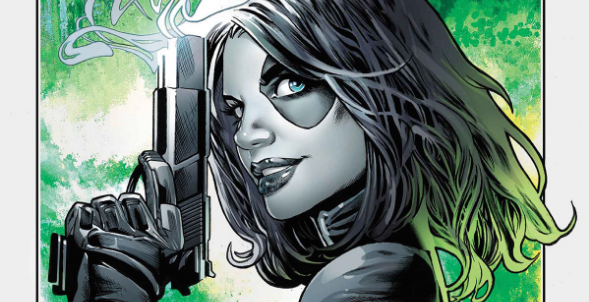
First issues have an almost impossible amount of work to do. They have to introduce (or reintroduce) the lead character, their supporting cast, their unique perspective, the series’ premise, and they have to do it all within 20 pages. Every creative team has their own unique approach to this task, and for Gail Simone and David Baldeon in Domino 1, that approach largely comes down to dialogue and internal monologue. Continue reading

Star Wars: Poe Dameron 26: Discussion

by Michael DeLaney and Mark Mitchell

This article containers SPOILERS. If you have not read the issue yet, proceed at your own risk!

Michael: Marvel’s Star Wars line of comics were launched on the idea that what happens between the movies behind the scenes are stories worth telling. Surprisingly, many of these stories have been deep, creative chapters in the lives of the characters we know and love, building upon their respective character philosophies. Not every aspect of these characters’ lives shares that amount of depth or insight, however. We spend a lot of our lives sitting around, not doing anything consequential. Unfortunately, the same is true for the heroes of Star Wars: Poe Dameron 26. Continue reading

Life and Death (and Colors!) in Infinity Countdown 2

by Taylor Anderson

This article contains SPOILERS! If you haven’t read the issue, proceed at your own risk.

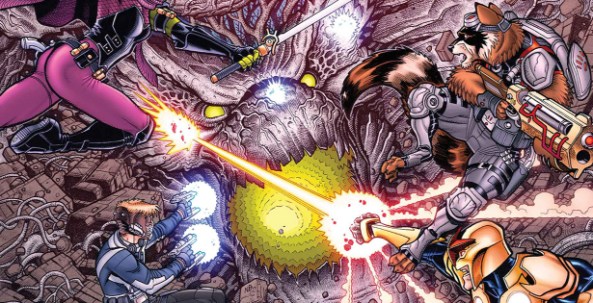
Life is literally defined by two things: birth and death. Sure, there’s a bunch of stuff that comes between those two milestones, but if you’re looking for something that all living things have in common, birth and death are pretty much it. Unsurprisingly, these two events have taken on a symbolic meaning for us humans. Ideas such as Yin and Yang, Light Side and Dark Side, Good and Evil, all stem from the dichotomy between the giving and extinguishing of life. It’s unsurprising, then, to see these two pillars of life make an appearance in Infinity Countdown 2. The grand scale of narrative presented is ripe for such grand themes as birth and death. Continue reading

Fun With Familiar Ideas in The Amazing Spider-Man 799

by Spencer Irwin

This article contains SPOILERS. If you haven’t read the issue yet, proceed at your own risk!

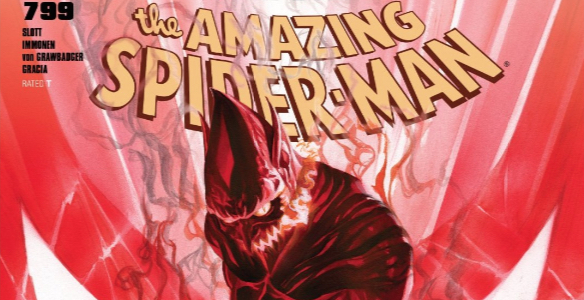
The end of a creative team’s run often finds the team building to a story that spans their entire tenure on the title, bringing together all their loose ends into one grand climax. Dan Slott, though, has simply been writing The Amazing Spider-Man too long to realistically do that; in fact, he’s tied up most of his long-running plots over the last few storylines, instead using much of his final arc to return Peter Parker to a kinda-sorta classic status quo for future creators to play with. Slott, though, has always found quite a bit to mine from classic status quos, from familiar plots and the immutable core of his characters. Even stories as well-known as “Norman Osborn returns to terrorize Peter and Harry” and “Spider-Man and Goblin fight” find a new life under Slott’s pen, and that’s no different in The Amazing Spider-Man 799, which finds Slott and Stuart Immonen tackling these familiar stories from new angles, from different perspectives, with a few surprises hiding up their sleeves. Continue reading

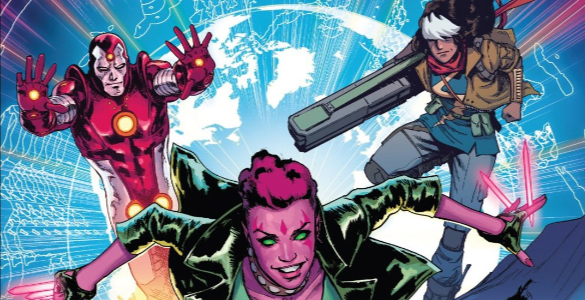
Exiles 1: Discussion

by Mark Mitchell and Ryan Desaulniers

This article containers SPOILERS. If you have not read the issue yet, proceed at your own risk!

Mark: The best teams are made up of strong, diverse personalities that bring out the best in each other. This is especially true in fiction. The individual members don’t need to always get along, conflict drives any story, but a certain baseline level of respect is necessary. One of the most impressive feats of team building in recent history has to be 2012’s The Avengers. Looking back with full knowledge of the incredible success Marvel Films has achieved almost unblemished since Iron Man ten years ago, it’s easy to take for granted the fact that The Avengers worked at all, but at the time it was incredibly risky. Going back and watching The Avengers now, the first two-thirds of the movie drag quite a bit as writer and director Joss Whedon works to establish the team dynamics, but that groundwork was necessary not just for the first movie, but for the Marvel Films team-ups to come. Again, we take for granted now that all of these characters can seamlessly interact with each other, but that’s only because the hard work was done by that essential first Avengers film. In Exiles 1, Saladin Ahmed, Javier Rodriguez, and Alvaro Lopez begin the work of building their own superhero team, and, like The Avengers, their patience in this premier issue sets them up for long term success. Continue reading

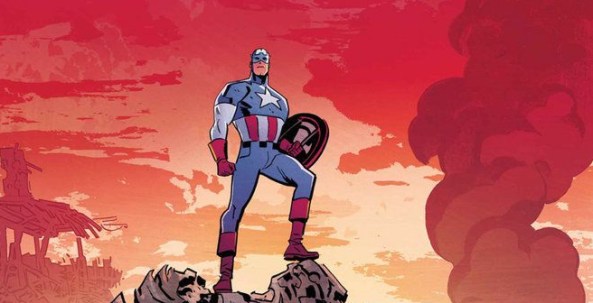
Hope Springs Eternal in Captain America 700

by Drew Baumgartner

Captain America 700

This article will contain SPOILERS. If you haven’t read the issue yet, proceed at your own risk!

Superheroes don’t get endings. They might die, sure, but are inevitably resurrected months, years, or decades down the line. And they’re brought back for the same reason superheroes don’t get endings: there’s always another story to tell (and another dollar to be made telling it). Fans may sometimes get jaded about this — especially when a hero is killed off for the umpteenth time — but that lack of closure keeps superheroes in a holding pattern in the middle of the hero’s journey. They may have momentary successes, sure, but they never get to kick up their heels at the end of a career well-served. You know, unless you can find some kind of alternate universe/timeline workaround that allows your hero some sense of closure while still allowing him to carry on the fight tomorrow. That’s exactly the kind of workaround Mark Waid and Chris Samnee cook up in Captain America 700, giving Steve the kind of heroic end he can only have if there’s some kind of trick. Continue reading

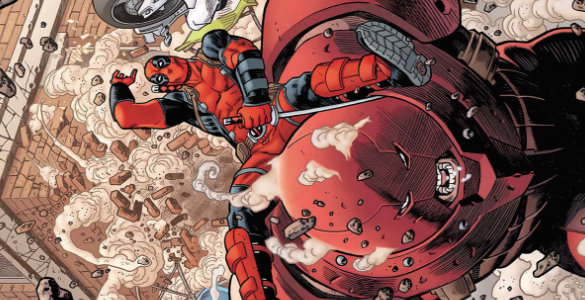
Expressive Lettering Fills in the Gaps in Despicable Deadpool 298

by Patrick Ehlers

This article contains SPOILERS. If you haven’t read the issue yet, proceed at your own risk!

slim-banner

“All that people care about is the look. There’s figures on this: 70% of what people react to is the look, 20% is how you sound, and only 10% is what you say.”

-Eddie Izzard, Dressed to Kill

Here’s something that’s true about comics: it’s a medium full of speaking characters that we will never actually hear speaking. By Izzard’s math, that means there’s a full fifth of a character’s essence we’re never really going to get through images and words on the page. As Deadpool pulls out all the stops to finally achieve suicide-by-mercenary, so too does the creative team pull out all the stops to express the height of his desperation. All the usual gears are spinning perfectly: Gerry Duggan’s writing is as simultaneously tight and chaotic as ever, and Mike Hawthorne’s impeccable layouts convey an almost grueling understanding of the setting of this issue-long brawl. But I want to focus on that elusive final 20% — “how you sound” — with Joe Sabino’s excellent lettering in this issue. Continue reading

X-Men Red 3 Offers a Portrait of Our Time

by Drew Baumgartner

X-Men Red 3

This article containers SPOILERS. If you haven’t read the issue yet, proceed at your own risk.

…it occurred to me that instead of them just being heroes that everybody admired, what if I made other people fear and suspect and actually hate them because they were different? I loved that idea; it not only made them different, but it was a good metaphor for what was happening with the civil rights movement in the country at that time.

Stan Lee on creating the X-Men

That the mutants of the Marvel universe are reviled and oppressed has long made them an allegory for any number of minorities the world over, which in turn makes the X-Men an allegory for any number of civil rights activists. Much has been written about the MLK/Xavier and Malcolm X/Magneto parallels, but as the twentieth century churned on, those movements coalesced less and less around recognizable figureheads. These movements weren’t leaderless, by any means, but the leaders were no longer the household names they were in the early ’60s. X-Men comics responded in kind, broadening its cast and bringing in an array of perspectives to cover the more diffuse push for civil rights across the globe. This made the X-Men generalists in terms of their symbolic power — maybe they were drawing parallels to the gay rights movement, or apartheid, or even the holocaust. But that generalist nature may also have blunted any one of those parallels, limiting how specific any one of them can truly feel.

Or so I thought. I’d come to accept the X-Men as a broad comment on the nature of oppression and activism, but never turned to it for “ripped from the headlines” representations of discrete real-world events. Maybe I (and the rest of the world) wasn’t paying enough attention to real-world events to recognize them. Maybe those events weren’t being covered in the way they have been over the past few years. Whatever the case, I was completely bowled over by the unapologetic allegory for Charlottesville that Tom Taylor and Mahmud Asrar present in X-Men Red 3. Continue reading