The Separation Anxiety of The Amazing Spider-Man 4

by Michael DeLaney

This article contains SPOILERS. If you haven’t read the issue yet, proceed at your own risk!

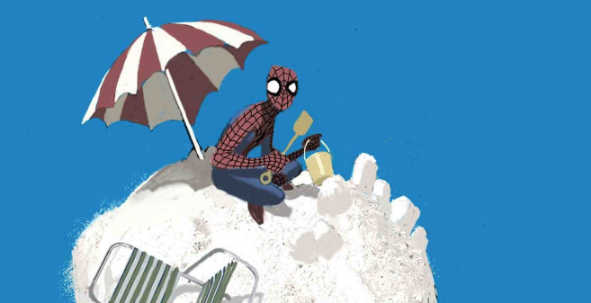
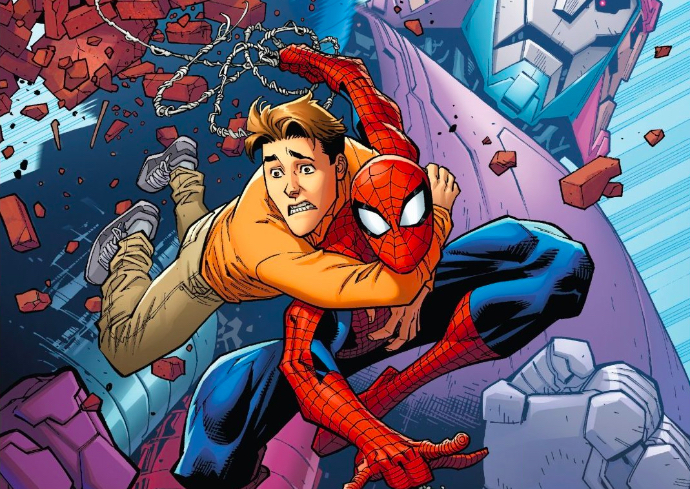
Say it with me now: “With great power comes great responsibility.” The phrase that the house of Spider-Man was built on has taken literal form as “Back to Basics” continues in The Amazing Spider-Man 4. Only in the wacky world of comic bookdom could we have two separate Spider-Men: Great Power & Great Responsibility (Superman Red & Superman Blue?) created as the byproduct of science.

Nick Spencer and Ryan Ottley continue to explore what these essential qualities of Spider-Man/Peter Parker look like when put under separate microscopes. For brevity’s sake I will refer to “Great Power” as Spider-Man and “Great Responsibility” as Peter. Without his responsibility, Spider-Man is actually more successful than he’s ever been – depending on how you measure success. Continue reading

Stolen Ideas and Intellectual Subjugation in Black Panther 3

by Spencer Irwin

This article contains SPOILERS. If you haven’t read the issue yet, proceed at your own risk!

Slavery is an indescribably cruel, evil, downright sadistic practice that robs its victims of so much, down to their very humanity. Issue one of Ta-Nehisi Coates’ and Daniel Acuña’s Black Panther used T’Challa’s capture at the hands of the intergalactic Wakandan Empire to explore how slavery strips its victims of their names, gods, homes, and heritage, and now issue three uses this same concept to explore a totally different side of the atrocity that is slavery: how it robs its victims of their intellectual property and potential. Continue reading

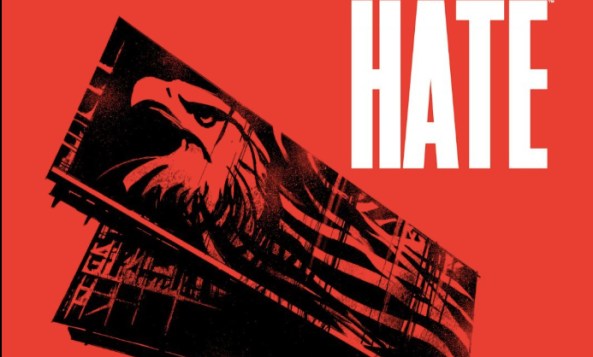
The Ruin of Structure of Days of Hate 7

by Patrick Ehlers

This article contains SPOILERS. If you haven’t read the issue yet, proceed at your own risk!

The very first image in Days of Hate 7 is New York City at at night from a distance with the text “Seven Weeks Later.” While the apocalypse-in-motion setting for this series will sometimes lean in to ruined urban landscapes–and there is plenty of that later in the issue–for the this introductory moment, the city skyline seems relatively intact. This skyline is the exception; the sterling faux-beacon for civilization in a world where all other structures, be they physical, societal, social or psychological, have collapsed. Continue reading

Usagi Yojimbo: The Hidden 5 Finds the Parallels Between Criminals and Children

by Michael DeLaney

Usagi Yojimbo The Hidden 5

This article contains SPOILERS. If you haven’t read the issue yet, proceed at your own risk!

Usagi Yojimbo: The Hidden 5 is a great reminder of how the comics medium can be/should be very intentional with its imagery. In film the term “match cut” refers to a transition where two shots are paralleled (matched) by their action or subject matter. Stan Sakai uses this technique in the middle of Usagi Yojimbo: The Hidden 5 to reiterate the kind of villains that Usagi is dealing with. Continue reading

Connection and Humanity in Peter Parker: the Spectacular Spider-Man 308

by Spencer Irwin

Peter Parker The Spectacular Spider-Man 308

This article contains SPOILERS. If you haven’t read the issue yet, proceed at your own risk!

It’s been fascinating watching Chip Zdarsky evolve as a writer. While I once thought of him primarily as a humorist, over the last few years it’s become apparent that his greatest strength is actually his ability to find the humanity in any character he touches, even villains. Throughout his run on Peter Parker: The Spectacular Spider-Man Zdarsky’s turned that into a strength of Peter’s as well, having him “defeat” several of his opponents (J. Jonah Jameson, The Tinkerer) by connecting and empathizing with them, by appealing to their shared humanity. Issue 308 pulls off the same feat with a particularly tricky character to humanize: The Sandman. Continue reading

No One is Infallible in Justice League 6

by Michael DeLaney

Justice League 6

This article contains SPOILERS. If you haven’t read the issue yet, proceed at your own risk!

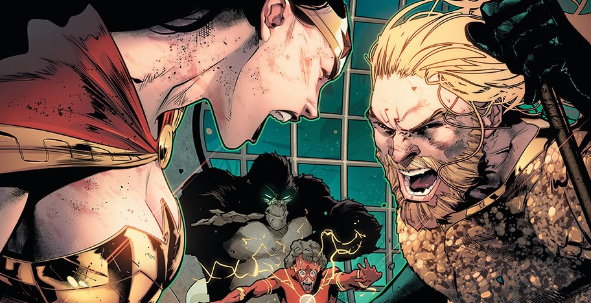
The Justice League is often elevated to a status akin to the gods of myth: immensely powerful, iron-willed and nearly unstoppable. The Trinity of Batman, Superman, and Wonder Woman is at the head of that pantheon of gods, with two veritable immortals and one mortal man who we consider incorruptible and infallible. With the epic cosmic stakes of Justice League 6, we are reminded that no one is infallible, and that a little humility might actually save the universe. Continue reading

Shot Compositions Sell the Relationships in The Wild Storm 16

by Drew Baumgartner

The Wild Storm 16

This article contains SPOILERS. If you haven’t read the issue yet, proceed at your own risk!

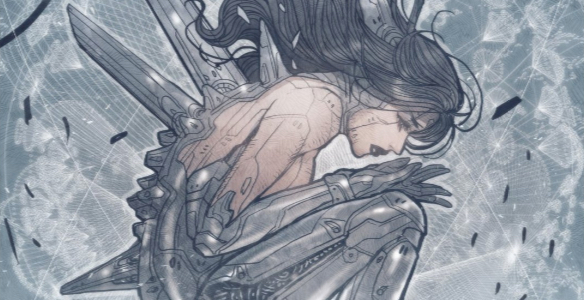
We met Angela Spica at a weird point in her life. While she was (mostly) passing as an eccentric engineer, her relationship to the world changed when she revealed her stolen transkeletal drysuit. That moment marked her as a fugitive, but she was already becoming something different before that, as her cybernetic makeup marks her as something more than “human.” That’s how she fell in with a group of oddities and aliens, but The Wild Storm 16 makes the case for Jenny Mei Sparks as a more natural peer. Their first meeting here doesn’t offer much more than the two simply sizing each other up, but Jon Davis-Hunt’s shot choices suggest that the two are on the same level — a stark contrast to the other big meeting in this issue. Continue reading

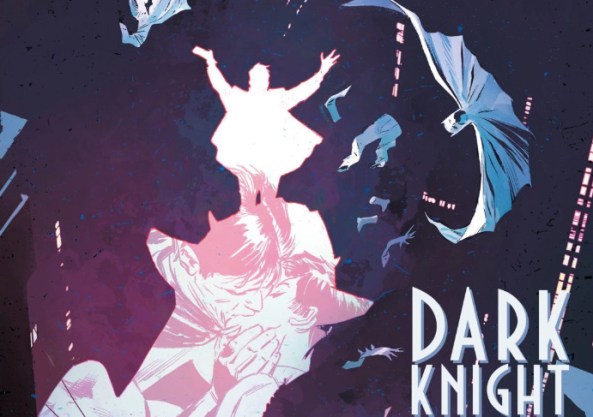
Batman 53: Discussion

by Spencer Irwin and Patrick Ehlers

This article contains SPOILERS. If you haven’t read the issue yet, proceed at your own risk!

Spencer: The “Cold Days” storyline in Batman 51-53 has almost been sort of a mystery story, but the mystery isn’t “did Mr. Freeze commit murder,” it’s “why is Batman defending him?” Retcon Punch’s own Drew and I had a small debate about it in the comments of our discussion of issue 52; I believed that Batman, in his grief over Selina leaving him at the altar, had falsely incriminated Freeze, and was now looking to find justice for him, while Drew countered that Bruce buying his way onto a jury and pitching his own defense of Freeze isn’t justice at all. It turns out that, in a way, we were both right; Bruce is indeed driven by his grief over Selina and the mistakes it’s led him to make, but he isn’t seeking justice, he’s seeking absolution. Continue reading

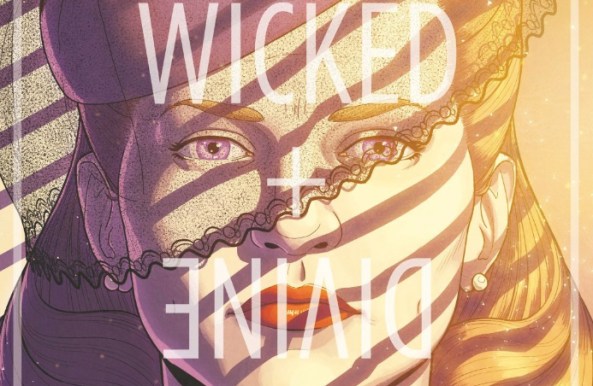
The “How” of the Reveal in The Wicked + The Divine 38

by Spencer Irwin

This article contains SPOILERS. If you haven’t read the issue yet, proceed at your own risk!

One of the things I appreciate the most about Kieron Gillen and Jamie McKelvie’s collaborations is the way they handle big twists and reveals. Gillen and McKelvie rarely trade in big showy twists (and when they do — such as in the “I Am Ananke” moment — they tend to raise more questions than they answer); instead, major pieces of information are revealed with such subtlety that one could almost miss them, and usually have plenty of evidence pointing their way long before the theories are finally confirmed, rewarding loyal, eagle-eyed readers. The Wicked + The Divine 38 clarifies several major pieces of information this way, furthering the plot, deepening its characters, and taking advantage of this arc’s unique structure in the process. Continue reading

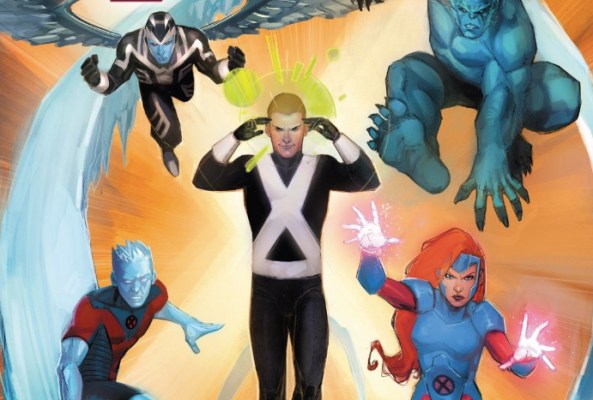
Astonishing X-Men Annual 1 Corrupts a Generation

by Patrick Ehlers

This article contains SPOILERS. If you haven’t read the issue yet, proceed at your own risk!

One of the frustrating things about our currently social and political landscape is that the generation pulling our country to the right was once a force for radical social change. When the baby boomers where hippies, they believed in equality and rejected conformity and corporatization. They championed peace, both as an antidote to war and on its own merit. We can argue about the efficacy of that countercultural movement all we want, but the point is that they were idealistic once. Somewhere over the last 50 years, peace and love turned into opportunism and xenophobia. To this point, the original X-Men have been spared this curmudgeonly fate. Introduced as avatars of otherneess in 1963, Jean Grey, Hank McCoy, Warren Worthington and Bobby Drake have such a long way to fall. Matthew Rosenberg and Travel Foreman’s Astonishing X-Men Annual 1 shows this corrupting influence in action, slowly radicalizing the most level headed, unimpeachable voices for equality in the marvel universe.

It’s a truly heartbreaking ride. Continue reading