How Layouts Drive Tension in Death of the Inhumans 3

by Drew Baumgartner

Death of the Inhumans 3

This article containers SPOILERS. If you have not read the issue yet, proceed at your own risk!

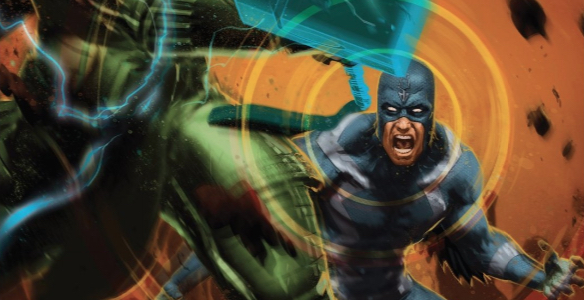
Deep, thoughtful analysis is a rarity in the world of comics criticism. While it’s easy enough to dismiss itinerant continuity policing or grumbling about plot-holes as braindead drivel, there’s a much more insidious kind of shallow analysis that suggests that there are simple aesthetic rules that govern the medium. It may be possible to identify trends that are true for even a very large sample of comics, but there are just as many exceptions to those “rules.” Truly deep analysis, on the other hand, can introduce us to new analytical tools that can be applied to many other comics, even if the conclusions we draw from those applications have no universal trend. Such is the case with Matt Fraction’s “cover version: daredevil 230 and cutting techniques,” one of my favorite comics analyses of all time. I highly recommend taking the time to read that piece, but the short explanation for why I love it so much is that it introduced me to ideas I had never encountered before. Most important was the thought that the invisible structures that guide our reading experience might be only just invisible, and that we can unearth them by paying close attention to things like panel counts and layouts. Fraction identifies a triangle motif in Daredevil 230 that is obvious enough on some pages, but on others just loosely describes the areas of the layouts we might most pay attention to. Using those same techniques, I recognize a similar pattern on some pages of Death of the Inhumans 3, though they elicit a decidedly different effect. Continue reading
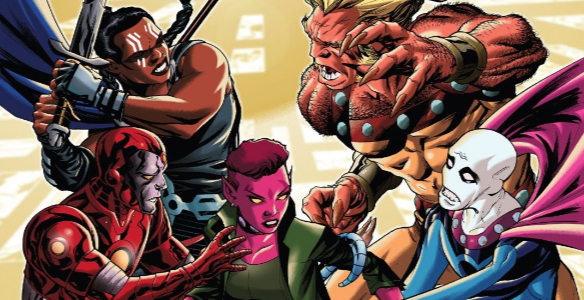
The Designs Define the Characters in Exiles 7

by Spencer Irwin

This article contains SPOILERS. If you haven’t read the issue yet, proceed at your own risk!

slim-banner

Exiles has been extremely lucky to have a regular artist as talented as Javier Rodriguez, but the series is just as lucky to have found a guest artist like Rod Reis, one who’s just as talented, even if his style is entirely different. I could probably spend a month just gushing about Reis’ work throughout Exiles 6 and 7, but today I want to specifically talk about his character designs and how they inform so much about each character’s role and personality without a single word. Continue reading

Nightwing Annual 1 Takes on Fake News

By Michael DeLaney

This article contains SPOILERS. If you haven’t read the issue yet, proceed at your own risk!

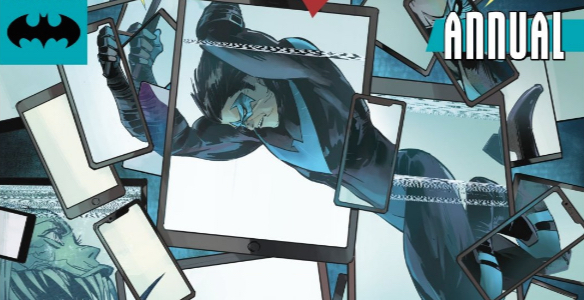
We’ve all heard the sayings “Knowledge is power” or “The truth will set you free”, but what good is that when that knowledge is so easily weaponized and the truth is blatantly denied? Nightwing Annual 1 continues Benjamin Percy’s “Dark Web” arc with Nightwing taking on the literal embodiment of fake news. And while a certain president might use that term to mean “bad press”, what I’m referring to – and what Percy is focusing on – is the targeted online disinformation that swayed many Americans to vote for that president in the first place. Continue reading

Scarlet 1 Bridges the Narrative Gap

By Michael DeLaney


This article contains SPOILERS. If you haven’t read the issue yet, proceed at your own risk!

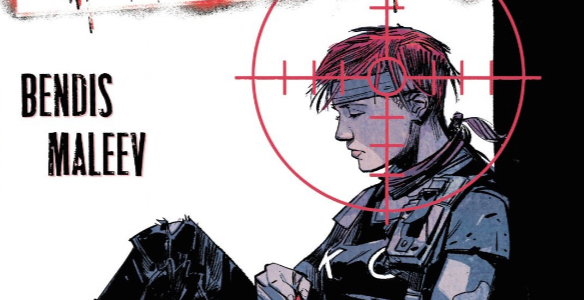
The medium of comic books isn’t an ancient indecipherable text, but it does have its own language that is learned and acquired by readers over time. Along with the significant portions of sequential art, readers must become accustomed to multiple forms of word-based storytelling. In Scarlet 1, writer Brian Michael Bendis, artist Alex Maleev, and letterer Joshua Reed showcase an additional storytelling device not often seen in comic books. Continue reading

Intimacy, Friendship, and Romance in Runaways 12

By Spencer Irwin

This article contains SPOILERS. If you haven’t read the issue yet, proceed at your own risk!

Runaways 12 focuses in on two different pairings, which both eventually blossom into romance. In both cases, though, those romances are born of a deep friendship, of a deep intimacy which has been developed throughout several volumes of adventures together. Rainbow Rowell, Kris Anka, and Matthew Wilson spend most of this issue digging deep into their intimacy in all its forms, be it emotional intimacy or physical. Continue reading

Depth of Field in Hunt for Wolverine: Dead Ends 1

By Drew Baumgartner

Hunt for Wolverine Dead Ends 1

This article contains SPOILERS. If you haven’t read the issue yet, proceed at your own risk!

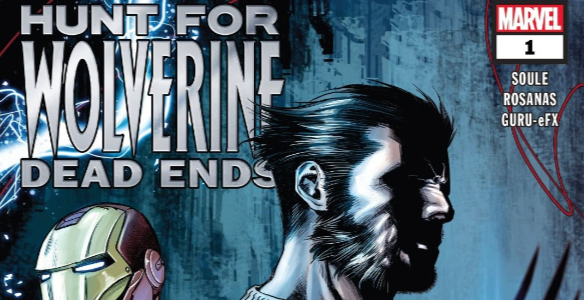
I remember someone once telling me that they mostly evaluate a comics artist based on the detail of their backgrounds. That always felt like an odd facet to fixate on (especially with so many others to factor in), but it’s hard to deny that richly detailed backgrounds are dazzling. It allows artists to flex not only their attention to detail, but their capacity for deep perspective, lending a sense of lived-in reality to their settings. But it’s also time consuming — even the most detail-prone artists will pick their moments, reserving sprawling cityscapes and the likes for big splash pages, and making choices that compress the depth of field elsewhere. Time is an understandable driver of level-of-detail, but it doesn’t always coincide with storytelling in a meaningful way. With The Hunt for Wolverine: Dead Ends 1, artist Ramon Rosanas finds a much more thematically resonant way to use his depth of field, lending Charles Soule’s villain reveal an unsettling otherworldliness. Continue reading

Historicizing the Present in Harbinger Wars II 4

by Drew Baumgartner

Harbinger Wars 2 4

This article contains SPOILERS. If you haven’t read the issue yet, proceed at your own risk!

All those innocent contractors hired to do the job were killed! Casualties of a war they had nothing to do with. All right, look, you’re a roofer, and some juicy government contract comes your way; you got the wife and kids and the two-story in suburbia — this is a government contract, which means all sorts of benefits. All of a sudden these left-wing militants blast you with lasers and wipe out everyone within a three-mile radius. You didn’t ask for that. You have no personal politics. You’re just trying to scrape out a living.

Randal, Clerks

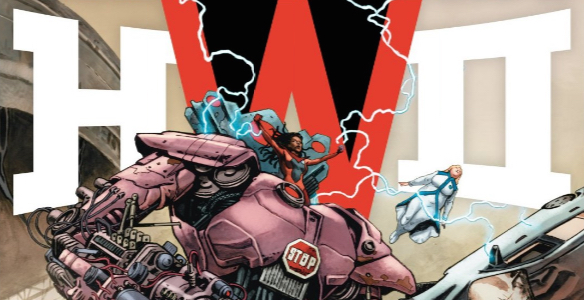
Violence is never a good look. Self-defense may justify it in some cases, but any innocents caught in the crossfire tar even the most noble motives. It turns heroes into villains and obscures the line between good and evil. I’ve had the luxury of thinking of this as a hypothetical question for most of my life, the kind of moral quandry characters might be confronted with in comics, but not exactly an active concern in my day to day life. But in a country facing the rise of white-supremacists, I can’t tell you how many think pieces I’ve read in the past two years debating the morality of punching nazis. More broadly, the questions are about when violence is justifiable, and how much collateral damage we’re willing to accept of said violence. These are exactly the questions everyone is weighing in Harbinger Wars 2 4, though they’re far from the only “ripped from the headlines” commentary in the issue, which paints a startlingly nuanced portrait of our times. Continue reading

The Punisher 1: Discussion

by Ryan Desaulniers and Patrick Ehlers

This article contains SPOILERS. If you haven’t read the issue yet, proceed at your own risk!

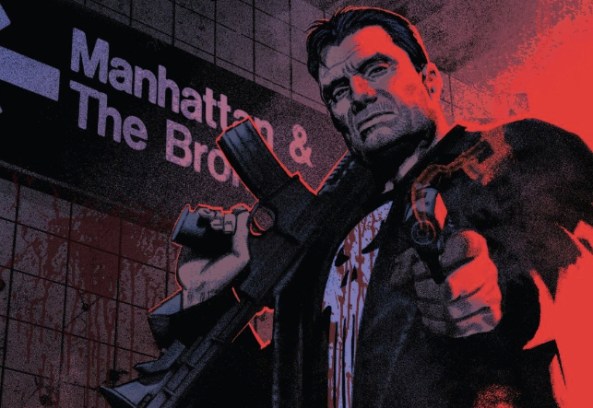
Ryan: We all know Frank Castle’s deal: a veteran whose family was unceremoniously gunned down takes to arms in a one-man war against crime or for whatever cause he sees fit to fight for. In the numerous Punisher stories since his inception in 1974, and particularly since the seminal Garth Ennis PunisherMAX run with the character, writers have been trying to find ways to connect a man who commits so many reprehensible acts of cruelty and murder with an audience. Castle sports the label of “anti-hero” to an audience that consumes his stories in various mediums, but writers keep pushing to see how far his character can go and still elicit sympathy from the readers, using different tactics to do so. The Punisher 1 by Matt Rosenberg and Szymon Kudranski, however, leaves all of these devices behind, giving us a Frank Castle title that is bereft of almost any means of identifying and excusing Frank’s actions, save for the fact that Castle fights against even more villainous figures. Continue reading

Vader is a Glutton for Punishment in Darth Vader 20

by Michael DeLaney

This article contains SPOILERS. If you haven’t read the issue yet, proceed at your own risk!

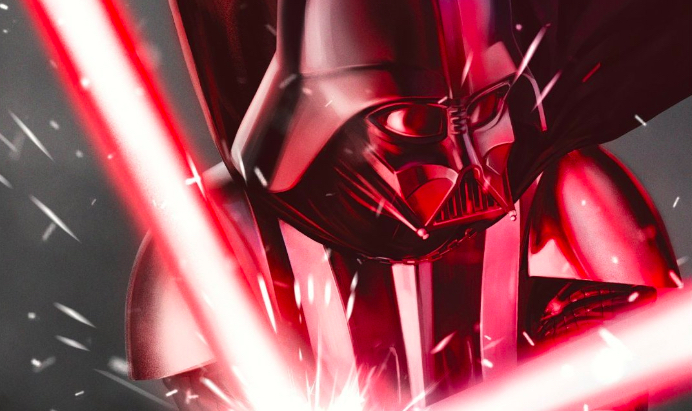
The relationship between Anakin Skywalker and Padme Amidala is easily one of the worst parts of the Star Wars prequel trilogy, but it is my favorite part of a Darth Vader comic book. When you remove Hayden Christensen (and George Lucas) from the picture, the emotional weight of the former Skywalker is fairly significant. Such is the case in Charles Soule and Giuseppe Canuncoli’s Darth Vader 20. Continue reading

West Coast Avengers 1: Discussion

by Spencer Irwin and Patrick Ehlers 

This article contains SPOILERS. If you haven’t read the issue yet, proceed at your own risk!

This is the true story of seven strangers picked to work together and have their lives taped, to find out what happens when people stop being polite, and start getting real.

The Real World.

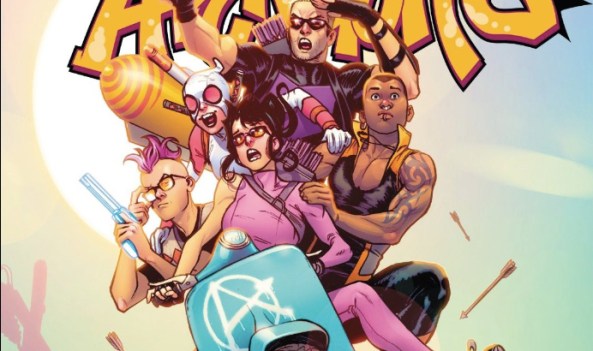
Spencer: Despite that famous tagline, reality television rightfully has a reputation for being anything but real, with contestants purposely taking on certain roles for the camera and producers editing footage in misleading ways to construct particular narratives (whether they’re “true” or not). Part of what makes West Coast Avengers so interesting, then, is that, despite its “superhero reality show” concept, creators Kelly Thompson and Stefano Caselli seem devoted to depicting the sad realities of their cast’s lives, to finding the truth behind their day to day existences, even when those existences are patently absurd. Continue reading