Shifting the Narrative in Hunt for Wolverine: Mystery in Madripoor 1

by Drew Baumgartner

Hunt for Wolverine Mystery in Mardipoor 1

This article contains SPOILERS. If you haven’t read the issue yet, proceed at your own risk!

The Bechdel Test

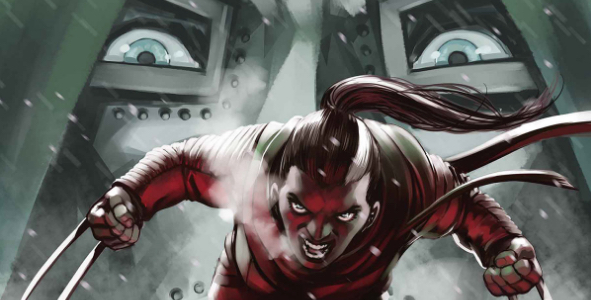
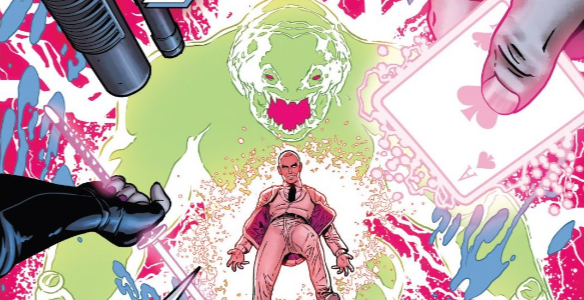
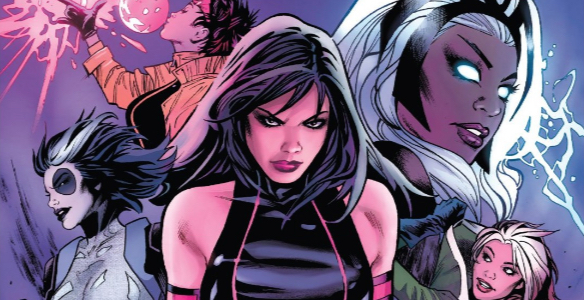
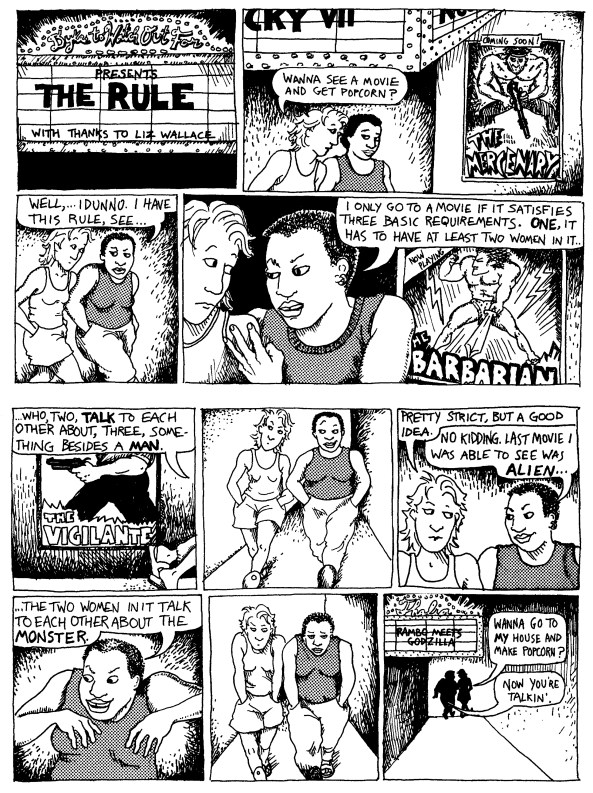
Drew: This particular Dykes to Watch Our For premiered in 1985, and its premise is still ringing in the ears of writers and readers everywhere. Now known as “The Bechdel Test,” these criteria insist on something beyond simple representation (though it’s remarkable how many films fail to satisfy even that first requirement), aiming for a dialogue that features no males (even as subjects of conversation). And that last bit is a huge stumbling block for narratives to this day. Plenty will feature two women and even manage to put them in a scene together, but the conversation will still revolve around the male characters. It’s the kind of problem you might expect to plague any all-female tie-in to the “Hunt for Wolverine” event to suffer from — Logan is necessarily absent, but that fact is likely to be the subject of discussion — but Jim Zub and Thony Silas manage to shift the focus in Mystery in Madripoor 1, pulling the story in totally unexpected directions. Continue reading

X-Men Red 4 Battles Real-World Threats

by Drew Baumgartner

X-Men Red 4

This article containers SPOILERS. If you haven’t read the issue yet, proceed at your own risk.

Comics have always reflected our real-world fears — from inner-city crime or nuclear panic — by heightening them to exaggerated extremes. Except, I’d argue, when it comes to the X-Men’s persecution. Sure, the X-Men’s superpowers would qualify as an “exaggerated extreme” of the types of differences that normally mark a minority class, but it’s straight-up not possible for writers to come up with more exaggerated ways societies persecute their minorities. From apartheid to lynchings to genocides, there’s nothing the X-Men have faced that real-world minorities haven’t already suffered, grounding even their most fanciful stories in sober reality. It’s a fact that Tom Taylor and Mahmud Asrar have leaned into from the start of X-Men Red, lending the series a “ripped from the headlines” approach that is truly unique in superhero comics. Continue reading

All-New Wolverine 35: Discussion

by Spencer Irwin and Taylor Anderson

This article contains SPOILERS. If you haven’t read the issue yet, proceed at your own risk!
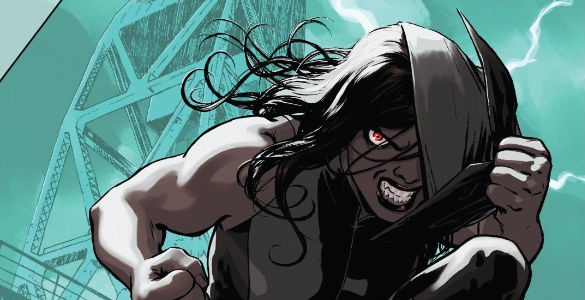
Spencer: I think I may have missed the mark a bit when discussing last month’s installment of All-New Wolverine. I claimed that “Old Woman Laura” was a story about redeeming Bellona and defeating Doctor Doom, the last tyrant left in a world that’s otherwise an utopia, but Tom Taylor and Ramon Rosanas have proven me wrong in All-New Wolverine 35, the series’ finale. Those are a part of this adventure, to be sure, but only a small part. What this story is about — what it’s always been about — is giving Laura Kinney the happy ending she deserves.  Continue reading

A Bait-and-Switch in Hunt for Wolverine: Adamantium Agenda 1

By Spencer Irwin

This article contains SPOILERS. If you haven’t read the issue yet, proceed at your own risk!

There’s a joke amongst fans that if a team exists in the Marvel Universe, Wolverine has been a part of it. This is an exaggeration — it’d be funny to see him joining up with the Champions or Young Avengers, but it hasn’t happened yet — but only slightly. Logan’s prolific stature in the Marvel Universe is what allows for an event like Hunt for Wolverine, which rounds up as many characters with connections to Logan as possible, no matter how tangential, from every corner of Marvel’s vast universe. It’s a bit of a bait-and-switch, as bringing in all these characters has so far (in the two issues of Hunt for Wolverine thus released) led to stories that are rather light on Wolverine himself. Tom Taylor and R.B. Silva lean into that idea in Hunt for Wolverine: Adamantium Agenda 1, pulling a bait-and-switch on their cast as well as their readers. Logan’s former New Avengers teammates think they’re rescuing Wolverine(‘s genetic code), but it turns out they’ve stumbled into a very different, much more personal scenario. Continue reading

Assembling the Team in Hunt for Wolverine: Weapon Lost 1

By Drew Baumgartner

Hunt for Wolverine Weapon Lost 1

This article contains SPOILERS. If you haven’t read the issue yet, proceed at your own risk!

There’s something fun about watching a team put itself together. It lends urgency to everyone’s presence, making their utility to the team explicit in a way that isn’t inherently true of pre-existing teams. That is, while Iceman is coming on this X-Men mission whether or not anything needs to be iced, Danny Ocean is only adding someone to the team if their skills are essential to the plan. With so many pre-existing teams in comics, we don’t always get to see purpose-built teams with quite so narrow a focus as the one in Charles Soule and Matteo Buffagni’s Hunt for Wolverine: Weapon Lost, which is exactly what makes its first issue so fun. Continue reading

The Story’s Scope is Not Well-Served in All-New Wolverine 34

By Spencer Irwin

This article contains SPOILERS. If you haven’t read the issue yet, proceed at your own risk!

I love the concept behind this “Old Woman Laura” arc. Diving into a Wolverine’s future to find a utopia is a refreshing change of pace, and a beautiful way to show how Laura’s more civil and humane approach to heroing — her attempts to be better than Logan — eventually pays off. That Laura’s final regret — and final mission — would be Bellona brings All-New Wolverine full circle in a satisfying way. Issue 34 itself has so many delightful moments; I practically squealed when Kate Bishop showed up. Yet, for everything that I love about this storyline and this issue, it also has a few major problems. A story of this scope needs more time and room to play out than it’s getting. Continue reading

X-Men Red 3 Offers a Portrait of Our Time

by Drew Baumgartner

X-Men Red 3

This article containers SPOILERS. If you haven’t read the issue yet, proceed at your own risk.

…it occurred to me that instead of them just being heroes that everybody admired, what if I made other people fear and suspect and actually hate them because they were different? I loved that idea; it not only made them different, but it was a good metaphor for what was happening with the civil rights movement in the country at that time.

Stan Lee on creating the X-Men

That the mutants of the Marvel universe are reviled and oppressed has long made them an allegory for any number of minorities the world over, which in turn makes the X-Men an allegory for any number of civil rights activists. Much has been written about the MLK/Xavier and Malcolm X/Magneto parallels, but as the twentieth century churned on, those movements coalesced less and less around recognizable figureheads. These movements weren’t leaderless, by any means, but the leaders were no longer the household names they were in the early ’60s. X-Men comics responded in kind, broadening its cast and bringing in an array of perspectives to cover the more diffuse push for civil rights across the globe. This made the X-Men generalists in terms of their symbolic power — maybe they were drawing parallels to the gay rights movement, or apartheid, or even the holocaust. But that generalist nature may also have blunted any one of those parallels, limiting how specific any one of them can truly feel.

Or so I thought. I’d come to accept the X-Men as a broad comment on the nature of oppression and activism, but never turned to it for “ripped from the headlines” representations of discrete real-world events. Maybe I (and the rest of the world) wasn’t paying enough attention to real-world events to recognize them. Maybe those events weren’t being covered in the way they have been over the past few years. Whatever the case, I was completely bowled over by the unapologetic allegory for Charlottesville that Tom Taylor and Mahmud Asrar present in X-Men Red 3. Continue reading

Pacing as Character in All-New Wolverine 33

By Patrick Ehlers

This article contains SPOILERS. If you haven’t read the issue yet, proceed at your own risk!

I love the idea of popping into a character’s far-flung future. It’s a way of taking a character’s essence and teasing out the results of a life lived in that essence — the ultimate if-then statement. If you’re a violent loner, then you end up alone and wracked with guilt. It’s all effect, and the cause is understood to be part of the character’s DNA. All-New Wolverine 33 kicks off the “Old Woman Laura” story, and writer Tom Taylor and artist Ramon Rosanas show the result of Laura’s legacy of positivity and leadership. Even in a world that was rocked by Doom World Wars, there’s still joy, prosperity, sorority and productivity in Laura’s future. Continue reading

Are New Mediums Influencing the Artwork in Astonishing X-Men 10?

by Taylor Anderson

This article contains SPOILERS. If you haven’t read the issue yet, proceed at your own risk!

Much has been made about how the internet and e-books are killing the printed word. Even though that’s a bit hyperbolic, it is true that more and more people are reading books on an electronic device. This same trend holds true in the world of comic books, where sites such as Comixology have cut into the traditional printed market. I myself prefer to read comic books on my iPad these days, and as I do so, I sometimes wonder how this change in medium might be affecting the way comics are made and published. With that in mind, I couldn’t help but consider Astonishing X-Men 10 an interesting case study in the way electronic formats might be alternating the way comic book artists produce their craft. Continue reading

All-New Wolverine 32 finds Catharsis in Revenge

by Drew Baumgartner

All-New Wolverine 32

This article contains SPOILERS. If you haven’t read the issue yet, proceed at your own risk!

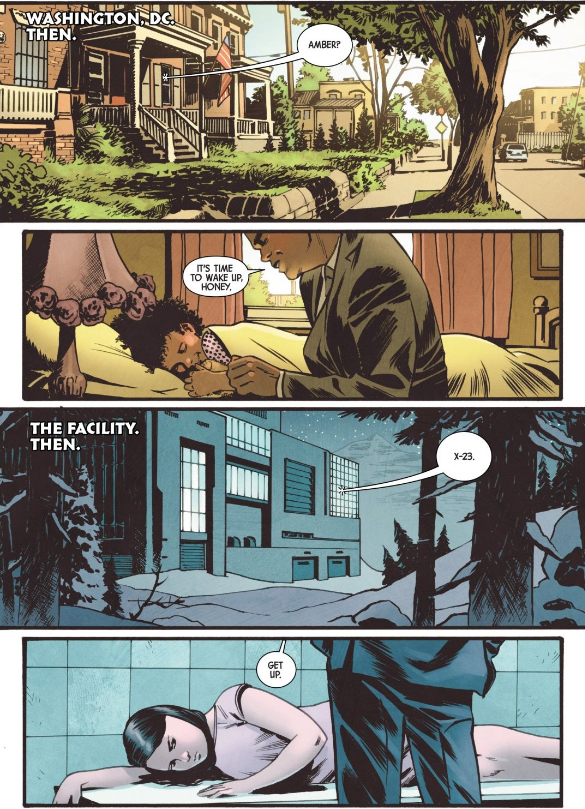
This issue opens with a heartbreaking flashback sequence chronicling the simultaneous loss of innocence for two young girls. One is Amber Griffen, whose father was killed at his first day on the job protecting a presidential candidate. The other is Laura Kinney, who was the assassin sent to kill that candidate (and anyone else within clawing distance). Years later, it’s easy to understand why these women would be enemies, but Tom Taylor and Djibril Morissette-Phan take care to demonstrate that Laura is every bit as victimized by these events as Amber, telling their stories in parallel to drive that point home.

Amber and Laura Continue reading