Lockjaw 3 is a Cartoony Romp

By Drew Baumgartner

Lockjaw 3

This article contains SPOILERS. If you haven’t read the issue yet, proceed at your own risk!

Gordie: Alright, alright. Mickey’s a mouse. Donald’s a duck. Pluto’s a dog. What’s Goofy?
[…]
Teddy: Goofy’s a dog, he’s definitely a dog.
[…]
Chris: He can’t be a dog. Wears a hat and drives a car.
[…]
Vern: God, that’s weird. What the hell is Goofy?

Stand By Me

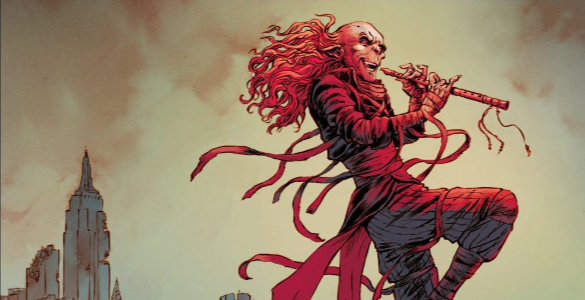
There are no rules inherent to a cartoon world. Maybe this is one where dragons exist. Maybe this is one where elephants can fly. Maybe this is one where an anthropomorphized mouse can own a regular (albeit cartoon) dog. We can accept those conceits on the terms they’re given, because it’s a cartoon. Audiences balk at other media for being “unrealistic,” but “cartoony” — effectively stylized unrealism — is a compliment. At least, that’s how I tend to think of cartooniness: a fun relaxations of the “rules” that govern fictional worlds, making room for a heck of a lot more imagination and fun. Such is certainly the case with Lockjaw 3, which finds even more fun to mine from relaxing its already madcap rules. Continue reading

Mighty Thor 706: Discussion

by Drew Baumgartner and Spencer Irwin

Mighty Thor 706

This article contains SPOILERS. If you haven’t read the issue yet, proceed at your own risk!

And on the seventh day God ended his work which he had made; and he rested on the seventh day from all his work which he had made.

Genesis 2:2

Drew: Can gods be heroes? I might posit that immortality voids the noble qualities like courage and sacrifice that define heroism. To me, anyway, gods and heroes are mutually exclusive groups, which might well be the reason we created the concept of demigods — Hercules slaying the Nemean Lion is less impressive if he has infinite time and power at his disposal, and Jesus dying on the cross is literally meaningless if he can’t die. In this way, we understand that Jane Foster’s nobility comes not from her godliness, but from her humanity — from the sacrifice she can only make because she isn’t a god. But still, she was a god, at least briefly, which maybe entitles her to a bit of rest after all of that sacrifice. Continue reading

An Episodic Reprieve in The Further Adventures of Nick Wilson 4

By Drew Baumgartner

The Futher Adventures of Nick Wilson 4

This article contains SPOILERS. If you haven’t read the issue yet, proceed at your own risk!

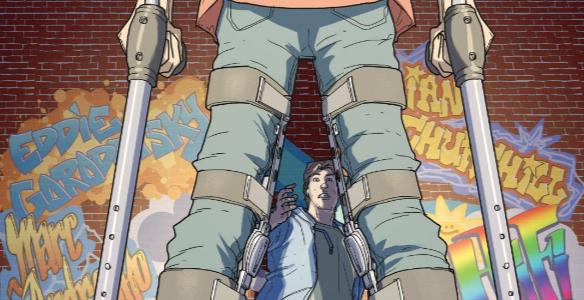
Comics and TV both exist on a spectrum between fully serialized and fully episodic storytelling modes. And any given series will move a bit within that spectrum, often to great effect — a typically heavily serialized story will offer up a beautifully self-contained installment, or a typically episodic one might find extra emphasis from that occasional “to be continued…”. As a miniseries, my expectations of serialization in The Further Adventures of Nick Wilson are even stronger, with each episode building to whatever conclusion writer Eddie Gorodetsky has engineered. Which makes issue 4’s episodic nature so refreshing — we couldn’t have seen it coming. Continue reading

Action Comics 1000: Discussion

by Drew Baumgartner, Michael DeLaney, Patrick Ehlers, and Spencer Irwin

Action Comics 1000

This article contains SPOILERS. If you haven’t read the issue yet, proceed at your own risk!

“From the City that Has Everything”

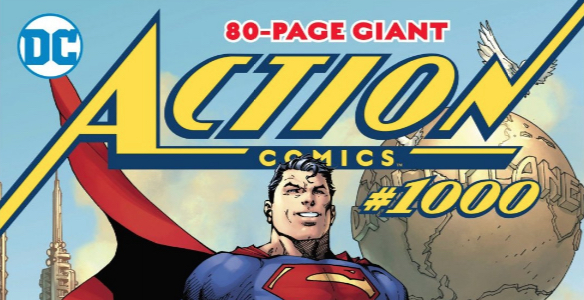
Drew: Superman changed the world. That’s obvious enough in-universe, but it’s just as true of our world. Action Comics 1 created (or at least codified) the superhero genre, a genre that came to define both the 20th and 21st centuries, and is still growing as Action Comics rings in its 1000th issue. It’s a singular achievement, but celebrating it as such might not be in the spirit of Superman, for whom humbleness is as much a part of his character as heroism. He’s not one to take compliments easily, let alone brag, so any efforts to do so on his behalf run the risk of feeling crass. Most of the stories in this issue opted to ignore lionizing Superman outright, aiming instead to illustrate what it is that makes him so laudable, but in the issue’s opening chapter, Dan Jurgens came up with a way to address the issue with Superman himself, providing a commentary on the whole exercise of a huge anniversary issue, and offering a justification that even Superman can get behind. Continue reading

Quantum and Woody 5 is Chaotic-Good

by Drew Baumgartner

Quantum and Woody 5

This article contains SPOILERS. If you haven’t read the issue yet, proceed at your own risk!

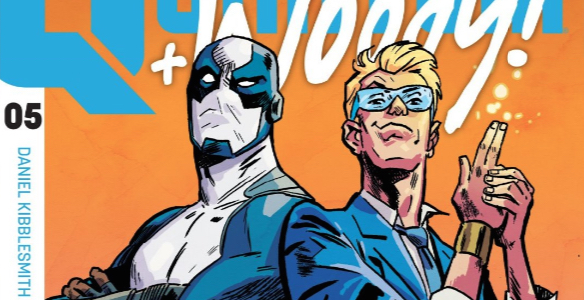
Superhero comics are full of Chaotic Good characters — conscientious free spirits that believe in doing good, but by their own standards. From Batman to Wolverine to the Teenage Mutant Ninja Turtles, Chaotic Good characters fight for their morals, though not necessarily for the law. Neither Quantum nor Woody would fit this category — Quantum is good, but too lawful, while Woody is chaotic, but too morally passive. Together, though, their actions end up taking on a Chaotic Good, picking up Woody’s chaotic nature and Quantum’s desire to do good. Writer Daniel Kibblesmith and artist Kano attempt something similar with Quantum and Woody 5, delivering an issue that is both chaotic and good. Continue reading

The Timeline Skews in Batman 45

By Drew Baumgartner

Batman 45

This article contains SPOILERS. If you haven’t read the issue yet, proceed at your own risk!

Here’s the present, 1985, the future, and the past. Prior to this point in time, somewhere in the past…the time line skewed into this tangent…creating an alternate 1985. Alternate to you, me, and Einstein…but reality for everyone else.

Doc Brown, Back to the Future Part II

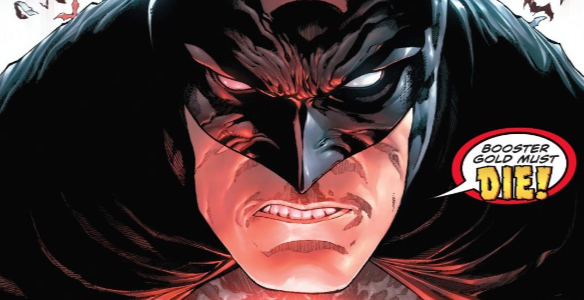
We’re all familiar enough with the notion of alternate timelines and the butterfly effect by this point that any reasonable time-traveler would have to fear ever changing past events — indeed, it’s a sci-fi concept so ubiquitous, even Abe Simpson thought to offer Homer a warning about it on his wedding day. And yet, we still like to imagine “what if” scenarios about making different decisions in only our own pasts, but those of fictional characters. The most well-known “what if” story in superhero comics might well be “For the Man Who Has Everything,” Alan Moore and Dave Gibbon’s clever parable about fantasy wish fulfillment. Superman’s fantasy necessarily focuses on his own experiences on a non-exploded Krypton, but the absence of Superman would obviously have profound effects back on Earth. That is, there are butterfly effects in that fantasy timeline we never see, that a Krypton-based Kal-El wouldn’t even know about. Cleverly, Tom King and Tony Daniel open on the butterfly effects of their alternate timeline in Batman 45 before circling back to explain how and why this alternate timeline was created in the first place. Continue reading

Hope Springs Eternal in Captain America 700

by Drew Baumgartner

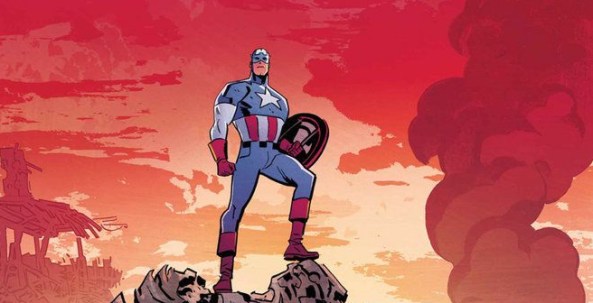
Captain America 700

This article will contain SPOILERS. If you haven’t read the issue yet, proceed at your own risk!

Superheroes don’t get endings. They might die, sure, but are inevitably resurrected months, years, or decades down the line. And they’re brought back for the same reason superheroes don’t get endings: there’s always another story to tell (and another dollar to be made telling it). Fans may sometimes get jaded about this — especially when a hero is killed off for the umpteenth time — but that lack of closure keeps superheroes in a holding pattern in the middle of the hero’s journey. They may have momentary successes, sure, but they never get to kick up their heels at the end of a career well-served. You know, unless you can find some kind of alternate universe/timeline workaround that allows your hero some sense of closure while still allowing him to carry on the fight tomorrow. That’s exactly the kind of workaround Mark Waid and Chris Samnee cook up in Captain America 700, giving Steve the kind of heroic end he can only have if there’s some kind of trick. Continue reading

An Early Start Sets Crude 1 on an Unusual Course

by Drew Baumgartner

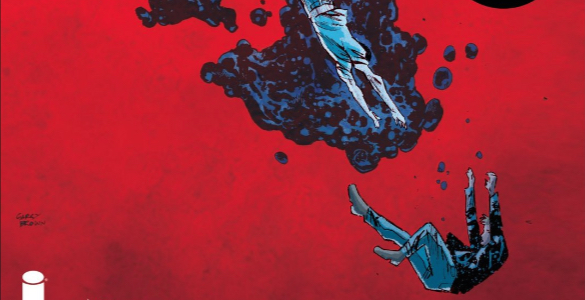
Crude 1

This article contains SPOILERS. If you haven’t read the issue yet, proceed at your own risk!

Every story is a mystery at its start. Themes, settings, characters, and their motivations are all unknown to us at the outset, so the opening chapters of stories are often defined by which of these questions they answer, and which they leave open. In that way, a story ultimately defines what its hanging questions are by where it begins. Does it open generations before the protagonist is born or on the day of the inciting incident? Does its scope start wide and zoom in, or does it start in tight and zoom out? Or, more to the point in many mainstream comics, do we meet the protagonist before or after their loved one is murdered, propelling them on some kind of quest for justice/vengeance? With Crude 1, Steve Orlando and Garry Brown’s choices on where and when to start their narrative reveal a great deal about what they think is interesting about their narrative, but in doing so, may have buried the lede. Continue reading

Teenage Mutant Ninja Turtles 81: Discussion

By Drew Baumgartner and Taylor Anderson

Teenage Mutant Ninja Turtles 81

This article contains SPOILERS. If you haven’t read the issue yet, proceed at your own risk!

Drew: Homicidal mutants. Power-hungry ninja clan leaders. Aliens bent on world domination. The Teenage Mutant Ninja Turtles franchise has had a ton of villains over the years, but they all tend to share one thing in common: obvious evilness. IDW’s incarnation has done a great deal to complicate and question the morals and perspectives of those familiar villains, but never so much to make the Turtles frame the choices of their adversaries as “misguided.” Which is precisely why Splinter’s slow heel turn has added so much depth to the series. It’s fine for the Turtles to be battling an evil, cackling warmonger when they’re appearing on a Saturday morning cartoon, but in this age where people seem to believe there are “very good people on both sides” of every argument, we may need more nuanced depictions of evil. The road to Hell, they say, is paved with good intentions, which is all anyone seems to have in this series at the moment. You know, besides the Rat King. Continue reading

X-Men Red 3 Offers a Portrait of Our Time

by Drew Baumgartner

X-Men Red 3

This article containers SPOILERS. If you haven’t read the issue yet, proceed at your own risk.

…it occurred to me that instead of them just being heroes that everybody admired, what if I made other people fear and suspect and actually hate them because they were different? I loved that idea; it not only made them different, but it was a good metaphor for what was happening with the civil rights movement in the country at that time.

Stan Lee on creating the X-Men

That the mutants of the Marvel universe are reviled and oppressed has long made them an allegory for any number of minorities the world over, which in turn makes the X-Men an allegory for any number of civil rights activists. Much has been written about the MLK/Xavier and Malcolm X/Magneto parallels, but as the twentieth century churned on, those movements coalesced less and less around recognizable figureheads. These movements weren’t leaderless, by any means, but the leaders were no longer the household names they were in the early ’60s. X-Men comics responded in kind, broadening its cast and bringing in an array of perspectives to cover the more diffuse push for civil rights across the globe. This made the X-Men generalists in terms of their symbolic power — maybe they were drawing parallels to the gay rights movement, or apartheid, or even the holocaust. But that generalist nature may also have blunted any one of those parallels, limiting how specific any one of them can truly feel.

Or so I thought. I’d come to accept the X-Men as a broad comment on the nature of oppression and activism, but never turned to it for “ripped from the headlines” representations of discrete real-world events. Maybe I (and the rest of the world) wasn’t paying enough attention to real-world events to recognize them. Maybe those events weren’t being covered in the way they have been over the past few years. Whatever the case, I was completely bowled over by the unapologetic allegory for Charlottesville that Tom Taylor and Mahmud Asrar present in X-Men Red 3. Continue reading