Secrets as a Weapon in The Wicked + The Divine 35

by Spencer Irwin

This article contains SPOILERS. If you haven’t read the issue yet, proceed at your own risk!

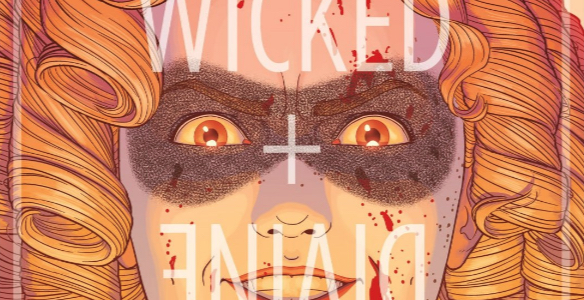
It should be no surprise that almost every character in Kieron Gillen and Jamie McKelvie’s The Wicked + The Divine are hiding major secrets, nor that, as the series enters its final year, more and more of those secrets are coming to light. What might be a bit surprising, though, is how well the cast leverages these secrets — both their own and others’ — in order to get what they want. Secrets can be a liability, but in the world of WicDiv, they’re just as often an asset, a weapon just waiting to be fired. Continue reading
Isola 1: Discussion

By Spencer Irwin and Michael DeLaney

This article contains SPOILERS. If you haven’t read the issue yet, proceed at your own risk!

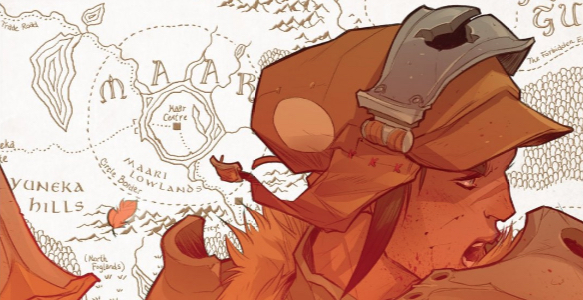
Spencer: The older I get, the more I realize how vital communication is to just about every single facet of life. So many problems and conflicts, be they in business or our personal lives, are caused by simple miscommunications, and the inability to communicate with someone makes it almost impossible to do anything with them or have any sort of meaningful relationship. Communication is a central theme of Isola, the new Image series from former Gotham Academy collaborators Brenden Fletcher, Karl Kerschl, and Msassyk. Not only does Isola 1 explore the difficulties that arise when two parties are unable to communicate, but the methods the creative team use to communicate information with the readers are second-to-none. This is one smartly-told comic book. Continue reading

Using Our Voices to Help, Not Hurt in Black Panther 171

By Spencer Irwin

This article contains SPOILERS. If you haven’t read the issue yet, proceed at your own risk!

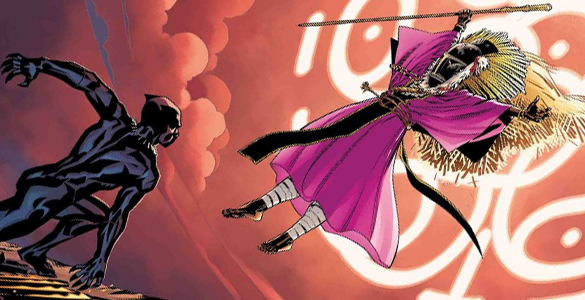
Our voices make us powerful. They allow us to make bonds and forge connections with one another, they allow us to speak out against oppression and injustice, they allow us to express our innermost desires and emotions, to be heard. Unfortunately, some voices are louder than others. Voices of men, voices of white people, they have a platform that women or people of color are so often denied access to, a platform that amplifies their voice, not only giving their words too much power, but drowning out the voices of others. This is first and foremost a problem for those whose voices are being drowned out, of course, but it’s also a problem for those doing the speaking; they’re so busy talking that they’re not listening, and that means they’re missing out on a lot of vital information. Continue reading

Finding Another Way in Teenage Mutant Ninja Turtles 80

By Spencer Irwin

This article contains SPOILERS. If you haven’t read the issue yet, proceed at your own risk!

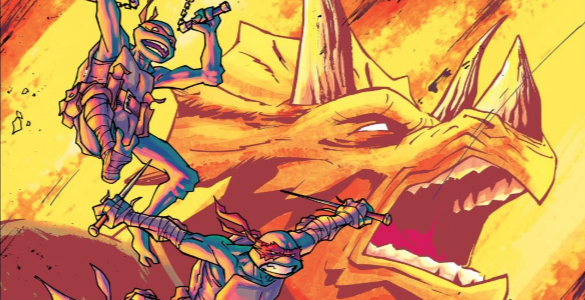
Of the many crimes The Man of Steel committed against Superman, its greatest was having him snap Zod’s neck at the end of the film. Superman is a hero who not only doesn’t kill, but who is always supposed to find another way, a better way, to deal with his problems. Forcing him into a situation where his only option is to kill not only shows a grave misunderstanding of the character, but a lack of imagination on the part of the writers. Teenage Mutant Ninja Turtles 80 places Splinter in the role of Man of Steel‘s Superman, the “hero” who believes he has no choice but to kill, but the Turtles have to believe they can find another way to deal with the Triceratons. Writers Kevin Eastman, Bobby Curnow, and Tom Waltz reveal their priorities to be in line with the Turtles’ when they unveil that better way. Continue reading

Dark Nights: Metal 6: Discussion

by Spencer Irwin and Mark Mitchell 

This article contains SPOILERS. If you haven’t read the issue yet, proceed at your own risk!

slim-banner

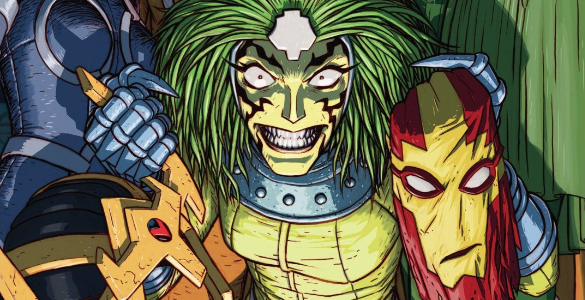
Spencer: Now that the series has come to an end, I can safely say that I have very mixed feelings about Dark Nights: Metal as a whole. So much of this event has been about embracing gonzo, bonkers, throwback action, but much of that fun is buried under attempts to overexplain every aspect of the (often impossible to follow) plot. The stakes of the event never fully sank in for me, as aside from artist Greg Capullo’s hellish landscapes, most of the nightmarish aspects of the Dark Multiverse were buried away in tie-in issues, while the main series focused on fun, but straightforward action beats. That said, there were a few areas where this series shined, and Dark Nights: Metal 6 exemplifies them all. It’s a strong metaphor for embracing hope and community over nihilism and isolation, a powerful reminder of stories’ ability to inspire, and an ode to the past (and future) of the DC Universe. Continue reading

High School Memories in The Further Adventures of Nick Wilson 3

By Spencer Irwin

This article contains SPOILERS. If you haven’t read the issue yet, proceed at your own risk!

Whether they romanticize it or want to forget about it altogether, most people have pretty strong feelings about the time they spent in high school — or, at least, that’s how most popular media likes to portray things. In truth, I’m guessing far more people think about high school the way Nick Wilson does: with hazy indifference. In The Further Adventures of Nick Wilson 3, Eddie Gorodetsky, Marc Andreyko, and Stephen Sadowski send Nick to his high school reunion, which is probably the lamest — and, thus, the most realistic — high school reunion in the history of pop culture.  Continue reading

Mighty Thor 705: Discussion

by Spencer Irwin and Ryan Mogge

Mighty Thor 705

This article contains SPOILERS. If you haven’t read the issue yet, proceed at your own risk!

Spencer: Jane Foster is willing to do what must be done, no matter how hard or dangerous, no matter what the consequences might be, even when nobody else can or will. It’s what makes her a hero, what makes her worthy; it’s also what brings about her downfall. The Mighty Thor 705 is the swan song our beloved Jane deserves, a beautiful, action-packed, heartbreaking issue that highlights everything that made Jane’s Thor an inspiration, everything that made her important both in-universe and out. Continue reading

Growth, Chemistry, History, and Change in Runaways 7

By Spencer Irwin

This article contains SPOILERS. If you haven’t read the issue yet, proceed at your own risk!

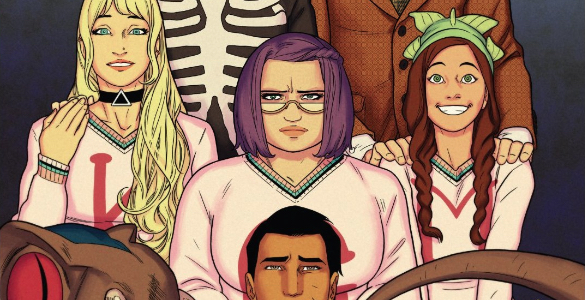
The density of prose, as well as the ample opportunities for dialogue and conversations, make novels a format that excels in rich, deep characterization; there’s just more room and opportunity to get into a character’s head than in most other mediums. It’s no surprise, then, that writer and novelist Rainbow Rowell would excel in this regard, but it is a pleasant surprise that she’s been able to translate those skills so perfectly to her comic book work on Runaways. This is a title where every character feels real and three dimensional, more than just archetypes or action stars but like actual kids with actual concerns, desires, deep-seated fears, and the ability to grow and change. Most importantly, Rowell makes us feel the effects of their history, of everything they’ve gone through since first being created 15 years ago. Continue reading

Jon Shines as Damian Spins His Wheels in Super Sons 14

by Spencer Irwin


This article contains SPOILERS. If you haven’t read the issue yet, proceed at your own risk!

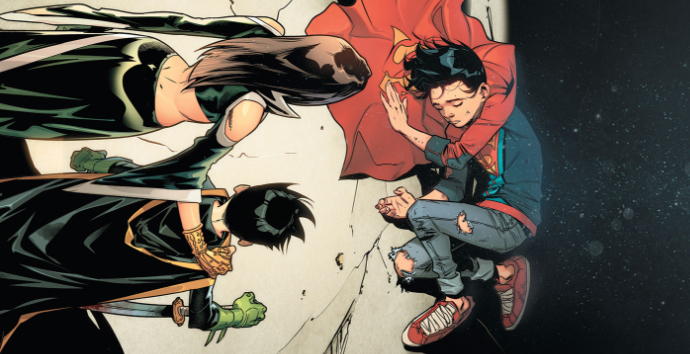
The battle between Damian Wayne and his mother, Talia al Ghul, is the centerpiece of Super Sons 14, but it’s a showdown I feel like I’ve seen before. I don’t mean the actual physical fight, which is well choreographed and which artist Carlo Barberi fills with hits that look like they really hurt; it’s their argument, the words and ideas they toss back and forth, which feels lifted from every other Damian/Talia story I’ve ever read. Thankfully, writer Peter Tomasi brings it all to an interesting conclusion; the idea that Damian is upset that, no matter what he does, he’ll never be able to please both of his parents is an affecting one, and is probably familiar to many children of divorce (at least the more contentious ones). It’s a great place to end the issue, even if it doesn’t do much to lift up the rest of the fighting that came before.

Thankfully, Jon Kent’s half of the issue shines where Damian’s doesn’t. Continue reading

Eternity Girl 1: Discussion

by Mark Mitchell and Spencer Irwin


This article contains SPOILERS. If you haven’t read the issue yet, proceed at your own risk!

Mark: People who suffer from chronic depression are often very good at putting up facades of happiness; it’s part of why suicide can be surprising to the friends and family of the person who took their life. These facades are a coping mechanism for a depression sufferer in a number of ways, including stopping people from inquiring about their happiness. If you look happy — if you act “normal” — then people are more apt to leave you alone. But keeping up appearances for the benefit of others is exhausting, and sometimes the facade breaks down at inopportune moments — at a friend’s wedding, the night before a big paper is due, in front of your co-workers at the office.

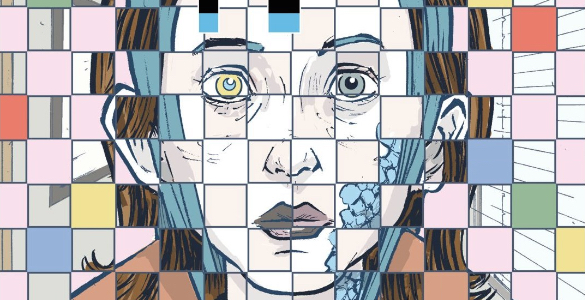
The performative aspect of keeping up appearances is made literal in Magdalene Visaggio and Sonny Liew’s Eternity Girl 1, a new title in DC’s Young Animal line. Continue reading