Dinosaur Ultron Embraces Evil in The Unbeatable Squirrel Girl 24

by Spencer Irwin

This article contains SPOILERS. If you haven’t read the issue yet, proceed at your own risk!

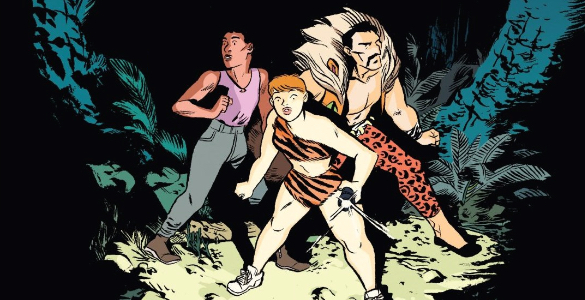
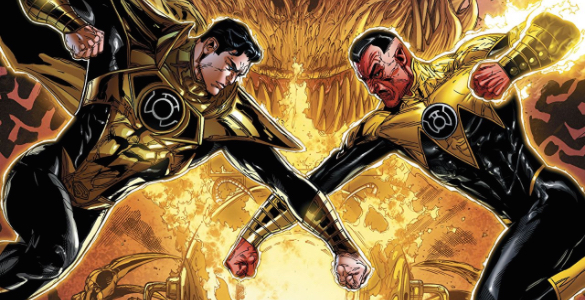
Dinosaur Ultron is a terrific villain, partially because it’s just so cool to see Ultron as a dinosaur, partially because artist Erica Henderson has come up with a design for him that’s equal parts menacing and adorable and because colorist Rico Renzi mines his red glowing highlights for some particularly effective scares, and partially because Ryan North has found a genuinely funny and unique voice for him. What seems most notable to me about Dinosaur Ultron, though, is that he came upon his hatred of all organic life independently of the original Ultron’s programming; if both versions of the AI came to the same conclusion despite wildly different lives and circumstances, did they ever really have a chance to be anything different? Could he still be? Continue reading

Runaways 1: Discussion

by Spencer Irwin and Taylor Anderson

This article contains SPOILERS. If you haven’t read the issue yet, proceed at your own risk!

Spencer: Runaways 1 has to be one of the most unusual first issues I’ve ever read, especially for a team book and especially for a book from the Big 2. While I’ve read plenty of good, sometimes even great, first issues, there’s certain objectives most first issues have to achieve — introducing the series’ cast, premise, and villain, for example — that can lead to them all feeling like they’re cut from the same template. Runaways 1, though, shatters that template completely; Rainbow Rowell, Kris Anka, and Matthew Wilson essentially skip to what would probably be issue 4 of any other series, immediately immersing readers deep in a tense, life-or-death scenario. It’s a marvelous decision. Continue reading

A Pity Party vs. a Victim Complex in The Flash 30

by Spencer Irwin

This article will contain SPOILERS. If you haven’t read the issue yet, proceed at your own risk!

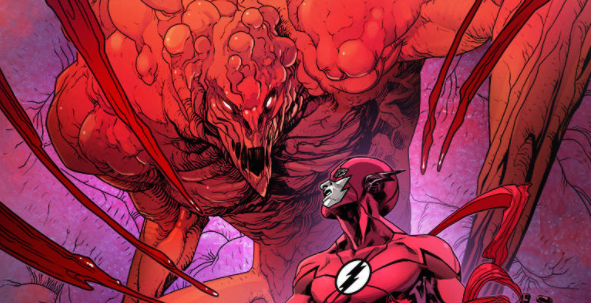
Ramsey the coroner, a.k.a. Bloodwork a.k.a. the villain of The Flash 30, never wants to be a victim again after a sheltered childhood hiding from hemophilia, and has only hurt or killed others in order to protect himself. That doesn’t absolve him, of course — the only real risk he’s facing is his own crimes being exposed, and he has zero remorse for any of his actions — but it does explain why he wants to hurt the Flash. Not only is Flash a personal threat to Bloodwork, but Ramsey also views him as a threat to all of Central City, something Barry, in his current self-pitying, Negative Speed Force addled state, would definitely agree with. Continue reading

Out of Order is the Right Order in Rocket 5

by Spencer Irwin

Rocket 5

This article contains SPOILERS. If you haven’t read the issue yet, proceed at your own risk!

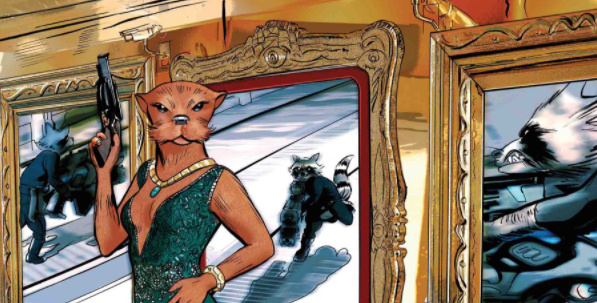
I’ve never been a big fan of the in media res opening (and I just won’t shut up about it!), but I’ve always thought Rocket has used them excellently nonetheless — when paired with the sidebar narration it feels natural to open a story at its end, rather than a cheap crutch. Al Ewing and Adam Gorham take this skill to the next level in Rocket 5, opening the issue with not one, but four in media res openings! Amazingly, it works better than ever. Continue reading

An Off-Color Kate in Hawkeye 10

By Spencer Irwin

This article contains SPOILERS. If you haven’t read the issue yet, proceed at your own risk!

When I first opened Hawkeye 10 I did a double-take, and had to go back to recheck the credits. I would have sworn it was Francesco Francavilla illustrating the issue, but instead, it was regular colorist and artist Jordie Bellaire and Leonardo Romero doing their best impression, bathing those first few pages in the deep, rich shades of red that have come to be Francavilla’s trademark. It’s our first sign that something is seriously wrong with Kate, and not just because thinking of Francavilla brings to mind the villain spotlight issue of Fraction’s Hawkeye; it’s because red is not Kate’s color. Continue reading

Osborn Can’t Get Out Of His Own Way in The Amazing Spider-Man 32

by Spencer Irwin

Amazing Spider-Man 32

This article contains SPOILERS. If you haven’t read the issue yet, proceed at your own risk!

Spider-Man and the Green Goblin are arch-enemies, right? While both men have faced many opponents in their lives, nobody gets in their way, nobody riles them up more than the other. It makes sense, then, that when faced with the prospect of fighting his “own personal demon,” ol’ Norman Osborn would immediately assume that this refers to Spider-Man. In Amazing Spider-Man 32, though, Dan Slott and Greg Smallwood seem to be insinuating something entirely different: that Norman’s own personal demon may just be himself. Continue reading

Revisiting the Past While Also Moving Forward in Daredevil 26

by Spencer Irwin

This article contains SPOILERS. If you haven’t read the issue yet, proceed at your own risk!

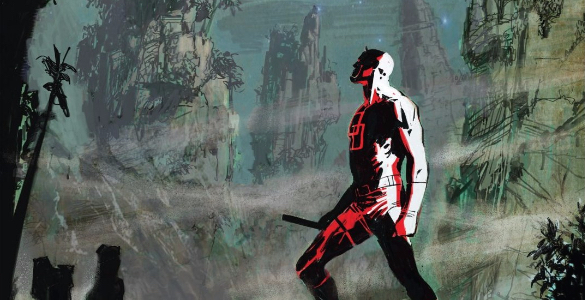
Charles Soule’s run on Daredevil began with a bit of a “back to basics” approach, a return to the character’s traditionally dark tone after Waid and Samnee’s more optimistic run. Still, Soule wasn’t content to just do the same old things with Daredevil; Matt underwent significant changes, including adopting a new costume and sidekick, fighting new villains, and losing all of his old support systems. The last few storylines, though, took a step away from those changes — one was a straight-up flashback tale, and the other a Kingpin story. Daredevil 26 finds Soule reconciling all these various takes, moving forward with the status quo changes brought about by issue 25 while also revisiting concepts from both earlier in this run and long before it. Continue reading

The Wicked + The Divine 31: Discussion

by Drew Baumgartner and Spencer Irwin
Wicked + The Divine 31

This article contains SPOILERS. If you haven’t read the issue yet, proceed at your own risk!

In order to increase the likelihood that students will call for medical assistance in an alcohol-related emergency, some colleges and universities have instituted “Good Samaritan” or medical amnesty policies that eliminate or reduce judicial consequences for students involved in alcohol-related medical emergencies. Other schools may reject this type of strategy based on arguments such as the need to “avoid sending the wrong message” about the seriousness of underage drinking.

Doborah K. Lewis & Timothy C. Marchell,
Safety first: a medical amnesty approach
to alcohol poisoning at a U.S. university”

Drew: I first encountered the notion of a medical amnesty policy in college, though I can’t say I gave it much thought at the time. Indeed, it wasn’t until I was in a position to be worried about dangerously drunk/overdosing students not coming forward (I worked for several years at a summer camp for high-school students) that I started to appreciate how boneheaded the “avoid sending the wrong message” camp truly is. Mostly, it just forgets that the rules against drinking and alcohol use are there for the safety of the students in the first place, somehow valuing the sanctimonious tut-tutting of saying “you shouldn’t drink” over, you know, saving the life of a kid who broke the rules. It’s such an obviously flawed attitude, I was honestly taken aback when I saw reports that some sheriff in Florida was explicitly not offering amnesty to folks with warrants seeking shelter from Hurricane Irma. Or, more specifically, he was insisting on conducting unconstitutional ID checks in order to deter anyone with a warrant from seeking the refuge of a hurricane shelter, endangering their lives because he somehow values laws — the things society makes in order to protect people — more than actually protecting people.

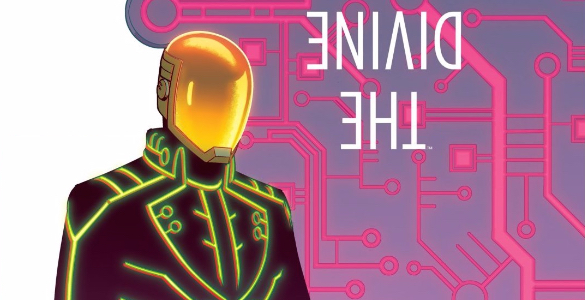
Before I get too off topic, my point is that we’re often too preoccupied with the letter of the law to really parse its spirit. Certain things may be illegal because they’re dangerous, but if coming forward about illegal activity makes things objectively less dangerous, we should encourage that behavior. The article I quoted at the top of this piece offers objective data in support of that idea after studying a medical amnesty policy at Cornell, but I think it’s crucial to note that this type of thinking doesn’t just operate at the institutional level. Even in our daily lives we often react badly to honesty simply because we dislike the truths being revealed, but like the researchers at Cornell, we must recognize how that attitude only makes the situation worse. I found myself thinking about this phenomenon a great deal as I read The Wicked + The Divine 31, as issues of amnesty (and lack thereof) cropped up throughout the issue. Continue reading

Young Readers Will Love Star Wars Adventures 1

by Spencer Irwin

This article contains SPOILERS. If you haven’t read the issue yet, proceed at your own risk!

One of the most valuable lessons anyone can keep in mind when consuming media is that not everything is for you. Different works have different target audiences, and just because a particular work doesn’t appeal to you specifically doesn’t mean it doesn’t have worth. I’ve always felt like this has been a problem especially in mainstream comics, where attempts at books for all ages or younger readers are met with derision from some of the more entitled fans. We need younger readers to keep this medium alive, and kids deserve stories created especially for them — it makes no sense to judge those books by the same standards we would titles aimed at adults. That’s something I had to keep in mind while reading Star Wars Adventures 1 — I am decidedly not the target audience for this book, but I’m glad it exists nonetheless. Continue reading

The Details Drag Down a Strong Premise in Superman 30

by Spencer Irwin

This article contains SPOILERS. If you haven’t read the issue yet, proceed at your own risk!

There’s a particular brand of story that eschews hard logic or consistent rules for pure emotional storytelling: think Doctor Who at its best, where rules are often bent or changed to support the emotional thrust a given episode, or even the old Teen Titans animated series, where Trigon was defeated by the metaphor of Raven growing up, even if there was never explanation given as to how she gained so much raw power. This kind of storytelling can be tricky: if the emotions and metaphors work well enough readers will forgive (or perhaps not even notice) any gaps in logic, but there’s always the risk that they won’t. For my money, Superman 30 falls a little too close to the latter category; there’s a strong emotional core here, but also a lot of details that don’t fully add-up or make sense. Continue reading