Revisiting the Past While Also Moving Forward in Daredevil 26

by Spencer Irwin

This article contains SPOILERS. If you haven’t read the issue yet, proceed at your own risk!

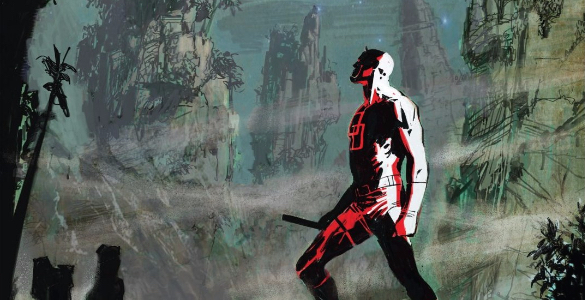
Charles Soule’s run on Daredevil began with a bit of a “back to basics” approach, a return to the character’s traditionally dark tone after Waid and Samnee’s more optimistic run. Still, Soule wasn’t content to just do the same old things with Daredevil; Matt underwent significant changes, including adopting a new costume and sidekick, fighting new villains, and losing all of his old support systems. The last few storylines, though, took a step away from those changes — one was a straight-up flashback tale, and the other a Kingpin story. Daredevil 26 finds Soule reconciling all these various takes, moving forward with the status quo changes brought about by issue 25 while also revisiting concepts from both earlier in this run and long before it. Continue reading

Logan’s Mind and Body in Astonishing X-Men 3

by Taylor Anderson

This article contains SPOILERS. If you haven’t read the issue yet, proceed at your own risk!

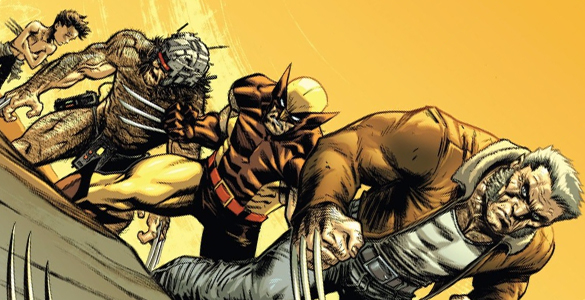
Wolverine has always been the perfect blend of superpower and persona. On the mutant side, Logan’s body regenerates from virtually any damage he may sustain. On the persona side, Logan is strong-willed and once his mind is set to do something, there’s little that can get in his way. The marriage of Logan’s unflinching resolve and undying body is poetic in the way each side reflects the other. What exactly that makes of the man’s psyche is the topic of discussion in Astonishing X-Men 3. Continue reading

Groot Roots in All New Guardians of the Galaxy 9

By Taylor Anderson

This article contains SPOILERS. If you haven’t read the issue yet, proceed at your own risk!

The origin story is a quintessential tale for any hero, whether they be major character who headlines movies or one that would only be familiar to the most knowledgeable comic book reader. Many of these stories are so well-known that many people know where Superman or Spider-Man got their powers from even if they’ve never picked up a monthly. But not all heroes enjoy such clarity when it comes to their origins, and such is the case with Groot. There seems to be no consensus on where Groot came from, so in All-New Guardians of the Galaxy 9 Gerry Duggan figures he may was well take stab at telling the story of Groot’s roots. Continue reading

Dreams of Do-Gooding in Star Wars: Darth Vader 5

by Michael DeLaney

This article contains SPOILERS. If you haven’t read the issue yet, proceed at your own risk!

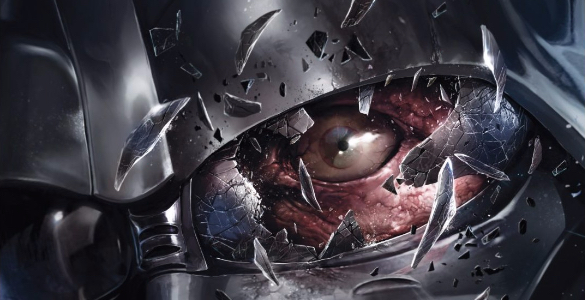
The “it was all a dream” storytelling device is often looked down upon as a narrative cheat, which depending on the circumstances might be true. However there are merits to it as well, as we see in Star Wars: Darth Vader 5. Sometimes, asking the question of “what could have been” makes the reality of a situation that much more bitter. Continue reading

Blowing Up the Page in Green Lanterns 30

by Patrick Ehlers

This article contains SPOILERS. If you haven’t read the issue yet, proceed at your own risk!

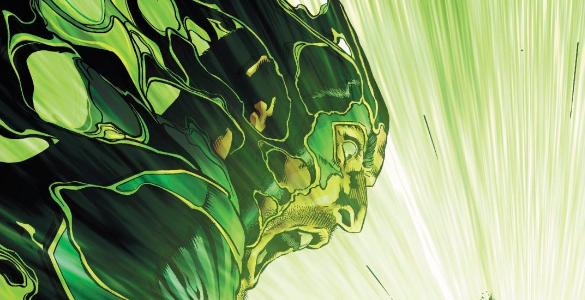
Halfway through Green Lantern 30, Simon Baz praises Jessica Cruz’ plan to fight Volthoom. His narration says “A power ring requires incredible concentration. Volthoom has no ideas what he’s doing. Keep him off balance. All hands on deck. Never let up.” Her plan, like so many Green Lantern plans, boils down to “everyone punch him at the same time.” The dramatic subversion is that the plan doesn’t appear to be working. Artist Carlo Barberi elevates the drama by blowing up the format, only reining in it once our heroes are back in control. Continue reading

The Wicked + The Divine 31: Discussion

by Drew Baumgartner and Spencer Irwin
Wicked + The Divine 31

This article contains SPOILERS. If you haven’t read the issue yet, proceed at your own risk!

In order to increase the likelihood that students will call for medical assistance in an alcohol-related emergency, some colleges and universities have instituted “Good Samaritan” or medical amnesty policies that eliminate or reduce judicial consequences for students involved in alcohol-related medical emergencies. Other schools may reject this type of strategy based on arguments such as the need to “avoid sending the wrong message” about the seriousness of underage drinking.

Doborah K. Lewis & Timothy C. Marchell,
Safety first: a medical amnesty approach
to alcohol poisoning at a U.S. university”

Drew: I first encountered the notion of a medical amnesty policy in college, though I can’t say I gave it much thought at the time. Indeed, it wasn’t until I was in a position to be worried about dangerously drunk/overdosing students not coming forward (I worked for several years at a summer camp for high-school students) that I started to appreciate how boneheaded the “avoid sending the wrong message” camp truly is. Mostly, it just forgets that the rules against drinking and alcohol use are there for the safety of the students in the first place, somehow valuing the sanctimonious tut-tutting of saying “you shouldn’t drink” over, you know, saving the life of a kid who broke the rules. It’s such an obviously flawed attitude, I was honestly taken aback when I saw reports that some sheriff in Florida was explicitly not offering amnesty to folks with warrants seeking shelter from Hurricane Irma. Or, more specifically, he was insisting on conducting unconstitutional ID checks in order to deter anyone with a warrant from seeking the refuge of a hurricane shelter, endangering their lives because he somehow values laws — the things society makes in order to protect people — more than actually protecting people.

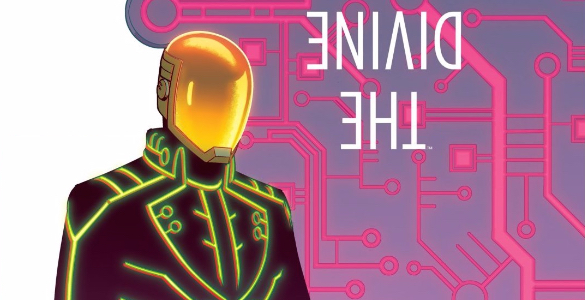
Before I get too off topic, my point is that we’re often too preoccupied with the letter of the law to really parse its spirit. Certain things may be illegal because they’re dangerous, but if coming forward about illegal activity makes things objectively less dangerous, we should encourage that behavior. The article I quoted at the top of this piece offers objective data in support of that idea after studying a medical amnesty policy at Cornell, but I think it’s crucial to note that this type of thinking doesn’t just operate at the institutional level. Even in our daily lives we often react badly to honesty simply because we dislike the truths being revealed, but like the researchers at Cornell, we must recognize how that attitude only makes the situation worse. I found myself thinking about this phenomenon a great deal as I read The Wicked + The Divine 31, as issues of amnesty (and lack thereof) cropped up throughout the issue. Continue reading

Scary Space Science in Green Arrow 30

by Michael DeLaney 

This article contains SPOILERS. If you haven’t read the issue yet, proceed at your own risk!

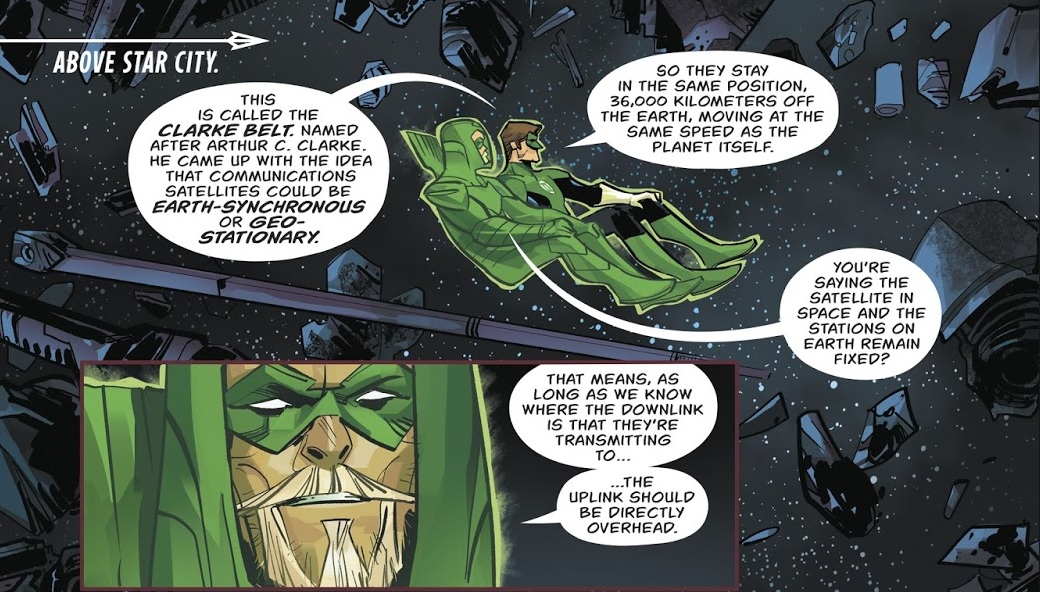
My name is Michael and I learned the basics of satellites from Green Arrow 30. Along with the series’ social justice narrative, “Flash facts” like this are what makes Green Arrow such an impressive book.

Continue reading

Generations Iron Man and Ironheart 1: Discussion

by Taylor Anderson and Patrick Ehlers 

This article contains SPOILERS. If you haven’t read the issue yet, proceed at your own risk!

Taylor: The future is going to be weird, man. How do I know? Every day I stand before 25 middle schoolers and attempt to teach them important stuff about books. Frequently, I’ll make analogies that are too out of date for them to get or, more embarrassingly, I’ll pull a “back in my day” story out of the playbook. Thinking about the difference from when I was in middle school to the kids I teach today is a lesson in how fast things change. These kids (see, I’m already so old I can’t help it!) have never known a world without cell phones, the internet, and Justin Bieber. Generations: Iron Man and Ironheart 1 understands that change happens quickly, just as I do, but the world that the issue imagines is beyond anything I thought imaginable. Continue reading

Young Readers Will Love Star Wars Adventures 1

by Spencer Irwin

This article contains SPOILERS. If you haven’t read the issue yet, proceed at your own risk!

One of the most valuable lessons anyone can keep in mind when consuming media is that not everything is for you. Different works have different target audiences, and just because a particular work doesn’t appeal to you specifically doesn’t mean it doesn’t have worth. I’ve always felt like this has been a problem especially in mainstream comics, where attempts at books for all ages or younger readers are met with derision from some of the more entitled fans. We need younger readers to keep this medium alive, and kids deserve stories created especially for them — it makes no sense to judge those books by the same standards we would titles aimed at adults. That’s something I had to keep in mind while reading Star Wars Adventures 1 — I am decidedly not the target audience for this book, but I’m glad it exists nonetheless. Continue reading

Batman 30: Discussion

by Michael DeLaney and Drew Baumgartner 

This article contains SPOILERS. If you haven’t read the issue yet, proceed at your own risk!

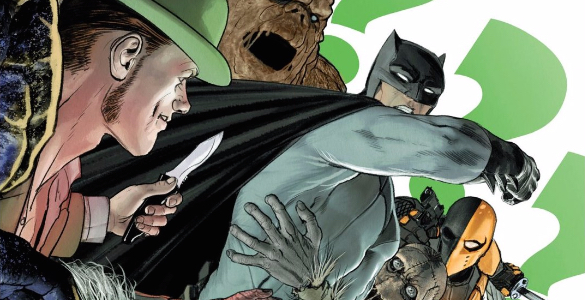
Michael: I’ll admit, I haven’t really understood Tom King’s fascination with Kite Man during his tenure on Batman. King placed Kite Man in the middle of “The War of Jokes and Riddles” in Batman 27 and his tragic origin — Riddler poisoning and killing his son — still left me unmoved. Batman 30 marks the second part of “The Ballad of Kite Man” as well as my cold heart thawing to Kite Man’s tragic existence. Continue reading