Guilt As A Weapon in The Wicked + The Divine 1373AD

by Spencer Irwin

This article contains SPOILERS. If you haven’t read the issue yet, proceed at your own risk!

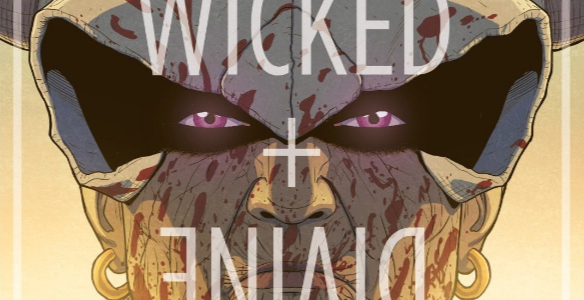
For the most part, emotions aren’t inherently good or bad — their effect ultimately depends on how you process them. Too much of a “good” emotion can be overwhelming, while traditionally negative emotions like fear, pain, sadness, and even guilt have their lessons to teach us. Growing up religious, I’ve seen guilt successfully steer people towards better choices (or away from poor ones), but I’ve also seen guilt consume people down to their very soul. In the wrong hands guilt can be a powerful and dangerous weapon, a tool to wield against others, to manipulate them and tear them down. Ananke, of course, has never met a weapon she hasn’t wanted to give a try, and in The Wicked + The Divine 1373AD guilt proves to be a potent addition to her arsenal. Continue reading
Gratuitous Violence and Wasted Potential in Heroes in Crisis 1

by Spencer Irwin

This article contains SPOILERS. If you haven’t read the issue yet, proceed at your own risk!

slim-banner

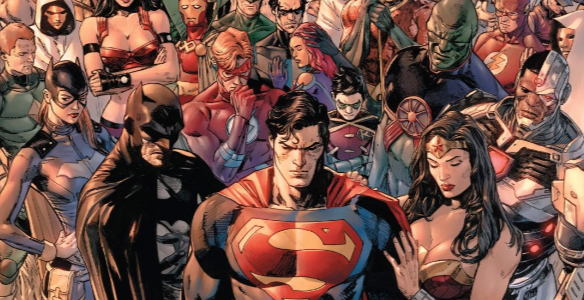
What is Heroes in Crisis actually about? The answer drastically changes my reading of this issue. See, as a murder mystery it works quite well — it doesn’t alleviate all my criticisms (which we’ll get into in a bit, believe me), but there’s interesting hooks in the form of which of the two prime suspects is the murderer, why they did it, and how the Trinity of Batman, Superman, and Wonder Woman will react. As a murder mystery, Heroes in Crisis 1 is an enjoyable, if flawed, comic. But Heroes in Crisis has primarily been advertised and solicited as a more low-key, nuanced look at how superheroes handle trauma, and when judged by that metric, it’s far less successful. Continue reading

West Coast Avengers 2: Discussion

by Spencer Irwin and Michael DeLaney

This article contains SPOILERS. If you haven’t read the issue yet, proceed at your own risk!

Spencer: Kate Bishop’s California adventures — under the pens of both Matt Fraction and Kelly Thompson — have all more-or-less revolved around the idea of appearance, on Hollywood’s obsession with beauty, fame, and youth. On first glance, M.O.D.O.K.’s transformation into the chiseled B.R.O.D.O.K. in West Coast Avengers 2 seems fueled by the same kinds of obsessions, but there’s actually an even greater danger lurking deep within: B.R.O.D.O.K.’s preoccupation with appearance is driven entirely by dangerous entitlement and toxic masculinity. Continue reading

Severing Yet Another Tether to Bruce’s Humanity in Batman 55

by Spencer Irwin

This article contains SPOILERS. If you haven’t read the issue yet, proceed at your own risk!

slim-banner

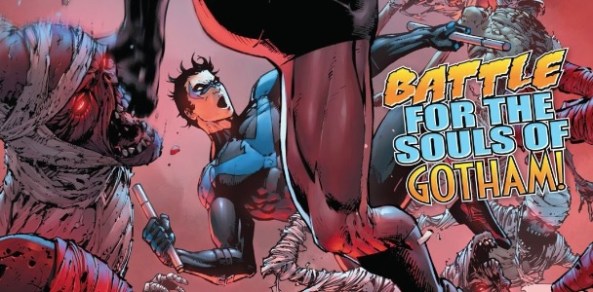
When first introduced back in 1940, Dick Grayson — then known as Robin, the Boy Wonder — was meant to provide a reference point for young readers, a way for them to see themselves in the stories they were reading. His youthful charm not only won over readers, but Batman himself, who quickly transformed from his early brooding, murderous, pulp-inspired incarnation into a more genial, bombastic character thanks to Robin’s influence. Even as modern interpretations of Batman return to a darker take on the character, Dick Grayson — now Nightwing — remains a tether to Batman’s humanity, a character who can bring out his lighter side even under the harshest circumstances. In Batman 55, Tom King and Tony Daniel highlight this vital role Nightwing fills, not just through his actions, but through the very structure of the issue. Continue reading

“The End” is the Enemy in Fantastic Four 2

by Spencer Irwin

This article contains SPOILERS. If you haven’t read the issue yet, proceed at your own risk!

Back when the Future Foundation rode off into the sunset at the end of Secret Wars, ready to recreate and explore the multiverse, many fans (myself included) saw it as the perfect farewell to the characters. This leaves Dan Slott and Sara Pichelli with the unenviable task of bringing this “ending” to an end, of justifying more adventures for characters who had already received their happily ever after. Interestingly, Slott and Pichelli do so by demonizing the very idea of “endings,” by making “the end” the very villain that brings the Fantastic Four back together. Continue reading

Taking Control of Your Own Story in The Wicked + The Divine 39

by Spencer Irwin

This article contains SPOILERS. If you haven’t read the issue yet, proceed at your own risk!

See, I refuse to think of rock and roll as my career
Tell me all my opportunities, ask me if I care
The rock star lifestyle ain’t for me
I quit
Got somewhere else I’d rather be
So I quit
I quit, I quit

“I Quit” — Descendents

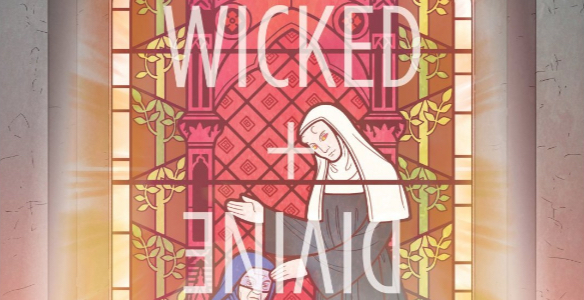
Fame isn’t for everyone; hell, fame isn’t for most people. But fame is also a trap, and something that takes a lot of work and luck to achieve, so I admire the hell out of anyone who’s willing to give it up, whether it be to broaden into less lucrative aspects of their medium or to get out of show business altogether. It takes a lot of clarity and guts to make that decision, and in The Wicked + The Divine 39, Laura Wilson — no longer Persephone — has both in droves. Continue reading

Time Travel is a Threat, Not a Savior in Paper Girls 24

By Spencer Irwin

Paper Girls 24

This article contains SPOILERS. If you haven’t read the issue yet, proceed at your own risk!

The cast of Paper Girls continually look to time travel for salvation, as a cure-all to whatever ails them. The problem is that time travel caused almost all of their problems in the first place, and only threatens to cause more in the future. Brian K. Vaughan, Cliff Chiang, and Matthew Wilson make this clearer than ever in Paper Girls 24, an issue that paints time travel as something that’s actively destructive and malicious. Continue reading

Justice League 7/Adventures of the Super Sons 2: Discussion

by Spencer Irwin and Michael DeLaney

Adventures of the Super Sons 2:Justice League 7

This article contains SPOILERS. If you haven’t read the issue yet, proceed at your own risk!

Spencer: No two people experience the same piece of media the same way. That’s actually the entire foundation of what we do here at Retcon Punch — we exist to examine the different ways our various writers interpret weekly comic books.  Two books released by DC this week dive into this theme as well — Adventures of the Super Sons 2 explores how the same stories led two members of the Gang down very different life paths, while Justice League 7 finds three very different people reacting to some harsh truths about the universe in very different ways. Both drive home the same point: our natures and preconceived notions often have as much to do with how we interpret media as the actual media itself does, for better or for worse, no matter what the creators’ original intent may be. Continue reading

The Designs Define the Characters in Exiles 7

by Spencer Irwin

This article contains SPOILERS. If you haven’t read the issue yet, proceed at your own risk!

slim-banner

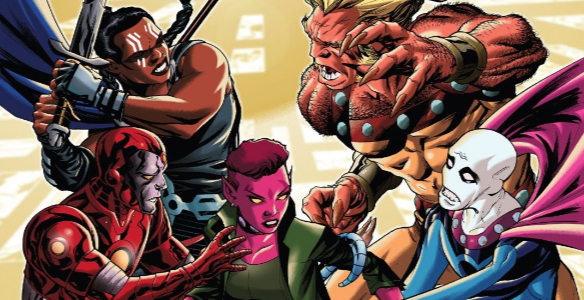
Exiles has been extremely lucky to have a regular artist as talented as Javier Rodriguez, but the series is just as lucky to have found a guest artist like Rod Reis, one who’s just as talented, even if his style is entirely different. I could probably spend a month just gushing about Reis’ work throughout Exiles 6 and 7, but today I want to specifically talk about his character designs and how they inform so much about each character’s role and personality without a single word. Continue reading

Intimacy, Friendship, and Romance in Runaways 12

By Spencer Irwin

This article contains SPOILERS. If you haven’t read the issue yet, proceed at your own risk!

Runaways 12 focuses in on two different pairings, which both eventually blossom into romance. In both cases, though, those romances are born of a deep friendship, of a deep intimacy which has been developed throughout several volumes of adventures together. Rainbow Rowell, Kris Anka, and Matthew Wilson spend most of this issue digging deep into their intimacy in all its forms, be it emotional intimacy or physical. Continue reading